
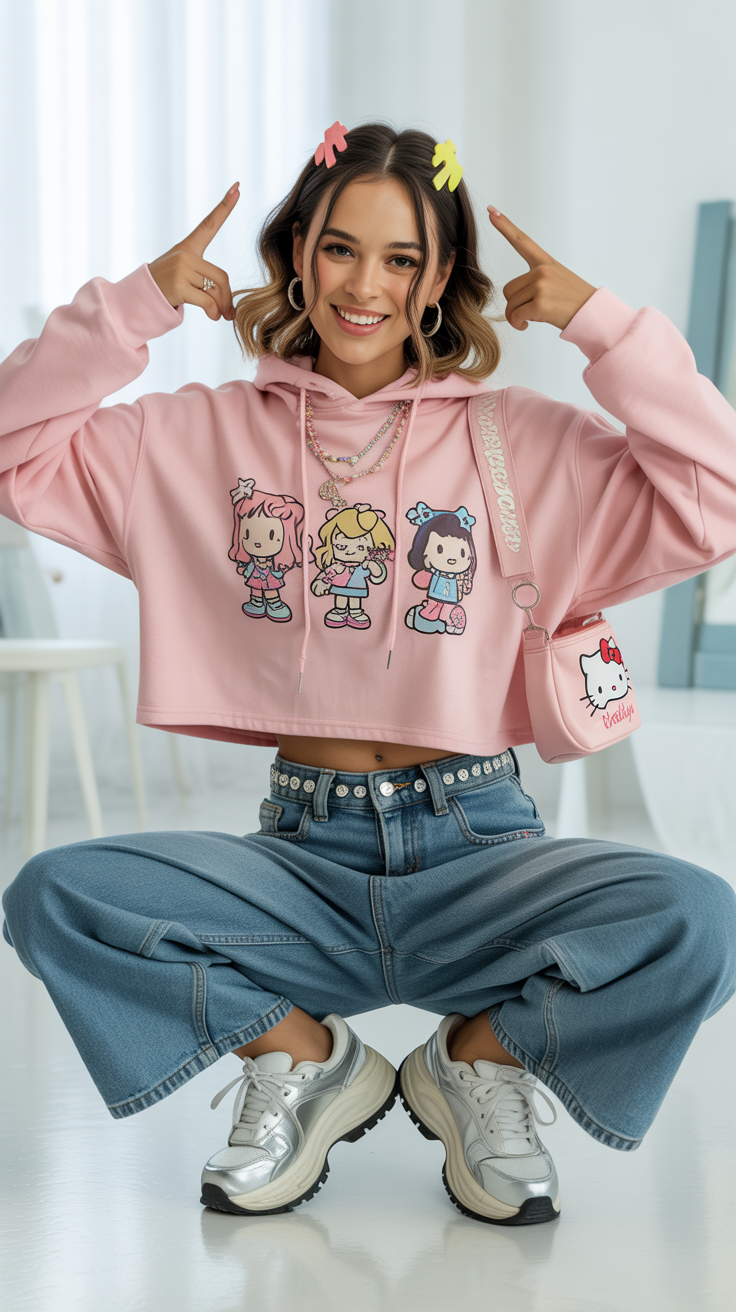
The early 2000s witnessed a fascinating cultural exchange between Japanese street style and Western fashion, creating a unique aesthetic that defined an entire generation.
When we talk about 21 Japanese-Inspired Early 2000s Fashion Looks, we’re exploring a revolutionary moment when Tokyo’s vibrant Harajuku district influenced global trends in ways never seen before.
This era brought us everything from pastel-colored Gothic Lolita dresses to edgy Visual Kei styles, platform sneakers that defied gravity, and layered accessories that transformed simple outfits into wearable art.
The fusion of kawaii culture with punk rebellion, anime influences with high fashion, and traditional Japanese elements with contemporary streetwear created looks that remain influential even today.
Whether you remember rocking these styles yourself or you’re discovering them for the first time, this journey through Japanese-inspired Y2K fashion will reveal how Tokyo’s creative minds shaped what we wore, how we expressed ourselves, and why these looks continue to inspire modern fashion enthusiasts around the world.
1. Decora Kei Rainbow Explosion
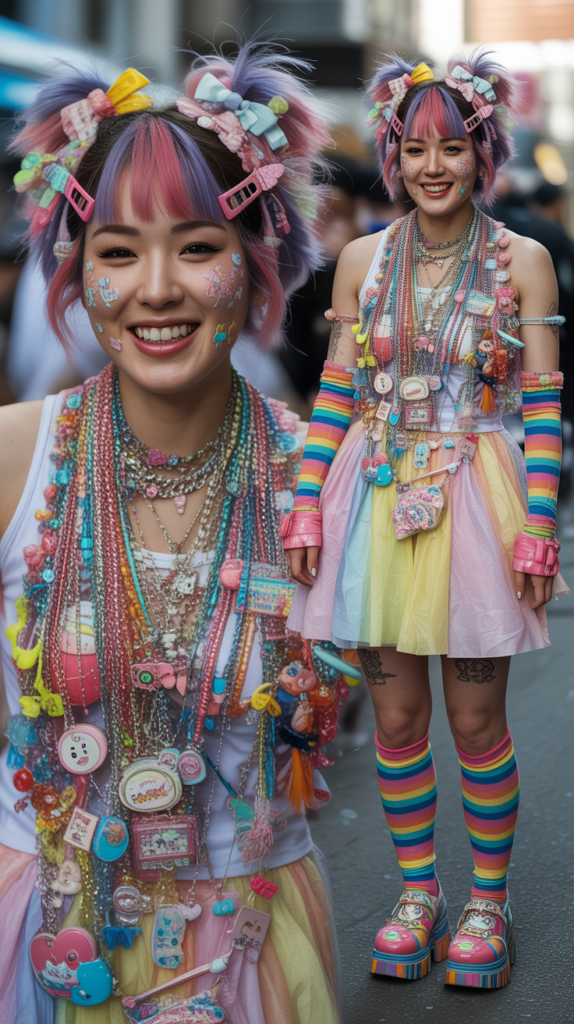
Decora Kei represented pure joy translated into clothing, where maximalism wasn’t just accepted but celebrated.
This style emerged from Harajuku’s youth culture and became synonymous with childhood nostalgia meeting teenage rebellion.
Key Elements of Decora Kei:
- Accessories were the foundation of this look, with wearers stacking 50 to 100 hair clips, barrettes, and pins throughout their hair
- Bright neon colors dominated every piece, from hot pink to electric blue, lime green to sunshine yellow
- Multiple layers of necklaces created a cascading effect, often featuring plastic beads, character charms, and toy pendants
- Leg warmers in clashing patterns were worn over colorful tights or striped socks
- Stickers placed directly on faces became signature decorative elements, especially star and heart shapes
- Platform sneakers or Mary Janes added height while maintaining the playful aesthetic
- Oversized bags covered in pins and keychains served as mobile collections of personality
- Arm warmers and wristbands stacked from wrist to elbow in various textures and colors
Styling Tips:
- Start with a neutral base like a white t-shirt to let accessories shine
- Mix childlike elements (cartoon characters, candy motifs) with unexpected edge pieces
- Layer at least 10 different necklaces for authentic Decora volume
- Choose one focal color and build variations around it
- Add temporary hair color or wigs in pink, blue, or rainbow shades
2. Gothic Lolita Elegance
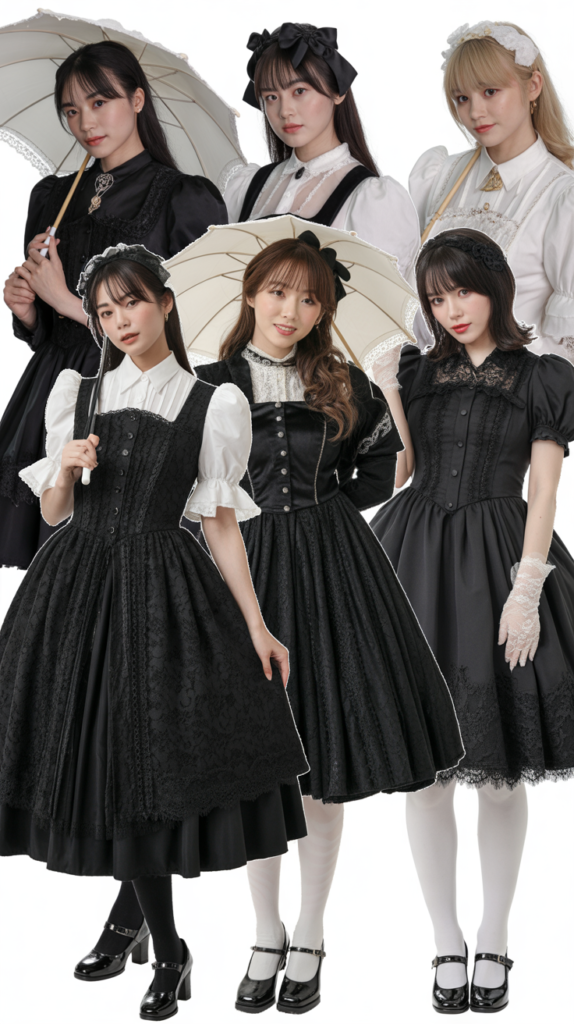
Gothic Lolita fashion merged Victorian-era modesty with dark romanticism, creating an elegant rebellion against conventional Japanese and Western beauty standards.
This style demanded attention to detail and commitment to a complete aesthetic transformation.
Core Components:
- Bell-shaped skirts with petticoats created the iconic silhouette, typically falling just below the knee
- High-quality lace in black or white adorned every garment from blouses to socks
- Platform Mary Jane shoes combined innocence with gothic edge, often featuring buckles and crosses
- Headwear was non-negotiable, including headdresses, mini top hats, or elaborate bonnets
- White or cream blouses with Peter Pan collars provided contrast against dark jumper skirts
- Parasols and handbags matched the outfit’s color scheme and level of detail
- Jewelry featured crosses, roses, and cameos in silver or antique gold finishes
- Makeup emphasized pale skin with dark lips and dramatic eye makeup
Essential Brands:
- Baby, The Stars Shine Bright pioneered accessible Gothic Lolita pieces
- Moi-même-Moitié by Mana offered high-end gothic elegance
- Metamorphose temps de fille provided versatile options for different Lolita substyles
3. Visual Kei Rock Star
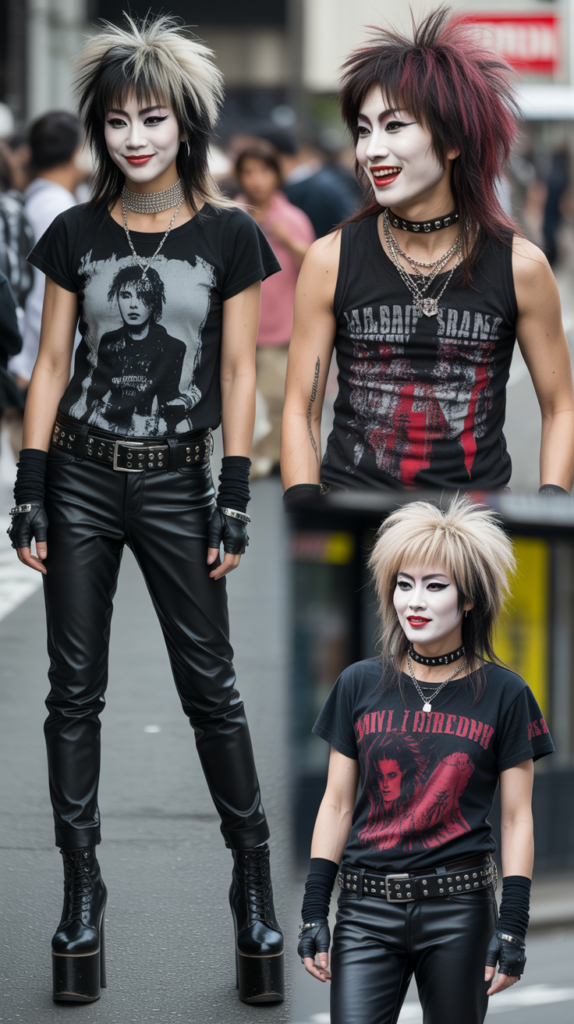
Visual Kei style emerged from Japanese rock music culture, where band members’ appearance was as important as their sound.
This androgynous aesthetic challenged gender norms and celebrated theatrical self-expression.
Defining Characteristics:
- Extreme hair styling involved teasing, coloring, and structuring hair into gravity-defying shapes
- Heavy eye makeup for all genders included thick eyeliner, false lashes, and dramatic eyeshadow
- Leather and vinyl garments dominated the wardrobe, from pants to jackets to accessories
- Layered clothing combined mesh shirts under leather vests over printed tees
- Platform boots reached extreme heights, sometimes adding 4-6 inches
- Studded belts and chokers created edge without overwhelming the look
- Asymmetrical cuts appeared in both clothing and hairstyles
- Band merchandise was incorporated as genuine fashion rather than just fan gear
Color Palettes:
- Black served as the universal base for most Visual Kei outfits
- Blood red, deep purple, and royal blue added dramatic accent colors
- White provided stark contrast in shirts, accessories, or hair streaks
- Silver hardware and jewelry caught light and added dimension
4. Gyaru Glamour
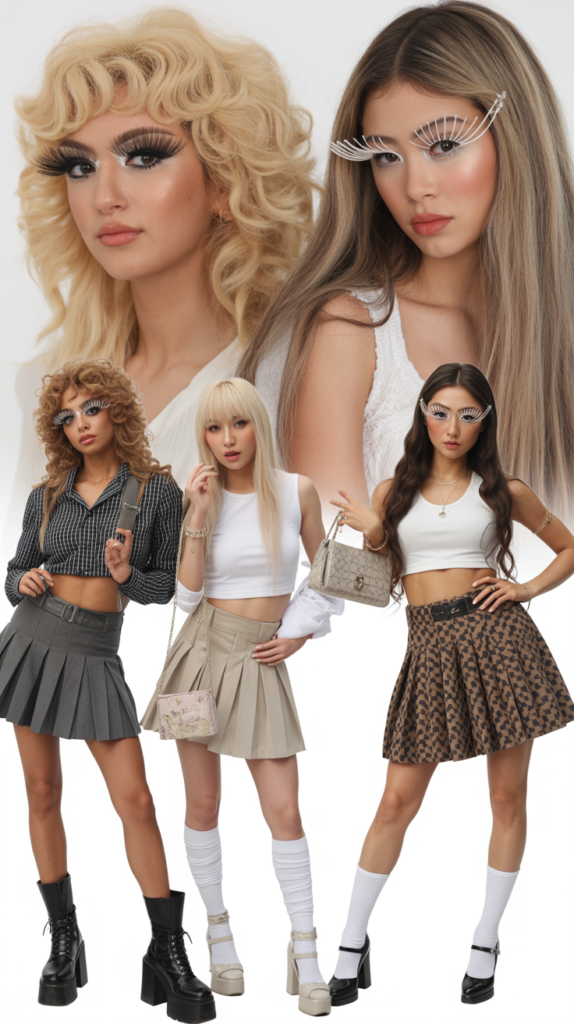
Gyaru culture rebelled against traditional Japanese beauty ideals by embracing deeply tanned skin, bleached hair, and Western-influenced glamour.
This look represented freedom, fun, and a rejection of conservative expectations.
Signature Elements:
- Dark tans were achieved through tanning beds or makeup, contrasting sharply with traditional pale beauty standards
- Bleached blonde or honey-colored hair was often curled or styled in voluminous waves
- Dramatic false eyelashes extended far beyond natural lash lines, sometimes in multiple layers
- White or light eye makeup created a wide-eyed appearance against tanned skin
- Platform boots or heels added extreme height, with some reaching 6 inches
- Mini skirts and shorts paired with loose socks or leg warmers
- Designer knockoffs or real luxury items were displayed prominently
- Nail art featured elaborate designs, crystals, and extreme lengths
Substyles:
- Hime Gyaru added princess elements with tiaras and pink accents
- Ganguro took tanning to extremes with neon makeup
- Onee Gyaru offered a more mature, sophisticated version
- Banba pushed boundaries with the most exaggerated features
5. Fairy Kei Pastel Dreams
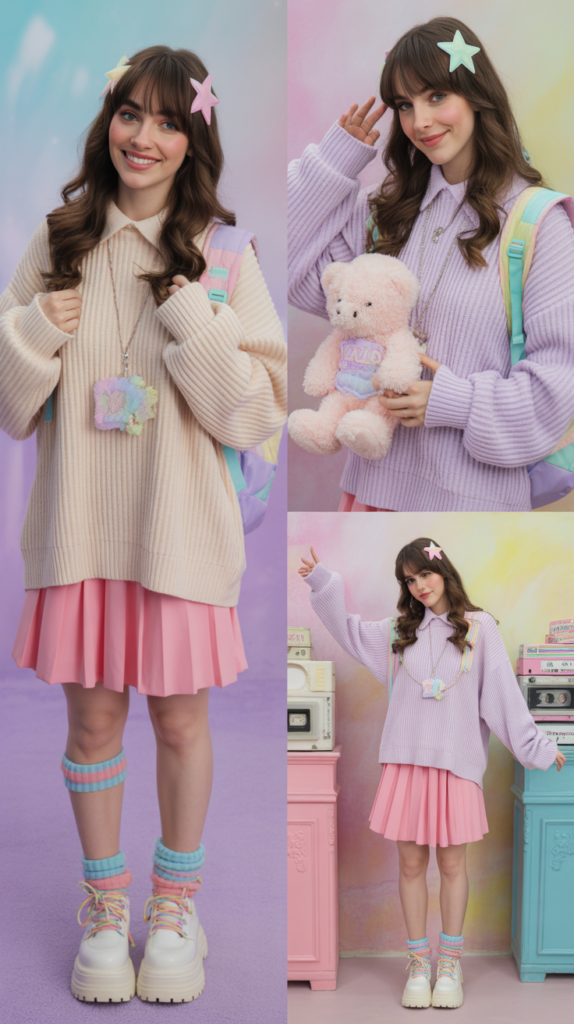
Fairy Kei celebrated 1980s nostalgia through pastel colors and vintage-inspired pieces, creating a soft, dreamy aesthetic that felt like stepping into a fairy tale.
This style emphasized comfort and cuteness in equal measure.
Essential Components:
- Pastel color palette dominated with lavender, mint green, baby pink, and powder blue
- Oversized sweaters and sweatshirts often featured vintage cartoon characters or retro logos
- High-waisted shorts or skirts created a youthful, playful silhouette
- Platform sneakers or jelly shoes referenced 1980s athletic and casual wear
- Vintage toy accessories included My Little Pony, Care Bears, and Polly Pocket items
- Pastel hair colors matched the overall color scheme, often in pink or lavender
- Colorful tights or over-the-knee socks added layers and visual interest
- Fanny packs and small backpacks served as both functional and fashionable accessories
Shopping Strategy:
- Thrift stores provided authentic 1980s pieces at affordable prices
- American Apparel offered modern basics in perfect pastel shades
- Japanese brands like Listen Flavor specialized in Fairy Kei aesthetics
- Vintage toy stores supplied unique accessories unavailable elsewhere
6. Cosplay Casual Integration
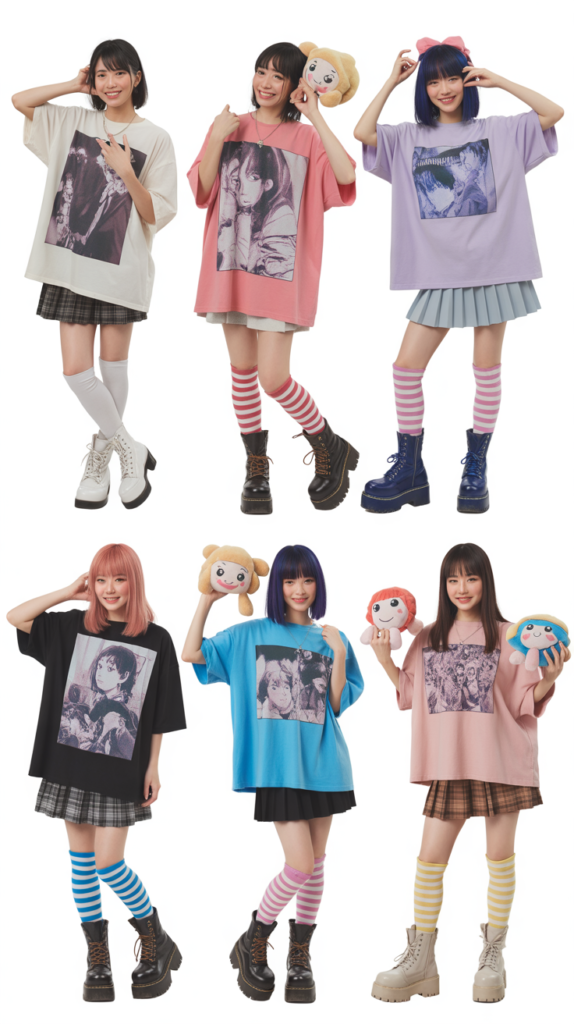
The early 2000s saw cosplay elements bleeding into everyday fashion, where anime and manga character influences became wearable street style.
This look allowed fans to express their interests without full costume commitment.
Key Features:
- Character-inspired color blocking recreated iconic anime outfits in wearable forms
- Prop accessories like fake weapons, wings, or ears transitioned from conventions to streets
- School uniform elements were mixed with casual pieces for everyday anime aesthetics
- Wigs in unnatural colors allowed for temporary transformation without permanent commitment
- Graphic tees featuring favorite characters were layered under jackets or vests
- Knee-high socks with patterns referenced school uniform styling from popular series
- Messenger bags with patches and pins displayed fandom affiliations
- Circle lenses enlarged eyes for anime-like appearance
Popular Influences:
- Sailor Moon inspired pleated skirts and sailor collars
- Neon Genesis Evangelion influenced plug suit-inspired tight layers
- Final Fantasy brought belts, zippers, and asymmetrical designs
- Fruits Basket encouraged soft, romantic layering
7. Kogal School Style
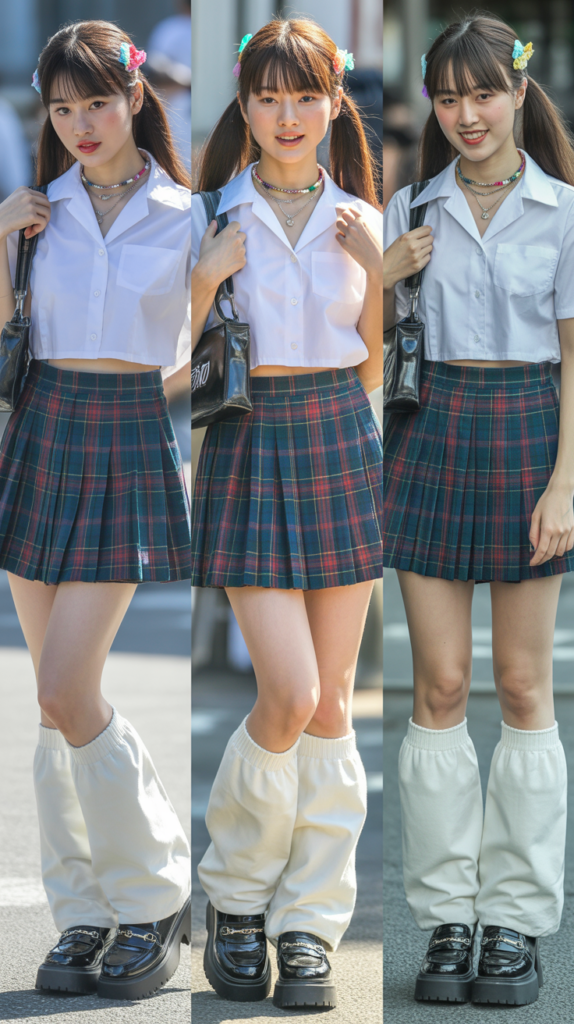
Kogal fashion took Japanese school uniforms and transformed them into a statement of rebellion and individuality.
This controversial style became emblematic of youth culture pushing against traditional expectations.
Distinctive Elements:
- Shortened uniform skirts rose significantly above regulation length, often rolled at the waist
- Loose socks (loose-socks) pooled around ankles in deliberately messy fashion
- Platform loafers added height while maintaining school-appropriate footwear
- Bleached or dyed hair violated school rules in subtle (or not-so-subtle) ways
- Designer bags replaced standard school bags, especially Louis Vuitton or Burberry
- Cardigans worn off-shoulder added casual rebellion to uniform tops
- Koala no Māchi pencil boxes and branded stationery became status symbols
- Pagers and early cell phones with elaborate charms and decorations
Cultural Context:
- This style emerged from high school girls’ desire for self-expression within uniform constraints
- Media coverage ranged from fascination to moral panic
- International brands noticed and began targeting this demographic
- The look influenced Western interpretations of “schoolgirl chic”
8. Punk Harajuku Edge
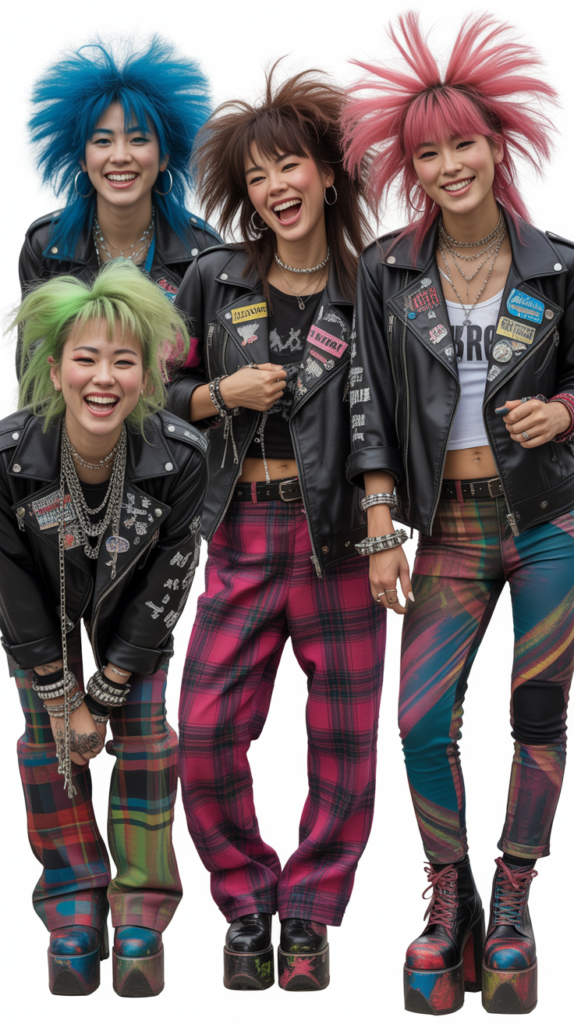
Harajuku punk combined British punk rock aesthetics with Japanese street sensibilities, creating a unique fusion that felt familiar yet distinctly Tokyo.
This style balanced aggression with playfulness in unexpected ways.
Core Elements:
- Tartan and plaid patterns appeared on pants, skirts, and accessories in traditional and neon colors
- Safety pins decorated everything from clothing to ears, both functional and decorative
- Studded leather jackets were often customized with patches and paint
- Mohawks and liberty spikes came in colors from natural to neon rainbow
- Combat boots were painted, studded, or otherwise personalized
- Band patches covered bags and jackets, mixing Western punk with J-rock
- Fishnet layers showed through ripped jeans or under skirts
- Bondage pants with straps and D-rings made strong statements
DIY Culture:
- Customization was expected, not optional
- Patches were sewn, painted, or safety-pinned onto garments
- Hair dye experiments happened in bathrooms and bedrooms
- Thrifted pieces were transformed through cutting, painting, and embellishing
9. Mori Girl Forest Fashion
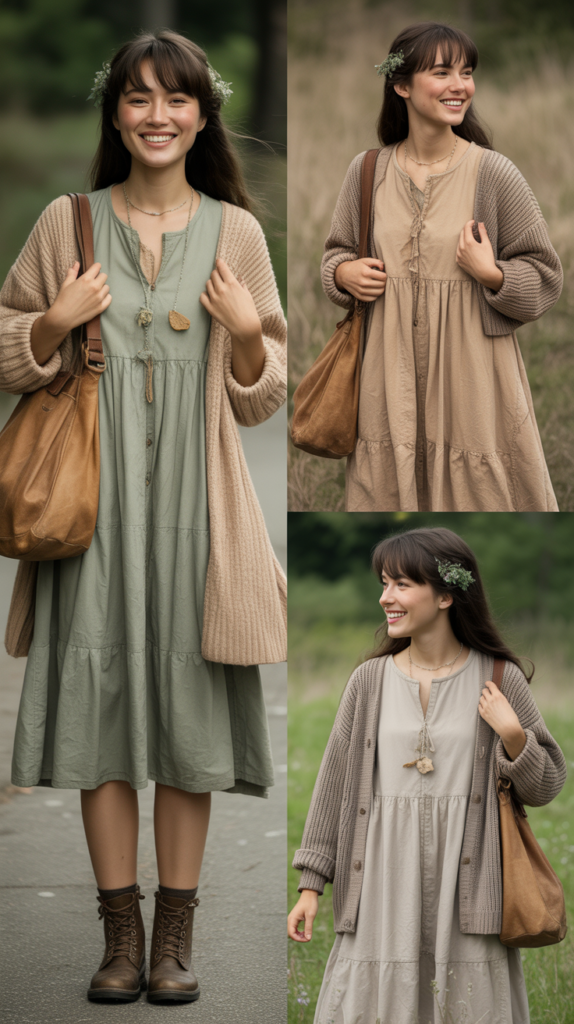
Mori Girl (forest girl) style emerged in the late 2000s but drew from early decade aesthetics, emphasizing natural fabrics, earthy colors, and a connection to nature.
This gentle look contrasted sharply with Harajuku’s more extreme styles.
Defining Features:
- Layers upon layers created depth and texture, typically 3-5 visible layers minimum
- Natural fabrics like cotton, linen, and wool were preferred over synthetics
- Earth tone palette included browns, creams, forest greens, and muted florals
- Vintage or vintage-inspired pieces gave an timeless, nostalgic feeling
- Comfortable, flat footwear like ankle boots or mary janes supported the natural aesthetic
- Minimal makeup emphasized natural beauty with just a touch of enhancement
- Nature-inspired accessories featured leaves, flowers, birds, and woodland creatures
- Loose, flowing silhouettes prioritized comfort and movement
Lifestyle Integration:
- This wasn’t just fashion but a lifestyle embracing simplicity
- Outdoor activities like forest walks inspired the aesthetic
- Photography often featured wearers in natural settings
- Handmade and vintage items were valued over fast fashion
10. Cyber Goth Futurism
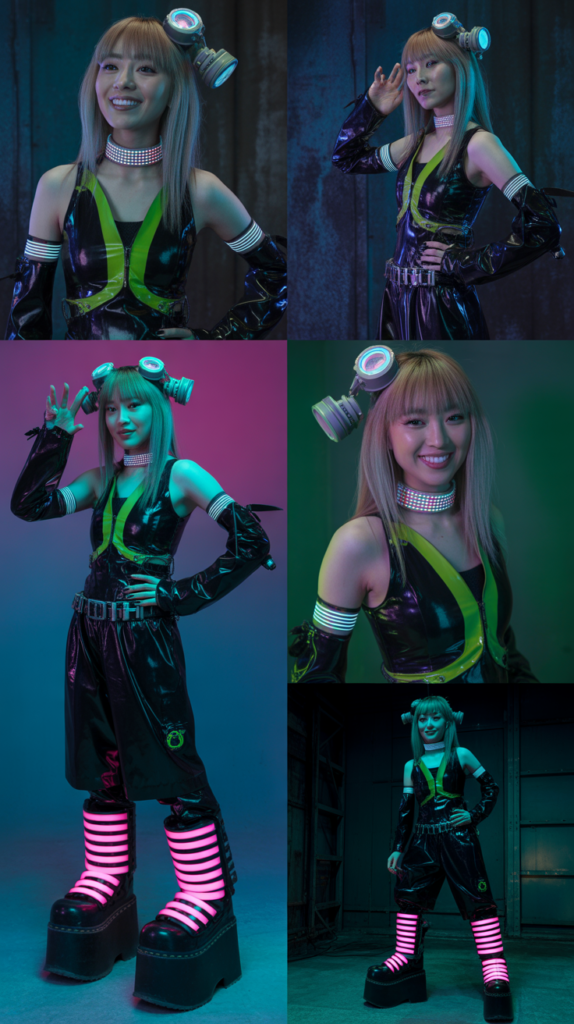
Cyber Goth combined industrial music culture with Japanese futurism, creating a dark, technological aesthetic that felt like stepping into an anime dystopia.
This style represented humanity’s anxious relationship with advancing technology.
Key Components:
- Black served as the canvas for all other elements, creating maximum contrast
- Neon accents in green, pink, blue, or orange provided cyberpunk vibes
- UV-reactive materials glowed under blacklight at clubs and events
- Platform boots reached extreme heights, sometimes resembling robotic legs
- Gas masks and goggles functioned as accessories rather than protective gear
- Synthetic hair falls in neon colors added dramatic hair volume
- Vinyl and PVC fabrics reflected light and created futuristic shine
- Industrial accessories like chains, gears, and metal hardware
Music Connection:
- This style was inseparable from industrial, EBM, and aggrotech music scenes
- Club culture drove fashion evolution and adoption
- Brands like Cyberdog provided specialized pieces
- Online communities shared DIY tutorials and shopping resources
11. Sweet Lolita Confection
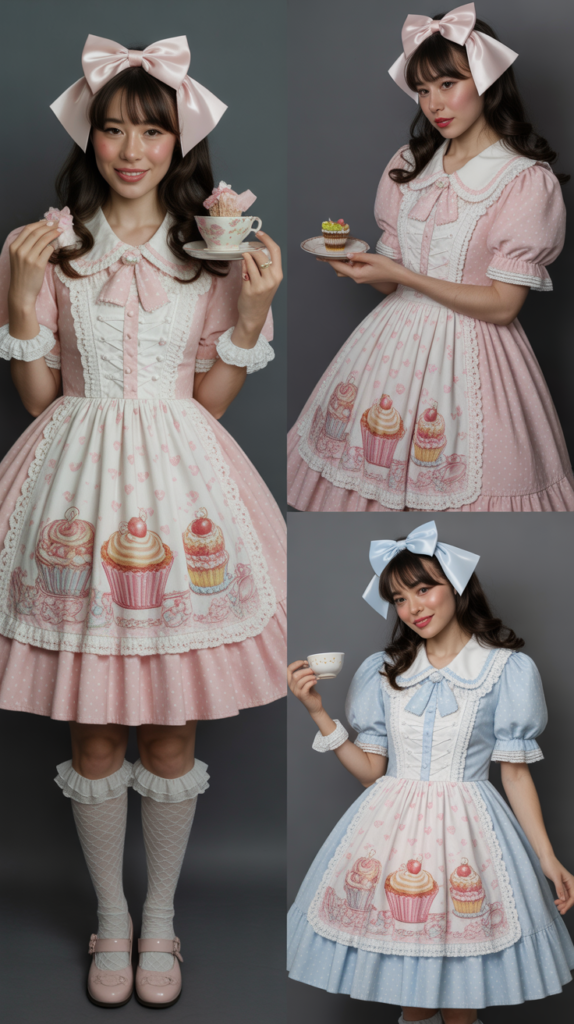
Sweet Lolita represented the most feminine and kawaii version of Lolita fashion, with color palettes resembling cakes, candies, and desserts.
This ultra-sweet style celebrated girlish innocence and fantasy.
Essential Elements:
- Pastel color schemes dominated with pink, lavender, mint, and baby blue
- Sweet motifs included cupcakes, strawberries, chocolates, rabbits, and teddy bears
- A-line or bell-shaped dresses created the classic Lolita silhouette with petticoats
- Matching headbows were sized proportionally to the dress’s sweetness level
- White or pastel knee socks featured lace tops and sometimes small prints
- Tea party shoes with modest heels and ankle straps completed the look
- Parasols and handbags coordinated perfectly with dress colors and themes
- Jewelry featured pearls and delicate chains with sweet charms
Coordinate Building:
- Everything should match in theme, color, and level of decoration
- Angelic Pretty and Baby, The Stars Shine Bright led this substyle
- Accessories counted as much as the main dress
- “OTT” (over-the-top) Sweet pushed sweetness to maximum levels
12. Yankii Delinquent Chic
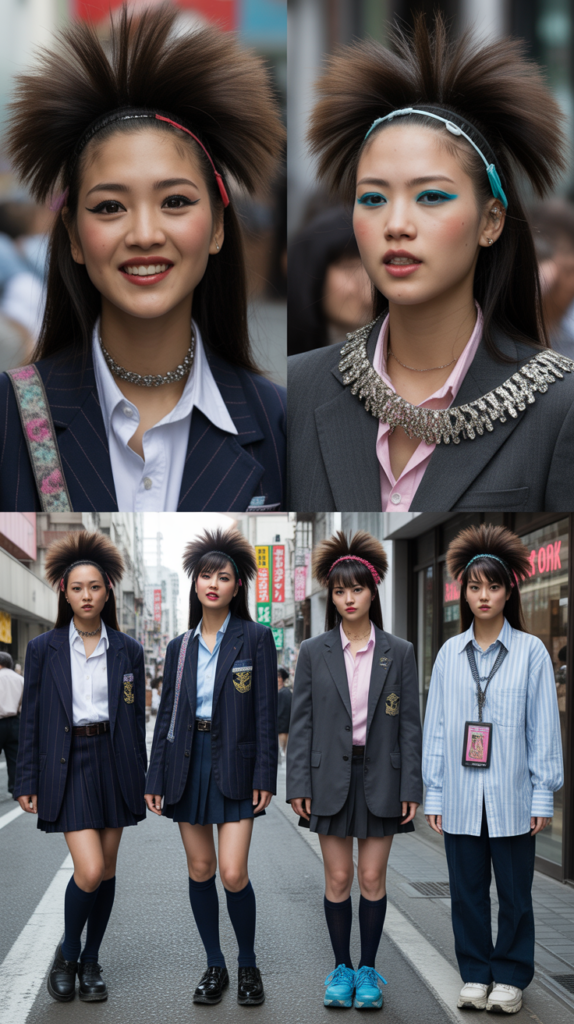
Yankii style came from Japanese delinquent subculture, featuring modified school uniforms and an attitude of rebellion. This look was more about swagger and presence than specific garments.
Characteristic Features:
- Modified uniforms with altered proportions – longer jackets, wider pants
- Pompadour hairstyles required significant styling time and strong products
- Surgical masks worn as fashion statements rather than health protection
- Baggy pants contrasted with Japan’s typically fitted fashion
- Athletic jackets from brands like Adidas worn in non-athletic contexts
- Aggressive posturing in photos and public spaces
- Gold chains and rings added bling to otherwise simple outfits
- Bleached or dramatically styled hair signaled nonconformity
Cultural Roots:
- This style referenced postwar Japanese motorcycle gangs (bōsōzoku)
- Working-class rebellion against middle-class norms
- Regional variations existed across different Japanese cities
- Media portrayed yankii characters in manga and dramas
13. Cult Party Kei
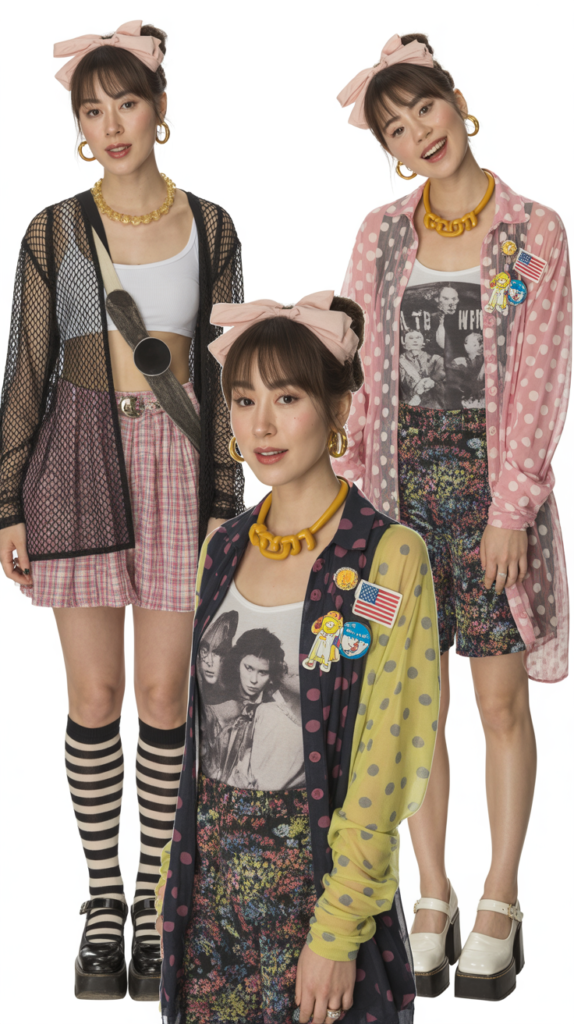
Cult Party Kei emerged from the Japanese brand Cult Party and sister label Nile Perch, creating a unique aesthetic mixing pop culture references with artistic chaos.
This style celebrated controlled messiness and clever layering.
Defining Characteristics:
- Mixed patterns that shouldn’t work together but somehow did
- Vintage Americana mixed with Japanese kawaii elements
- Artistic graphics featuring illustrations, cartoons, and abstract designs
- Asymmetrical layering created intentional imbalance
- Quirky accessories like vintage toys, unusual hats, and handmade items
- Comfortable, loose silhouettes prioritized wearability
- Indie music influence from alternative and underground scenes
- Limited color palettes per outfit despite pattern mixing
Brand Philosophy:
- Cult Party encouraged personal interpretation over strict rules
- Affordability made the style accessible to young fans
- Online communities shared coordinate ideas and styling tips
- The aesthetic felt more “real” and achievable than high-end Lolita
14. Aristocrat Gothic Maturity
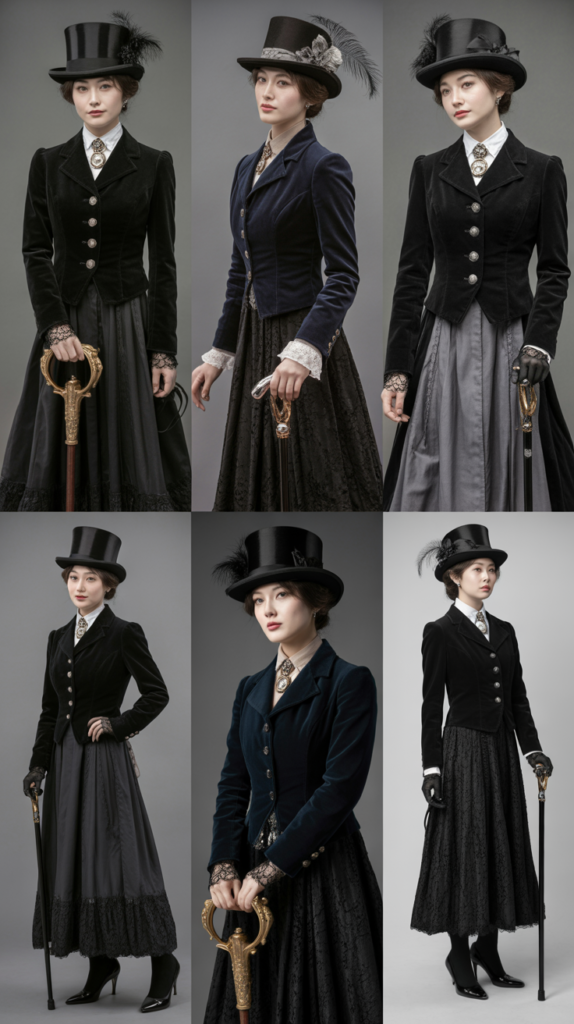
Aristocrat style represented the grown-up evolution of Gothic Lolita, trading cute elements for elegant, Victorian-inspired sophistication.
This look appealed to those who loved gothic aesthetics but wanted less childlike presentations.
Key Elements:
- Tailored jackets with proper structure replaced casual cardigans
- Long skirts or dress pants offered more coverage than typical Lolita lengths
- Masculine and feminine elements mixed freely regardless of wearer’s gender
- Top hats, canes, and pocket watches added Victorian gentleman touches
- Rich fabrics like velvet, brocade, and heavy cotton
- Minimal lace compared to Gothic Lolita, focusing on cut and drape
- Subdued jewelry featuring antique-style pieces
- Elegant boots with moderate heels rather than platform shoes
Style Philosophy:
- This represented growing up within gothic fashion rather than leaving it
- Professional contexts became more accessible with aristocrat styling
- Gender expression expanded beyond traditional gothic presentations
- h.NAOTO and other brands created specific aristocrat lines
15. Dolly Kei Vintage Romance
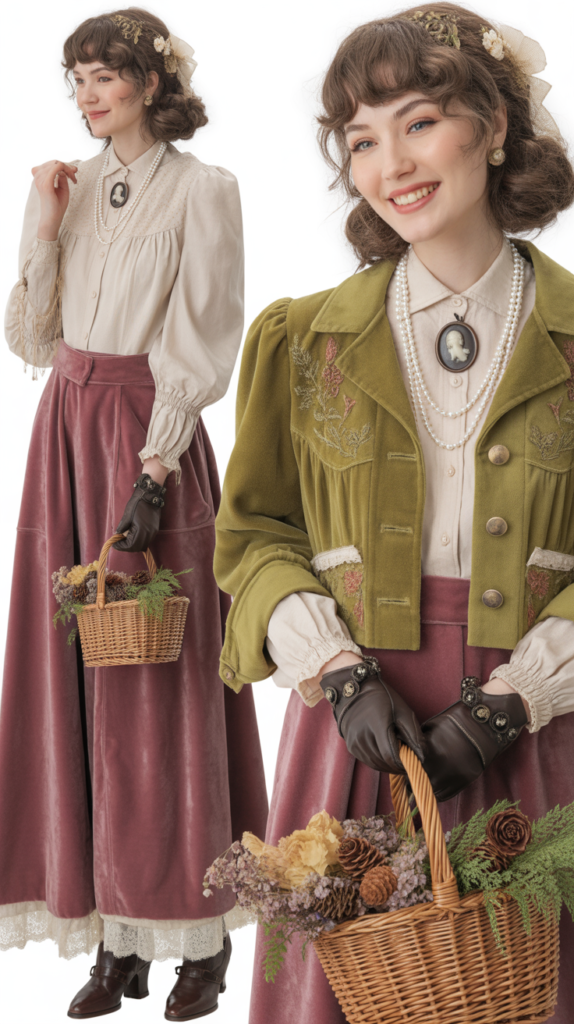
Dolly Kei celebrated vintage aesthetics from multiple eras and cultures, creating a maximalist look that felt like raiding an antique shop.
This style mixed historical references without strict accuracy.
Signature Components:
- Multiple historical eras combined in single outfits without conflict
- Vintage or vintage-style pieces sourced from thrift stores and antique markets
- Forest and nature themes appeared in prints and accessories
- Heavy layering created depth and visual interest
- Antique accessories including brooches, lockets, and old photographs
- Muted, dusty color palette avoided bright pastels or neons
- Literature and fairy tale references inspired outfit themes
- Handmade elements added personal touches to vintage finds
Shopping Approach:
- Thrift stores and vintage shops were primary sources
- Brands like Grimoire and Marble provided new dolly kei pieces
- Online vintage retailers expanded options internationally
- DIY modifications transformed ordinary vintage into dolly kei
16. Kimono Fusion Modern
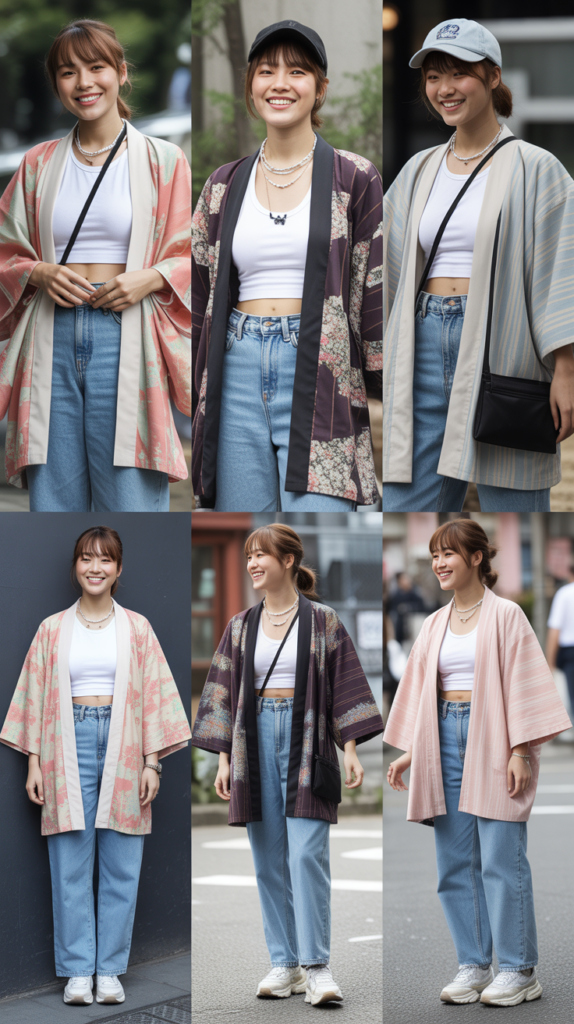
Modern kimono styling took traditional Japanese garments and integrated them into contemporary fashion, creating a bridge between heritage and street style. This look honored tradition while embracing innovation.
Fusion Elements:
- Kimono worn as jackets over t-shirts and jeans
- Obi belts styling non-traditional outfits added structure and Japanese flair
- Haori jackets paired with completely Western ensembles
- Traditional prints on modern silhouettes like mini dresses
- Geta or zori sandals worn with casual clothing
- Kimono sleeve details incorporated into Western-cut tops
- Hair accessories like kanzashi decorating modern hairstyles
- Fabric choices mixing traditional patterns with contemporary materials
Cultural Considerations:
- This approach made kimono accessible for daily wear
- Younger generations reconnected with traditional clothing
- International fashion took notice and created kimono-inspired pieces
- Balance between respect and innovation remained important
17. Oshare Kei Colorful Rock
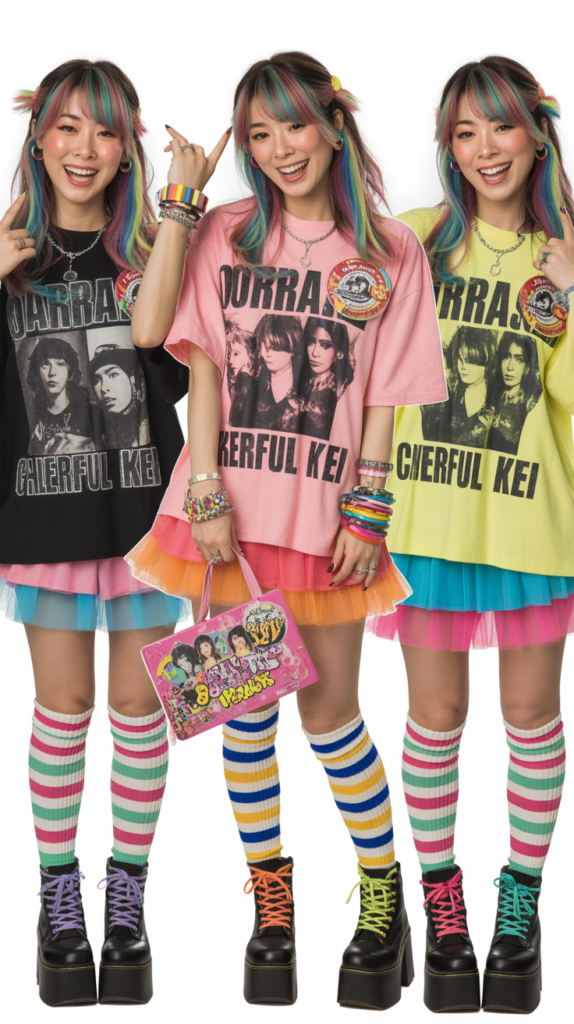
Oshare Kei brought bright colors and positive energy to Visual Kei aesthetics, creating a more approachable version of Japanese rock fashion.
This style celebrated happiness and self-expression through bold choices.
Defining Features:
- Rainbow color palettes replaced Visual Kei’s dark dominance
- Bright, often striped clothing in multiple colors per garment
- Cheerful accessories like stars, hearts, and smiley faces
- Styled hair in multiple colors created rainbow or candy-colored effects
- Platform sneakers instead of heavy boots lightened the look
- Band merchandise from cheerful Visual Kei bands
- Colorful makeup with pink or blue tones instead of dark gothic
- Playful poses in photos contrasted with Visual Kei’s serious expressions
Music Scene:
- Bands like An Cafe and LM.C defined the Oshare Kei sound and look
- This subgenre made Visual Kei accessible to younger fans
- Concert fashion became increasingly colorful and creative
- International fans could more easily adopt this approachable style
18. Ganguro Extreme Rebellion
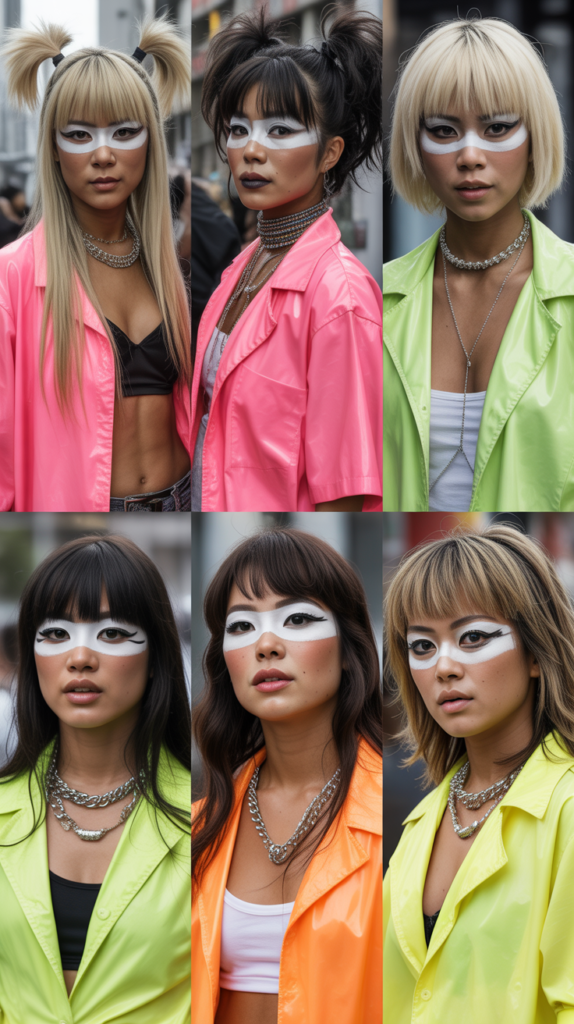
Ganguro represented the most extreme version of gyaru culture, taking every element to maximum levels. This controversial style made strong statements about beauty standards and conformity.
Extreme Elements:
- Very dark tans achieved through extended tanning salon sessions
- White makeup around eyes and lips created stark contrast
- Neon clothing in pink, orange, yellow, and green
- White or silver hair either natural or from wigs
- Extreme platform boots reaching 8-10 inches in height
- Stickers on face as permanent makeup accessories
- Hawaiian and tropical themes in clothing and accessories
- Bright, colorful contact lenses changed eye appearance dramatically
Social Impact:
- This style challenged Japanese beauty norms most directly
- Media coverage ranged from fascination to condemnation
- International misunderstanding led to both copying and criticism
- The look eventually influenced mainstream gyaru culture
19. Shironuri White Paint Art
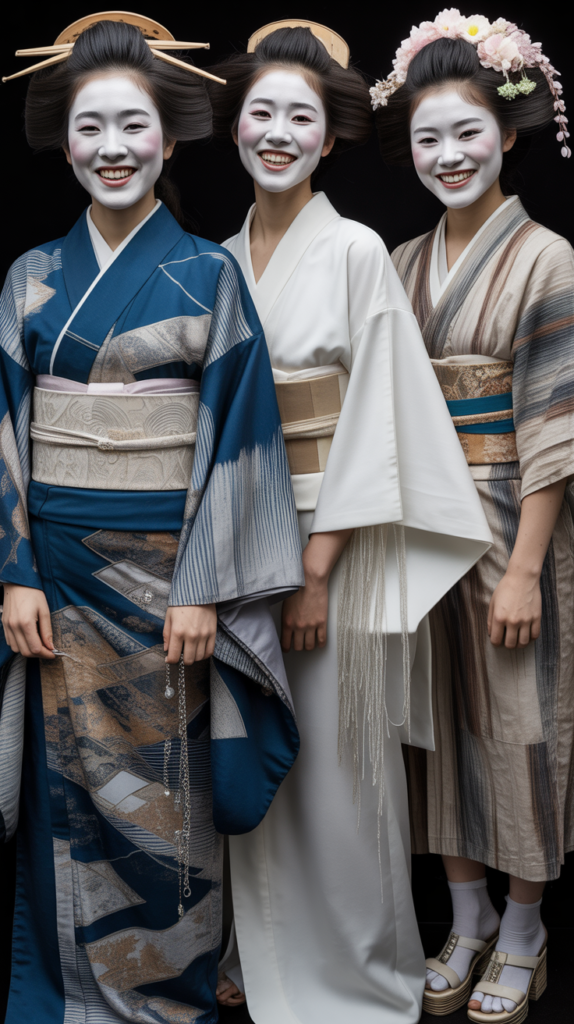
Shironuri involved painting the entire face white, creating a living canvas for artistic expression. This avant-garde style blurred lines between fashion, performance art, and cultural commentary.
Core Components:
- Complete white face paint served as the foundation
- Artistic makeup layered over white base in various colors and styles
- Elaborate costumes ranging from traditional to completely original
- Performance aspect made wearers living art pieces
- Mixed cultural references from Japanese tradition to global avant-garde
- Props and accessories enhanced the artistic presentation
- Photography focus as documentation of the art form
- Individual interpretation encouraged personal artistic vision
Notable Practitioners:
- Minori became internationally recognized for shironuri art
- This style connected to traditional Japanese theatrical makeup
- Social media helped spread shironuri globally
- Each artist developed signature styles within the white canvas
20. Otome Kei Maiden Fashion
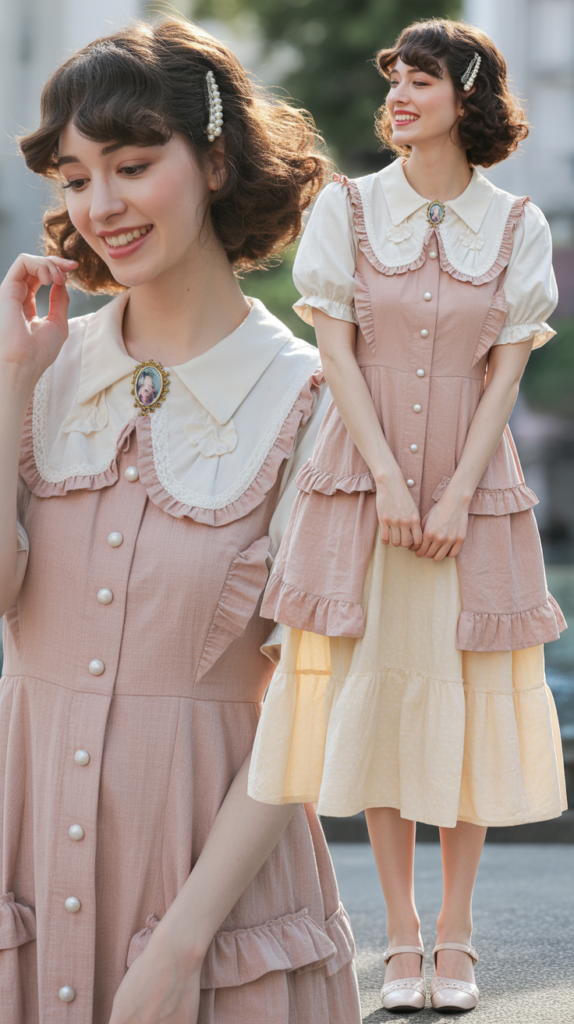
Otome Kei offered a more mature, understated femininity than Sweet Lolita while maintaining romantic sensibility. This style balanced elegance with wearability for daily life.
Characteristic Features:
- Modest, vintage-inspired silhouettes created elegant profiles
- Soft color palette included dusty pink, cream, and soft brown
- Delicate details like subtle lace and small buttons
- Romantic themes without extreme sweetness or gothic darkness
- A-line skirts and dresses fell to midi or knee length
- Cardigans and blouses layered for versatile styling
- Vintage-style shoes with modest heels
- Natural-looking makeup enhanced rather than transformed features
Versatility:
- This style worked for school, work, and social settings
- Less expensive than full Lolita coordinates
- Easier to integrate into existing wardrobes
- International brands offered similar pieces unknowingly
21. Casual Harajuku Mix
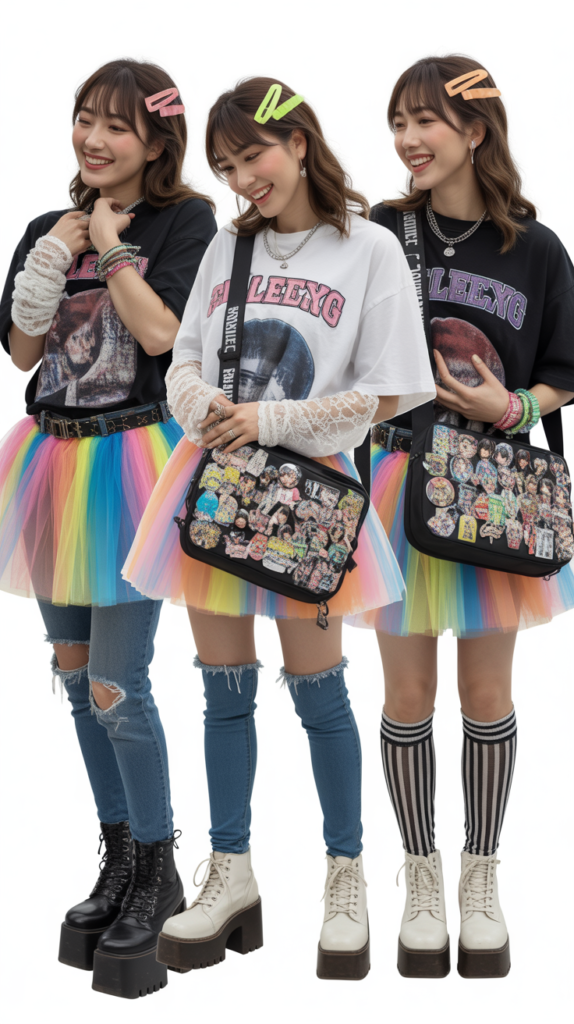
Casual Harajuku represented the everyday reality of Tokyo street fashion – mixing elements from various substyles into personal, wearable looks. This approach defined true Harajuku spirit more than any single style.
Mix and Match Philosophy:
- No strict rules allowed genuine personal expression
- Elements from multiple styles combined based on individual taste
- Thrifted and vintage pieces mixed with new items
- International influences blended with Japanese elements
- Comfortable, wearable results prioritized over perfect style adherence
- Individual creativity mattered more than brand names
- Constantly evolving as new influences emerged
- Accessible to everyone regardless of budget or body type
Core Spirit:
- Harajuku fashion valued originality over conformity
- Mixing “wrong” things created “right” personal style
- Street snaps captured real people’s creativity
- This democratic approach made Harajuku globally influential
| Style Comparison | Level of Extremity | Color Palette | Key Accessory | Typical Footwear |
|---|---|---|---|---|
| Decora Kei | Very High | Rainbow Neon | Hair Clips (50+) | Platform Sneakers |
| Gothic Lolita | Medium-High | Black & White | Parasol | Platform Mary Janes |
| Visual Kei | High | Black with Accents | Studded Choker | Platform Boots |
| Gyaru | Medium-High | Bright & Bold | False Lashes | Platform Heels |
| Fairy Kei | Medium | Soft Pastels | Vintage Toys | Platform Sneakers |
| Sweet Lolita | High | Pink & Pastels | Matching Headbow | Tea Party Shoes |
| Mori Girl | Low | Earth Tones | Nature Accessories | Flat Boots |
| Otome Kei | Low-Medium | Soft & Romantic | Vintage Brooches | Low Heels |
Conclusion
The 21 Japanese-Inspired Early 2000s Fashion Looks explored in this article represent more than just clothing choices – they embody a moment when Japanese youth culture revolutionized global fashion forever.
From the rainbow explosion of Decora Kei to the elegant rebellion of Gothic Lolita, from the extreme statements of Ganguro to the romantic whispers of Mori Girl, each style offered young people worldwide new ways to express identity, challenge norms, and build community.
These looks emerged from Tokyo’s Harajuku district but spread globally through early internet forums, street fashion magazines, and the determination of young people seeking alternatives to mainstream fashion.
Today’s fashion landscape still carries DNA from these movements – you can see their influence in contemporary streetwear, alternative fashion communities, and the ongoing celebration of personal style over prescribed trends.
Whether you lived through this era or discovered it later, understanding these 21 Japanese-Inspired Early 2000s Fashion Looks provides insight into how creativity, cultural exchange, and youthful rebellion can transform not just what we wear, but how we think about self-expression itself.
The legacy of early 2000s Japanese street fashion reminds us that fashion at its best is democratic, creative, and endlessly personal.