
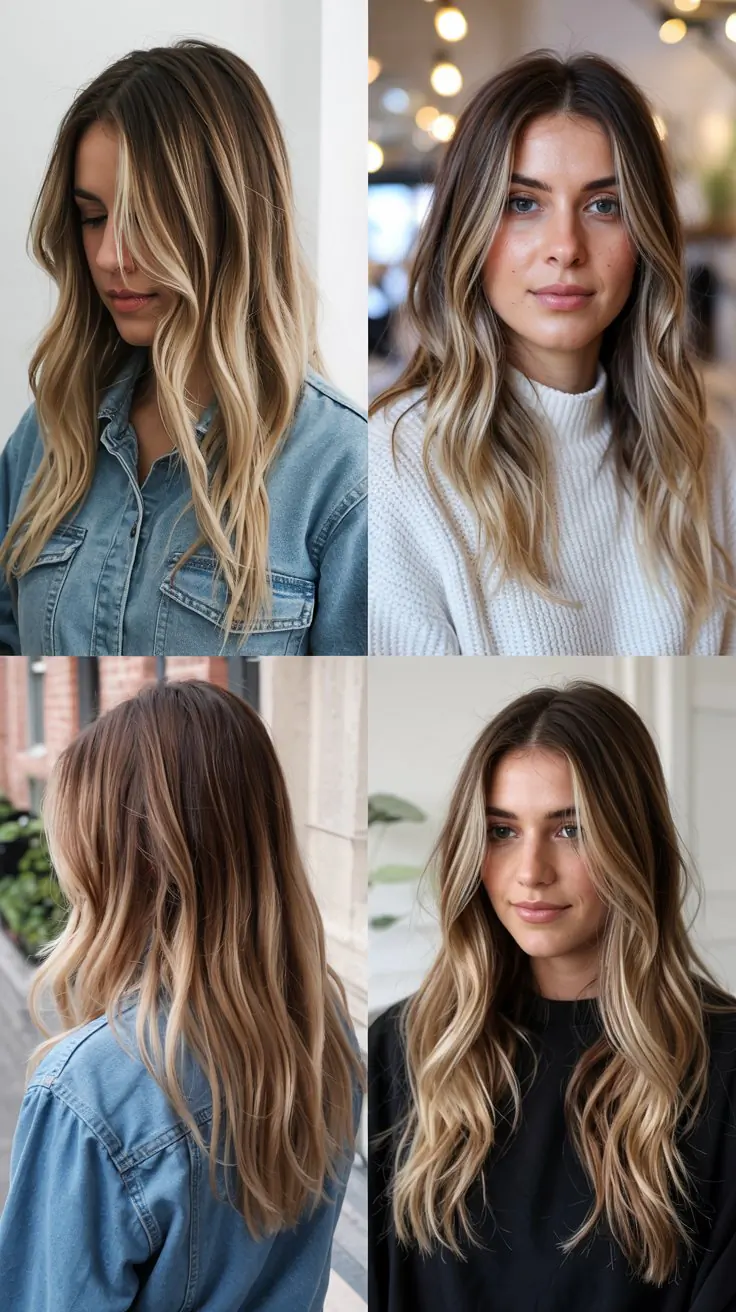
Finding a hair color that looks stunning today and even better months from now feels like discovering gold, and that’s exactly what 88 Low Maintenance Blonde Balayage Styles That Grow Out Seamlessly delivers.
Balayage has revolutionized how we approach blonde hair by creating natural-looking dimension that doesn’t require constant salon visits or leave you with harsh regrowth lines.
This comprehensive guide explores 53 different balayage techniques, from subtle sun-kissed highlights to bold transformations, all designed to complement your natural hair color as it grows.
You’ll discover specific placement strategies, color formulas for different base shades, styling tips that enhance your balayage, and maintenance routines that keep your blonde looking fresh for months.
Whether you’re a balayage beginner or looking to refine your current color, this article provides expert-level guidance on achieving that effortlessly beautiful blonde that transitions seamlessly from root to tip as your hair grows.
1. Understanding the Art of Low Maintenance Balayage
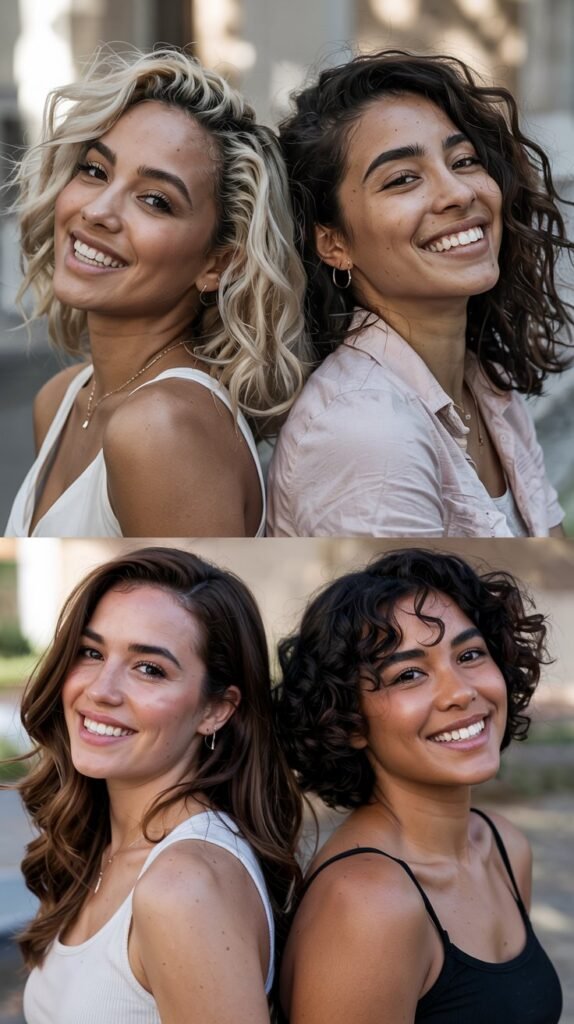
Balayage isn’t just a coloring technique—it’s a strategic approach to blonde that works with your natural hair growth pattern rather than against it.
The French word “balayage” means “to sweep,” and this hand-painted method creates soft, graduated color that mimics how the sun naturally lightens hair.
What Makes Balayage Low Maintenance:
- The technique focuses color placement away from the root area, typically starting 1-3 inches down from the scalp
- Color gradually transitions from darker roots to lighter ends, eliminating harsh lines of demarcation
- The intentional root shadow creates a natural grow-out pattern that can last 3-6 months between appointments
- Hand-painted application allows colorists to customize placement based on your hair’s natural movement and texture
- The technique uses multiple tones rather than one flat color, creating dimension that appears natural even as it grows
The Science Behind Seamless Growth:
- Traditional highlights place color directly at the root, creating obvious regrowth within 4-6 weeks
- Balayage leaves strategic depth at the root, which acts as a buffer zone during growth phases
- The soft transition means new growth blends into existing color rather than contrasting sharply
- Colorists can adjust the “melt” zone (where dark meets light) to match your hair’s growth rate
- This technique works particularly well for blonde because it embraces the multi-tonal nature of natural blonde shades
2. Buttery Blonde Balayage for Warm Skin Tones
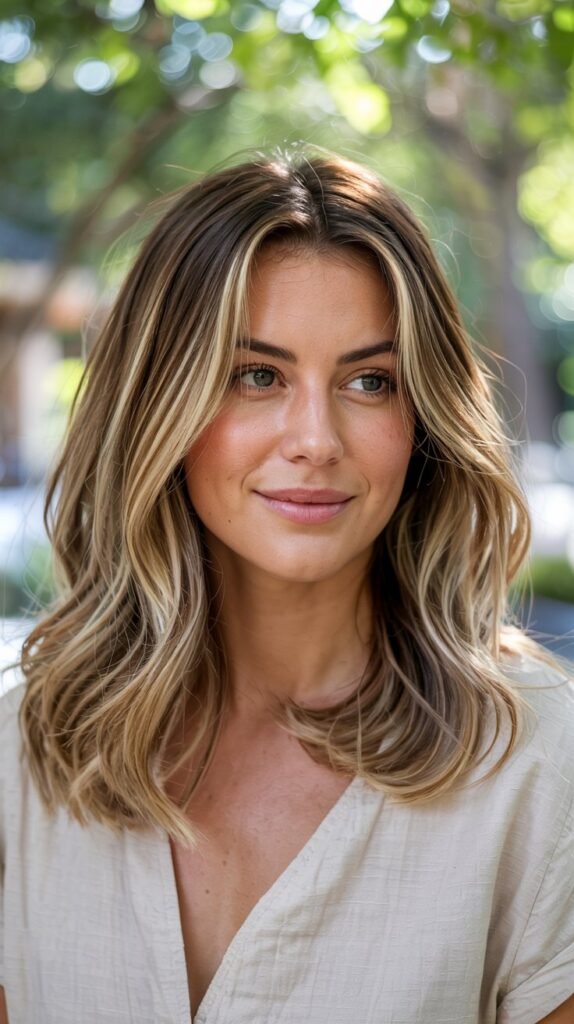
Buttery blonde creates a rich, golden finish that complements warm and olive skin tones beautifully, offering a sun-drenched look without appearing brassy or artificial.
This shade family ranges from deep golden blonde to lighter champagne tones, all unified by their warm, yellow-based undertones.
Color Formula Characteristics:
- Base colors typically range from level 6 (dark blonde) to level 8 (medium blonde) for optimal depth
- Balayage pieces are lifted to level 9-10 using warm gold, honey, and butter-cream toners
- Golden undertones prevent the ashy, cool appearance that can wash out warm skin tones
- The technique incorporates multiple warm blonde shades rather than one uniform color for natural dimension
- Colorists often use caramel lowlights alongside buttery highlights to enhance the warm color story
Best Placement Techniques:
- Face-framing pieces receive the lightest application to brighten and contour facial features
- Mid-lengths and ends get concentrated color for a sun-kissed effect that appears naturally lightened by exposure
- The back sections can remain darker, creating depth and making the overall color appear more natural
- Money piece highlights (thick, bright sections around the face) work exceptionally well with buttery tones
- Babylights can be added throughout for additional texture and movement
Maintenance and Longevity:
- Purple shampoo should be avoided as it neutralizes the golden tones you want to preserve
- Warm-toned glosses every 6-8 weeks refresh the buttery color without requiring full reapplication
- This shade family typically grows out beautifully for 4-5 months before needing a refresh
- Heat styling enhances the golden tones, making them appear richer and more multidimensional
- Natural oils actually benefit this color, adding to its buttery, glossy appearance
3. Ash Blonde Balayage for Cool Undertones
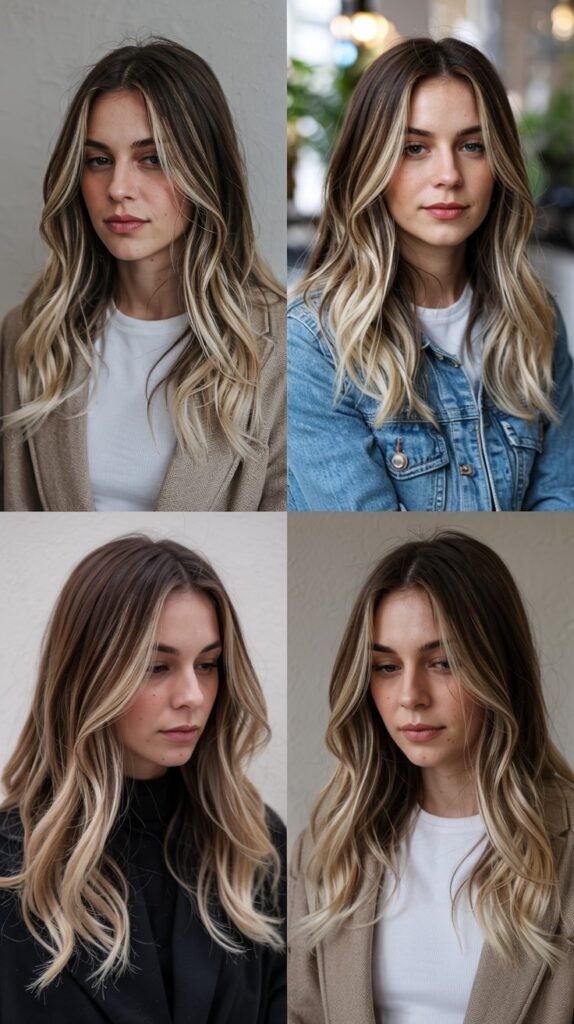
Ash blonde balayage brings a sophisticated, cool-toned elegance that flatters fair to cool skin tones while maintaining that coveted low-maintenance grow-out.
These silvery, beige, and platinum-tinged blondes create a modern, editorial look without the warmth of traditional golden blondes.
Color Science and Formulation:
- Ash tones contain blue and violet pigments that neutralize unwanted warmth and brassiness
- Base colors remain at level 6-7 to create contrast with lifted pieces at level 9-10
- The coolest ash blondes may incorporate actual silver or platinum toners for an icy finish
- Multiple ash shades (mushroom, pearl, champagne) create depth and prevent a flat, one-dimensional appearance
- Pre-lightening is essential as ash toners only work on properly lifted hair (ideally pale yellow base)
Strategic Application for Cool Tones:
- Lighter ash pieces concentrate on the crown and top layers where light naturally hits
- Cooler, darker tones remain at the nape and underneath for dimensional contrast
- The transition from root to ash blonde should span 2-3 inches for seamless growth
- Face-framing highlights can be slightly warmer (beige rather than pure ash) to prevent washing out facial features
- Balayage pieces should vary in thickness—some fine, some chunky—for natural texture
Maintaining Cool Blonde Integrity:
- Purple or blue-toned shampoos are essential for preventing brassiness between appointments (use 1-2 times weekly)
- Ash tones fade faster than warm tones, so toning glosses every 4-6 weeks maintain color integrity
- Chlorine and mineral deposits quickly turn ash blonde brassy, requiring chelating treatments for swimmers
- This color benefits from lower heat styling as excessive heat can pull unwanted warmth
- UV protection products prevent sun-induced brassiness that naturally warms cool blondes
4. Honey Blonde Balayage for Medium Brown Base

Honey blonde balayage on medium brown hair creates one of the most natural-looking color transitions, as the warm honey tones complement the underlying pigment of brunette hair.
This combination offers rich dimension with minimal maintenance, as the color story follows hair’s natural lightening pattern.
Why Honey Works on Brown:
- Medium brown hair (level 4-5) contains natural red and gold undertones that harmonize with honey tones
- The warm base prevents the balayage from appearing too contrasted or stripey
- Honey tones range from amber to golden caramel, all falling within the warm color family
- Less lightening is required compared to achieving cool-toned blonde on brown, reducing hair damage
- The color transition appears gradual and sun-kissed rather than obviously dyed
Technique Specifications:
- Colorists typically lift brown hair to level 7-8 before applying honey toners
- The balayage starts further down the hair shaft (2-3 inches from roots) to preserve brunette depth
- Ribbons of honey highlights alternate with untouched brown sections for multi-dimensional depth
- The lightest pieces concentrate at the ends, creating an ombré effect within the balayage
- Babylights and micro-highlights can be added through the brown sections for additional brightness
Growth Pattern Benefits:
- The natural brown root provides built-in shadow, eliminating the need for root touch-ups for 4-6 months
- As honey balayage grows, it creates a beautiful brunette-to-blonde gradient that appears intentional
- The warm tones of both brown and honey prevent harsh demarcation lines
- New growth actually enhances the dimensional quality rather than detracting from it
- Many clients can extend time between appointments to 6-8 months with proper at-home care
5. Platinum Blonde Balayage for Bold Statements
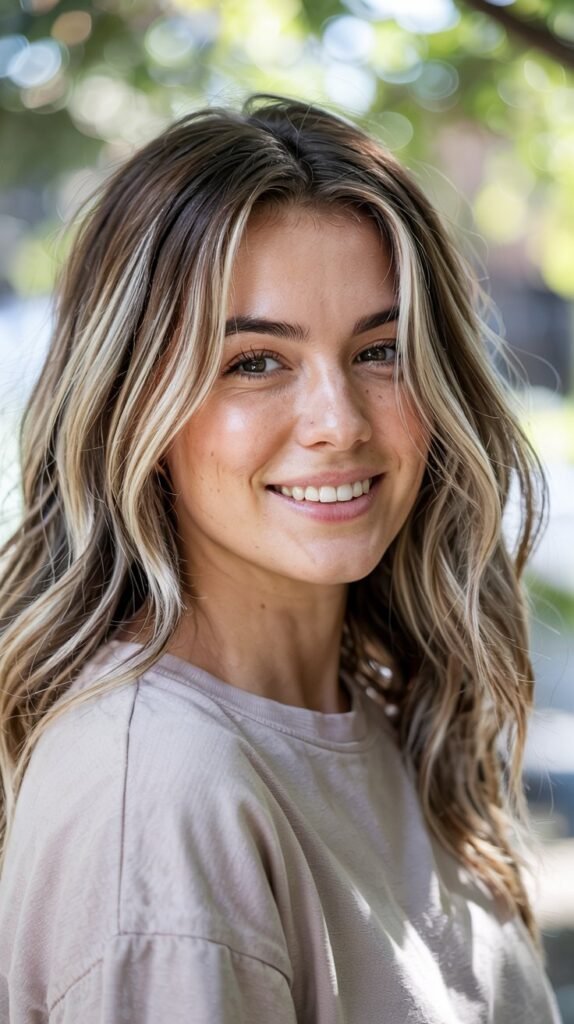
Platinum blonde balayage makes a dramatic statement while maintaining lower maintenance than all-over platinum, as the darker roots and mid-lengths anchor the look and extend time between appointments.
This high-impact style creates striking contrast while allowing for natural growth.
Achieving Platinum Through Balayage:
- Hair must be pre-lightened to level 10 (palest yellow) before platinum toners can be applied
- Multiple lightening sessions may be necessary for darker hair to prevent excessive damage
- Platinum toners contain violet pigments to neutralize any remaining yellow for pure white-blonde results
- The balayage technique concentrates platinum primarily on ends and surface layers
- Root areas remain 3-4 levels darker (medium to dark blonde) to create the low-maintenance shadow
Damage Management Strategies:
- Bond-building treatments during lightening process minimize breakage and maintain hair integrity
- Platinum pieces require deep conditioning treatments weekly to combat dryness
- Lower frequency of heat styling preserves platinum brightness and hair health
- Professional treatments like Olaplex, K18, or similar bond repair systems are essential
- Trimming ends every 6-8 weeks prevents split ends from traveling up the platinum sections
Platinum Balayage Variations:
- Full platinum ends with dark roots create a striking reverse ombré effect
- Face-framing platinum pieces with darker back sections offer dimension with less commitment
- Platinum ribbons throughout add brightness without full platinum coverage
- Shadow root technique can be adjusted deeper for clients wanting longer between appointments
- Platinum can be mixed with cool ash or warm champagne tones for customized results
6. Caramel Balayage for Natural Brunettes

Caramel balayage enhances natural brunette hair with warm, sweet tones that create sun-kissed dimension without requiring dramatic lightening.
This approach works exceptionally well for maintaining hair health while adding brightness and movement to brown hair.
Color Profile and Undertones:
- Caramel encompasses shades from light toffee to deep amber, all within the warm color spectrum
- These tones complement the natural red and gold undertones present in brunette hair
- Caramel balayage typically lifts hair 2-3 levels from the natural base for subtle enhancement
- The warmth prevents the brassy orange that sometimes occurs when lightening brown hair
- Multiple caramel shades create richer dimension than single-tone application
Placement for Maximum Natural Effect:
- Highest concentration of caramel appears where sun would naturally lighten hair (crown, face-framing, ends)
- Interior sections maintain more natural brunette for depth and body
- Caramel pieces are painted in varying widths to mimic natural sun-lightening patterns
- The technique can be adjusted to create either subtle or bold caramel contrast
- Underneath sections remain darker, creating the illusion of thicker, fuller hair
Longevity and Care Requirements:
- Caramel on brown grows out seamlessly for 4-6 months as the tones harmonize with natural color
- Warm-toned glosses refresh caramel vibrancy without requiring new lightening
- This color story requires minimal purple shampoo—only if brassiness appears
- Natural oils enhance caramel’s rich, glossy appearance rather than dulling it
- Heat styling intensifies caramel warmth, making the color appear more vibrant
7. Beige Blonde Balayage for Neutral Balance
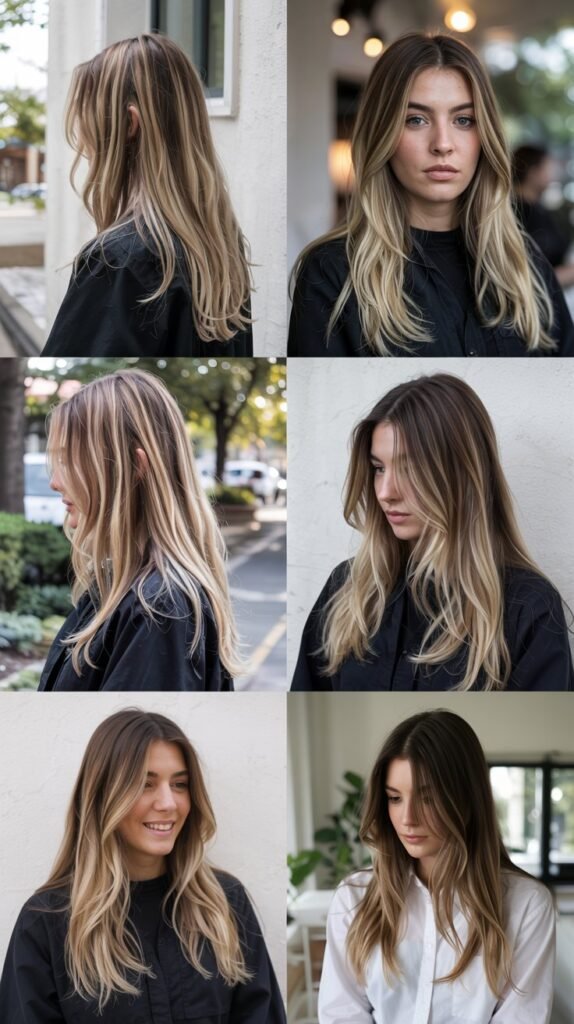
Beige blonde occupies the perfect middle ground between warm and cool tones, creating a neutral blonde that flatters nearly all skin tones.
This versatile shade prevents brassiness without the starkness of ash, making it one of the most universally flattering balayage options.
Understanding Beige Blonde:
- Beige contains equal parts warm (gold) and cool (ash) pigments for neutral balance
- This tone sits at level 8-9 on the color scale, offering brightness without extreme lightness
- The neutral quality means it doesn’t pull orange, yellow, or overly violet
- Beige works particularly well for those transitioning from warm to cool blonde or vice versa
- The shade appears natural in all lighting conditions without looking overly processed
Application Techniques:
- Root shadow typically stays 2-3 shades darker than the beige balayage pieces
- Face-framing can lean slightly warmer (sandy beige) for a softer, more flattering look
- Back sections incorporate both lighter and deeper beige tones for dimensional effect
- The balayage creates a lived-in look that appears professionally done yet naturally grown
- Beige toners are applied to pre-lightened hair at level 9 for optimal color deposit
Maintenance Advantages:
- Neutral tones require less frequent toning than pure cool or warm blondes (every 6-8 weeks)
- Both purple and blue shampoos can be used alternately to maintain neutral balance
- Beige blonde shows minimal brassiness compared to other blonde shades
- Growth appears seamless as the neutral tone transitions naturally from darker roots
- This shade works year-round without appearing too summery (warm) or wintry (cool)
8. Bronde Balayage: The Best of Both Worlds
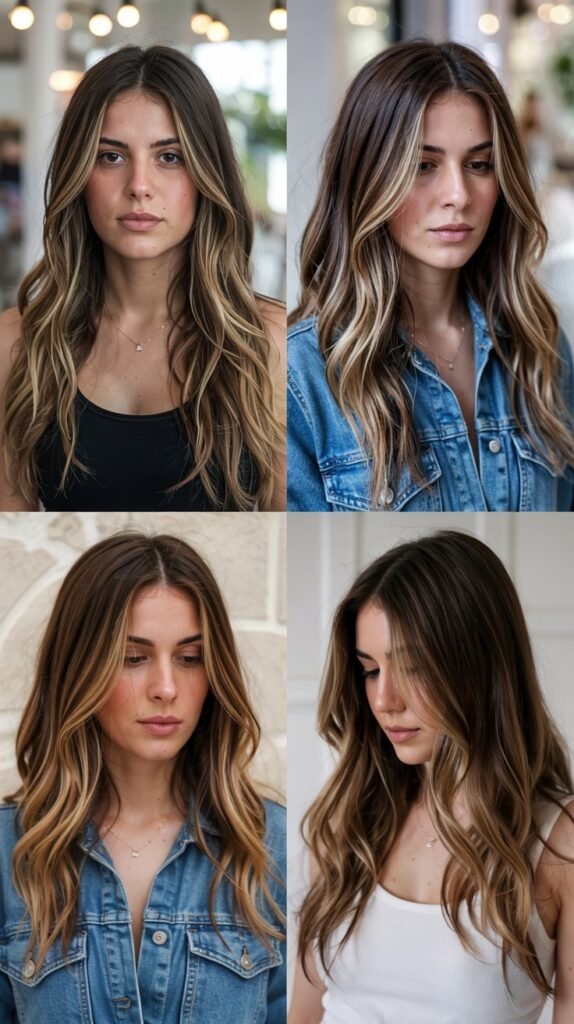
Bronde balayage combines brown and blonde into one cohesive color story, creating the ultimate low-maintenance look that never appears to have obvious regrowth.
This hybrid approach offers the brightness of blonde with the depth and dimension of brunette.
Defining Bronde:
- Bronde maintains a brown base (level 5-6) with blonde balayage pieces (level 7-9)
- The color ratio is typically 60% brown to 40% blonde for optimal balance
- Both warm and cool versions exist depending on whether gold or ash tones dominate
- The seamless blend means no clear line where brown ends and blonde begins
- Bronde works on all hair textures and adapts to different face shapes through strategic placement
Strategic Color Placement:
- Blonde pieces concentrate on surface layers and around the face for brightening effect
- Brunette depth remains throughout the interior and underneath sections
- The lightest blonde typically appears at the ends, creating subtle ombré within the balayage
- Face-framing bronde pieces should be the brightest to contour and highlight features
- The crown area receives more blonde for dimension and light reflection
Why Bronde Grows Out Best:
- The combination of brown and blonde creates a natural gradient that only improves with growth
- New growth appears intentional as it seamlessly blends with the existing brown base
- Clients can easily extend to 6-8 months between full balayage appointments
- Quick gloss treatments refresh tone without requiring new lightening
- The dimensional nature means growth never looks like “roots” but rather like intentional shadowing
9. Icy Blonde Balayage for Dramatic Cool Tones
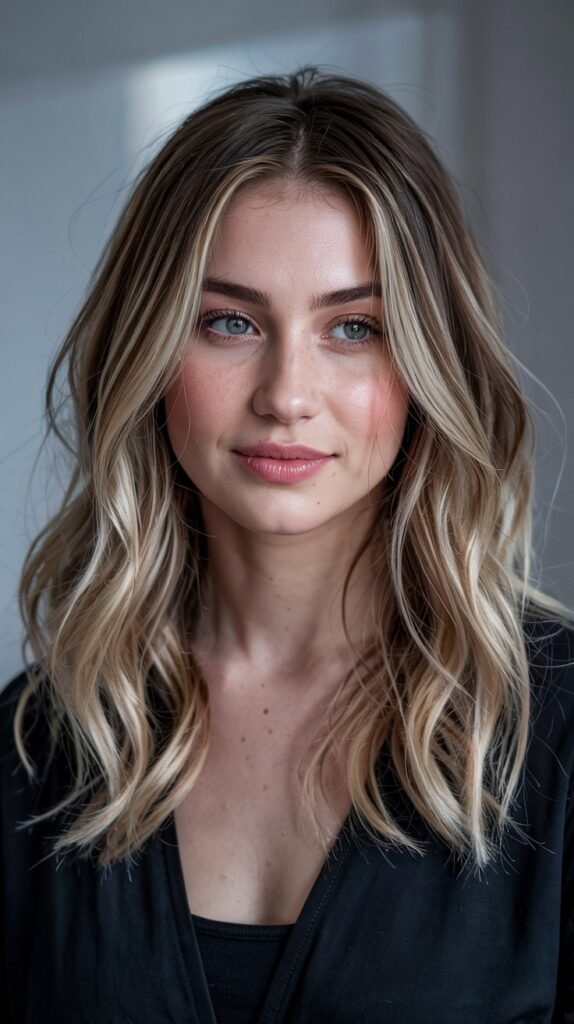
Icy blonde balayage creates the most dramatic cool-toned look, featuring near-white platinum pieces contrasted against darker roots.
This editorial style maintains lower maintenance than full icy blonde while delivering maximum impact and modern sophistication.
Achieving Icy Tones:
- Hair must be lifted to level 10+ (palest yellow to white) for icy toners to work effectively
- Icy toners contain heavy violet and blue pigments to eliminate all warmth
- The result is silver-white blonde with cool, almost blue-tinged undertones
- Root shadow for icy balayage can range from medium brown to ash blonde depending on desired contrast
- Multiple toning sessions may be necessary to achieve and maintain true icy color
Best Candidates for Icy Blonde:
- Fair to cool-toned skin benefits most from icy blonde’s stark coolness
- Natural blonde or light brown hair requires less damaging lightening
- Those committed to intensive maintenance routines maintain icy color best
- Individuals comfortable with dramatic, high-contrast looks wear this style confidently
- Hair in good condition withstands the necessary lightening process better
Intensive Care Requirements:
- Purple shampoo must be used with every wash to prevent yellowing (not just weekly)
- Weekly deep conditioning masks combat the dryness associated with high-lift blonde
- Heat protectant is non-negotiable as icy blonde hair is more vulnerable to damage
- Professional toning every 4-5 weeks maintains true icy color without brassiness
- Minimal heat styling preserves both color and hair integrity
10. Golden Blonde Balayage for Sun-Kissed Warmth
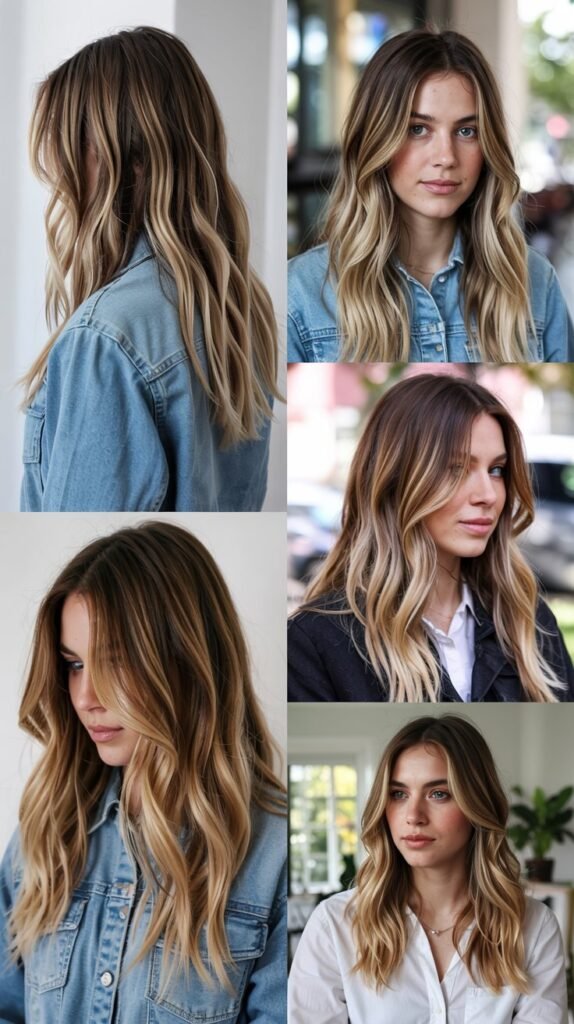
Golden blonde balayage captures the essence of summer sun-lightened hair, creating warm, radiant blonde that appears naturally kissed by sunshine.
This eternally popular shade offers vibrancy and warmth while maintaining the seamless grow-out that defines low-maintenance color.
Golden Blonde Specifications:
- Golden blonde ranges from level 7 (dark golden blonde) to level 9 (light golden blonde)
- Yellow-gold undertones dominate, creating rich warmth without appearing brassy
- The shade complements warm, olive, and neutral skin tones beautifully
- Multiple golden tones (wheat, honey-gold, butter-gold) create natural dimension
- This color family reflects light beautifully, making hair appear shinier and healthier
Application for Natural Effect:
- Highest concentration of golden blonde focuses where sun naturally hits (top layers, face, ends)
- Interior and underneath sections remain darker for depth and natural appearance
- The balayage creates ribbons of gold throughout rather than uniform blonde coverage
- Face-framing pieces receive the lightest, brightest gold for facial illumination
- Ends are typically the lightest part, creating an organic gradient effect
Maintenance and Seasonal Considerations:
- Golden blonde naturally brightens in summer sun, reducing need for frequent touch-ups
- Warm-toned glosses enhance golden vibrancy every 6-8 weeks
- This shade requires minimal purple shampoo—only if unwanted brassiness develops
- Heat styling enhances golden tones, making them appear richer and more vibrant
- Winter months may require slightly more frequent glossing to maintain warmth as sun exposure decreases
11. Champagne Blonde Balayage for Soft Elegance
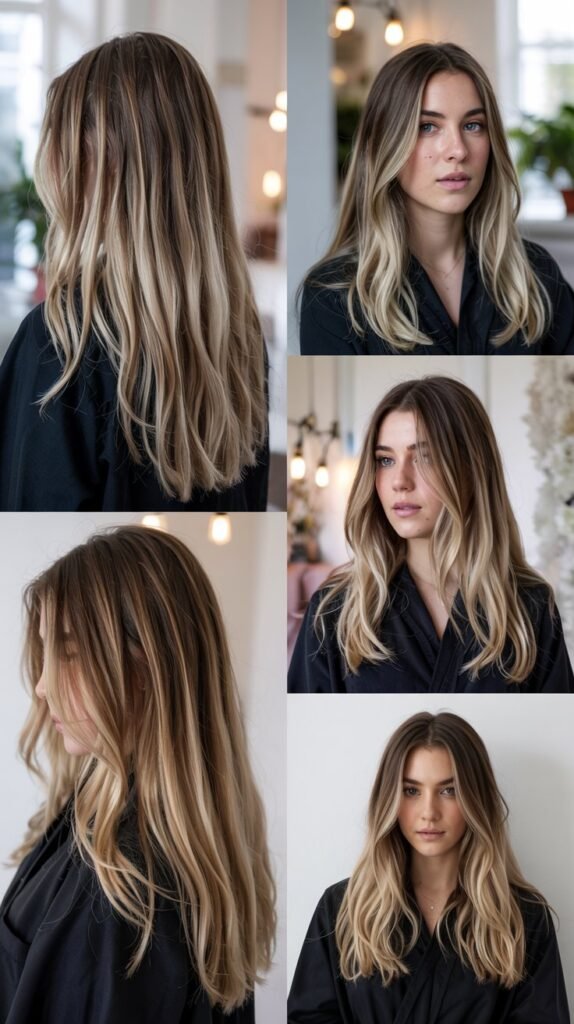
Champagne blonde offers refined elegance through its soft, muted warmth that’s more sophisticated than golden blonde yet warmer than ash.
This subtle shade creates an expensive, salon-quality look that grows out beautifully while maintaining its luxurious appearance.
Champagne Color Profile:
- Champagne blonde sits between warm and cool, leaning slightly toward warm with peachy-gold undertones
- The shade ranges from level 8-9, offering noticeable brightness without extreme lightness
- Pearl and rose-gold undertones distinguish champagne from purely golden or ash blondes
- This color has inherent softness that appears expensive and well-maintained
- Multiple champagne tones (from deeper rose-gold to lighter pearl) create sophisticated dimension
Who Champagne Flatters Most:
- Fair to medium skin tones with neutral to warm undertones wear champagne beautifully
- The soft warmth complements without overwhelming cooler skin tones
- Champagne’s subtlety suits professional environments while remaining fashion-forward
- Those seeking “expensive blonde” without high maintenance benefit from champagne’s forgiving nature
- The shade transitions beautifully through seasons without appearing too summery or wintry
Color Longevity:
- Champagne’s subtle warmth fades gracefully without turning brassy or overly yellow
- The shade maintains integrity for 6-8 weeks before requiring toning
- Growth appears intentional as champagne transitions seamlessly from darker roots
- Less dramatic than platinum or icy blonde, making grow-out less noticeable
- Quick gloss treatments refresh champagne without requiring complete re-application
12. Strawberry Blonde Balayage for Warm Red Undertones

Strawberry blonde balayage incorporates warm red-gold tones into blonde, creating a unique color that stands out while maintaining natural-looking grow-out.
This shade works particularly well for those with natural red undertones or anyone seeking blonde with warmth and personality.
Understanding Strawberry Blonde:
- Strawberry blonde combines copper-red and golden-blonde tones in balanced harmony
- The shade can range from subtle peachy-blonde to more pronounced rose-gold
- Natural red pigments in hair are enhanced rather than completely lifted away
- This color works best on light to medium bases (level 5-7) to preserve red undertones
- The warmth prevents the color from appearing flat or one-dimensional
Technical Application:
- Less aggressive lightening preserves natural red pigments rather than stripping them completely
- Strawberry toners emphasize red-gold tones rather than neutralizing them
- Balayage pieces vary in intensity from soft peachy-blonde to richer copper-blonde
- Face-framing can incorporate slightly more red for vibrant, flattering warmth
- The technique creates dimension by alternating redder and blonder tones throughout
Maintenance Specific to Strawberry Blonde:
- Red-gold shampoos (rather than purple) enhance and maintain strawberry tones
- This color fades toward peachy-gold rather than brassy yellow
- Glossing treatments should use warm, copper-infused toners to refresh vibrancy
- Sun exposure intensifies red tones naturally, reducing need for frequent salon visits
- Growth blends seamlessly as the warm base harmonizes with strawberry balayage pieces
13. Mushroom Blonde Balayage for Trendy Cool Tones
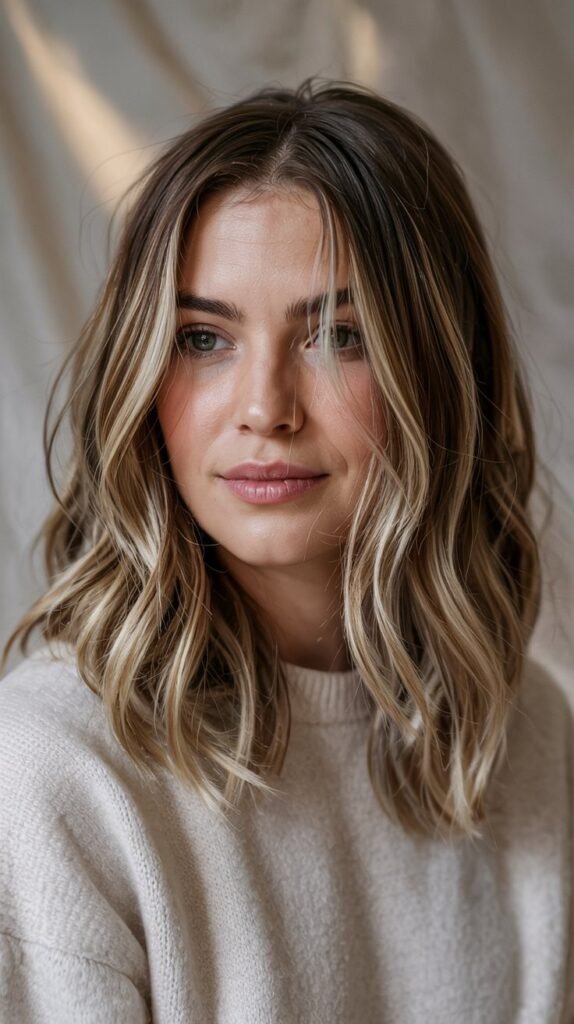
Mushroom blonde represents the coolest end of the blonde spectrum with its gray-beige-taupe blend that creates an edgy, fashion-forward look.
This trend-driven shade offers unique cool tones while maintaining the low-maintenance benefits of balayage application.
Mushroom Blonde Characteristics:
- The color combines ash blonde, gray, and taupe for a muted, earthy cool tone
- Mushroom sits at level 7-8, offering lightness without the starkness of platinum
- Cool brown undertones prevent the color from appearing too gray or silver
- This shade has an inherently modern, editorial quality popular on social media
- Multiple tones of mushroom (from warm-taupe to cool-gray) create sophisticated depth
Creating Mushroom Tones:
- Hair is pre-lightened to level 9-10 for proper cool tone deposit
- Mushroom toners contain ash, violet, and sometimes green pigments to neutralize warmth
- The cool-brown base creates necessary depth and prevents overly gray appearance
- Balayage pieces transition from deeper mushroom roots to lighter mushroom-blonde ends
- Face-framing can be slightly lighter but maintains overall cool-toned consistency
Maintaining Mushroom Integrity:
- Purple or blue shampoo prevents brassiness that quickly ruins mushroom’s cool aesthetic
- This color requires more frequent toning (every 4-5 weeks) than warmer blondes
- Mushroom fades toward ash-blonde rather than maintaining its unique taupe quality
- Hard water and minerals quickly add warmth, requiring chelating treatments
- UV protection products prevent sun-induced brassiness that’s particularly visible on cool tones
14. Blonde Balayage on Black Hair: High Contrast Drama

Blonde balayage on black hair creates the most dramatic contrast possible, offering show-stopping results while the balayage technique maintains lower maintenance than all-over blonde.
This high-impact look requires expertise and commitment but delivers unmatched visual drama.
Technical Considerations:
- Black hair (level 1-2) requires multiple lightening sessions to reach blonde (level 8-10)
- The darkest bases contain the most pigment, requiring careful, gradual lightening to prevent damage
- Balayage on black hair works best when blonde pieces are strategically placed rather than throughout
- Pre-lightener must lift through red, orange, and yellow stages before blonde toners can be applied
- Professional application is essential to minimize damage while achieving desired lightness
Strategic Placement for Drama:
- Face-framing blonde pieces create the most impactful contrast and facial brightening
- Blonde concentrates on ends and surface layers while black remains dominant underneath
- The contrast ratio is typically 70% black to 30% blonde for balanced drama
- Money pieces (thick blonde sections around face) offer maximum impact with minimal blonde coverage
- Some clients prefer blonde only on bottom layers for hidden drama when hair is up
Damage Control and Maintenance:
- Bond-building treatments during every lightening session protect hair integrity
- Weekly deep conditioning masks are non-negotiable for maintaining hair health
- The black base requires no maintenance, while blonde pieces need toning every 4-6 weeks
- Heat styling should be minimized to prevent additional stress on lightened pieces
- Regular protein treatments strengthen hair and prevent breakage at the color transition
15. Babylights Balayage for Subtle Dimension

Babylights balayage combines two popular techniques to create the most natural, sun-kissed blonde possible, mimicking the fine, delicate highlights that children’s hair naturally develops.
This approach delivers subtle brightness and dimension without obvious color placement.
Babylights Technique Explained:
- Babylights are ultra-fine highlights painted throughout hair using balayage application
- Individual babylights are typically 1-2 hairs thick, creating imperceptible color placement
- The technique requires more time than traditional balayage due to precise, delicate application
- Hundreds of tiny highlights create overall brightness rather than distinct streaks
- Babylights work throughout the entire head rather than just surface layers
Benefits of Babylights Balayage:
- The result appears as naturally sun-lightened hair rather than colored hair
- Ultra-fine highlights blend seamlessly as they grow, showing virtually no regrowth line
- This technique suits those wanting brightness without obvious highlights
- Babylights add dimension to fine or flat hair without adding harsh contrast
- The subtle nature means clients can extend time between appointments to 6-8 months
Best Applications:
- Babylights excel at softening harsh base colors or previously colored hair
- The technique brightens overall appearance without dramatic transformation
- Face-framing babylights create soft illumination without bold statements
- Babylights through lengths and ends add movement to one-dimensional hair
- Combined with traditional balayage pieces, babylights create maximum dimension
16. Face-Framing Balayage for Minimal Commitment
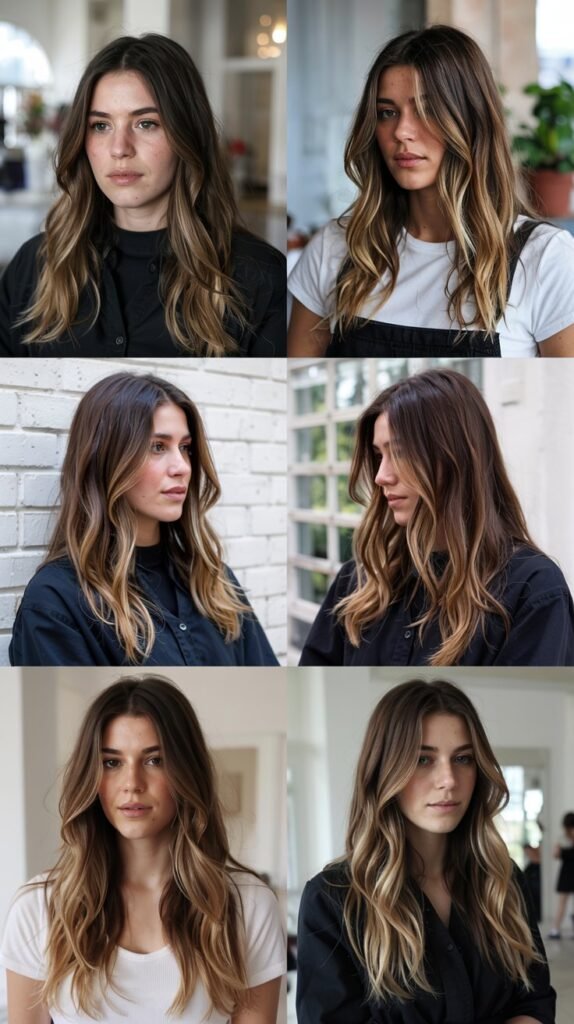
Face-framing balayage concentrates color around the face while leaving the majority of hair natural or darker, offering the brightening benefits of blonde with minimal maintenance and commitment.
This strategic approach creates maximum impact with minimal coverage.
Strategic Face-Framing Placement:
- Blonde pieces concentrate on the front 2-3 inches of hair on each side of the face
- The lightest pieces directly frame the face, gradually deepening as they move away
- Thickness of face-framing sections varies based on desired subtlety or boldness
- Some applications include blonde underneath front sections for hidden brightness when hair is tucked
- Face-framing can extend toward the crown for more visible color when hair is pulled back
Facial Contouring with Color:
- Lighter pieces around the face create an illuminating, slimming effect
- Strategic placement can emphasize cheekbones or draw attention to eyes
- Wider faces benefit from thinner face-framing pieces that create vertical lines
- Longer faces can use broader blonde sections for horizontal balance
- The technique brightens complexion by reflecting light near the face
Maintenance Advantages:
- Only face-framing pieces require toning and maintenance (every 6-8 weeks)
- Growth is minimal concern as most hair remains natural color
- Quick salon visits refresh just the front sections without full appointments
- Heat damage risk is lower as only small portions are lightened
- Many clients maintain face-framing balayage for years with minimal commitment
17. Reverse Balayage for Dimension on Blonde Hair
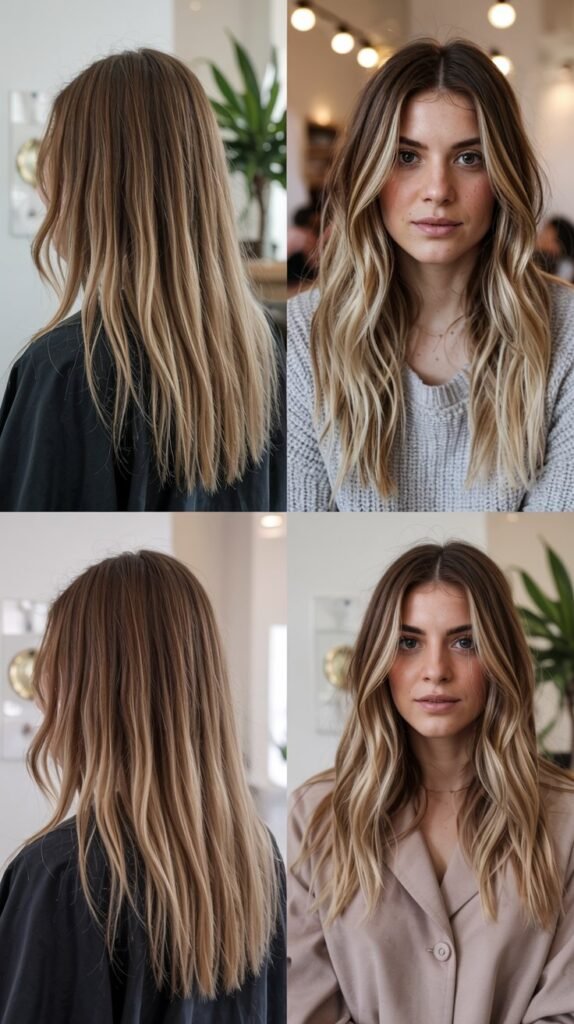
Reverse balayage adds darker tones to existing blonde hair, creating depth and dimension while extending time between appointments.
This technique benefits over-lightened blondes or those seeking more natural, multi-tonal color.
Understanding Reverse Balayage:
- The technique applies darker colors to blonde hair using the same hand-painted method
- Reverse balayage adds shades 2-3 levels darker than the existing blonde
- Darker tones are concentrated at roots and mid-lengths while ends remain lightest
- This creates natural dimension and prevents flat, one-dimensional blonde
- The technique effectively “grows out” blonde hair intentionally for low-maintenance maintenance
When Reverse Balayage Makes Sense:
- Over-processed blonde that’s become too light or uniform benefits from added depth
- Clients wanting to transition from high-maintenance blonde to lower maintenance
- Those seeking to add natural dimension to flat, single-process blonde
- Blondes experiencing excessive dryness from over-lightening find relief with added darker pieces
- Anyone wanting the “expensive blonde” look with visible root shadow and dimension
Color Selection for Reverse Technique:
- Darker shades should harmonize with skin tone (cool ash for cool tones, warm caramel for warm)
- The base blonde determines appropriate darker color (ash blonde gets ash brown, golden blonde gets caramel)
- Multiple darker tones create more natural results than single-shade application
- Darker pieces should be semi-permanent for gradual fade and flexibility
- Root area can go significantly darker (3-4 levels) for maximum low-maintenance benefit
18. Warm Blonde Balayage Color Formulas
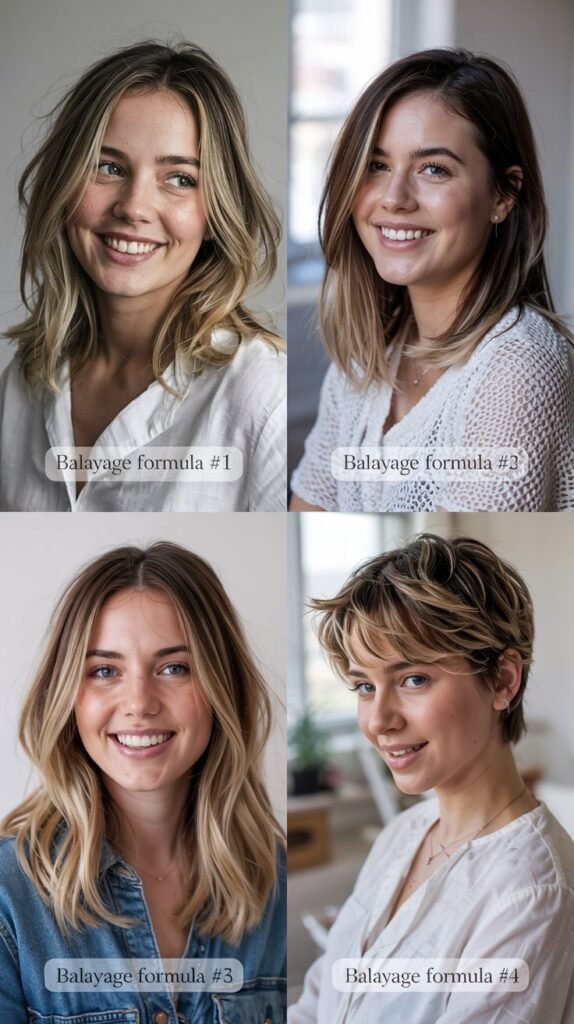
Understanding warm blonde formulas helps achieve the perfect sun-kissed result while avoiding unwanted brassiness.
These formulations create rich, golden, and honey tones that complement warm and neutral skin tones.
Formula Components for Warm Blonde:
- Base lightener lifts hair to level 8-10 depending on desired warmth intensity
- Warm toners contain gold, copper, and yellow pigments in varying ratios
- Level 8 warm blonde uses more concentrated gold for rich, deeper warmth
- Level 9-10 warm blonde incorporates lighter honey and butter-cream tones
- Multiple warm formulas create dimension rather than flat, single-tone color
Specific Warm Blonde Formulas:
| Desired Result | Lightening Level | Toner Formula | Undertone |
|---|---|---|---|
| Deep Golden Blonde | Level 8 | Gold + Copper base | Rich yellow-gold |
| Honey Blonde | Level 8-9 | Honey gold + warm gold | Amber undertones |
| Buttery Blonde | Level 9 |
Butter-cream + warm beige | Soft yellow-gold | | Caramel Blonde | Level 7-8 | Caramel + toffee gold | Red-gold undertones | | Sun-Kissed Golden | Level 9 | Light gold + neutral gold | Bright yellow-gold |
Preventing Brassiness in Warm Blonde:
- Proper pre-lightening to pale yellow prevents orange-toned results
- Warm toners should match hair’s natural undertones rather than fighting them
- Regular glossing treatments refresh warmth without additional lightening
- Heat protectant products prevent heat-induced brassiness
- Warm blondes naturally brighten in sun, requiring less frequent maintenance
19. Cool Blonde Balayage Color Formulas
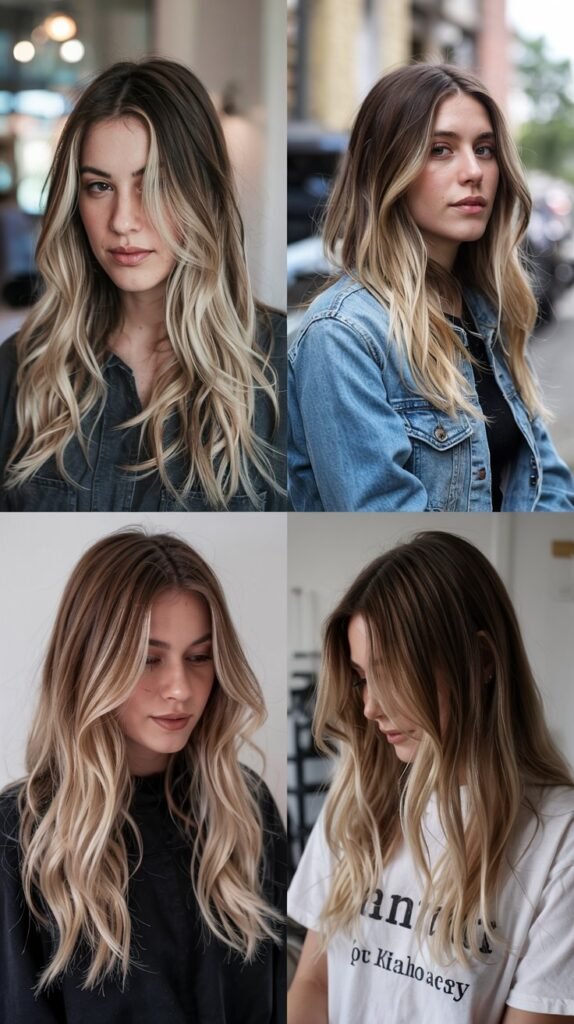
Cool blonde formulas neutralize unwanted warmth to create ash, platinum, and icy tones that flatter cool skin tones. These formulations require precise toning to achieve true cool results without brassiness.
Cool Blonde Formula Science:
- Cool toners contain violet, blue, and ash pigments to neutralize yellow and orange
- Hair must be pre-lightened to level 9-10 (pale yellow to white) for cool tones to appear true
- Insufficient lightening causes cool toners to appear muddy or greenish
- Multiple cool tones (silver-ash, pearl, platinum-ash) create sophisticated dimension
- Cool formulas fade faster than warm, requiring more frequent toning maintenance
Specific Cool Blonde Formulas:
| Desired Result | Lightening Level | Toner Formula | Undertone |
|---|---|---|---|
| Ash Blonde | Level 9 | Ash + violet base | Slight blue undertone |
| Platinum Blonde | Level 10+ | Platinum + heavy violet | Pure white base |
| Icy Blonde | Level 10+ | Platinum + blue + violet | Silver-white with blue |
| Mushroom Blonde | Level 8-9 | Ash + taupe + slight green | Gray-beige undertone |
| Silver Blonde | Level 10 | Silver + violet | Metallic gray undertone |
| Pearl Blonde | Level 9 | Pearl + soft violet | Pearlescent white |
Maintaining Cool Integrity:
- Purple shampoo neutralizes yellow, used 1-2 times weekly between salon visits
- Blue shampoo targets orange tones if present (typically on under-lightened hair)
- Cool toners require refreshing every 4-6 weeks as they fade to warmer tones
- Mineral deposits from hard water add warmth, requiring chelating treatments
- UV protection prevents sun-induced warming of cool tones
20. Balayage Placement Techniques for Different Face Shapes
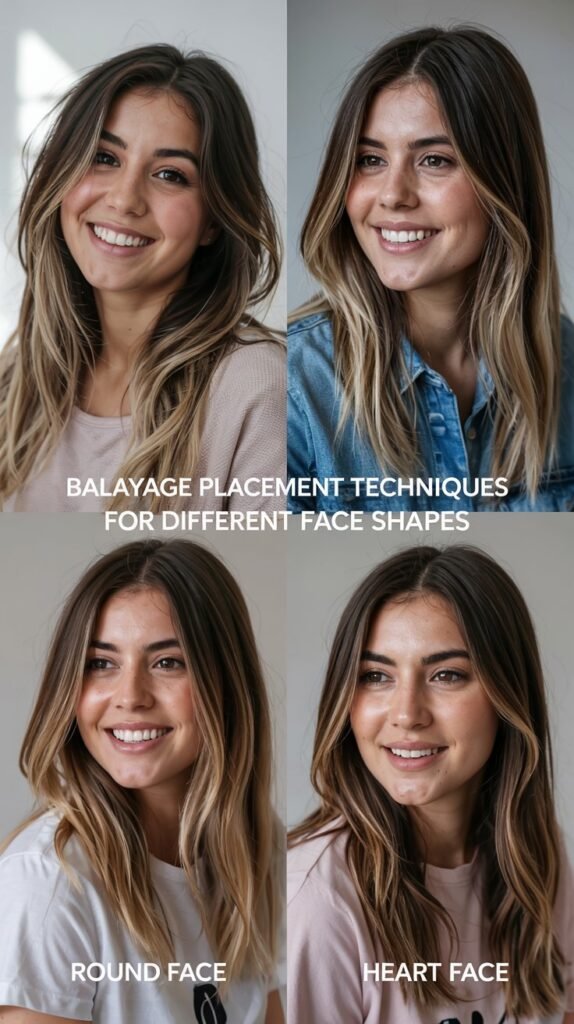
Strategic balayage placement flatters individual face shapes by creating visual balance and highlighting best features.
Understanding face shape ensures color placement enhances rather than conflicts with natural bone structure.
Round Face Shape:
- Vertical blonde pieces along the sides create elongating effect
- Avoid heavy concentration of blonde at cheekbone level, which can emphasize width
- Lightest pieces should start below the cheekbones to draw the eye downward
- Longer face-framing pieces create vertical lines that slim
- Concentration of color at crown adds height, making face appear less round
Oval Face Shape:
- Most versatile face shape can wear any balayage placement
- Balanced placement around entire face maintains natural oval proportions
- Classic face-framing with even distribution throughout works perfectly
- Can experiment with bolder placements (heavy face-framing, concentrated ends) without negative effect
- Horizontal and vertical placements both complement oval shapes
Square Face Shape:
- Soft, curved balayage placement softens angular jawline
- Avoid strong horizontal lines of color that emphasize jaw width
- Lightest pieces around forehead and chin create diagonal lines that soften angles
- Gentle curves in color placement follow and soften natural bone structure
- Balayage pieces that frame but don’t cut across jaw create flattering effect
Heart Face Shape:
- Balance wider forehead with strategic lower placement
- Lightest pieces at jawline and below create width where face narrows
- Avoid heavy concentration at temple area which can emphasize forehead width
- Face-framing that starts at cheekbones draws attention to center face
- Fuller balayage at ends balances narrower chin area
Long/Rectangular Face Shape:
- Horizontal color placement creates width and shortens appearance
- Avoid vertical, elongating placements that add length
- Concentrate brightest pieces at eye level to draw focus to center
- Balayage across cheekbones creates horizontal interest
- Even distribution rather than heavily concentrated ends prevents additional elongation
21. Textured Hair Balayage Techniques
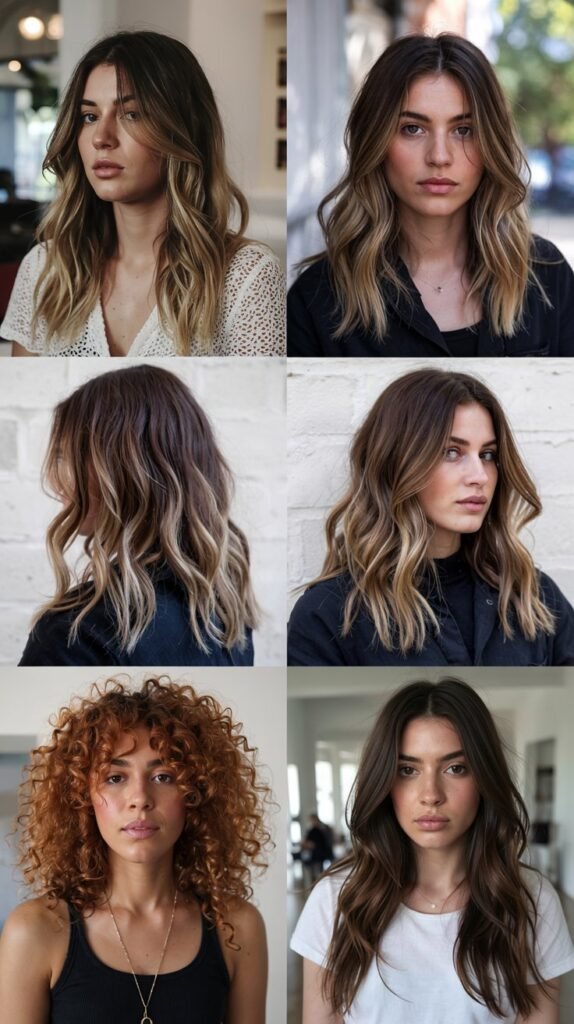
Balayage on textured, curly, and coily hair requires specialized techniques that work with curl patterns rather than against them. Proper placement enhances natural texture while creating dimension and movement.
Curl Pattern Considerations:
- Type 2 (wavy) hair shows balayage dimension well in both wet and dry states
- Type 3 (curly) hair requires dry application to see true curl pattern and appropriate placement
- Type 4 (coily) hair benefits from ribbon highlighting that creates dimension without damaging tight curl pattern
- Tighter curl patterns shrink significantly when dry, requiring adjustment in placement predictions
- Natural texture moves differently than straight hair, requiring color placement that enhances movement
Application Methods for Texture:
- Paint-on balayage works well for wavy and loosely curled hair
- Curly hair often benefits from sectioning and painting while dry to respect curl pattern
- Coily hair may use foiling or backcombing combined with balayage for controlled lightening
- Highlighting dominant curl clumps rather than random sections creates cohesive color
- Less saturation of lightener on textured hair prevents damage while achieving desired lift
Protective Measures:
- Textured hair is naturally more fragile, requiring gentler lightening processes
- Lower volume developers (20 rather than 30 or 40) reduce damage risk
- Multiple sessions prevent excessive processing that damages curl pattern
- Deep conditioning treatments before, during, and after lightening maintain texture integrity
- Bond-building treatments preserve curl elasticity during lightening process
22. Seasonal Balayage Transitions
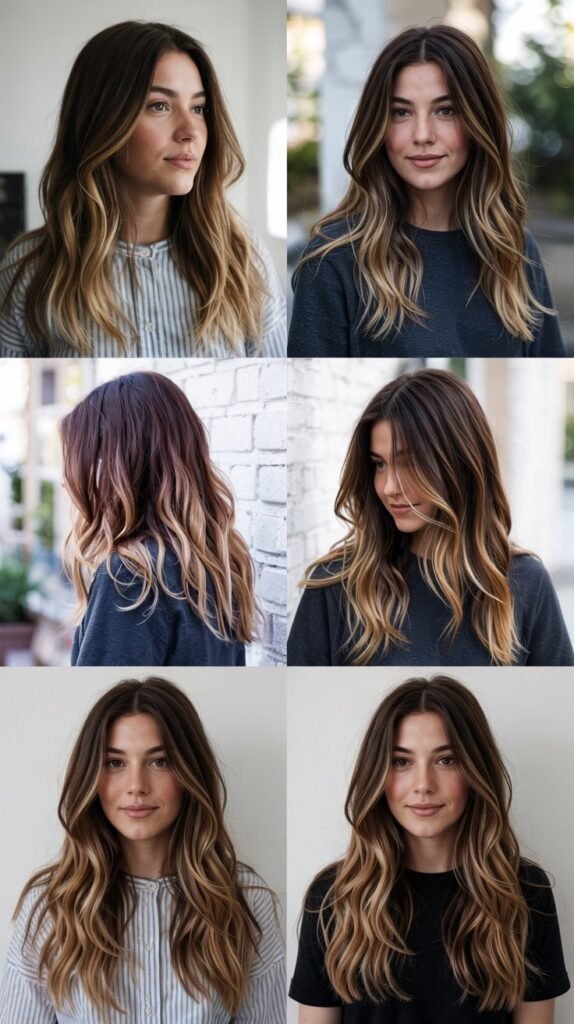
Balayage can transition between seasons with simple adjustments, allowing hair color to complement wardrobe changes and natural light shifts throughout the year while maintaining low-maintenance benefits.
Spring/Summer Blonde:
- Lighter, brighter balayage reflects increased sun exposure and warm weather
- Golden, honey, and warm tones complement tanned skin and bright sunlight
- Face-framing pieces can be lifted slightly brighter for sun-kissed effect
- Natural sun exposure intensifies warm tones, reducing need for salon visits
- Beach waves and textured styling enhance summer blonde dimension
Fall/Winter Blonde:
- Deeper, richer tones complement cooler weather and lower light conditions
- Reverse balayage or root shadow deepened for cozy, dimensional winter blonde
- Ash, beige, and cooler tones complement winter styling and fair skin
- Slightly less contrast makes blonde appear more natural in lower light
- Glossing treatments add shine that compensates for reduced natural sunlight
Transition Techniques:
- Spring: Lighten existing balayage pieces and add new bright ribbons for summer brightness
- Summer: Maintain bright tones with regular glossing and minimal new lightening
- Fall: Add lowlights or reverse balayage to deepen and create fall warmth
- Winter: Focus on toning rather than lightening, add depth through darker pieces
- Year-round: Root shadow adjustments create appropriate contrast for seasons
23. Balayage for Fine Hair vs. Thick Hair
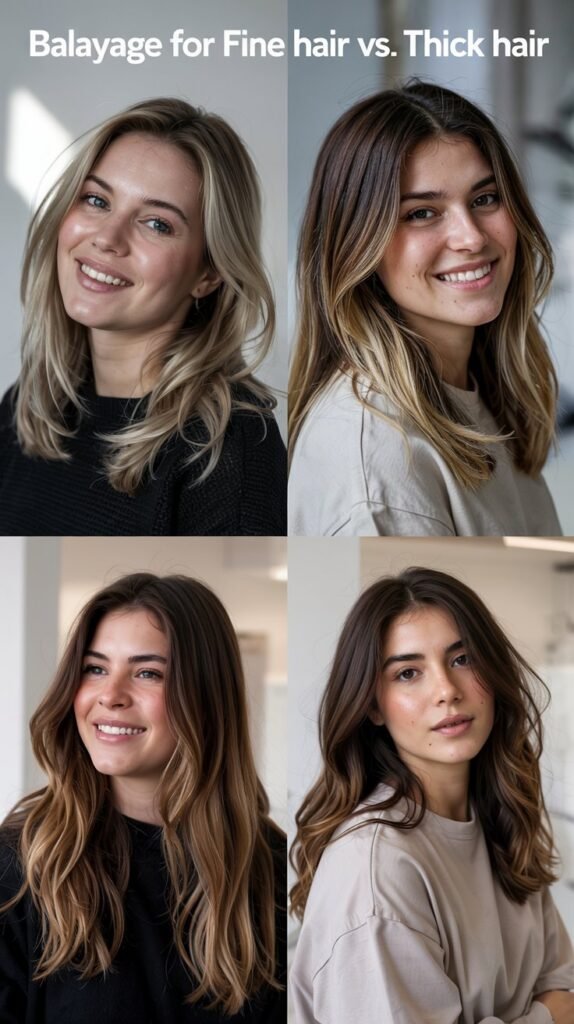
Hair density and thickness significantly impact balayage application and results, requiring adjusted techniques to optimize appearance and maintain hair health based on hair volume.
Fine Hair Balayage Strategy:
- Lighter, more frequent blonde pieces create illusion of thickness and volume
- Babylights and micro-balayage add dimension without harsh contrast that can make hair look thinner
- Avoiding excessive lightening prevents breakage that makes fine hair appear even thinner
- Strategic placement at crown and top layers creates lift and fullness
- Root shadow should be subtle to prevent harsh lines that emphasize thinness
Thick Hair Balayage Approach:
- Bolder, chunkier balayage pieces cut through density for visible dimension
- Heavier saturation ensures color develops fully through dense hair
- More aggressive contrast works because thick hair can support dramatic placement
- Interior lightening reduces visual bulk while adding movement
- Under-sections can be significantly lightened to reduce weight without affecting overall appearance
Common Challenges and Solutions:
| Hair Type | Challenge | Solution |
|---|---|---|
| Fine Hair | Color appears too harsh | Use babylights and subtle transitions |
| Fine Hair | Balayage not visible enough | Concentrate color on surface layers |
| Fine Hair | Damage concerns | Use lower volume developer, fewer sessions |
| Thick Hair | Color doesn’t show | Increase contrast and chunk size |
| Thick Hair | Appears too bulky | Lighten interior sections strategically |
| Thick Hair | Uneven processing | Ensure saturation and appropriate processing time |
24. Gray Coverage with Blonde Balayage
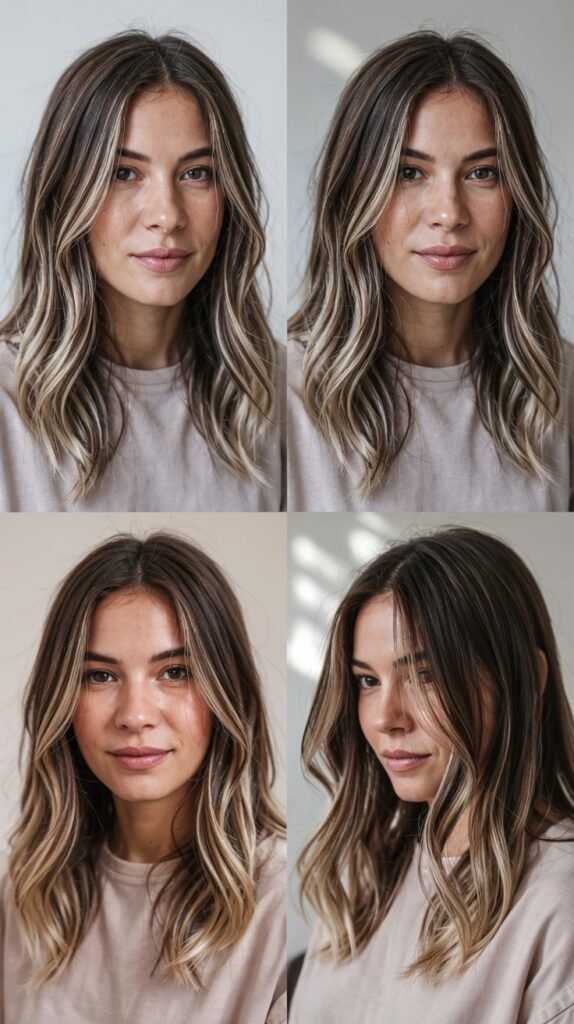
Blonde balayage can strategically cover or blend gray hair while maintaining natural-looking dimension and low-maintenance grow-out. This approach offers an alternative to traditional solid color coverage.
Gray Blending Strategy:
- Blonde balayage creates overall lightness that makes gray less noticeable
- Strategic blonde placement draws the eye away from gray-heavy areas
- Gray hair accepts color differently, sometimes resulting in brighter, more vibrant blonde
- The combination of blonde, natural color, and gray creates multi-dimensional result
- Root shadow helps blend gray regrowth seamlessly
Placement for Maximum Coverage:
- Concentrate balayage around hairline and face where gray is most visible
- Surface layer coverage ensures gray doesn’t dominate the overall appearance
- Crown area often has most gray concentration, requiring strategic highlighting
- Temples and front sections benefit from heavier blonde placement
- Back sections can have less coverage if gray concentration is lower
Technical Considerations:
- Gray hair is more resistant to color, sometimes requiring longer processing time
- Resistant gray may need pre-softening before lightening for even results
- Toning is crucial as gray can pull differently than pigmented hair
- Semi-permanent glosses can add tone to gray that balayage didn’t fully lighten
- Regular maintenance every 6-8 weeks keeps gray blended effectively
25. Money Piece Highlights in Balayage
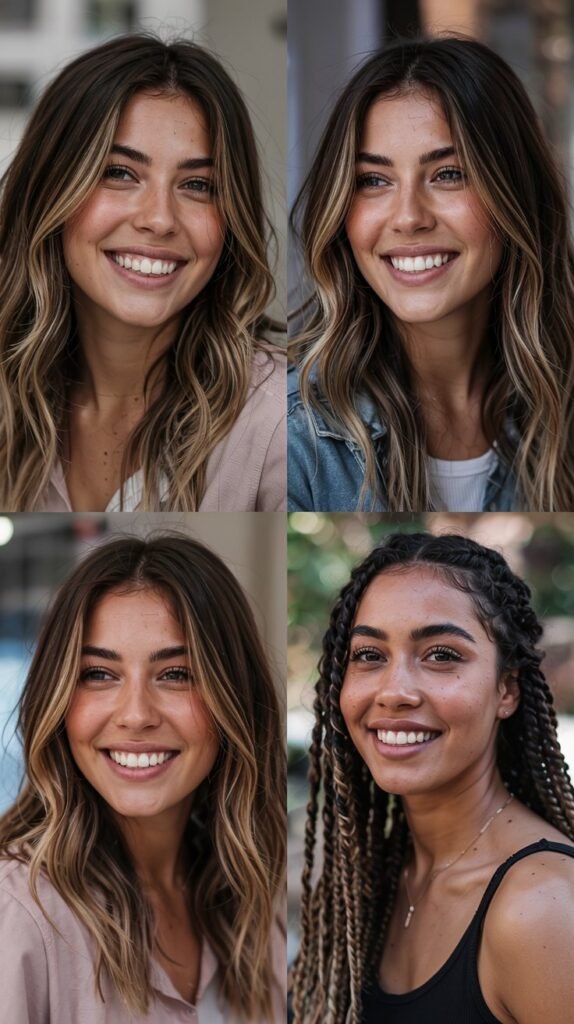
Money piece highlights—the bright, chunky sections framing the face—create maximum impact with minimal coverage. This strategic placement delivers face-brightening benefits while requiring the least maintenance.
Defining Money Pieces:
- Money pieces are thick sections (typically 1-2 inches wide) on either side of the face
- These sections are lifted significantly lighter than surrounding hair for high contrast
- The technique got its name because these strategic pieces give the most “bang for your buck”
- Money pieces typically start at the hairline and extend 2-4 inches back from the face
- They’re the lightest element in a balayage, often 3-4 levels brighter than base color
Strategic Placement:
- Classic money pieces frame both sides of face symmetrically
- Asymmetric placement (one side bolder) creates edgy, modern look
- Thickness can be adjusted based on desired subtlety or drama
- Money pieces work with any balayage or can stand alone as sole lightened element
- Placement considers parting—pieces should be visible from dominant viewing angle
Maintenance Benefits:
- Only small sections require lightening and toning maintenance
- Face-framing grows out most gracefully as it naturally transitions
- Quick touch-up appointments refresh just these sections
- Can be maintained independently from full balayage services
- Dramatically changes appearance with minimal time and cost investment
26. Balayage Toning Techniques for Longevity
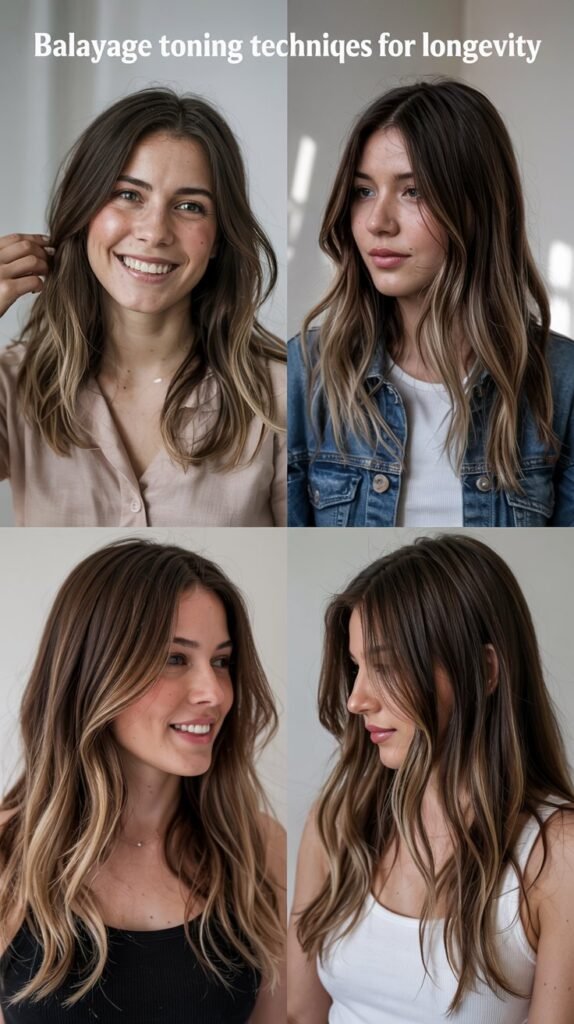
Professional toning extends balayage vibrancy and maintains desired tone between lightening appointments. Understanding toning techniques maximizes color longevity while minimizing damage and maintenance frequency.
Toning Fundamentals:
- Toning deposits color without lifting, adjusting tone of already-lightened hair
- Toners are demi-permanent or semi-permanent, lasting 4-8 weeks depending on formula
- They neutralize unwanted tones (brass, yellow) while adding desired tones (ash, gold, beige)
- Proper toning requires hair to be pre-lightened to appropriate level for tone to deposit correctly
- Multiple toning formulas can be used throughout the same head for customized results
Toning for Different Blonde Goals:
| Desired Tone | Toner Formula | Application Strategy |
|---|---|---|
| Ash Blonde | Violet + blue base | Heavy on yellower pieces, lighter on pale pieces |
| Golden Blonde | Gold + warm beige | Even application, avoiding roots |
| Beige Blonde | Neutral + slight violet | Balanced application throughout |
| Platinum | Heavy violet | Concentrated on any remaining warmth |
| Champagne | Pearl + rose-gold | Delicate application to preserve softness |
| Icy | Blue + violet | Extremely pale base required, generous application |
At-Home Toning Maintenance:
- Purple shampoo deposits violet pigment to neutralize yellow (use 1-2x weekly)
- Blue shampoo targets orange tones in under-lightened or warm blonde
- Toning shampoos should be left on 3-5 minutes for effectiveness
- Over-use of purple shampoo can create unwanted purple or gray cast
- Professional glosses every 6-8 weeks provide superior toning to shampoo alone
27. Protecting Blonde Balayage from Damage

Blonde hair requires specialized care to maintain health, prevent breakage, and preserve color vibrancy. Understanding protection strategies ensures balayage remains beautiful throughout its lifespan.
During Lightening Process:
- Bond-building treatments (Olaplex, K18, similar) added to lightener minimize damage during processing
- Lower volume developers reduce damage while still achieving lift (20-30 vol max recommended)
- Multiple gentler sessions create less damage than one aggressive session
- Proper saturation ensures even processing without needing extra time that causes over-processing
- Strand testing prevents over-lightening and subsequent breakage
Daily Protection Routine:
- Sulfate-free shampoos preserve color and natural oils that protect lightened hair
- Weekly deep conditioning masks restore moisture and strengthen hair structure
- Leave-in conditioners provide daily protection from environmental stressors
- Heat protectant sprays essential before any hot tool use (must apply before heat)
- UV protection products prevent sun damage that weakens and brasses blonde hair
Damage Prevention Strategies:
- Minimize heat styling frequency to prevent additional stress on lightened hair
- When using heat, keep temperatures below 350°F (177°C) for blonde hair
- Silk or satin pillowcases reduce friction that causes breakage while sleeping
- Regular trims (every 8-10 weeks) remove split ends before they travel up the hair shaft
- Avoid chemical treatments (keratin, perms) on heavily lightened hair that’s already compromised
28. Blonde Balayage for Different Hair Lengths
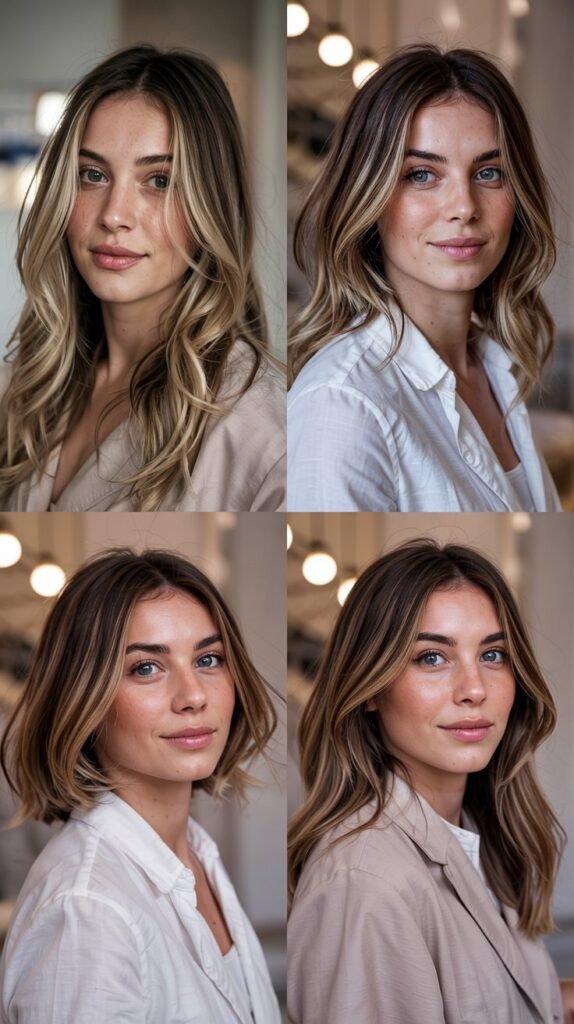
Hair length significantly impacts how balayage appears and how color should be placed for optimal results. Each length range requires adjusted techniques to maximize the balayage effect.
Short Hair (Above Shoulders):
- Limited space requires strategic, concentrated placement
- Face-framing pieces provide maximum impact on short styles
- All-over lighter balayage creates dimension on pixie cuts and bobs
- Growth is most noticeable on short hair, requiring maintenance every 8-12 weeks
- Blonde on short hair appears bolder due to proximity to face
Medium Hair (Shoulder to Mid-Back):
- Most versatile length for balayage showcases full transition from roots to ends
- Classic balayage technique with gradual lightening works beautifully
- Length allows for visible dimension without appearing too bold or subtle
- Various styling options (straight, wavy, up) all display balayage differently
- Maintenance typically needed every 3-4 months for optimal appearance
Long Hair (Mid-Back and Beyond):
- Extended length creates dramatic gradient from dark roots to light ends
- Natural ombré effect develops as balayage grows out over time
- Ends receive heaviest lightening, requiring regular trims to maintain health
- Length allows for multiple tones throughout (darker at roots, medium mid-length, lightest at ends)
- Maintenance can extend to 5-6 months as growth is less noticeable on length
29. Color Correction: Fixing Unwanted Balayage Results
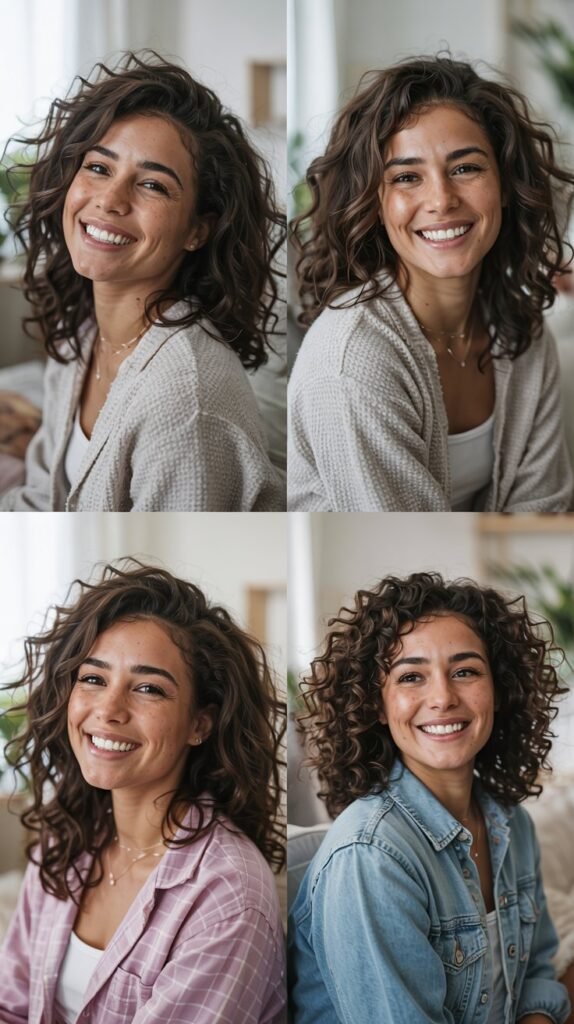
When balayage doesn’t turn out as expected, specific correction techniques can adjust color, placement, or tone. Understanding correction options helps salvage disappointing results.
Common Balayage Issues:
- Too brassy or orange: Insufficient lightening or wrong toner selected
- Too ashy or gray: Over-toning or toner applied to hair not light enough
- Patchy or uneven: Inconsistent application or processing time
- Too bold/contrasted: Blonde pieces too light compared to base color
- Too subtle: Insufficient lightening or poor placement visibility
Correction Techniques:
| Problem | Correction Solution | Process |
|---|---|---|
| Excessive Brass | Proper toning with ash/violet | Lift to pale yellow, then tone with appropriate cool formula |
| Over-toned Gray | Color fill or gloss | Add warmth back with gold/honey gloss |
| Patchy Application | Strategic additional highlighting | Fill gaps with matching balayage pieces |
| Too Contrasted | Lowlights and blending | Add darker pieces between blonde for gradual transition |
| Too Subtle | Additional lightening | Lift more pieces or increase brightness of existing balayage |
| Line of Demarcation | Smudging and root shadow | Blur harsh lines with deeper tones melted through transition |
When to Correct:
- Immediate correction (same day) risks excessive damage to hair
- Wait 2-4 weeks between correction attempts to allow hair to recover
- Some issues (excessive brass) can be corrected immediately with toning only
- Multiple correction sessions may be necessary for major fixes
- Sometimes growing out and starting fresh is healthiest option
30. Blonde Balayage Cost and Time Investment
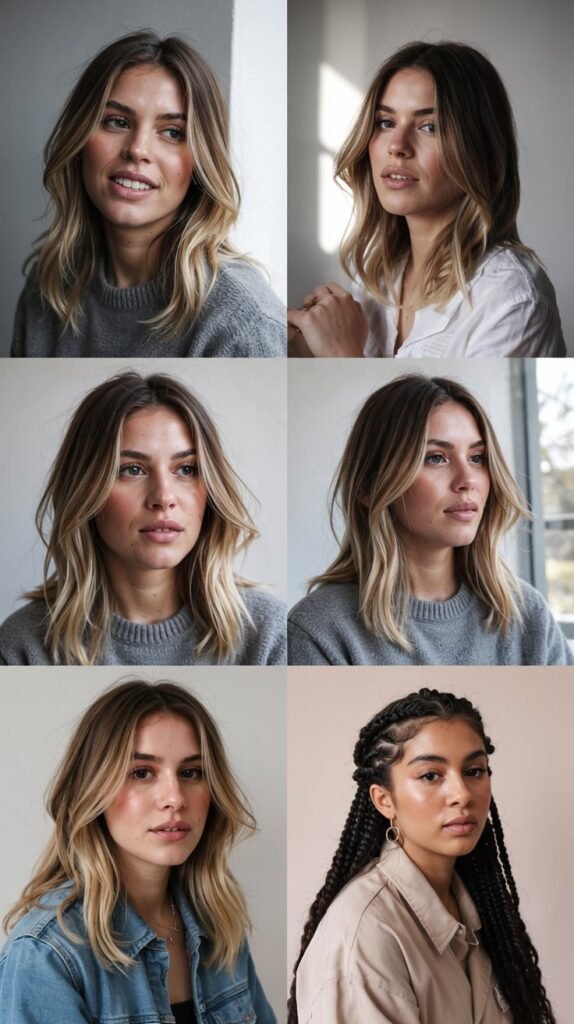
Understanding the financial and time commitment of balayage helps set realistic expectations and budget appropriately for achieving and maintaining desired blonde.
Initial Balayage Investment:
- Full balayage typically costs $200-$500+ depending on salon, location, and hair length
- Virgin hair (never colored) processes faster than previously colored hair
- Dark hair requiring significant lightening may need multiple sessions at additional cost
- Luxury salons in metropolitan areas charge premium prices ($400-$800+)
- Time investment ranges from 2-5 hours depending on technique complexity and hair condition
Maintenance Cost Breakdown:
| Service | Frequency | Typical Cost | Annual Investment |
|---|---|---|---|
| Full Balayage Refresh | Every 4-6 months | $200-$500 | $400-$1,000 |
| Toning/Gloss Only | Every 6-8 weeks | $50-$150 | $400-$900 |
| Root Shadow Touch-up | Every 8-12 weeks | $75-$200 | $300-$800 |
| Deep Conditioning | Every 4-6 weeks | $30-$75 | $240-$450 |
| Face-Framing Refresh | Every 8-10 weeks | $75-$150 | $390-$780 |
Ways to Reduce Cost:
- Extension between appointments with proper at-home care saves significant money annually
- Balayage specifically chosen for low maintenance reduces frequency of appointments
- Focus on toning appointments rather than full balayage refresh extends color lifespan
- Face-framing or money piece maintenance costs less than full-head services
- Quality at-home products prevent damage that requires expensive professional treatments
Time Commitment:
- Initial appointment: 3-5 hours for full balayage
- Maintenance appointments: 1-3 hours depending on service
- At-home care: 15-30 minutes extra per wash for specialized products
- Styling time may increase slightly as blonde requires heat protectant application
- Overall lower time commitment than high-maintenance color due to infrequent appointments
31. Blonde Balayage for Different Ages
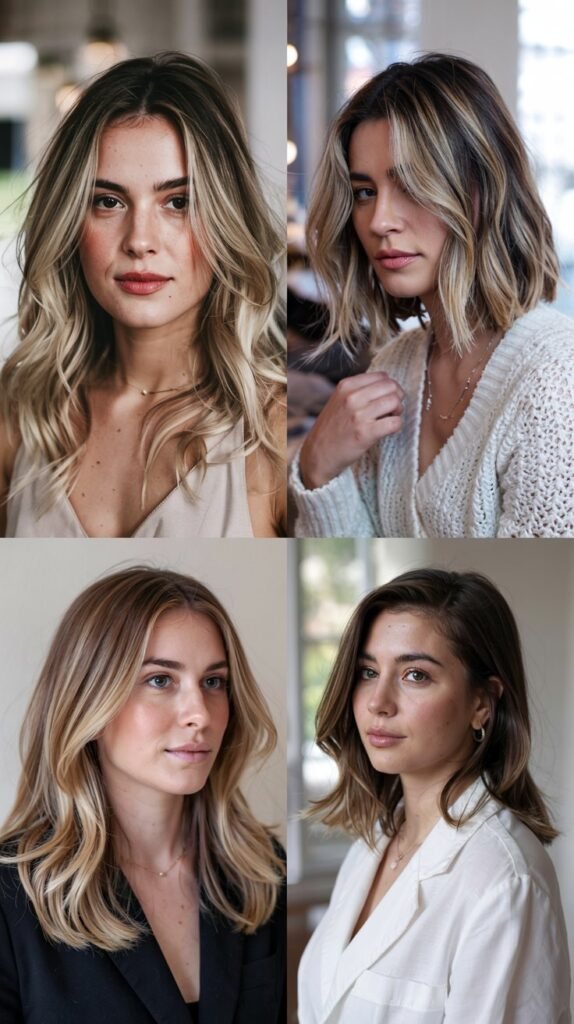
Balayage adapts beautifully across all age ranges, with strategic adjustments ensuring age-appropriate, flattering results that enhance rather than distract.
Teens and Twenties:
- Trendy, bold placements (money pieces, face-framing) popular and flattering
- Can experiment with platinum, icy, or fashion-forward tones
- Typically less gray coverage needed, allowing for more creative placement
- Vibrant, high-contrast balayage complements youthful energy
- Lower long-term damage concerns allow for bolder lightening if desired
Thirties and Forties:
- Balayage softens appearance and brightens complexion naturally
- Strategic gray blending becomes consideration for many clients
- More polished, refined placement preferred over experimental styles
- Natural, expensive-looking blonde (beige, champagne) most requested
- Face-framing brightness counteracts any skin tone changes
Fifties and Beyond:
- Lighter overall blonde softens features and brightens mature skin
- Excessive contrast can appear harsh; softer transitions more flattering
- Gray blending is primary concern for most clients
- Warm tones add youthful glow, while cool tones should be approached carefully
- Lower-maintenance options particularly valued as hair may be more fragile
Age-Specific Considerations:
- Younger clients often desire Instagram-worthy, bold results
- Mid-life clients balance professional appearance with style expression
- Mature clients prioritize low-maintenance and flattering softness
- Hair texture and condition changes with age affect appropriate lightening levels
- Skin tone changes over time may require toner adjustments for optimal flattery
32. Combining Balayage with Other Techniques
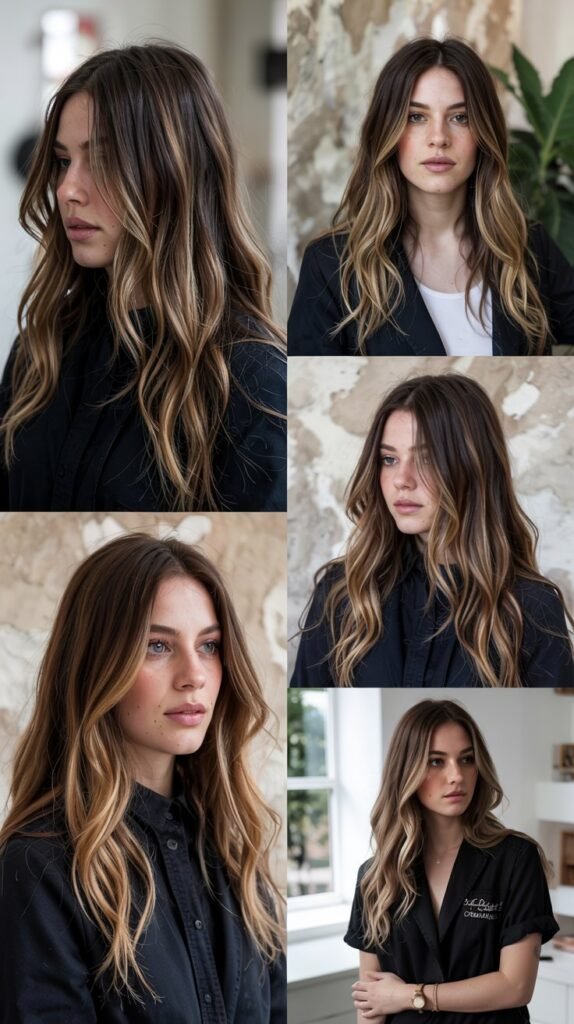
Balayage works beautifully in combination with other coloring techniques, creating unique, customized results that maximize dimension and personalization.
Balayage + Ombré:
- Balayage adds dimension within an ombré color transition
- Ombré creates dramatic dark-to-light gradient while balayage adds natural-looking texture
- Combination prevents ombré from appearing too uniform or artificial
- Particularly stunning on long hair where gradient has space to develop
- Placement focuses balayage pieces within the ombré transition zone
Balayage + Babylights:
- Babylights add fine, subtle highlights throughout
- Traditional balayage creates bolder ribbons and dimension
- Combination maximizes natural appearance with overall brightness
- Babylights fill gaps between balayage pieces for seamless color
- Especially effective on fine hair needing dimension without harsh contrast
Balayage + Lowlights:
- Lowlights add depth and dimension alongside blonde balayage
- Creates the most natural, multi-tonal color possible
- Particularly effective for preventing overly blonde, one-dimensional results
- Lowlights placed strategically in back sections create depth and body illusion
- Combination requires less frequent maintenance as multiple tones grow out seamlessly
Balayage + Root Shadow/Smudge:
- Root shadow blurs any demarcation between natural hair and balayage
- Creates ultra-low-maintenance grow-out by establishing intentional root depth
- Prevents harsh lines that develop as balayage grows
- Root shadow can be warm or cool depending on desired overall tone
- This combination offers the lowest maintenance of any balayage approach
33. Blonde Balayage Maintenance Schedule

A structured maintenance schedule maximizes balayage longevity, maintains hair health, and keeps blonde looking fresh between major appointments.
Weekly Maintenance (At Home):
- Wash with sulfate-free shampoo 2-3 times weekly to preserve color
- Apply purple or blue shampoo 1-2 times weekly to neutralize brassiness
- Deep conditioning mask once weekly to restore moisture and strength
- Heat protectant application before any hot tool use
- UV protection spray before sun exposure
Monthly Maintenance:
- Professional deep conditioning treatment or bond repair service
- Trim ends if showing split ends or damage
- Assess color fade and plan upcoming professional maintenance
- Evaluate at-home product effectiveness and adjust as needed
- Style assessment to ensure color placement still flatters current haircut
Quarterly Maintenance (Professional):
- Toning or gloss treatment to refresh color (every 6-8 weeks)
- Root shadow or smudge application if demarcation becoming visible (every 8-12 weeks)
- Full balayage refresh (every 3-6 months depending on growth rate and desired maintenance level)
- Professional bond treatment to maintain hair integrity
- Consultation to assess whether color goals or placement need adjustment
Annual Maintenance Checklist:
- Hair analysis to evaluate overall health and make any necessary changes
- Color evaluation to determine if tones need adjusting for seasonal changes
- Review maintenance schedule effectiveness and adjust frequency if needed
- Update at-home product routine based on hair’s current needs
- Consider any desired changes to placement, tone, or brightness level
34. DIY vs. Professional Balayage
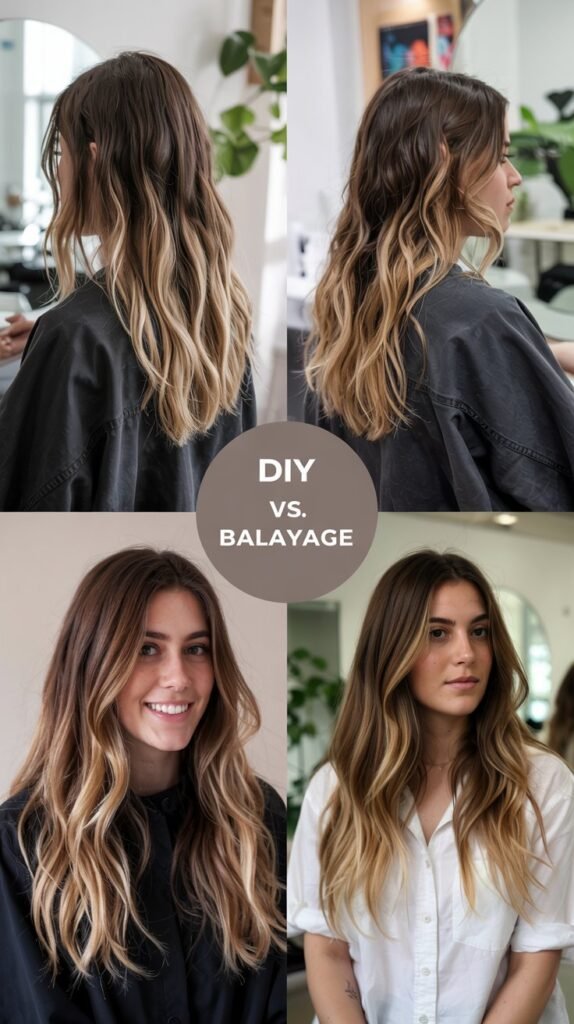
Understanding the significant differences between at-home and salon balayage helps make informed decisions about color investment and expectations.
Professional Balayage Advantages:
- Trained colorists assess hair condition, tone, and placement for optimal results
- Professional-grade products achieve better lift with less damage
- Expert application creates seamless transitions and proper dimension
- Color correction expertise if results don’t turn out as expected
- Proper tools (quality brushes, sectioning, processing caps) ensure even application
- Understanding of color theory prevents common mistakes like brassiness or patches
DIY Balayage Limitations:
- Difficult to see and reach back sections for even application
- Box blonde kits rarely include proper toners for desired results
- Over-processing and damage common without professional knowledge
- Inability to customize formula for specific hair type and desired result
- No color correction options if results are disappointing
- YouTube tutorials cannot replace years of professional training and experience
When DIY Might Work:
- Subtle touch-ups between professional appointments (not full balayage)
- Face-framing pieces only if experienced with hair color
- Previously lightened hair needing only toner refresh
- Realistic expectations about achieving professional-quality results
- Willingness to accept potential mistakes as learning experiences
- Hair is in excellent condition and naturally light (requires less aggressive lightening)
Cost-Benefit Analysis:
| Factor | Professional | DIY |
|---|---|---|
| Initial Cost | $200-$500 | $30-$80 |
| Quality Result | High likelihood | Variable, often disappointing |
| Damage Risk | Minimized with expertise | Higher risk |
| Time Investment | 2-5 hours | 3-6 hours with preparation |
| Correction Cost | N/A | $200-$600+ if professional fix needed |
| Satisfaction Rate | 85-95% | 40-60% |
35. Blonde Balayage for Different Hair Textures
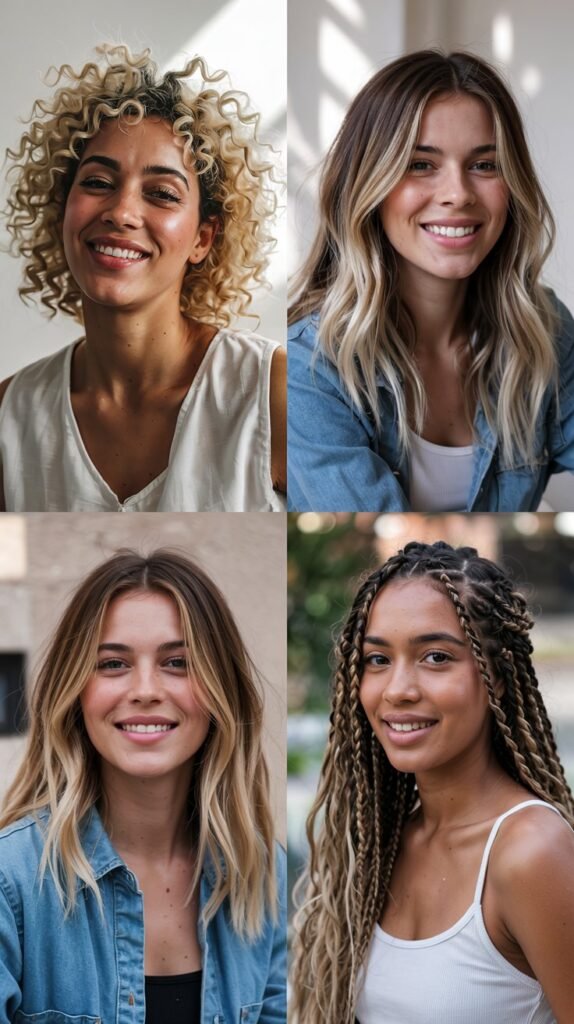
Hair texture—from straight to coily—dramatically impacts how balayage appears and should be applied. Respecting natural texture ensures optimal results.
Straight Hair (Type 1):
- Shows balayage placement most clearly and precisely
- Color transitions visible in both wet and dry states
- Traditional balayage techniques work well on straight texture
- Dimension shows best when styled with waves or texture
- Face-framing and money pieces provide maximum impact
- Maintenance every 4-5 months maintains desired appearance
Wavy Hair (Type 2):
- Natural movement enhances balayage dimension beautifully
- Color appears slightly different when wet (straight) versus dry (wavy)
- Wave pattern should guide placement for natural-looking results
- Balayage pieces follow wave formation for cohesive appearance
- Air-drying showcases balayage-wave interaction effectively
- One of the most versatile textures for balayage application
Curly Hair (Type 3):
- Must be applied on dry hair to respect curl pattern accurately
- Color concentrates on curl clumps rather than individual strands
- Dimension shows beautifully when curls are defined and styled
- Less lightening needed for visible results due to curl dimension
- Curl-friendly products essential to maintain both color and texture health
- Growth less noticeable as curls shrink and expand, creating natural blend
Coily Hair (Type 4):
- Requires specialized techniques respecting tight curl pattern
- Ribbon highlighting or sectioned application works better than free-hand painting
- Less aggressive lightening preserves curl integrity and prevents damage
- Natural hair often has beautiful dimension that balayage can enhance
- Moisture-rich products essential for maintaining both color and coil definition
- Strategic placement on outer sections shows dimension when hair is worn natural or styled
36. Blonde Balayage Color Theory
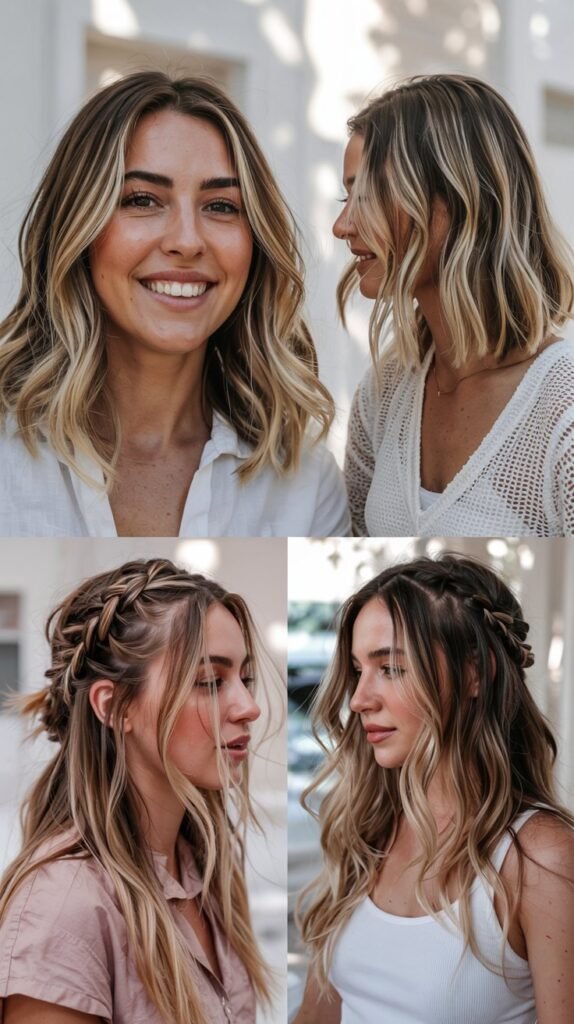
Understanding color theory ensures successful blonde balayage results, proper toning, and the ability to predict how colors will interact and fade over time.
The Color Wheel in Hair Color:
- Primary colors in hair: Red, yellow, blue
- Blonde is achieved by removing red and reducing yellow pigments
- Cool tones (ash, platinum) contain blue and violet to neutralize warm pigments
- Warm tones (golden, honey) embrace and enhance natural yellow-gold pigments
- Complementary colors neutralize each other (purple neutralizes yellow, blue neutralizes orange)
Underlying Pigments and Balayage:
- Hair lightens through stages: black → brown → red → orange → yellow → pale yellow → white
- Natural hair level determines how much lightening is needed for desired blonde
- Level 1-3 (black-dark brown): Most pigment to remove, requires significant lightening
- Level 4-6 (medium-light brown): Moderate lightening needed
- Level 7-10 (dark blonde-platinum): Already blonde, requires toning more than lifting
- Stopping at wrong stage causes brassiness (orange if stopped at orange stage, yellow if stopped at yellow stage)
Toning Theory:
| Unwanted Tone | Stage Hair Stopped At | Neutralizing Toner |
|---|---|---|
| Orange | Red-orange stage | Blue toner |
| Brass/Yellow-Orange | Orange-yellow stage | Blue + violet toner |
| Yellow | Yellow stage | Violet/purple toner |
| Greenish | Ash over warm base | Red or warm gold |
| Ashy/Dull | Over-toned | Warm gold or honey |
Predicting Color Fade:
- Cool tones (ash, platinum) fade toward warmer tones (beige, light gold)
- Warm tones (golden, honey) maintain warmth but become lighter and less saturated
- All toners fade 40-60% after 6-8 weeks regardless of initial tone
- Proper maintenance slows but doesn’t prevent natural fade
- Understanding fade patterns helps plan maintenance timing
37. Seasonal Hair Care for Blonde Balayage
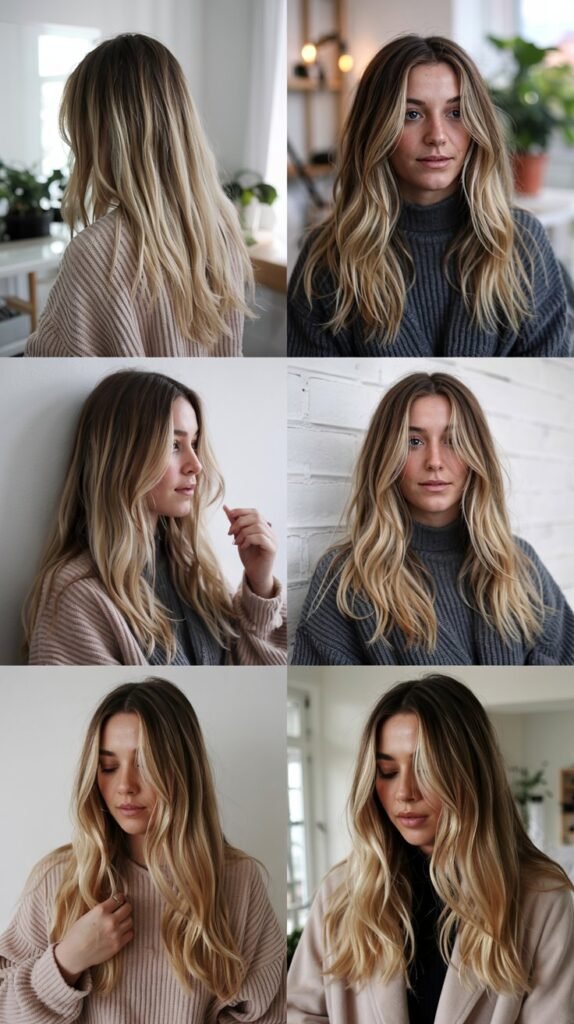
Blonde balayage requires adjusted care routines as seasons change to combat environmental stressors that affect color, texture, and health differently throughout the year.
Spring Care (Transitioning Weather):
- Increase moisture as humidity rises to prevent frizz
- UV protection becomes essential as sun exposure increases
- Chelating treatment removes winter mineral buildup
- Lighter styling products replace heavier winter formulas
- Consider refreshing balayage for brighter spring appearance
Summer Care (Sun, Chlorine, Salt Water):
- Daily UV protection spray prevents sun-induced fading and brassiness
- Pre-swim treatment (coconut oil or leave-in conditioner) creates barrier against chlorine
- Rinse immediately after swimming to remove chemicals and salt
- Weekly chelating or clarifying treatment removes buildup
- Extra conditioning combats dryness from sun, heat, and water exposure
- Natural sun exposure may brighten balayage, reducing need for salon visits
Fall Care (Cooling, Drying Weather):
- Increase deep conditioning as air becomes drier
- Consider adding lowlights or deepening base for cozy fall dimension
- Transition from UV protection to moisture-focused products
- Heat styling increases as air-drying becomes less comfortable
- Extra heat protectant essential as styling tool use increases
Winter Care (Indoor Heating, Cold Air):
- Maximum moisture necessary as heating systems dry hair significantly
- Anti-static products combat flyaways from dry air
- Protective styles minimize exposure to harsh winter elements
- Humidifier use benefits both hair and skin during winter months
- Less frequent washing as hair naturally produces less oil in dry air
- Root shadow or deeper tones create cozy winter dimension
38. Blonde Balayage Troubleshooting Guide

Common balayage problems have specific solutions. Understanding troubleshooting techniques helps maintain beautiful blonde between professional appointments.
Problem: Excessive Brassiness
- Cause: Under-toned, mineral buildup, or sun exposure
- Immediate Solution: Purple shampoo treatment left on for 5-10 minutes
- Long-term Solution: Professional toning appointment, install water softener
- Prevention: Regular purple shampoo use, UV protection, proper toning schedule
Problem: Color Fading Too Quickly
- Cause: Over-washing, hot water, poor product quality
- Immediate Solution: Reduce wash frequency to 2-3 times weekly
- Long-term Solution: Switch to professional color-safe products, use lukewarm water
- Prevention: Proper at-home maintenance routine, regular glossing treatments
Problem: Dry, Damaged Ends
- Cause: Over-processing, excessive heat styling, insufficient moisture
- Immediate Solution: Weekly deep conditioning masks, reduce heat styling
- Long-term Solution: Regular trims, bond-repair treatments, adjust routine
- Prevention: Proper conditioning routine, heat protectant use, gentler lightening techniques
Problem: Green Tint in Blonde
- Cause: Chlorine exposure, ash toner over warm base
- Immediate Solution: Tomato juice or vitamin C treatment to remove green
- Long-term Solution: Clarifying treatment, proper warm toning
- Prevention: Pre-swim protection, ensure proper hair level before ash toning
Problem: Uneven Color or Patches
- Cause: Inconsistent application or processing, previous color history
- Immediate Solution: Strategic additional highlighting to fill gaps
- Long-term Solution: Professional color correction appointment
- Prevention: Choose experienced colorist, communicate color history clearly
39. Styling Techniques That Enhance Blonde Balayage
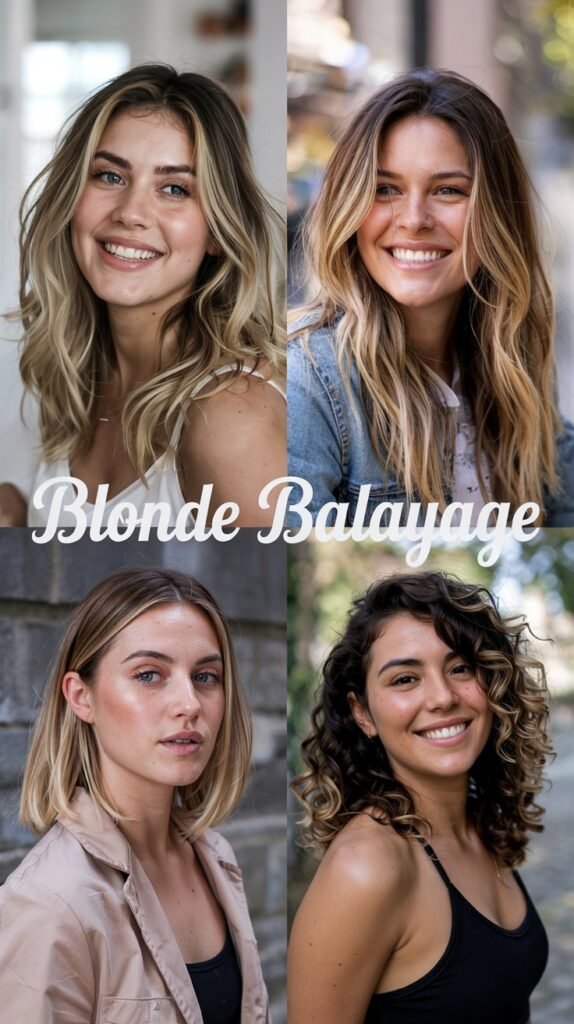
Strategic styling techniques maximize balayage dimension, creating the most impactful presentation of your blonde investment.
Techniques That Showcase Dimension:
- Loose waves create movement that displays multiple tones throughout balayage
- Beach waves with texturizing spray separate pieces, showing individual color placement
- Pulled-back styles (ponytails, buns) display dimension from different angles
- Half-up styles showcase face-framing pieces while displaying depth underneath
- Side parts create asymmetry that highlights dimensional color play
Heat Styling Methods:
- Large barrel curls (1.5-2 inch) create soft movement without tight curl obscuring color
- Flat iron waves create modern, piece-y texture that separates balayage tones
- Root lifting at crown displays lighter balayage pieces on top layers
- Curling away from face enhances face-framing balayage placement
- Lower heat settings (300-350°F) protect blonde hair while still achieving style
Air-Dry and Natural Styling:
- Mousse or texture spray on damp hair creates natural movement as it dries
- Braiding damp hair and air-drying creates waves that enhance dimension
- Natural texture (curls, waves) often displays balayage beautifully without heat
- Strategic part placement when air-drying affects how color dimension appears
- Products that enhance natural texture also enhance color variation visibility
Styles That Diminish Balayage Effect:
- Extremely sleek, flat styles may hide dimensional color variation
- Tight curls compress hair, reducing visibility of individual color pieces
- Very dark or low lighting makes all blonde appear similar, reducing dimension
- Updos that are too tight or smooth may not display color variation
- Excessive product application can darken blonde and mask subtlety
40. Best Products for Blonde Balayage Maintenance
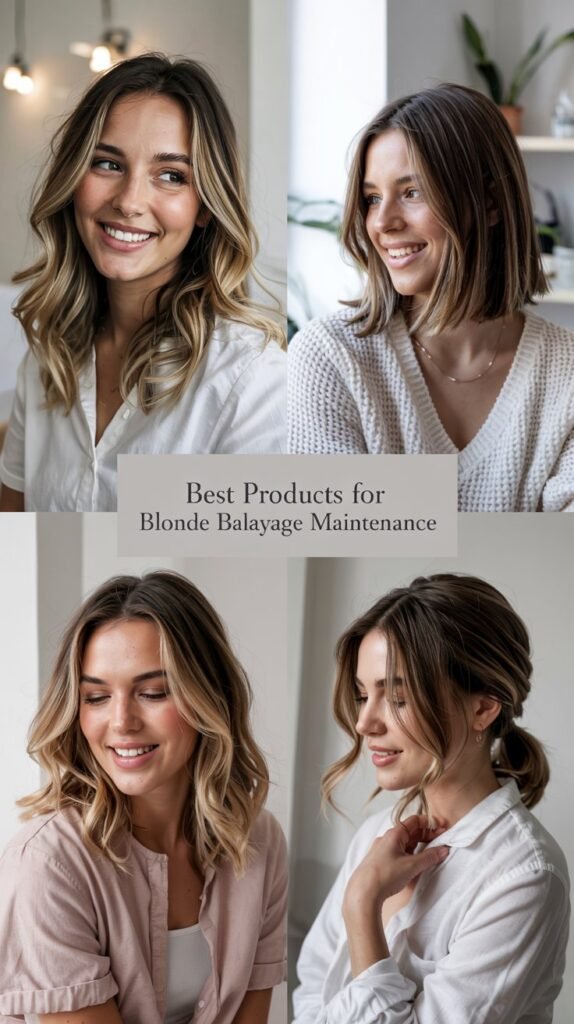
Quality products make significant difference in maintaining balayage vibrancy, preventing damage, and extending time between salon visits.
Essential Product Categories:
Cleansing Products:
- Sulfate-free shampoo preserves color and doesn’t strip natural oils
- Purple shampoo neutralizes brass in cool and neutral blondes (use 1-2x weekly)
- Blue shampoo targets orange tones in warmer blondes
- Clarifying shampoo removes buildup monthly without stripping color
- Chelating shampoo removes mineral deposits that cause brassiness
Conditioning Products:
- Color-safe conditioner provides moisture without fading
- Deep conditioning mask (weekly use) restores moisture to lightened hair
- Leave-in conditioner offers daily protection and moisture
- Bond-repair treatment (K18, Olaplex) maintains hair integrity
- Protein treatment (monthly) strengthens damaged or over-processed hair
Styling and Protection:
- Heat protectant spray essential before any hot tool use
- UV protection spray prevents sun damage and fading
- Texturizing spray enhances dimension without weighing hair down
- Glossing serum adds shine that makes color appear more vibrant
- Anti-humidity products maintain style in moisture-heavy environments
Professional vs. Drugstore:
| Factor | Professional Products | Drugstore Products |
|---|---|---|
| Ingredient Quality | Higher concentration actives | More fillers, fewer actives |
| Color Longevity | Extends color 30-50% longer | Standard longevity |
| Cost per Use | Higher upfront, lasts longer | Lower upfront, used quickly |
| pH Balance | Optimized for colored hair | May be too harsh |
| Results | More noticeable | Variable |
41. Blonde Balayage During and After Pregnancy

Pregnancy brings hormonal changes affecting hair texture and color considerations, requiring adjusted approach to balayage during and after this life stage.
Balayage Safety During Pregnancy:
- Most medical professionals consider balayage safer than traditional highlights during pregnancy
- Balayage keeps color away from scalp, minimizing chemical exposure concerns
- Second and third trimesters generally considered safest for any color services
- Well-ventilated salon environment essential to minimize fume exposure
- Many expectant mothers continue regular balayage without complications
Hormonal Effects on Hair Color:
- Pregnancy hormones can alter how hair accepts and holds color
- Some women experience more resistant hair during pregnancy
- Color may process differently than pre-pregnancy, requiring formula adjustments
- Hair texture changes during pregnancy may affect how balayage appears
- Existing balayage may shift tone due to hormonal changes even without new application
Postpartum Hair Changes:
- Postpartum shedding (typically 3-6 months after delivery) is normal
- Shedding can make existing balayage appear patchy or uneven
- Hair texture often changes postpartum, affecting how color appears
- Hormonal fluctuations affect oil production, changing washing frequency needs
- Many women resume normal balayage schedule 3-6 months postpartum
Breastfeeding Considerations:
- Balayage is generally considered safe during breastfeeding
- Minimal chemical absorption through scalp due to off-scalp application
- Well-ventilated environment still recommended
- Most mothers return to regular color schedules while nursing
- Individual comfort level and medical provider guidance should determine decisions
42. Transitioning from Dark Hair to Blonde Balayage
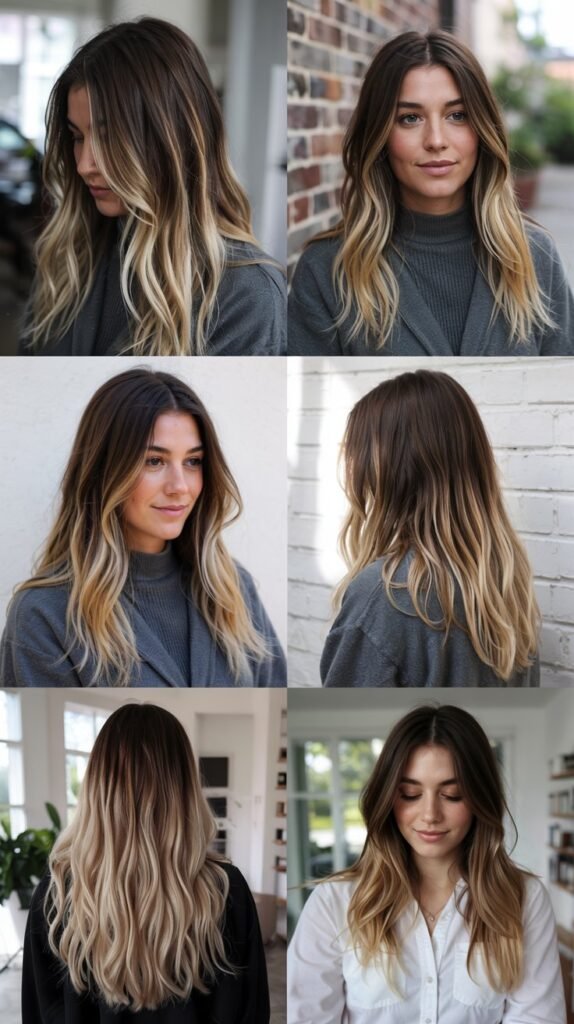
Moving from dark hair to blonde requires patience, strategy, and realistic expectations. Proper transition techniques minimize damage while achieving desired blonde goals.
Realistic Timeline:
- Level 1-3 (black-very dark brown): 6-12 months for healthy transition to blonde
- Level 4-5 (dark-medium brown): 3-6 months for optimal blonde results
- Level 6-7 (light brown-dark blonde): 1-3 months to desired blonde
- Rushing process causes excessive damage and potential hair breakage
- Multiple sessions spaced 6-8 weeks apart maintain hair integrity
Session-by-Session Transition:
Session 1: Establish balayage placement and lift 2-3 levels
- Creates initial dimension and begins lightening process
- Results will appear warm (caramel, honey) on dark base
- Heavy conditioning treatment to prep for future sessions
Session 2 (6-8 weeks later): Continue lifting existing pieces and add new ones
- Brings initial balayage to desired blonde level
- Adds additional pieces for more coverage
- Toning begins to neutralize warmth
Session 3 (6-8 weeks later): Achieve final placement and tone
- All balayage pieces reach desired blonde level
- Full toning for consistent color throughout
- Root shadow or smudging for seamless grow-out
Ongoing: Maintenance and refinement
- Regular toning maintains desired tone
- Strategic additions for continued dimension
- Focus shifts from lightening to maintenance
Damage Management During Transition:
- Bond-building treatments with every lightening session
- Weekly deep conditioning masks between appointments
- Minimize heat styling, especially in early transition phases
- Regular trims remove compromised ends
- Protein treatments maintain strength during lightening process
43. Blonde Balayage in Professional Settings

Balayage offers professional-appropriate blonde that balances style expression with workplace standards, creating polished appearance suitable for corporate environments.
Conservative Professional Environments:
- Subtle, natural-looking balayage blends best in traditional corporate settings
- Beige, champagne, and soft caramel tones appear more conservative than platinum or icy
- Lower contrast between base and balayage appears more understated
- Face-framing only or money pieces offer brightness without bold statement
- Warm, natural tones generally perceived as more professional than cool fashion colors
Creative Professional Environments:
- Bolder placements (heavy face-framing, platinum pieces) acceptable and even celebrated
- Trendy tones (mushroom, icy, rose-gold) showcase personal style appropriately
- Higher contrast adds personality while remaining polished
- Creative industries often appreciate fashion-forward color choices
- Individual expression through color may be seen as asset rather than liability
Industry-Specific Considerations:
Finance/Law: Most conservative; subtle beige or champagne balayage safest Healthcare: Natural-looking color appropriate; avoid extreme platinum or unconventional tones Education: Depends on level and location; generally lean toward natural, professional tones Tech/Startup: More accepting of bold color choices and creative expression Retail/Hospitality: Varies by brand; upscale brands may prefer subtle, while trendy brands embrace bold Creative Industries: Most accepting; bold, fashion-forward balayage often welcomed
Maintaining Professionalism:
- Well-maintained color (no visible brassiness) appears more professional than faded color
- Styled hair showcases balayage professionally versus unstyled
- Root shadow or smudging creates polished, intentional look rather than grown-out appearance
- Regular trims maintain polished appearance
- Appropriate color tone for skin tone appears more professional than mismatched shades
44. Blonde Balayage Hair Extensions and Wigs

Extensions and wigs offer temporary blonde balayage without committing to permanent color, providing flexibility for special occasions or color experimentation.
Balayage Hair Extensions:
- Clip-in extensions with balayage create instant dimension and length
- Permanent extensions (tape-in, fusion, sew-in) with balayage blend seamlessly with natural hair
- Extensions can add balayage without lightening natural hair at all
- Matching extension tone to desired balayage ensures natural appearance
- Human hair extensions can be toned to perfectly match custom balayage
Color Matching Strategies:
- Bring hair extension samples to salon appointment for precise matching
- Extensions should match both base color and balayage tones for seamless blend
- Multiple toned extensions (darker, medium, lighter) create realistic dimension
- Strategic extension placement concentrates color where balayage would naturally fall
- Professional color matching services ensure extensions blend perfectly
Balayage Wigs:
- Full lace or lace-front wigs with balayage offer complete transformation without commitment
- Human hair wigs can be custom-toned to achieve specific balayage tones
- Synthetic wigs available in popular balayage patterns at lower price points
- Wigs protect natural hair from lightening damage while experimenting with blonde
- Ideal for those unable to lighten natural hair due to damage or chemical restrictions
Maintenance of Extensions and Wigs:
- Clip-in extensions require same care as natural blonde hair (purple shampoo, conditioning)
- Permanent extensions need professional maintenance every 6-8 weeks for positioning
- Synthetic wigs cannot be toned but maintain color without fading
- Human hair wigs require same maintenance as natural balayage hair
- All extensions and wigs benefit from heat protectant and gentle styling
45. DIY Maintenance Between Professional Appointments
Strategic at-home maintenance extends balayage vibrancy and manages minor issues between salon visits, maximizing color investment.
Safe DIY Toning:
- Purple shampoo for yellowing blonde (leave 3-5 minutes, not longer)
- Blue shampoo for brassy warmth (use less frequently than purple)
- Toning conditioners offer gentler color deposit than shampoos
- Test any new toning product on small section first
- Never use boxed blonde or toner kits at home—professional correction costs more than salon visit
Root Concealer for Emergencies:
- Temporary root touch-up sprays or powders blend regrowth between appointments
- Choose shade matching root shadow rather than balayage pieces
- These products wash out with next shampoo, providing temporary solution only
- Apply sparingly—heavy application looks unnatural
- Particularly useful for special events when salon appointment isn’t possible
Gloss Treatments:
- Semi-permanent at-home glosses add shine and deposit subtle tone
- Clear glosses enhance shine without changing color
- Tinted glosses refresh color between professional toning appointments
- Follow instructions precisely—over-processing can deposit too much color
- Quality glosses (Kristin Ess, dpHue) work better than drugstore options
What NOT to DIY:
- Never attempt additional lightening at home between appointments
- Avoid permanent color or toner application without professional guidance
- Don’t try to correct color problems without consulting colorist first
- No chemical treatments (keratin, perms) on blonde hair without professional assessment
- Resist trimming or cutting hair yourself—improper cutting affects how balayage appears
46. Blonde Balayage for Active Lifestyles
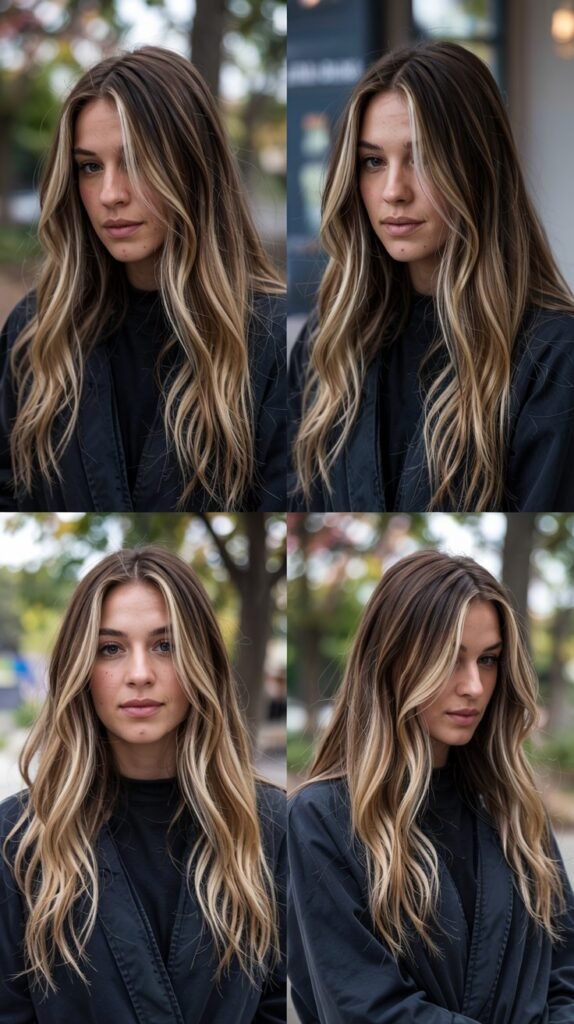
Athletes and active individuals require balayage that withstands frequent washing, sun exposure, chlorine, and styling demands while maintaining color integrity.
Color Choices for Active Lifestyles:
- Warmer tones (golden, honey) withstand sun exposure better than cool tones
- Lower contrast balayage shows less visible fade than high contrast
- Root shadow extended further down (3-4 inches) accommodates frequent washing
- Beige and neutral tones maintain color longer than ash or platinum
- Less processing equals healthier hair that better withstands active lifestyle stress
Protective Strategies:
Swimming:
- Pre-swim treatment (leave-in conditioner or coconut oil) creates chemical barrier
- Rinse immediately after swimming to remove chlorine and salt
- Weekly chelating treatment removes chemical buildup
- Swim cap provides maximum protection for serious swimmers
- Extra conditioning combats chlorine-induced dryness
Sun Exposure:
- UV protection spray before outdoor activities essential
- Hat or protective styling minimizes direct sun exposure
- Sun naturally lightens and warms blonde—can reduce salon maintenance
- Excessive sun causes dryness requiring increased conditioning
- After-sun treatments replenish moisture lost to sun exposure
Frequent Washing:
- Sulfate-free shampoo minimizes color stripping with frequent washing
- Co-washing (conditioner only) between shampoos preserves color
- Dry shampoo extends time between washes when possible
- Lukewarm water rather than hot preserves color longer
- Quick rinse after workouts removes sweat without full wash
47. Blonde Balayage Color Theory for Skin Undertones
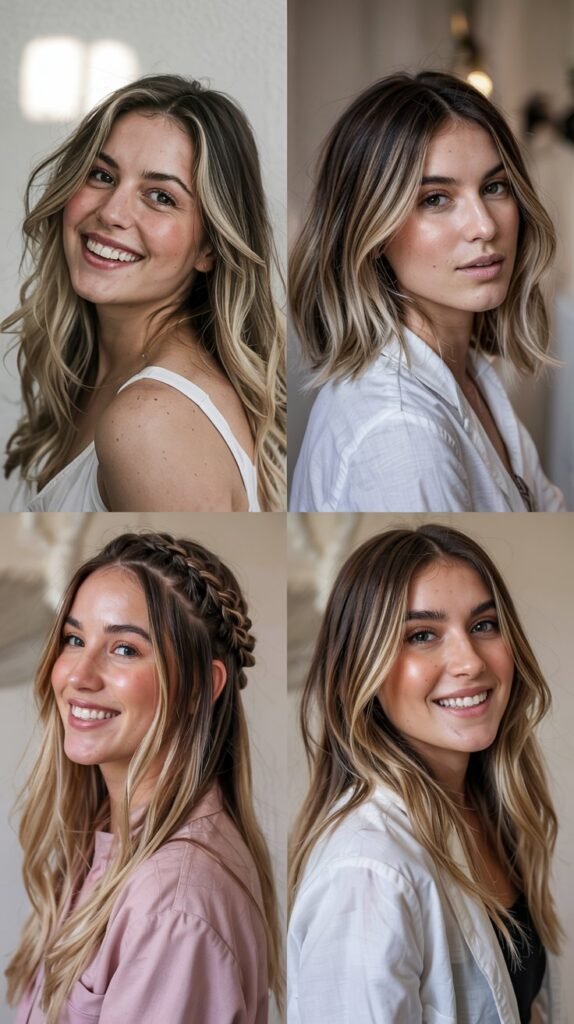
Matching balayage to skin undertones creates harmonious, flattering color that enhances natural complexion rather than competing with it.
Determining Skin Undertone:
- Warm undertones: Veins appear greenish, gold jewelry flattering, peachy or golden cast to skin
- Cool undertones: Veins appear bluish, silver jewelry flattering, pink or rosy cast to skin
- Neutral undertones: Veins appear blue-green, both jewelry types flattering, balanced skin tone
- Olive undertones: Green or gray cast, unique category that can wear warm or cool depending on depth
- Test by holding white paper near face—if skin looks yellow-peach (warm), pink (cool), or balanced (neutral)
Best Balayage for Each Undertone:
Warm Undertones:
- Golden blonde, honey, buttery, caramel balayage
- Yellow-gold based tones enhance natural warmth
- Avoid overly cool ash or platinum that can wash out appearance
- Strawberry blonde and rose-gold work beautifully
- Rich, warm dimension complements warm complexions
Cool Undertones:
- Ash blonde, platinum, icy, champagne balayage
- Violet or blue-based tones complement natural coolness
- Avoid overly warm golden tones that can appear brassy against cool skin
- Mushroom and pearl blonde create sophisticated harmony
- Cool tones prevent blonde from overwhelming delicate coloring
Neutral Undertones:
- Beige blonde, sandy, natural blonde balayage
- Most versatile—can wear warm or cool depending on preference
- Mix of warm and cool tones creates dimension
- Can adjust seasonally (warmer summer, cooler winter)
- Balanced tones prevent any clashing with neutral complexion
Olive Undertones:
- Warm golden blonde generally most flattering
- Beige and caramel prevent green cast that can occur with some tones
- Avoid extremely ashy tones that may emphasize green in skin
- Honey and bronze-blonde create beautiful warmth
- Test tones carefully as olive can be unpredictable with color
48. Balayage Touch-Up Techniques

Strategic touch-ups maintain balayage between full appointments, addressing specific areas showing growth or fading while preserving low-maintenance benefits.
Face-Framing Touch-Ups:
- Refresh only the sections around face every 8-10 weeks
- Costs significantly less than full balayage refresh
- Maintains brightness where most visible without full appointment
- Quick service (30-60 minutes) compared to full balayage
- Ideal for extending time between major services
Root Smudging/Shadow:
- Deeper color applied at roots blurs any visible demarcation
- Can be done without additional lightening, only toning
- Creates seamless transition as balayage grows
- Takes 30-45 minutes, significantly faster than new balayage
- Extends time between full appointments by 2-3 months
Glossing Only:
- Refresh tone without lightening any new hair
- Adds shine and vibrancy to faded color
- 30-45 minute service significantly more affordable than full color
- Can be done every 6-8 weeks without damage concerns
- Maintains color integrity between lightening sessions
Strategic Piece Addition:
- Add a few new balayage pieces where fading is most visible
- Addresses specific problem areas without full head application
- Maintains dimension as original balayage grows out
- Less expensive and time-consuming than complete refresh
- Particularly effective for high-use areas (face-framing, crown)
49. Blonde Balayage Aftercare Instructions
Proper aftercare in the 48-72 hours following balayage application significantly impacts color longevity, tone, and hair health.
Immediate Post-Appointment (First 24 Hours):
- Avoid washing hair for 24-48 hours to allow color to fully set
- No hot tools or heat styling to prevent stress on freshly processed hair
- Avoid tying hair tightly; loose styles prevent breakage on vulnerable hair
- No swimming (chlorine or salt water) for at least 48 hours
- Sleep on silk or satin pillowcase to minimize friction
First Week Care:
- Use only recommended color-safe, sulfate-free products
- Lukewarm or cool water for washing, never hot which opens cuticle and releases color
- Limit washing to 2-3 times maximum during first week
- Deep conditioning treatment mid-week replenishes moisture
- Minimal heat styling; air-dry when possible
- If heat necessary, use lowest effective temperature with protectant
First Month Maintenance:
- Establish regular washing routine (2-3x weekly ideal)
- Begin purple or blue shampoo routine if recommended (typically week 2-3)
- Professional deep conditioning or bond treatment at 2-week mark
- Monitor color development and note any unexpected fading or toning issues
- Schedule follow-up if any concerns arise
- Avoid clarifying shampoo which can strip new color
Long-Term Aftercare:
- Maintain sulfate-free, color-safe product routine
- Weekly deep conditioning becomes standard practice
- Regular toning schedule as recommended (typically every 6-8 weeks)
- Heat protectant becomes non-negotiable before any styling
- UV protection during sun exposure
- Full balayage refresh scheduled according to individual maintenance plan (typically 3-6 months)
50. Blonde Balayage Inspiration from Celebrities
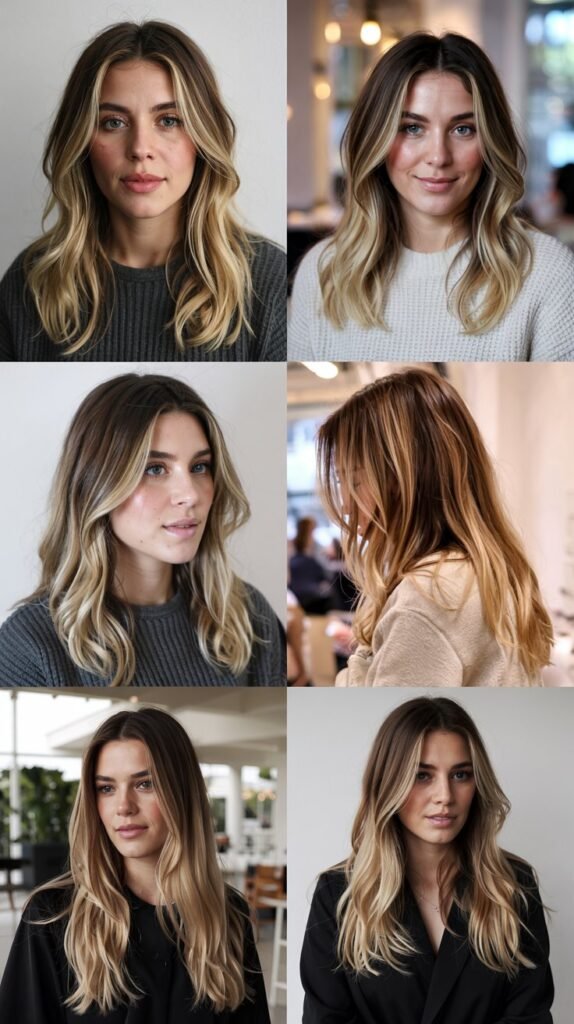
Celebrity balayage provides inspiration for achieving specific looks, though individual hair type and maintenance commitment significantly impact results.
Timeless Blonde Balayage Icons:
- Jennifer Aniston: Classic golden balayage with seamless grow-out, medium contrast
- Gisele Bündchen: Sun-kissed golden-honey balayage that appears naturally lightened
- Blake Lively: Warm buttery blonde with dimension, face-framing brightness
- Margot Robbie: Neutral-to-warm blonde with subtle dimension, polished appearance
- Beyoncé: Honey-caramel balayage on darker base, sophisticated warmth
Modern Blonde Balayage Trends:
- Hailey Bieber: Money pieces and face-framing with natural root shadow, ultra-low maintenance
- Rosie Huntington-Whiteley: Champagne-beige balayage, expensive-looking neutral tone
- Chrissy Teigen: Bronde balayage, perfect brown-blonde balance
- Sienna Miller: Lived-in blonde with textured, undone appearance
- Cara Delevingne: Ash-beige blonde with cool undertones, edgy sophistication
Requesting Celebrity Color:
- Bring multiple photos showing color in different lighting conditions
- Understand your hair may not process identically due to texture, condition, and starting color
- Discuss realistic timeline—celebrity color may require multiple sessions
- Consider maintenance commitment—some celebrity looks require frequent upkeep
- Professional colorist can adapt celebrity inspiration to suit your individual features
- Hair extensions often contribute to celebrity volume and length, not just color
51. Blonde Balayage Consultation Guide
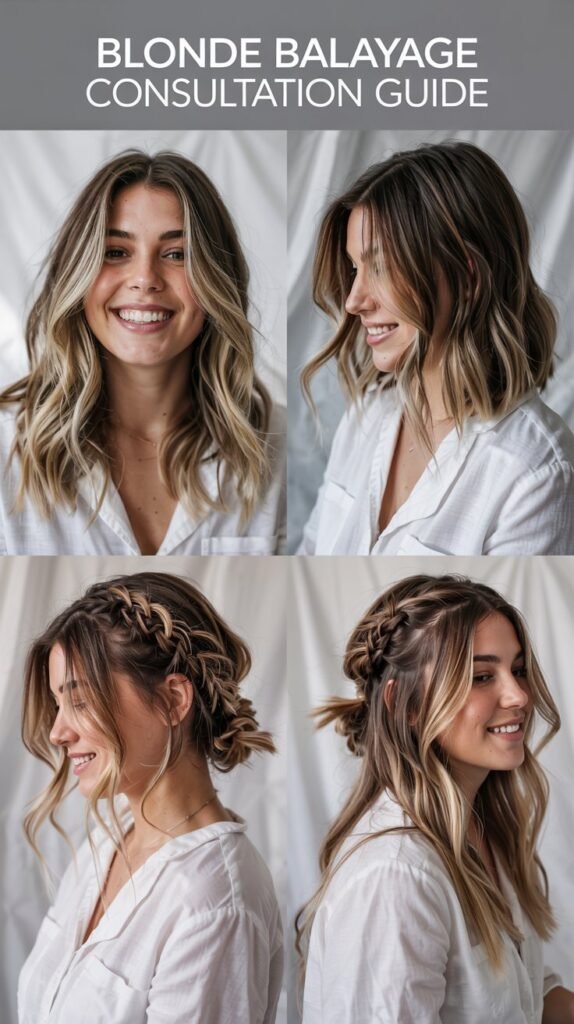
A thorough consultation ensures colorist and client align on expectations, creating roadmap for achieving desired balayage results.
Essential Consultation Topics:
Current Hair Status:
- Natural hair color and level
- Previous color history (lightening, darkening, other treatments)
- Current condition (damage, dryness, breakage)
- Chemical treatments (keratin, relaxers, perms) and timing
- Last color service and products used
Desired Results:
- Inspiration photos from multiple angles and lighting
- Specific tone preferences (warm, cool, neutral)
- Desired maintenance level (how often willing to visit salon)
- Lifestyle considerations (swimming, sun exposure, styling frequency)
- Budget for initial service and ongoing maintenance
Realistic Expectations:
- Timeline for achieving desired color (may require multiple sessions)
- Expected results based on current condition and color
- Maintenance frequency and associated costs
- Potential limitations based on hair health
- Alternative approaches if desired look isn’t immediately achievable
Important Questions to Ask:
- How many sessions will achieving my desired color require?
- What will each session cost, and what’s the total investment?
- How long will each appointment take?
- What at-home products do you recommend specifically for my hair?
- How often will I need toning appointments?
- When should I schedule my first maintenance appointment?
- What damage prevention measures will you use?
- What should I do if I experience unexpected fading or brassiness?
Red Flags in Consultation:
- Colorist guarantees specific results without seeing your hair
- No discussion of hair condition or damage assessment
- Promises single-session transformation from dark to platinum
- Dismisses your concerns about damage or maintenance
- Cannot explain technical approach or products they’ll use
- No portfolio showing work on hair similar to yours
52. Blonde Balayage for Weddings and Special Events
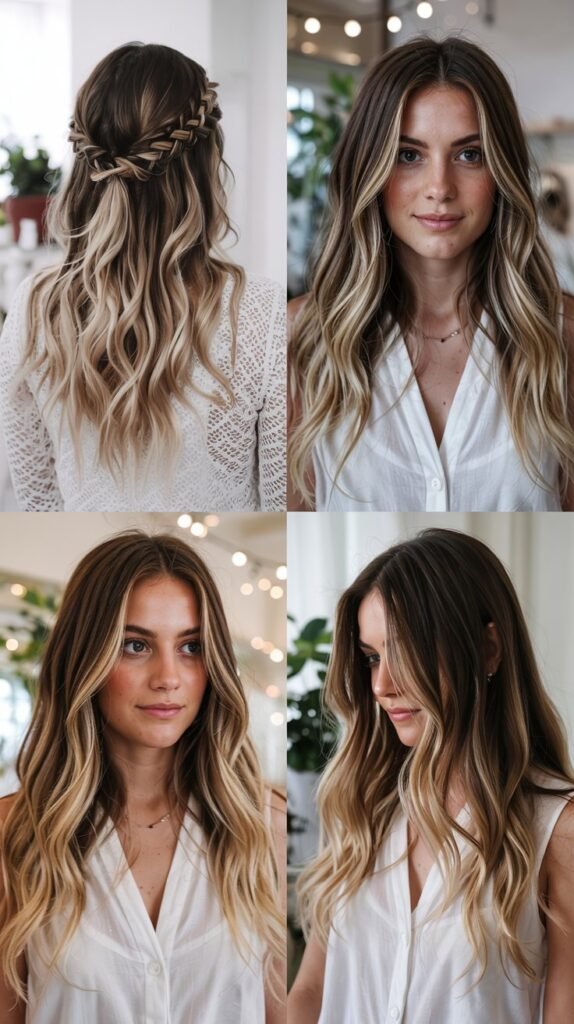
Special occasion balayage requires strategic timing and planning to ensure hair looks perfect on the big day while maintaining health and desired appearance.
Timeline Planning:
6-8 Months Before:
- Initial consultation to plan color journey
- First balayage session if transitioning from dark hair
- Begin establishing color and assessing hair response
- Start building hair health with treatments and proper care
3-4 Months Before:
- Continue color progression toward final desired tone
- Assess placement and make any adjustments
- Deepen conditioning treatment routine
- Trial hairstyles to see how color appears when styled
6-8 Weeks Before:
- Final balayage lightening session if needed
- Ensure color is at desired brightness and placement
- Professional deep conditioning or bond treatment
- Schedule final toning appointment timing
2-3 Weeks Before:
- Final toning or gloss appointment
- Trim to remove any split ends
- No new color work this close to event
- Practice final hairstyle with current color
1 Week Before:
- Light gloss only if recommended by colorist
- Deep conditioning treatment
- No experimenting with new products or techniques
- Confirm day-of styling appointment
Day Before/Day Of:
- Professional styling appointment
- Touch-up products available for any necessary corrections
- Photographer-ready color and style
- Confidence in knowing hair looks exactly as planned
Special Event Considerations:
- Photography lighting (natural vs. indoor) affects how balayage appears in photos
- Outdoor weddings in full sun make ash tones appear lighter, golden tones more vibrant
- Indoor/evening events benefit from dimension that catches light
- Hair trials ensure styling showcases color optimally
- Backup root concealer or touch-up products for peace of mind
53. Fixing Over-Processed Blonde Balayage
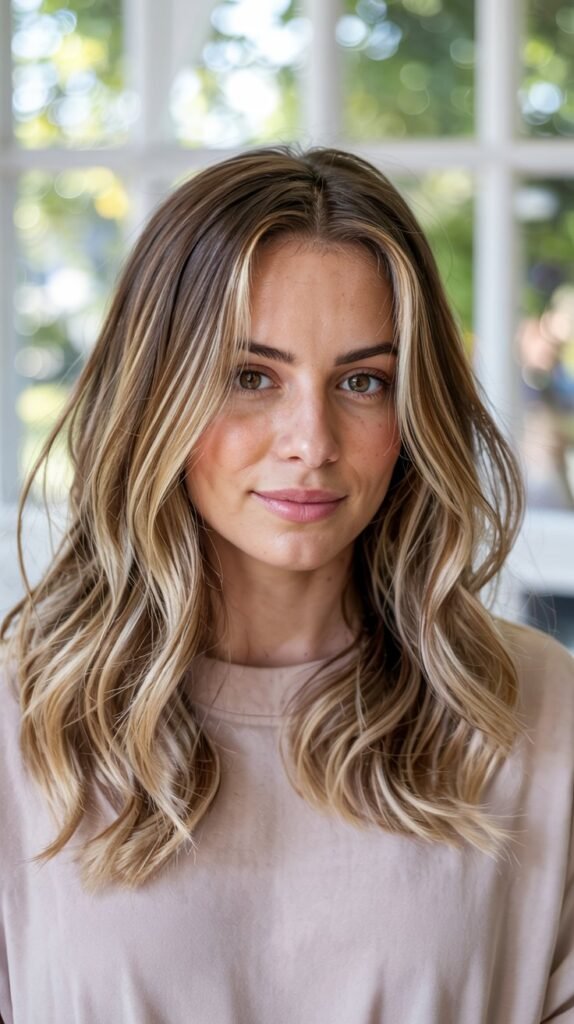
Over-processed blonde requires careful rehabilitation to restore health, appearance, and color integrity without causing additional damage.
Identifying Over-Processing:
- Excessive dryness and straw-like texture
- Breakage, especially when wet or during styling
- Gummy or elastic feel when wet
- White or very pale ends that feel compromised
- Color appears flat, dull, or overly porous
- Hair stretches significantly when wet then breaks
Immediate Intervention:
- Stop all lightening services immediately
- No heat styling until health improves
- Begin intensive bond-repair treatment routine (K18, Olaplex)
- Weekly protein treatments to rebuild hair structure
- Deep conditioning masks 2-3 times weekly
- Trim obviously damaged ends to prevent split travel
Color Correction for Over-Processed Blonde:
- Filler treatments restore missing pigment to over-lifted hair
- Toning very gently, using semi-permanent color only
Conclusion
Low-maintenance blonde balayage is the ultimate solution for effortless, long-lasting beauty.
These 53 seamless styles are designed to grow out naturally, minimize touch-ups, and keep your hair looking fresh between salon visits.
With soft blends, lived-in tones, and flattering placement, you can enjoy beautiful blonde without constant upkeep—saving time, money, and stress while staying stylish all year long.