
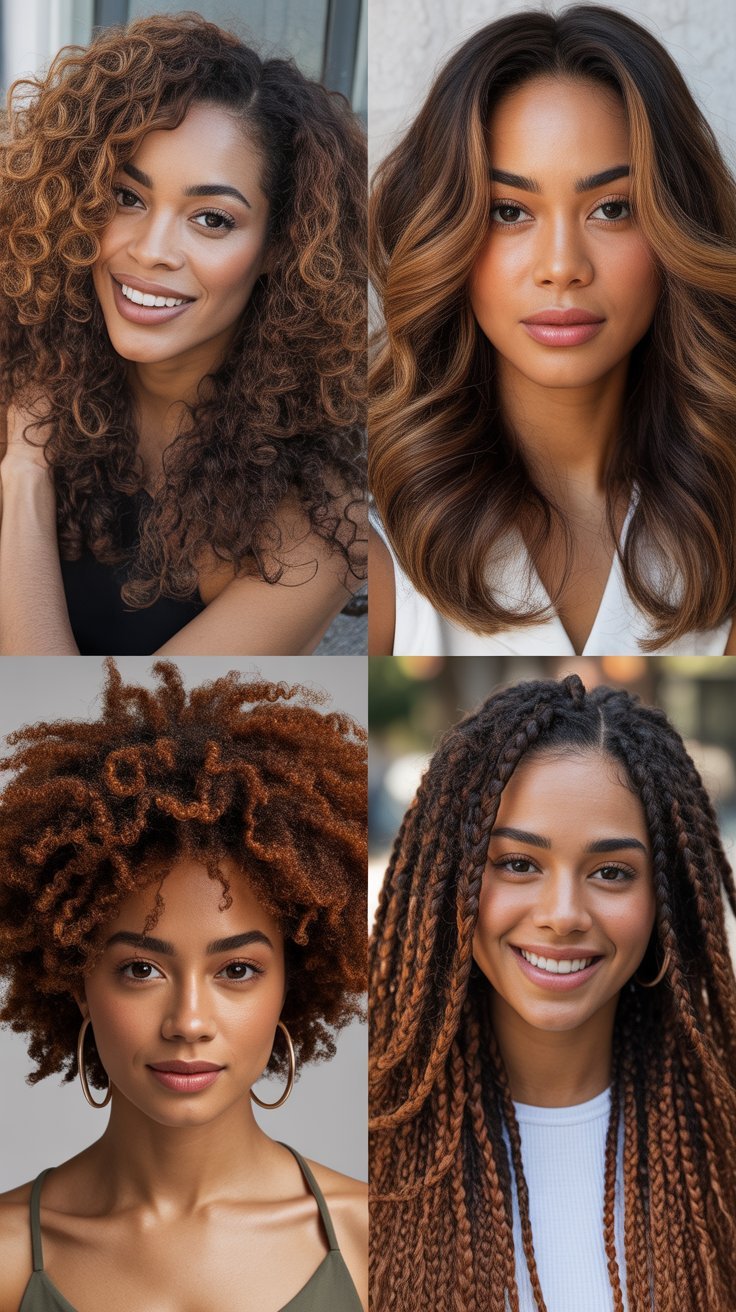
Brown hair with highlights has revolutionized the beauty landscape for Black women, offering a sophisticated way to enhance natural beauty while adding dimension and vibrancy to any hairstyle.
Whether you’re looking to brighten your complexion, add depth to your curls, or simply refresh your look with minimal maintenance, the right highlight technique can transform your entire appearance.
This comprehensive guide explores 66 stunning brown hair with highlights for Black women that pop, covering everything from subtle caramel streaks to bold copper accents, honey-toned balayage to rich chestnut ribbons.
You’ll discover the best highlighting techniques for different hair textures, seasonal color trends that complement darker skin tones, low-maintenance options for busy lifestyles, and expert tips for keeping your highlighted brown hair healthy and vibrant
. We’ll walk you through face-framing highlights that illuminate your features, ombré styles that create seamless transitions, and dramatic contrast highlights that make a bold statement.
Whether you prefer warm golden tones, cool ash hues, or red-based copper shades, this article provides inspiration and practical guidance to help you find the perfect highlighted brown hair look that celebrates your unique beauty and personal style.
1. Caramel Highlights on Dark Brown Hair
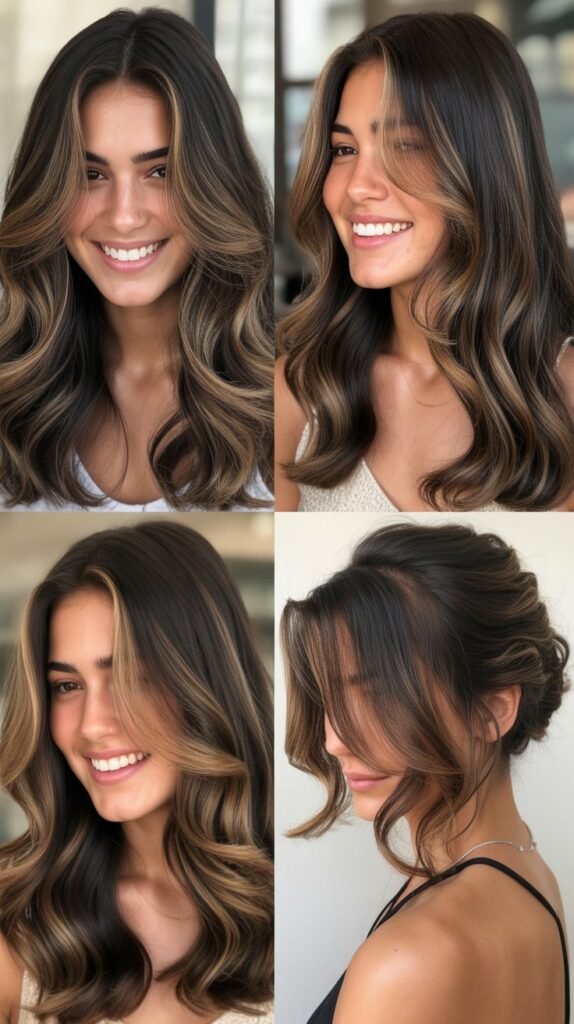
Caramel highlights create a sun-kissed warmth that beautifully complements dark brown hair, offering a natural-looking enhancement that’s both sophisticated and approachable.
This classic combination works exceptionally well for Black women because the caramel tones add luminosity without overwhelming the richness of dark brown base colors.
Why Caramel Highlights Work
- The warm undertones in caramel shades harmonize naturally with the melanin-rich complexions of Black women, creating a cohesive and flattering look.
- Caramel highlights reflect light beautifully, adding dimension and movement to hair that might otherwise appear flat or one-dimensional.
- This color combination requires less frequent touch-ups compared to lighter highlights, making it a practical choice for maintaining hair health.
- The subtle contrast between dark brown and caramel creates depth without the harshness of more dramatic color differences.
Best Placement Techniques
- Face-framing: Strategic placement around the face brightens your complexion and draws attention to your facial features.
- Balayage method: Hand-painted caramel streaks create a natural, sun-kissed effect that looks effortlessly beautiful.
- Partial highlights: Concentrating caramel tones in the top layers and around the crown adds dimension while keeping the underneath darker for depth.
- Money piece: Bold caramel sections framing both sides of the face create an instantly glamorous effect.
Maintenance Tips
- Use sulfate-free shampoos specifically formulated for color-treated hair to prevent the caramel tones from fading prematurely.
- Apply a purple or blue toning shampoo occasionally if your caramel highlights develop brassy undertones.
- Deep condition weekly to maintain moisture balance, as highlighted hair tends to be more porous and prone to dryness.
- Protect your hair from heat styling with thermal protectant sprays to preserve both color vibrancy and hair integrity.
2. Honey Blonde Highlights for Warmth
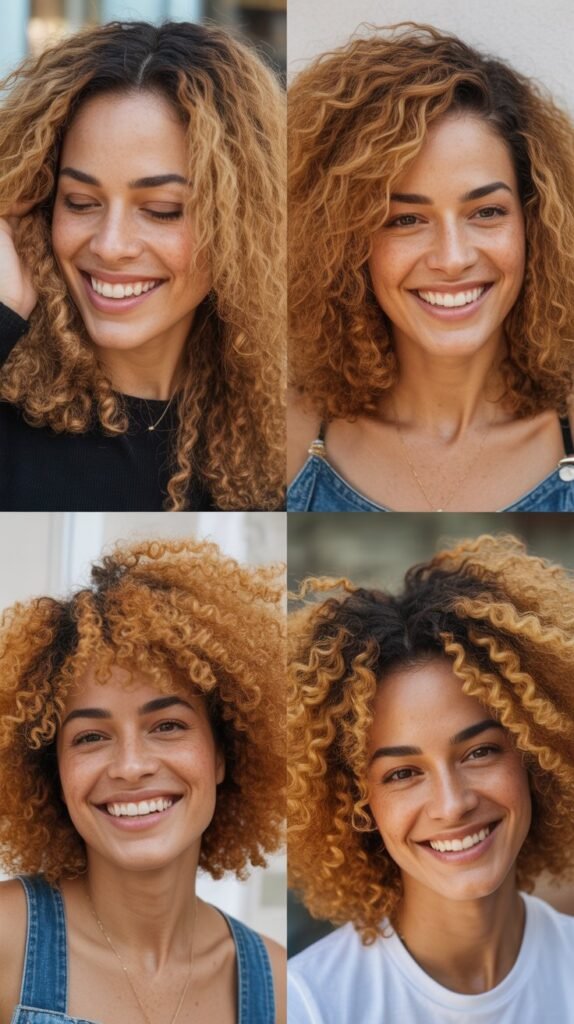
Honey blonde highlights infuse brown hair with golden warmth and radiance, creating a stunning contrast that’s particularly striking on Black women with warm or neutral undertones.
These lighter accents catch the light beautifully and add a youthful, vibrant energy to your overall appearance.
The Appeal of Honey Blonde
- Honey blonde sits perfectly between caramel and platinum, offering noticeable brightness without going too extreme.
- The golden undertones in honey blonde create a harmonious blend with warm brown base colors, resulting in a cohesive look.
- This shade adds significant lift and brightness to your complexion, making it appear more luminous and radiant.
- Honey blonde highlights photograph exceptionally well, making them ideal for those who frequently appear in photos or on social media.
Ideal Candidates
- Warm undertones: If your skin has golden, peachy, or yellow undertones, honey blonde will enhance your natural warmth beautifully.
- Medium to light brown base: While honey blonde can work on darker bases, it shows most vibrantly on medium brown hair with less processing required.
- Bold personalities: This shade makes a statement and suits those who aren’t afraid to stand out and embrace attention.
- Low porosity hair: Hair that resists color penetration may benefit from honey blonde as it requires sufficient lifting to achieve the desired tone.
Styling Recommendations
- Loose beach waves showcase the dimension created by honey blonde highlights, creating a casual yet polished look.
- Sleek straight styles allow the contrasting colors to create defined ribbons of light throughout your hair.
- High ponytails and buns display the multi-dimensional effect when hair is pulled back, revealing the highlight placement.
- Braided styles incorporate the honey blonde as eye-catching accents woven throughout the texture.
3. Subtle Chestnut Ribbons
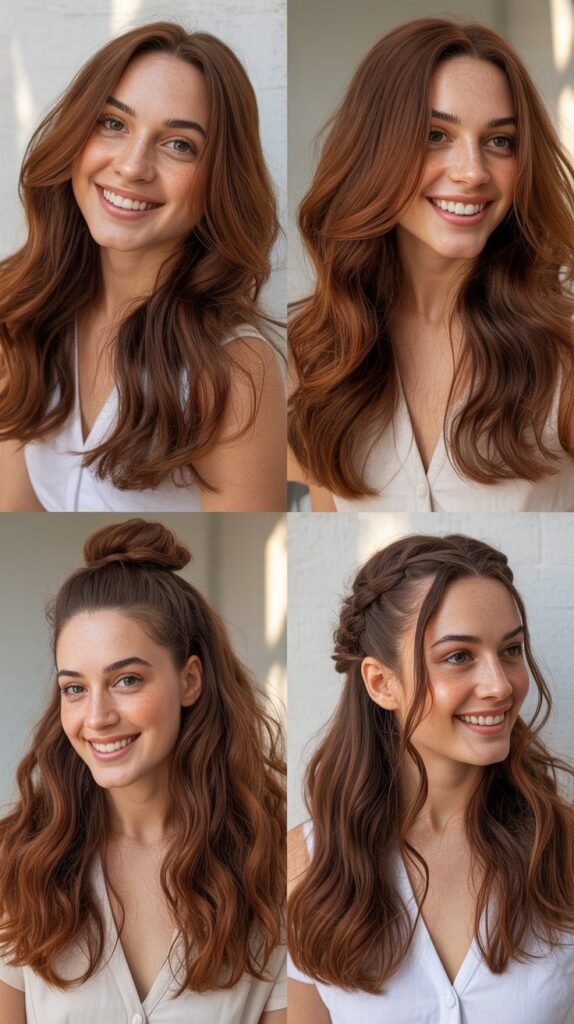
Chestnut ribbons offer a sophisticated, understated approach to highlighting brown hair, providing just enough contrast to add interest without dramatically altering your overall appearance.
This technique is perfect for those who want enhancement rather than transformation.
Understanding Chestnut Tones
- Chestnut is a rich, reddish-brown shade that sits slightly lighter than dark chocolate brown but darker than auburn.
- The red undertones in chestnut add warmth and depth, preventing brown hair from appearing flat or dull.
- This shade blends seamlessly with natural brown hair, creating subtle dimension that looks almost like your own hair reflecting light.
- Chestnut ribbons are low-maintenance because they don’t create stark contrast lines as they grow out.
Application Methods
- Ribbon technique: Thin, concentrated sections of chestnut color are strategically placed to create vertical ribbons of light throughout the hair.
- Lowlights and highlights combination: Alternating chestnut with your base color creates a multi-tonal effect that appears natural and complex.
- Peekaboo placement: Chestnut sections hidden underneath the top layer create surprise pops of color when hair moves.
- Crown concentration: Focusing chestnut ribbons around the crown and part line brightens the most visible areas.
Professional vs. At-Home
| Aspect | Professional Application | At-Home Application |
|---|---|---|
| Precision | Expert placement for natural-looking ribbons | May result in uneven or chunky sections |
| Color accuracy | Custom-mixed formulas for perfect chestnut tone | Limited to pre-mixed box colors |
| Hair health | Professional-grade products with bond builders | Potential for more damage with drugstore products |
| Cost | $80-$250 depending on salon and location | $10-$30 for DIY kits |
| Time investment | 2-4 hours in salon | 1-2 hours at home plus preparation |
4. Copper Highlights for Bold Statement
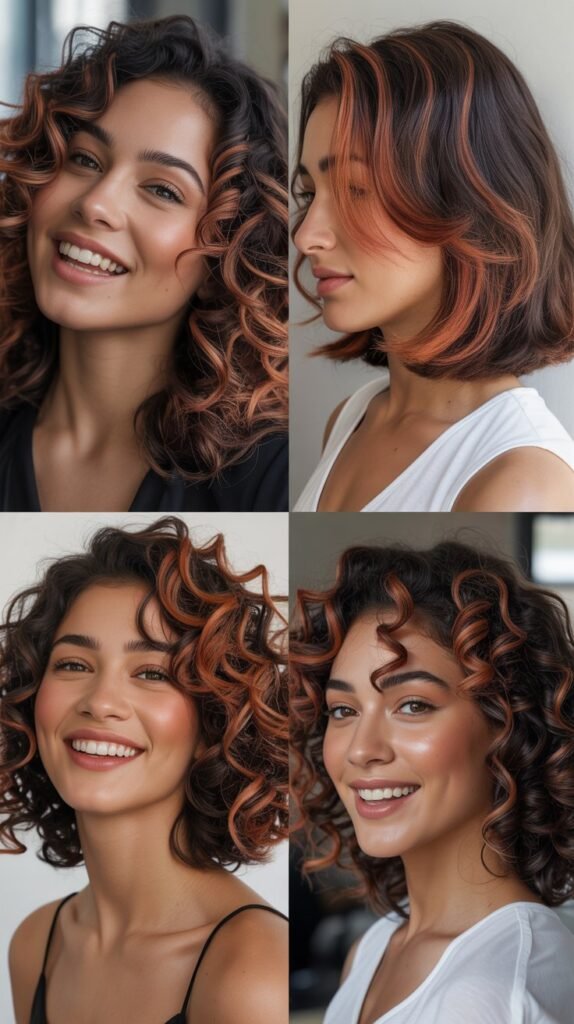
Copper highlights bring fiery, eye-catching dimension to brown hair, creating a bold and confident statement that’s perfect for Black women who want to showcase their personality through their hair.
These vibrant reddish-orange tones add warmth and energy while remaining wearable for various occasions.
The Power of Copper
- Copper highlights range from bright penny tones to deeper burnt orange shades, offering versatility within the color family.
- The high-contrast effect of copper against brown creates dramatic visual interest and dimension.
- These warm metallic tones complement warm and neutral skin undertones particularly well, enhancing natural radiance.
- Copper reflects light intensely, making hair appear fuller and more voluminous.
Choosing Your Copper Shade
- Bright copper: Vibrant, orange-leaning tones that make a bold, youthful statement.
- Rose copper: Softer, pink-toned copper that offers a feminine, romantic vibe.
- Burnt copper: Deeper, more subdued copper with brown undertones for a sophisticated look.
- Golden copper: Copper with yellow undertones that bridges the gap between gold and orange.
Maintenance Challenges and Solutions
- Copper fades faster than other highlight colors due to its large color molecules that wash out easily from the hair shaft.
- Use color-depositing conditioners in copper or red tones weekly to refresh the vibrancy between salon visits.
- Wash hair with cool water to seal the cuticle and lock in color molecules for longer-lasting results.
- Limit washing frequency to 2-3 times per week, using dry shampoo between washes to preserve color.
- Schedule color refresh appointments every 4-6 weeks to maintain the intensity of copper highlights.
5. Golden Brown Balayage
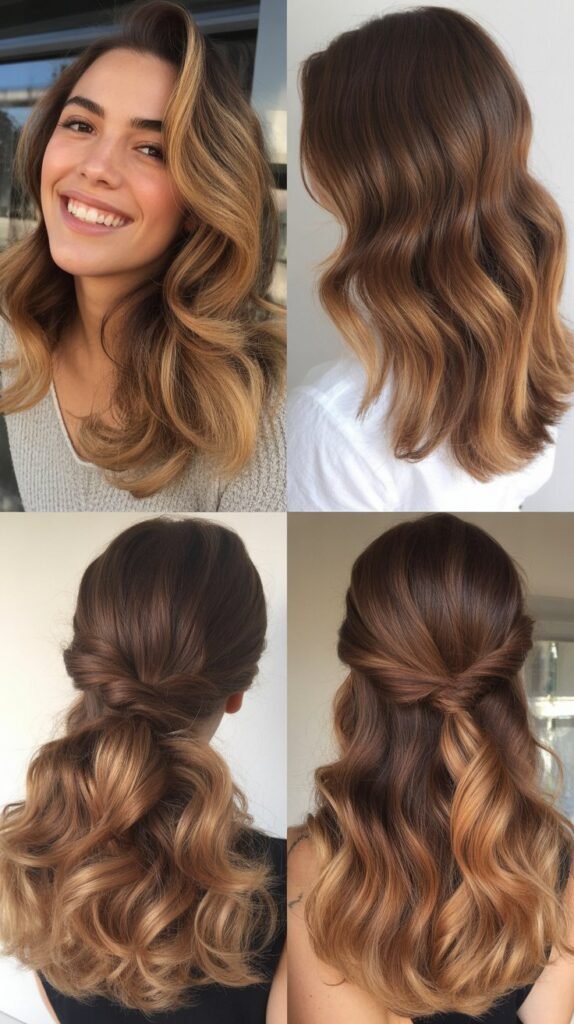
Golden brown balayage creates a seamless gradient effect that transitions naturally from darker roots to lighter, golden-toned ends, offering a low-maintenance highlighting option that grows out beautifully.
This technique is ideal for Black women seeking a natural-looking enhancement with minimal upkeep.
Balayage Benefits
- The hand-painted application method creates a customized, artistic result that’s unique to each individual.
- No harsh demarcation lines mean balayage grows out gracefully without obvious regrowth lines.
- The technique adds dimension throughout the hair, creating depth and movement that enhances natural texture.
- Balayage requires less frequent touch-ups compared to traditional foil highlights, saving time and money long-term.
Color Transition Strategies
- Subtle gradient: Gentle color progression from dark brown roots to golden mid-lengths and ends creates an understated effect.
- High contrast: More dramatic lightening toward the ends makes a bolder statement while keeping roots natural.
- Face-framing focus: Concentrating lighter golden tones around the face while keeping the back darker creates dimension where it matters most.
- Rooted balayage: Intentionally keeping several inches of natural root color creates a lived-in look from the start.
Styling to Showcase Balayage
- Loose, tousled waves allow the color gradient to blend and flow naturally, showcasing the artistry of the technique.
- Side-swept styles reveal the face-framing highlights while displaying the color transition along the length.
- Half-up hairstyles show the contrast between darker top sections and lighter lengths.
- Natural texture styles, including curls and coils, create beautiful dimension as the golden tones peek through the movement.
6. Ash Brown Highlights for Cool Tones
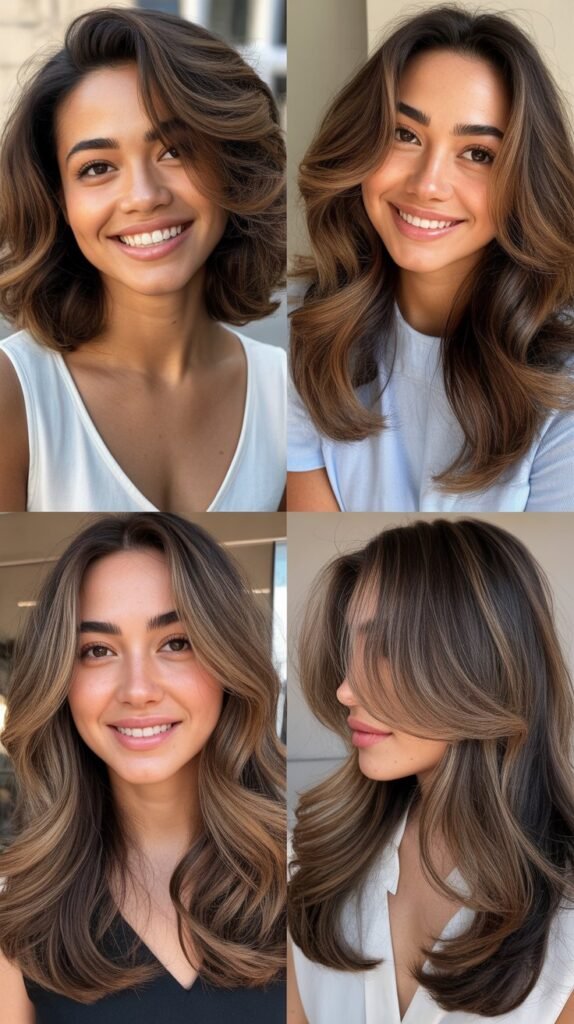
Ash brown highlights provide a sophisticated, cool-toned alternative to warm caramel and honey shades, perfect for Black women with cool or neutral undertones who want to avoid brassy warmth.
These smoky, grayish-brown tones create modern, edgy dimension.
Understanding Ash Tones
- Ash colors contain blue and green pigments that neutralize warmth, creating a cool, muted appearance.
- These highlights work exceptionally well for counteracting any natural brassiness in brown hair.
- Ash brown creates a sophisticated, almost smoky effect that’s trending in contemporary hair color.
- The cool tones can make skin appear brighter and help even out complexions with redness or uneven tone.
Who Should Choose Ash Highlights
- Individuals with cool undertones (pink, red, or blue beneath the skin) will find ash highlights most flattering.
- Those who prefer silver jewelry over gold typically suit cool-toned hair colors better.
- People with naturally cool or neutral-toned brown hair can enhance their natural coloring with ash highlights.
- Anyone seeking a modern, fashion-forward look that differs from traditional warm highlights.
Preventing Unwanted Warmth
- Use purple or blue toning shampoos weekly to maintain the cool ash tones and prevent warmth from developing.
- Avoid chlorinated water, which can introduce green or brassy tones to ash-colored hair.
- Request a toner application at every color appointment to refresh the cool, ashy effect.
- Minimize heat styling, as high temperatures can activate warm undertones in previously cooled hair.
- Protect hair from sun exposure, which naturally warms and oxidizes cool-toned colors over time.
7. Burgundy and Brown Combination
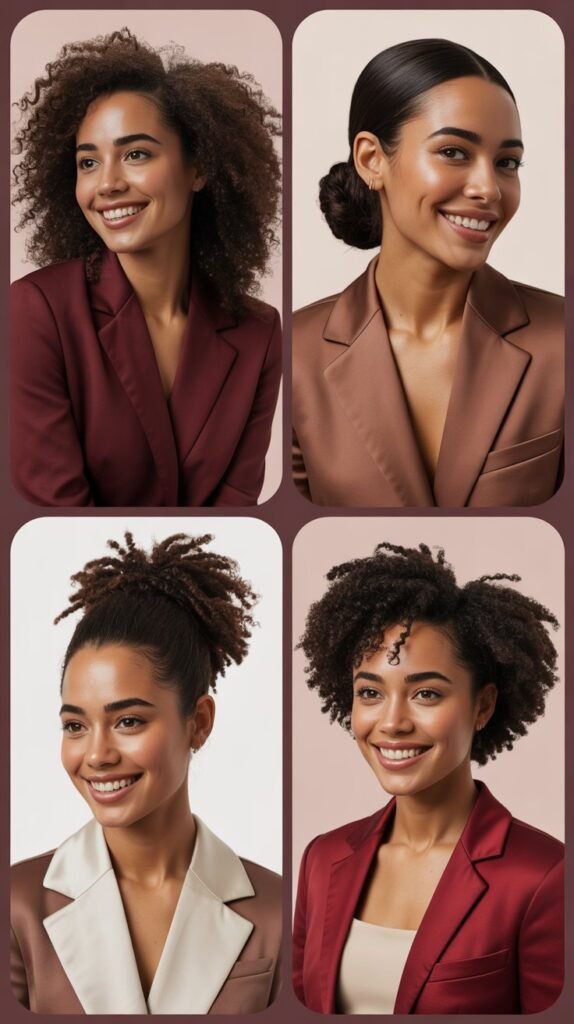
The burgundy and brown combination offers a luxurious, jewel-toned approach to highlighting that’s both sophisticated and statement-making.
These deep wine-colored accents add richness and depth to brown hair while maintaining an elegant, refined appearance.
The Elegance of Burgundy
- Burgundy’s deep red-purple tones create a luxurious, high-end look that’s associated with sophistication and confidence.
- This shade adds richness to brown hair without the maintenance challenges of lighter highlights.
- The darker nature of burgundy means it blends seamlessly with brown bases, creating subtle yet impactful dimension.
- Burgundy highlights are versatile enough for professional environments while still making a distinctive style statement.
Seasonal Considerations
- Fall and winter: Burgundy’s deep, wine-inspired tones perfectly complement the rich color palettes of cooler seasons.
- Spring and summer: Lighter burgundy with more red undertones can work for warmer months when adjusted appropriately.
- Year-round elegance: Deep burgundy remains sophisticated across all seasons, making it a timeless choice.
- Holiday appeal: The jewel-toned quality of burgundy makes it especially popular for holiday season transformations.
Complementary Makeup and Fashion
- Burgundy hair pairs beautifully with neutral makeup palettes that let the hair color be the focal point.
- Berry-toned lips echo the burgundy in your hair, creating a cohesive, intentional look.
- Jewel-tone clothing in emerald, sapphire, and ruby complements the richness of burgundy highlights.
- Gold accessories and jewelry contrast beautifully against the cool-warm balance of burgundy and brown.
- Earth-tone wardrobes in camel, olive, and rust create sophisticated combinations with burgundy-highlighted brown hair.
8. Face-Framing Highlights
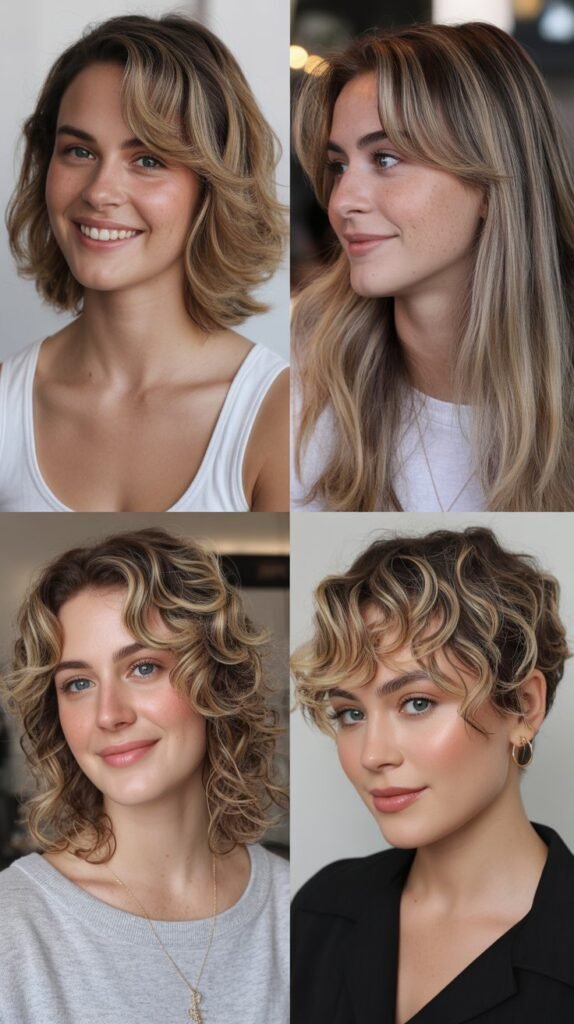
Face-framing highlights concentrate color strategically around your face to brighten your complexion, draw attention to your features, and create an instantly polished appearance.
This targeted approach maximizes impact while minimizing processing and maintenance.
Strategic Placement Benefits
- Face-framing highlights create the illusion of a professional blowout or fresh salon visit even on day-old hair.
- The light-reflecting properties of lighter color around the face brighten your complexion and make you appear more awake.
- This technique draws the eye to your facial features, functioning almost like natural contouring for your face shape.
- Minimal hair is processed, reducing damage while still creating significant visual impact.
Customizing for Face Shapes
- Round faces: Vertical highlights that start higher up can elongate the appearance of the face.
- Square faces: Softer, wider placement around the jawline helps soften angular features.
- Heart-shaped faces: Focusing highlights at cheekbone level and below balances a wider forehead.
- Oval faces: Nearly any face-framing placement works, allowing for personal preference in width and starting point.
- Long faces: Wider panels that start lower add width and balance to longer face proportions.
Color Selection for Face-Framing
- Choose highlights 2-3 shades lighter than your base for a natural, sun-kissed effect that’s universally flattering.
- Go 4-5 shades lighter for a more dramatic, statement-making contrast that immediately draws attention.
- Consider your skin’s undertones—warm shades for warm skin, cool tones for cool skin, or neutral options for versatile appeal.
- Coordinate face-framing color with any existing highlights elsewhere in your hair for cohesion.
9. Ombré Brown to Blonde Transition
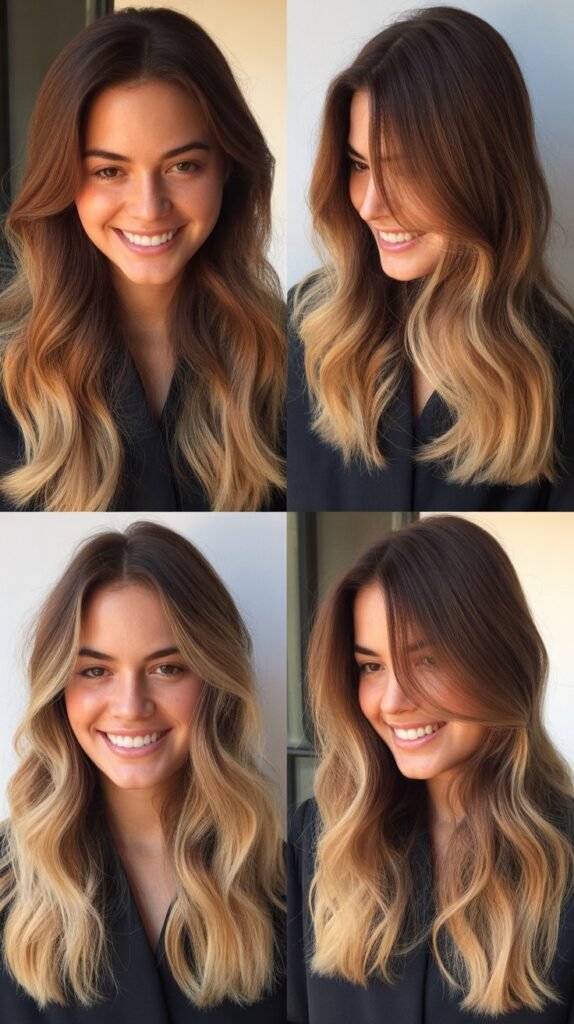
Ombré creates a dramatic gradient from brown roots to blonde ends, offering maximum impact and a bold style statement.
For Black women, this high-contrast look showcases confidence and fashion-forward sensibility while providing the practical benefit of low-maintenance roots.
Ombré vs. Balayage
| Feature | Ombré | Balayage |
|---|---|---|
| Transition style | Distinct horizontal gradient | Seamless, painted blending |
| Contrast level | High contrast between sections | Softer, more natural contrast |
| Maintenance | Very low—clear grow-out zone | Low—grows out naturally |
| Application method | Sectioned, uniform lightening | Hand-painted, customized |
| Visual impact | Bold, statement-making | Subtle, sun-kissed |
| Time in salon | 3-4 hours | 2-3 hours |
Achieving Healthy Blonde Ends
- Pre-lighten gradually over multiple sessions rather than attempting dramatic lifts in one appointment to minimize damage.
- Use bond-building treatments during the lightening process to maintain hair integrity and strength.
- Invest in professional deep conditioning treatments specifically formulated for bleached hair.
- Trim ends regularly to remove any damage and maintain the health and appearance of blonde sections.
- Apply leave-in treatments and oils to blonde sections daily, as they’re more porous and prone to dryness.
Styling Ombré Hair
- Loose waves and curls create beautiful color melting effects where brown and blonde sections blend together naturally.
- Straight styles showcase the distinct color transition, creating a bold, graphic effect.
- Half-up styles display both the dark roots and light ends simultaneously, showing the full color journey.
- Braided styles weave the two colors together, creating interesting patterns and visual texture.
10. Subtle Highlights for Natural Enhancement
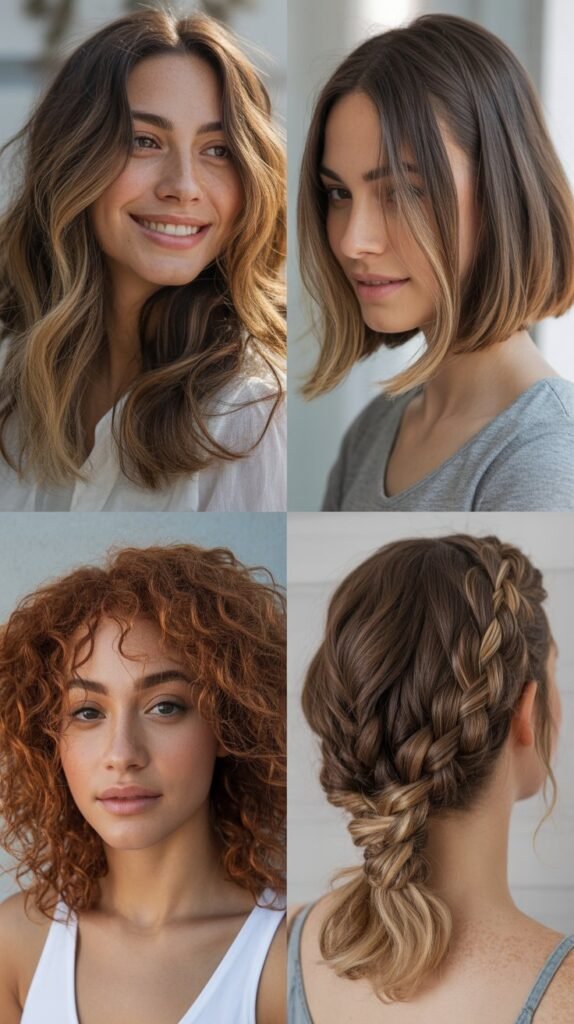
Subtle highlights enhance your natural brown hair with barely-there dimension that looks like your hair has been naturally kissed by the sun.
This conservative approach is perfect for first-time color clients or professional environments requiring understated styling.
The Philosophy of Subtlety
- Subtle highlights aim to enhance rather than transform, working with your natural color to add depth and interest.
- The color difference between base and highlights is minimal—typically only 1-2 shades—creating soft dimension.
- Strategic placement mimics how sun naturally lightens hair, concentrating lighter tones on surface layers and around the face.
- This approach maintains hair health by minimizing processing while still achieving noticeable improvement.
Best Practices for Subtle Results
- Choose highlights within the same color family as your base—warm browns with caramel, cool browns with ash tones.
- Use foil techniques with very thin sections to create fine, ribbon-like highlights that blend seamlessly.
- Place highlights strategically rather than throughout the entire head, focusing on high-impact areas.
- Request a toner that closely matches your natural color to further blend and soften any contrast.
Professional Environments
- Subtle highlights remain appropriate for conservative corporate settings, medical professions, and legal fields.
- The understated nature prevents hair from becoming a distraction while still allowing personal expression.
- Maintenance requirements are minimal, reducing the need for frequent salon visits during busy work schedules.
- The professional appearance conveys attention to grooming without appearing high-maintenance or trend-focused.
- Subtle dimension adds polish to professional hairstyles without competing with business attire.
11. Chunky Highlights for the 2000s Revival
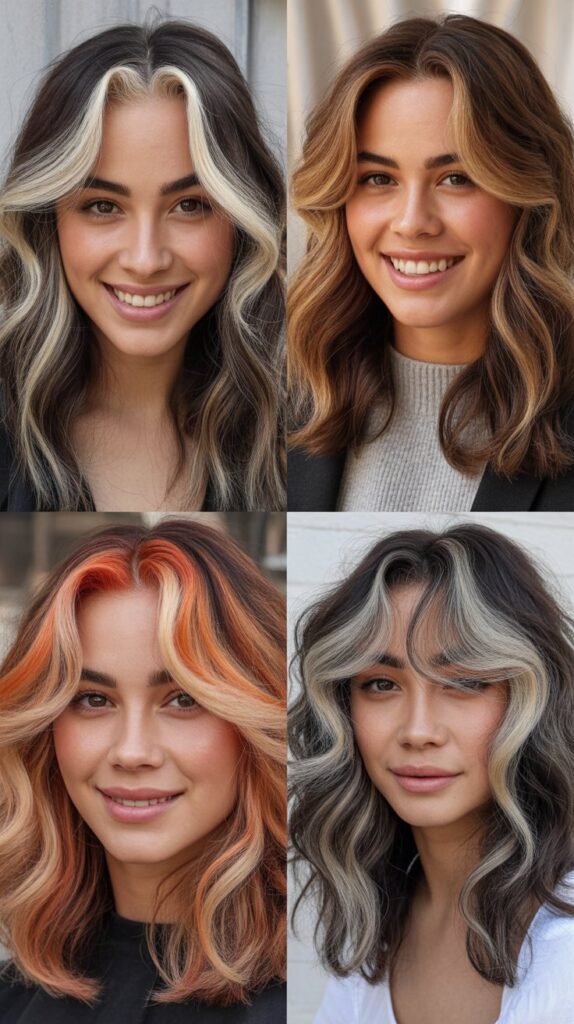
Chunky highlights have made a nostalgic comeback, embracing the bold, statement-making aesthetic of early 2000s fashion with a modern twist.
These thick, defined sections of lighter color create intentional contrast and a retro-inspired vibe that’s currently trending.
Modern vs. Classic Chunky
- Contemporary chunky highlights use strategic placement rather than the uniform, striped effect of early 2000s styles.
- Today’s version incorporates varying thicknesses and intentional asymmetry for a more sophisticated appearance.
- Modern color choices extend beyond the platinum blonde of the past, including caramel, copper, and honey tones.
- Updated techniques blend the edges of chunks slightly rather than creating harsh, unblended lines.
Making Chunky Highlights Wearable
- Limit chunky sections to face-framing areas or the top layer rather than throughout the entire head for a balanced look.
- Choose colors that complement your skin tone rather than defaulting to the lightest possible option.
- Balance bold chunky highlights with sleek, polished styling to prevent an overly casual or dated appearance.
- Incorporate additional subtle highlights between chunky sections to create transitional tones and soften the overall effect.
Celebrity Inspiration
- Many contemporary celebrities and influencers have embraced updated chunky highlights, making them fashion-forward rather than dated.
- The trend appears across social media platforms, particularly TikTok and Instagram, driving renewed popularity among younger demographics.
- Fashion weeks and editorial shoots frequently feature chunky highlights, cementing their status as a legitimate trend rather than a fleeting revival.
- The key to celebrity-level chunky highlights is professional execution with high-quality products and expert placement.
12. Red-Based Brown Highlights
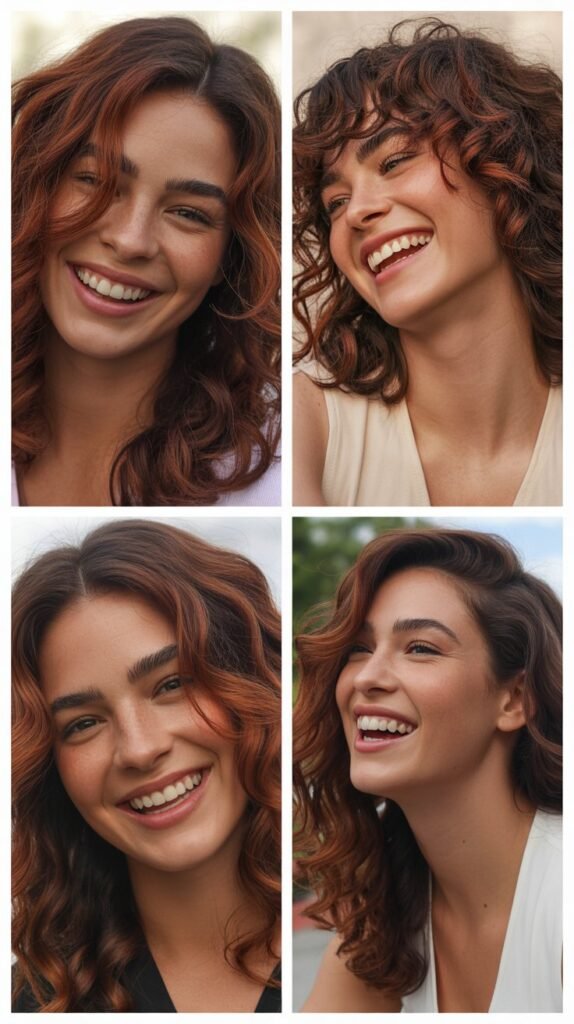
Red-based brown highlights add warmth, vibrancy, and multi-dimensional richness to brown hair, creating a spectrum of auburn, mahogany, and chestnut tones that enhance natural beauty while making a sophisticated statement.
The Spectrum of Red-Brown
- Auburn: Classic red-brown that’s universally flattering and creates warm, autumn-inspired dimension.
- Mahogany: Deep, purplish-red tones that add richness and sophistication to brown bases.
- Cherry brown: Brighter, more vivid red tones that make a bold statement while remaining wearable.
- Copper-brown: The perfect bridge between orange copper and brown, offering warmth without going too red.
Skin Tone Compatibility
- Warm undertones: Embrace golden-red highlights like copper-brown and bright auburn for harmonious enhancement.
- Cool undertones: Choose cooler reds with purple bases like mahogany or burgundy-brown for complementary contrast.
- Neutral undertones: Nearly any red-based highlight works, offering maximum versatility in shade selection.
- Deep complexions: Vibrant reds show beautifully against rich skin tones, creating stunning contrast and dimension.
Maintaining Red Tones
- Red pigments fade notoriously fast due to their large molecular size, requiring dedicated maintenance efforts.
- Wash hair with color-safe, sulfate-free shampoos specifically formulated for red hair to extend vibrancy.
- Apply color-depositing conditioners or glosses in red tones weekly to refresh the color between salon appointments.
- Protect hair from sun exposure, which quickly fades red pigments through oxidation.
- Avoid chlorinated pools and salt water, which strip red color molecules rapidly from the hair shaft.
- Schedule gloss or glaze treatments every 4-6 weeks to maintain richness and prevent dullness.
13. Lowlights and Highlights Combination
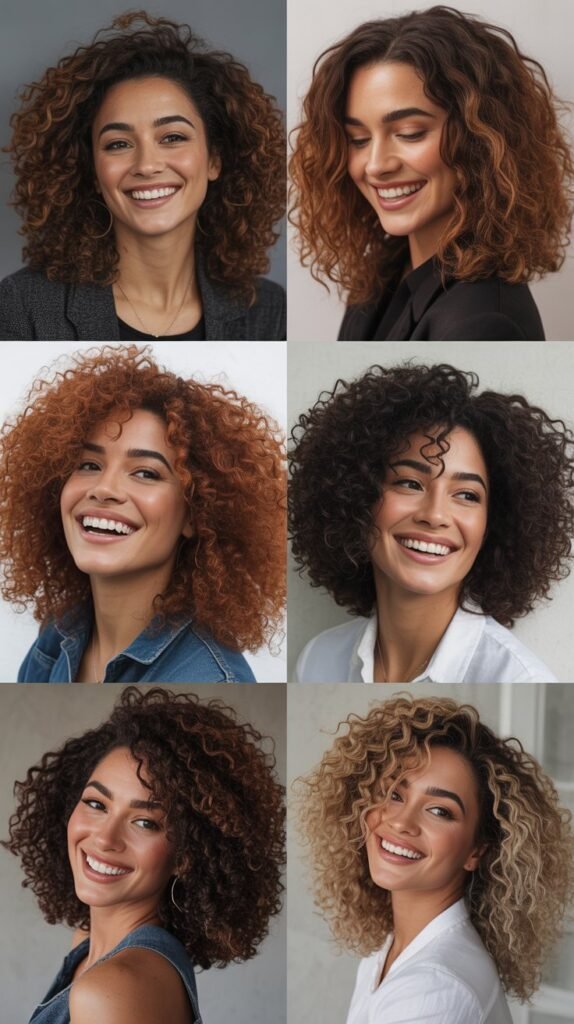
Combining lowlights (darker than your base) with highlights (lighter than your base) creates multi-dimensional hair color that mimics the natural variation found in virgin hair, resulting in a sophisticated, complex appearance with depth and movement.
Understanding the Technique
- Lowlights add depth to areas that might otherwise appear flat or one-dimensional, creating shadow and contrast.
- Highlights bring forward sections of hair, creating dimension and the illusion of movement and volume.
- The combination prevents hair from appearing too light or washed out, maintaining richness and complexity.
- This technique corrects previous color mishaps by adding back depth that may have been lost through over-highlighting.
Color Selection Strategy
- Choose lowlights 1-2 shades darker than your base for subtle depth without harsh contrast.
- Select highlights 2-3 shades lighter than your base to create balanced, noticeable dimension.
- Ensure lowlights and highlights complement each other, staying within the same warm or cool tone family.
- Consider the ratio: more lowlights for added depth, more highlights for brightness, or equal parts for balanced dimension.
Application Patterns
- Alternating foils: Traditional technique placing lowlights and highlights in alternating sections throughout the head.
- Strategic placement: Lowlights underneath and at the nape for depth, highlights on top and around the face for brightness.
- Freehand painting: Artistic application allowing the colorist to customize placement based on your specific hair and desired outcome.
- Panel technique: Larger sections of lowlights creating substantial depth with fine highlights woven throughout.
14. Babylights on Brown Hair
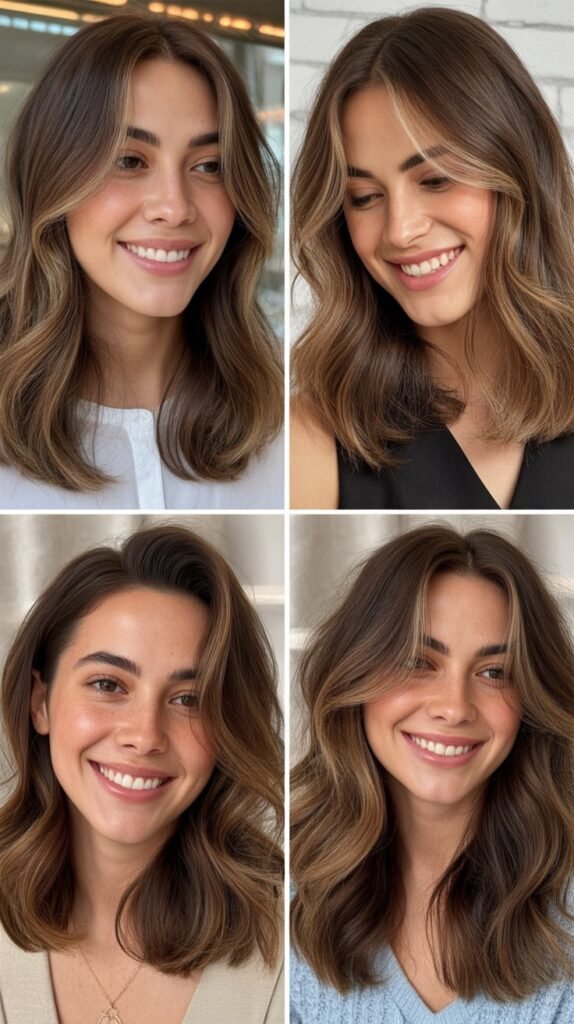
Babylights are extremely fine, delicate highlights that mimic the subtle, natural lightening seen in children’s hair after sun exposure.
This ultra-subtle technique creates dimension that’s nearly imperceptible yet significantly enhances the overall appearance of brown hair.
The Babylights Difference
- Babylights use ultra-thin sections—even finer than traditional highlights—creating a soft, diffused effect.
- The technique requires exceptional precision and skill, making it essential to choose an experienced colorist.
- Results appear almost natural, as if you were born with perfectly dimensional hair rather than colored it.
- The delicate nature means babylights blend seamlessly, growing out gracefully without obvious demarcation lines.
Ideal Candidates for Babylights
- First-time color clients who want to experiment with highlights without committing to dramatic change.
- Professionals in conservative fields requiring subtle, natural-looking enhancement.
- Anyone with fine or thin hair, as babylights add perceived texture and volume without weighing hair down.
- Those seeking low-maintenance color that won’t require frequent touch-ups or constant upkeep.
Time and Cost Considerations
| Factor | Babylights | Traditional Highlights |
|---|---|---|
| Application time | 3-4 hours due to precision | 2-3 hours |
| Number of foils | 100+ ultra-thin sections | 40-60 standard sections |
| Cost range | $150-$350+ | $80-$200 |
| Touch-up frequency | Every 3-4 months | Every 6-8 weeks |
| Maintenance level | Very low | Moderate |
| Visual impact | Subtle, natural | Noticeable, defined |
15. Money Piece Highlights
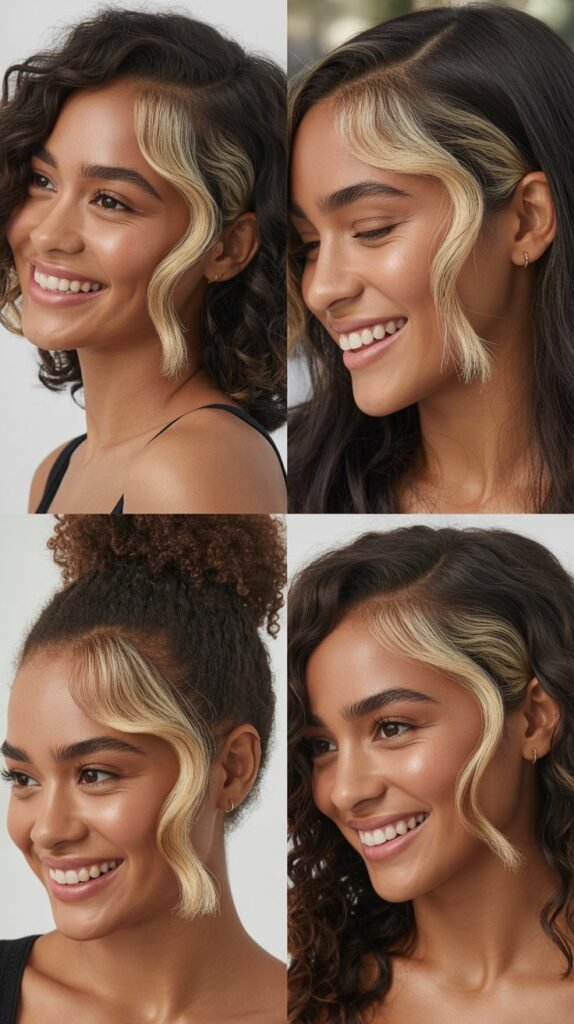
Money piece highlights feature two bold, thick sections of significantly lighter color framing both sides of the face, creating an instantly eye-catching effect that’s become one of the most popular highlighting trends for its high impact and relatively low maintenance.
Why It’s Called the Money Piece
- The term references the high-value impact these strategic sections create despite processing minimal hair.
- These face-framing highlights deliver maximum visual punch, making them worth the investment (hence “money” piece).
- The trend originated in salons as a cost-effective way to achieve a significant transformation without full-head highlighting.
- Celebrity adoption and social media popularity have cemented the money piece as a contemporary hair color staple.
Color Options for Money Pieces
- High contrast blonde: Creates dramatic definition against brown hair for a bold, statement-making appearance.
- Warm caramel: Softer than blonde but still noticeable, offering warmth and brightness without extreme contrast.
- Honey gold: Bridges the gap between natural and bold, providing luminosity with wearability.
- Platinum silver: Ultra-modern, cool-toned option that creates edgy, fashion-forward contrast.
- Copper or red: Adds warmth and vibrancy for those wanting color outside the blonde spectrum.
Styling Your Money Piece
- Part your hair down the middle to showcase both sections equally for a symmetrical, balanced appearance.
- Wear hair down and straight to create bold, defined ribbons of contrasting color on both sides of your face.
- Tuck hair behind one ear to reveal the money piece on the visible side while creating asymmetry.
- Pull hair back into a ponytail or bun, allowing the money pieces to frame your face and soften the pulled-back style.
- Create loose waves that blend the money pieces slightly with your base color for a softer, more dimensional effect.
16. Warm Toffee Highlights
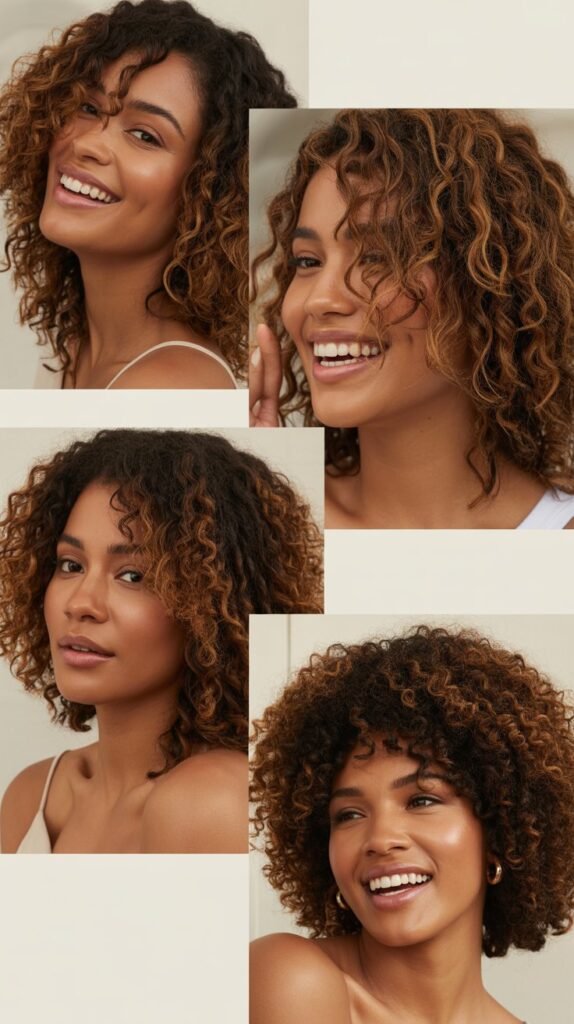
Warm toffee highlights offer rich, buttery dimension that falls between caramel and golden brown, creating a delicious-looking enhancement that adds warmth and luminosity to brown hair.
This shade is particularly flattering for medium to deep skin tones.
The Toffee Tone
- Toffee combines golden, amber, and light brown pigments to create a complex, multi-faceted warm shade.
- This color has enough depth to blend naturally with brown bases while providing noticeable brightening effects.
- The buttery quality of toffee reflects light beautifully, creating shine and luminosity in the hair.
- Toffee’s warmth complements the golden and red undertones common in many Black women’s skin tones.
Complementary Base Shades
- Medium brown: Toffee highlights create perfect contrast—different enough to notice but harmonious enough to blend.
- Dark brown: Provides more dramatic dimension while maintaining an overall warm, cohesive appearance.
- Light brown: Creates subtle, sun-kissed enhancement that appears almost natural.
- Red-brown bases: Toffee’s golden tones complement existing red undertones beautifully.
Seasonal Appeal
- Spring and summer: Toffee’s warm, golden quality captures the sunny essence of warmer months perfectly.
- Fall: The rich, sweet tone aligns with autumn’s cozy, harvest-inspired color palette.
- Winter: Toffee adds much-needed warmth during dreary months, brightening complexions and spirits.
- Year-round versatility: The balanced nature of toffee makes it appropriate and attractive across all seasons.
17. Dimensional Brown Color Melt
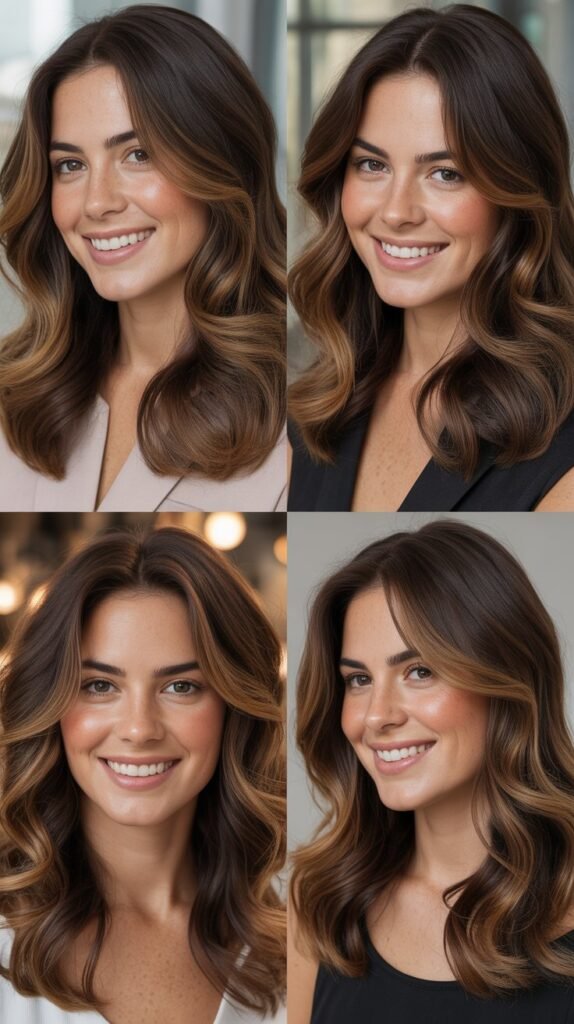
Color melt techniques create seamless transitions between multiple shades of brown, resulting in ultra-dimensional hair that appears to change color as it moves and catches light.
This advanced technique requires expert blending skills but delivers stunning, natural-looking results.
The Color Melt Process
- Multiple brown shades are applied throughout the hair, from darkest at the roots to lightest at the ends or strategically placed throughout.
- Colors are overlapped and blended at their meeting points, creating gradual transitions rather than distinct sections.
- The technique requires advanced color theory knowledge to select complementary shades that blend harmoniously.
- Application takes longer than traditional highlighting due to the precision and blending required.
Shade Combinations That Work
- Espresso to chocolate to chestnut: Deep to medium progression creating rich, sophisticated dimension.
- Mahogany to auburn to copper: Warm, red-based gradient offering vibrant, eye-catching results.
- Cool brown to ash brown to taupe: Contemporary cool-toned combination for modern, edgy appeal.
- Warm brown to toffee to honey: Golden progression creating sun-kissed, luminous effects.
Maintenance and Longevity
- Color melts grow out more gracefully than traditional highlights due to the seamless blending and intentional gradient.
- Toning treatments every 6-8 weeks help maintain the distinct shades and prevent them from bleeding together.
- The dimensional nature means color melts look good at various stages of growth, extending time between appointments.
- Deep conditioning treatments preserve the integrity of multiple color applications on the same hair.
- Gloss treatments enhance shine and refresh the vibrancy of all shades simultaneously.
18. Highlights for Natural Hair Textures
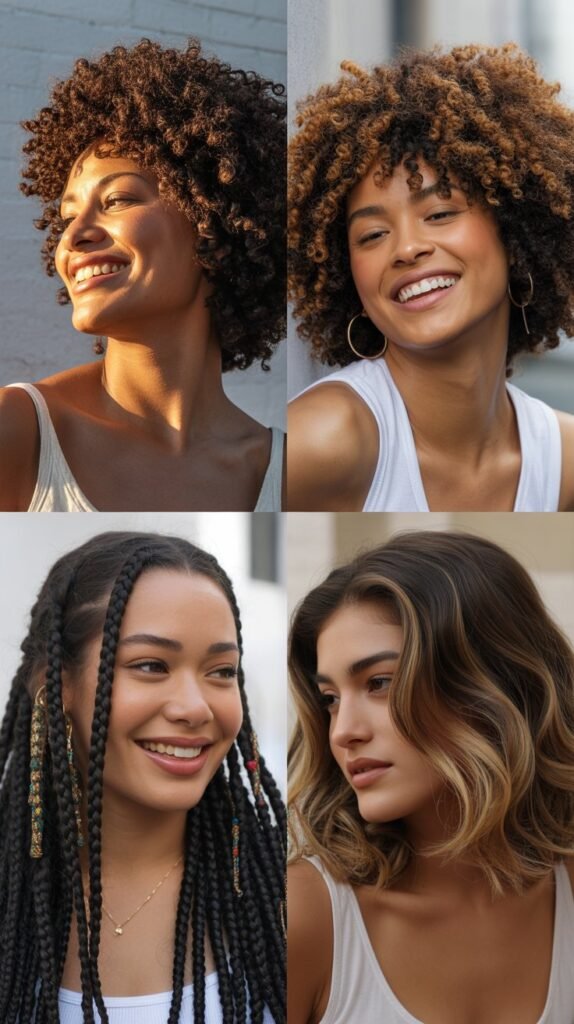
Highlighting natural hair textures—from loose waves to tight coils—requires specialized knowledge and techniques to enhance curls while maintaining their health and definition.
The right approach celebrates texture while adding beautiful dimension.
Understanding Texture and Color
- Natural hair tends to have higher porosity in its textured state, affecting how color penetrates and processes.
- The curves and bends in curly hair create natural shadows and highlights that colorist can enhance rather than fight against.
- Tighter curl patterns may show highlights differently than looser textures, requiring adjusted placement strategies.
- Natural hair’s fragility demands gentler processing techniques and extra care to prevent damage and breakage.
Best Highlighting Techniques for Curls
- Pintura highlighting: Paint-on technique following the natural curl pattern to enhance dimension where it naturally occurs.
- Curly balayage: Hand-painted highlights on dry, styled curls ensuring color placement complements the curl formation.
- Deva highlighting: Technique specifically designed for curly hair, painting color onto individual curl clumps.
- Diffused highlights: Softer application that creates overall brightness without distinct sections, ideal for maintaining curl integrity.
Protecting Natural Hair During Coloring
- Use bond-building treatments like Olaplex during the lightening process to minimize damage to already-fragile curl structures.
- Opt for lower volume developers (20 volume instead of 30 or 40) to achieve lighter tones more gently over multiple sessions if needed.
- Deep condition before, during (if possible), and after coloring to maintain moisture levels crucial for curl definition.
- Avoid overlapping color applications on previously lightened sections to prevent breakage at vulnerable points.
- Schedule trims before or after coloring to remove any weak or damaged ends that might not withstand processing.
Post-Color Curl Care
- Switch to sulfate-free, color-safe shampoos and conditioners specifically formulated for both color-treated and curly hair.
- Implement protein treatments to strengthen hair structure affected by chemical processing.
- Use leave-in conditioners and curl creams with UV protection to prevent color fading from sun exposure.
- Avoid heat styling when possible, as colored natural hair is more vulnerable to heat damage.
- Deep condition weekly using products designed for color-treated, textured hair to maintain moisture balance.
19. Peekaboo Highlights Underneath
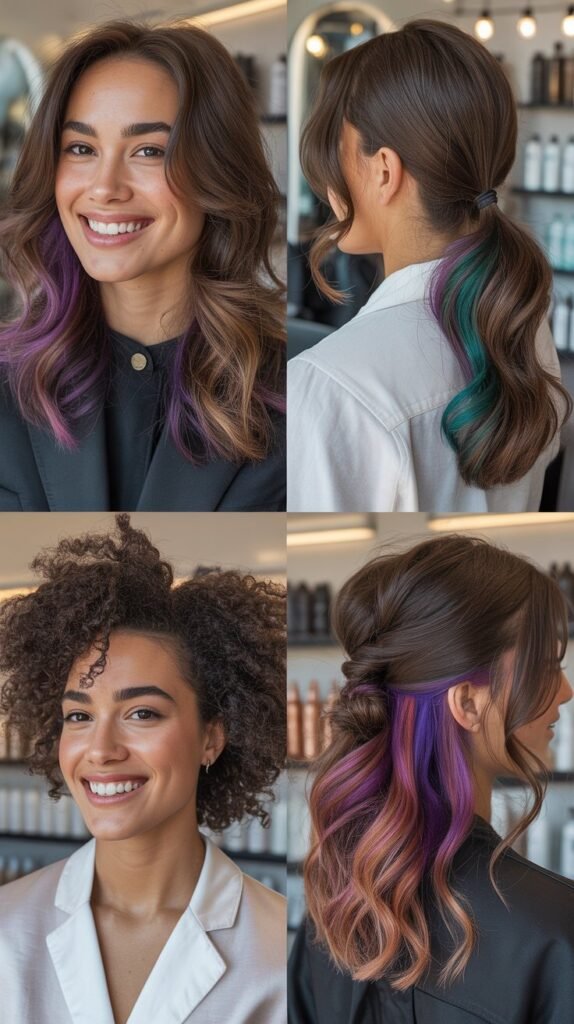
Peekaboo highlights hide pops of color underneath the top layer of hair, creating surprise dimension that’s revealed only when hair moves, is styled in updos, or is parted differently.
This technique offers versatility and playful dimension.
The Appeal of Hidden Color
- Peekaboo placement allows for bold color experimentation without committing to highly visible change.
- Professional environments benefit from this technique as the color can be completely hidden when needed.
- The surprise element adds personality and playfulness to your hairstyle without overwhelming it.
- Less visible color means less sun exposure and fading, potentially extending the vibrancy of your highlights.
Strategic Placement Options
- Nape section: Color hidden at the lowest back section, revealed when hair is worn up or in ponytails.
- Underlayer throughout: Highlights throughout the bottom layer creating dimension visible when hair moves.
- Side sections: Color placed at the sides of the head, revealed when hair is tucked behind ears or parted differently.
- Interior panels: Strategic sections within the hair that peek through when hair separates naturally.
Color Choices for Peekaboo
- Match your surface highlights for cohesive dimension that’s surprising yet harmonious when revealed.
- Go bold with contrasting colors like platinum, copper, or even fashion colors for maximum impact.
- Choose complementary shades that coordinate with but don’t match your base for subtle dimension.
- Consider seasonal colors you can hide completely when the season ends but enjoy while it lasts.
20. Foilayage Technique
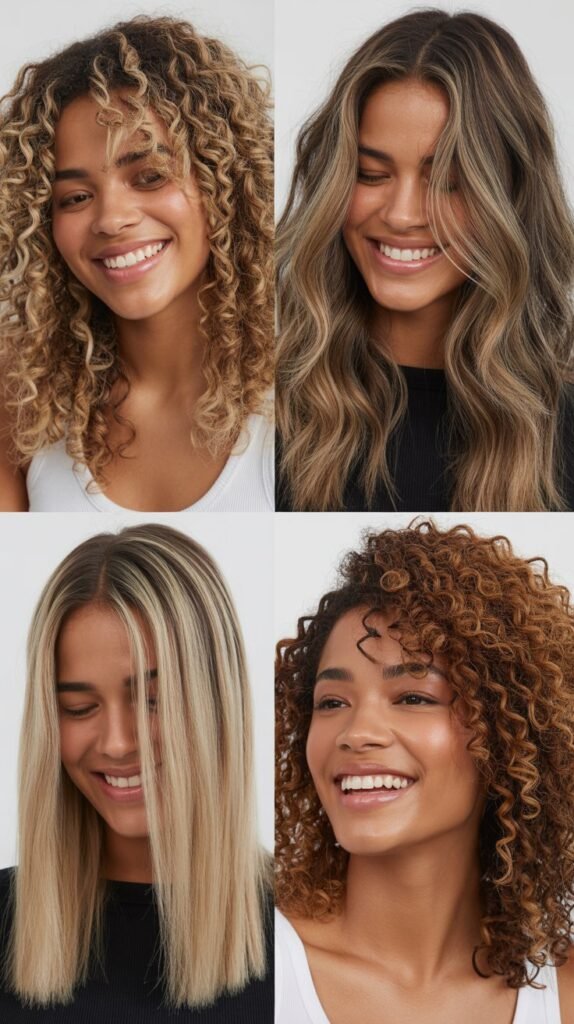
Foilayage combines the precision of traditional foil highlighting with the natural blending of balayage, offering the best of both worlds—controlled color placement with soft, seamless results that look hand-painted and natural.
How Foilayage Works
- Hair is hand-painted with lightener using balayage techniques to create natural placement and gradation.
- Instead of leaving the painted sections exposed to air, they’re enclosed in foils to increase processing power and lift.
- The foil enclosure allows for lighter results in less time compared to traditional open-air balayage.
- Once removed, the color appears hand-painted and natural despite the controlled processing environment.
Advantages Over Traditional Methods
| Aspect | Foilayage | Traditional Balayage | Traditional Foils |
|---|---|---|---|
| Processing time | Faster due to heat | Slower, air processing | Faster, controlled heat |
| Color lift | Higher lift potential | Softer, subtle lift | Highest lift potential |
| Appearance | Natural, blended | Most natural | Can be uniform |
| Precision | High precision | Artistic variation | Highest precision |
| Maintenance | Low, grows naturally | Lowest maintenance | Higher maintenance |
Ideal Candidates for Foilayage
- Those wanting significant lift (lighter highlights) with natural-looking placement and blending.
- Anyone transitioning from foiled highlights to balayage who still wants brightness but softer grow-out.
- People with stubborn, resistant hair that doesn’t lift well with traditional air-dried balayage alone.
- Clients seeking efficiency—foilayage achieves balayage results in less processing time.
21. Sun-Kissed Brown Highlights
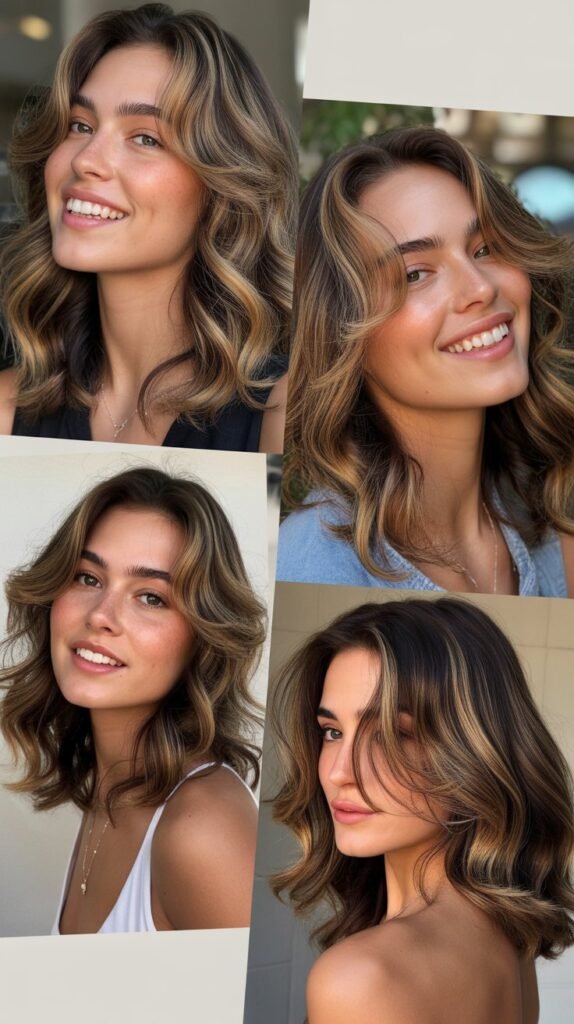
Sun-kissed highlights replicate the natural lightening that occurs from sun exposure, concentrating lighter tones where the sun would naturally hit—the top layers, around the face, and at the ends—for effortlessly beautiful, vacation-inspired hair.
Mimicking Natural Lightening
- Sun-kissed placement focuses on the “high points” of the hair—the top surface, crown area, and around the hairline.
- Color is typically warmer (golden, honey, caramel) as these are the tones sun naturally creates in brown hair.
- The ends are often lighter than the roots, mimicking the gradual exposure pattern of hair growing over a sunny season.
- Highlights are softer and more diffused rather than precise and uniform, replicating organic sun lightening.
Best Application Methods
- Balayage perfectly suits sun-kissed effects with its hand-painted, natural placement philosophy.
- Hair painting on dry hair allows the colorist to see exactly where light hits naturally when you’re in the sun.
- Lighter application at the ends and around the face with more concentration on the top layers creates authentic dimension.
- Minimal saturation creates softer, more diffused color rather than intense, bold highlights.
Seasonal Transitions
- Spring/Summer: Go brighter and more golden, embracing the warm-weather aesthetic with more visible lightness.
- Fall/Winter: Tone down to slightly deeper sun-kissed tones that still provide warmth without summer intensity.
- Maintenance between seasons: Gloss or toner treatments can shift the tone without completely re-coloring.
- The natural grow-out means sun-kissed hair transitions beautifully between seasons without obvious re-growth lines.
22. Ribbon Highlights Throughout
Ribbon highlights are thin, uniform sections of lighter color strategically placed throughout the hair, creating continuous vertical lines that add consistent dimension and movement from roots to ends.
The Ribbon Effect
- Thin, consistent sections create continuous lines of color rather than scattered pieces of varying thickness.
- Ribbons are typically placed uniformly throughout the head for even, all-over dimension.
- The vertical nature creates the illusion of length and can make hair appear fuller and more voluminous.
- Even distribution ensures the highlights are visible from all angles, not just the top or front sections.
Creating Natural-Looking Ribbons
- Vary the exact placement slightly rather than creating perfectly uniform, grid-like patterns for more organic results.
- Use multiple complementary shades within the ribbon technique for added complexity and dimension.
- Keep ribbons very thin (baby-fine) for subtle dimension or slightly thicker for more noticeable contrast.
- Blend the ribbons at the roots using shadowing or smudging techniques to soften the grow-out line.
Styling to Showcase Ribbons
- Straight, sleek styles allow the vertical lines to appear clearly defined and graphic.
- Gentle waves create a softer effect where ribbons blend slightly with movement while remaining visible.
- Updos and braided styles weave the ribbons throughout, creating patterned dimension in structured hairstyles.
- High ponytails reveal the ribbons running from root to tip, showing the consistent dimensional effect.
23. Highlights for Short Brown Hair
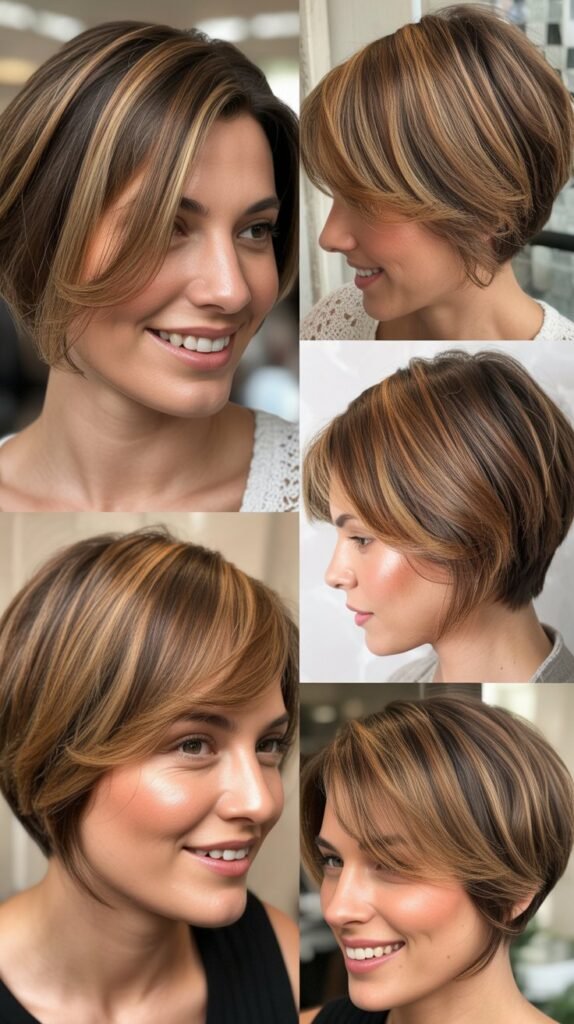
Short brown hair presents unique opportunities for highlighting, with placement strategies that enhance the haircut’s shape while adding dimension that makes the style appear more dynamic and modern.
Strategic Placement for Short Styles
- Pixie cuts: Concentrate highlights on the longer top sections and around the hairline to draw attention to facial features.
- Bob cuts: Place highlights throughout the top layer and heavily around the face, keeping underneath darker for depth.
- TWA (Teeny Weeny Afro): Add highlights to the crown and front sections where sun would naturally hit.
- Short tapered cuts: Highlight the longer sections on top while keeping tapered sides natural for contrast and definition.
Color Considerations for Short Hair
- Bold, high-contrast colors work well on short hair as there’s less length to overwhelm with dramatic color.
- Frequent trims mean highlights may be cut away, so choose low-maintenance placement or commit to regular color refresh.
- Lighter highlights around the face maximize brightening effects that short hair naturally provides.
- Multiple colors can coexist in short styles without appearing too busy due to the limited canvas.
Maintenance Realities
- Short hair grows out faster relative to overall length, meaning color appointments may be needed more frequently.
- Haircuts every 4-6 weeks can remove highlighted ends, requiring strategic placement that maintains effect despite regular trimming.
- Root touch-ups may become less important as frequent cuts refresh the entire style regularly.
- Consider all-over color techniques like color melting that maintain effect even as hair is trimmed.
24. Long Brown Hair with Highlights
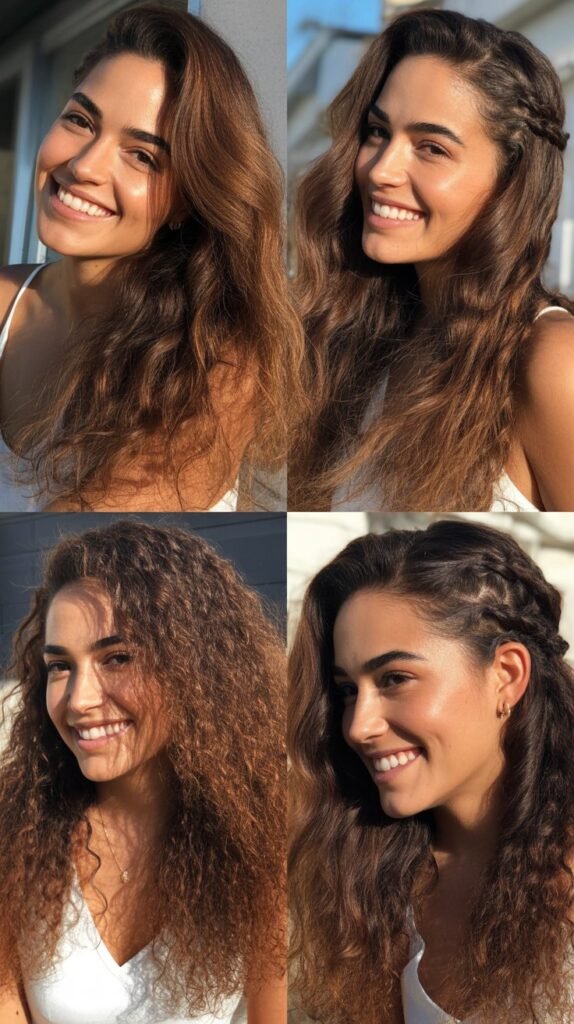
Long brown hair provides an extensive canvas for highlighting, allowing for complex color combinations, dramatic gradients, and multi-dimensional techniques that showcase the full length and movement of the hair.
Maximizing Length Impact
- Gradient techniques like ombré and balayage emphasize length by creating color journeys from root to tip.
- Strategic highlight placement can draw the eye downward, making already-long hair appear even longer.
- Multi-tonal dimension adds visual interest throughout the length, preventing long hair from appearing flat.
- Face-framing combined with length-enhancing techniques creates a comprehensive, flattering effect.
Placement Patterns for Long Hair
- Heaviest at ends: Concentrating lighter color toward the bottom creates dimension where hair naturally moves most.
- Vertical ribbons: Continuous highlights from root to tip emphasize length and create sleek, elegant dimension.
- Sectioned approach: Different placement strategies in different areas (face-framing, crown highlights, end lightening) for comprehensive coverage.
- Layered dimension: Highlights throughout layers create depth and prevent long hair from appearing one-dimensional.
Maintaining Healthy Long Highlighted Hair
- Regular trims every 8-12 weeks remove damaged highlighted ends while maintaining length.
- Deep conditioning treatments become essential as highlighted ends are the oldest, most processed hair.
- Protective styles reduce manipulation and breakage of vulnerable highlighted sections.
- Silk or satin pillowcases and bonnets prevent friction damage to delicate colored hair during sleep.
- Lower heat styling temperatures and always use thermal protectants to prevent additional damage to processed hair.
25. Highlights for Fine Hair
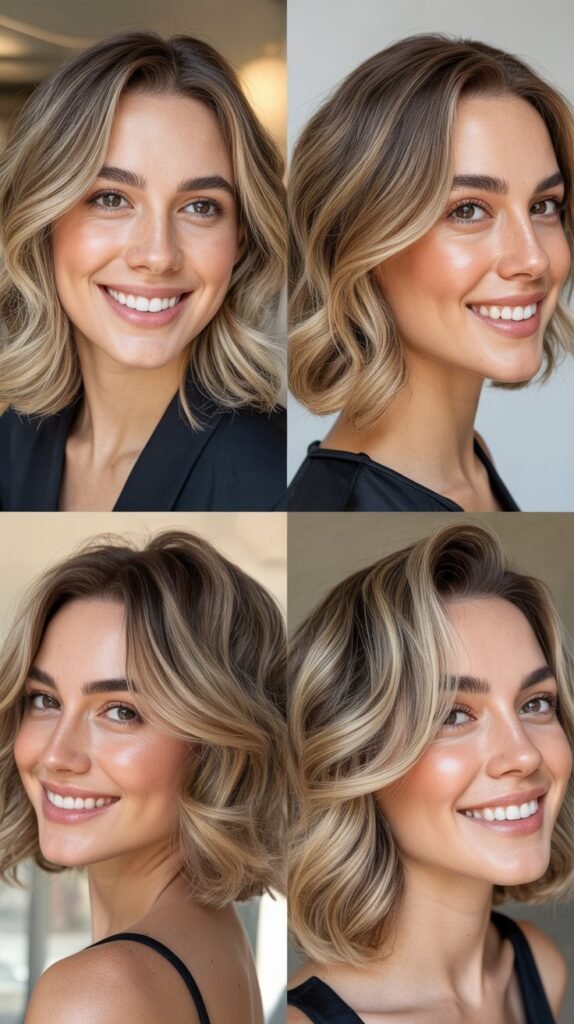
Fine hair requires special highlighting considerations to add dimension without making the hair appear thinner or emphasizing its delicate nature.
The right technique can actually make fine hair appear fuller and more voluminous.
Color Placement for Volume
- Lighter highlights on top layers reflect more light, making hair appear more voluminous and fuller.
- Darker lowlights underneath create shadow and depth that makes the top layers pop forward visually.
- All-over highlighting can sometimes make fine hair appear thinner by removing dimension, so strategic placement is key.
- Vertical placement creates the illusion of more hair strands and greater density than horizontal sections.
Appropriate Techniques
- Babylights: Ultra-fine sections match the delicate nature of fine hair, creating proportionate dimension.
- Teasy lights: Back-combing sections before applying color creates softer, more diffused results that add perceived texture.
- Balayage: Hand-painting allows for customized placement that enhances fine hair without overwhelming it.
- Avoid: Heavy, chunky highlights that create too much contrast and can make fine hair appear sparse.
Processing Considerations
- Fine hair processes faster than thick, coarse hair, requiring lower developer volumes and shorter processing times.
- Over-processing fine hair leads to breakage and thinning, so conservative approaches yield better long-term results.
- Frequent deep conditioning treatments are essential as fine hair lacks the natural resilience of thicker textures.
- Lighter, more frequent color applications create less stress on delicate fine hair than infrequent dramatic changes.
26. Highlights for Thick Hair
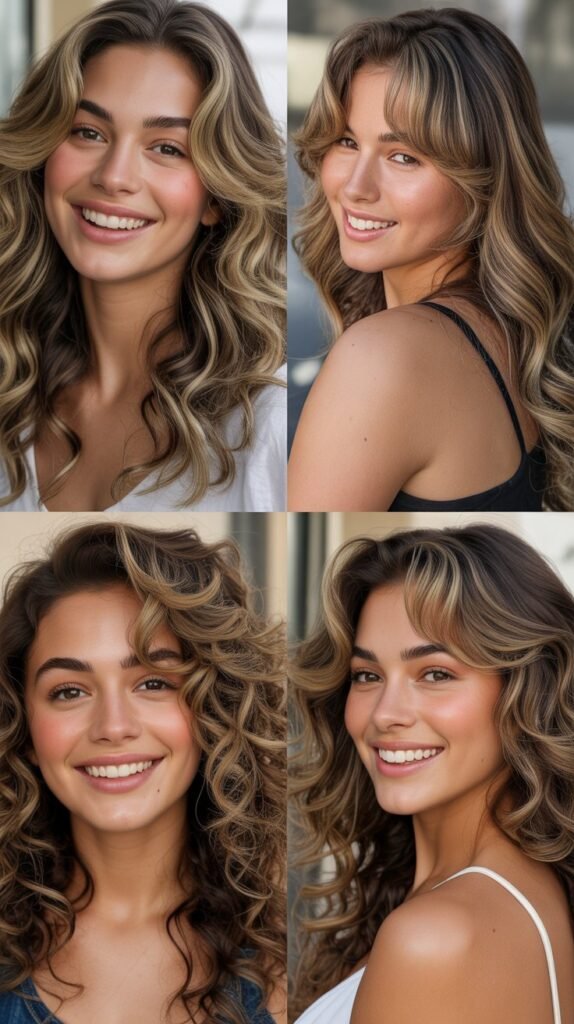
Thick hair provides the perfect canvas for bold highlighting techniques, supporting more extensive color work without appearing over-processed while offering volume and texture that showcases dimensional color beautifully.
Advantages of Thick Hair
- Abundant hair density allows for more extensive highlighting without making hair appear thin or sparse.
- Thick hair typically resists damage better than fine hair, tolerating more processing with proper care.
- The natural volume and movement of thick hair showcases multi-dimensional color effects beautifully.
- Multiple color techniques can be combined in thick hair without creating overwhelming results.
Appropriate Coverage
- Full-head highlights work well in thick hair, creating comprehensive dimension throughout all sections.
- Partial highlights may not show adequately in very thick hair, potentially appearing too subtle or uneven.
- Multi-tonal approaches with multiple highlight shades create complex, salon-quality dimension.
- Thick hair may require more foils or more extensive hand-painting to achieve desired coverage and visibility.
Time and Cost Factors
| Factor | Fine Hair | Thick Hair |
|---|---|---|
| Foils needed | 30-50 sections | 60-100+ sections |
| Application time | 1.5-2.5 hours | 3-5 hours |
| Product amount | Less color/lightener | Significantly more product |
| Cost range | $100-$200 | $150-$400+ |
| Processing time | Faster, requires monitoring | Longer, more resistant |
27. Sombre (Soft Ombré) Highlights
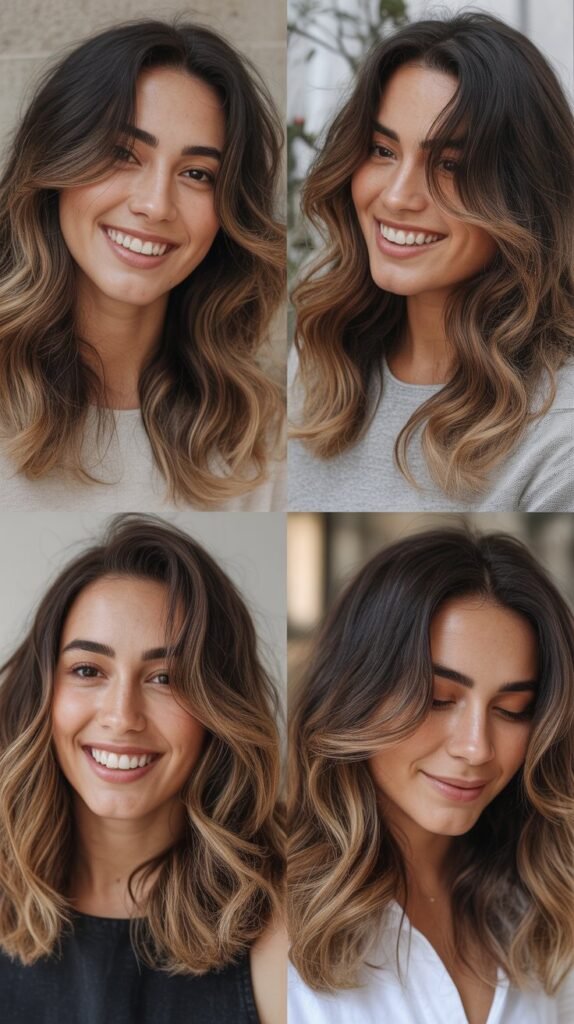
Sombre, or soft ombré, creates a gentler gradient transition than traditional ombré, blending colors more subtly from roots to ends for a natural-looking, sun-kissed effect that’s sophisticated and low-maintenance.
Sombre vs. Ombré Distinctions
- Sombre creates a softer, more gradual transition with less dramatic contrast between sections.
- The blending zone is much wider in sombre, creating almost imperceptible color shifts rather than distinct zones.
- Sombre appears more natural and sun-kissed while ombré makes a bolder, more intentional style statement.
- Maintenance is equally low for both techniques, but sombre requires less dramatic initial color change.
Achieving the Perfect Sombre
- Start with highlights just 2-3 shades lighter than your base for the subtle contrast that defines sombre.
- Use multiple intermedi shades to create the gradual transition rather than jumping from dark to light.
- Blend extensively where colors meet, using techniques like backbrushing or teasing to diffuse harsh lines.
- Consider starting the transition higher up (mid-length rather than at ears) for even softer, more gradual results.
Ideal Candidates
- First-time color clients who want dimensional color without dramatic transformation.
- Those with professional requirements for conservative, natural-looking hair color.
- Anyone seeking extremely low-maintenance color that gracefully grows out for months.
- People who love the ombré concept but prefer subtler, more understated results.
28. Highlights with Protective Styles
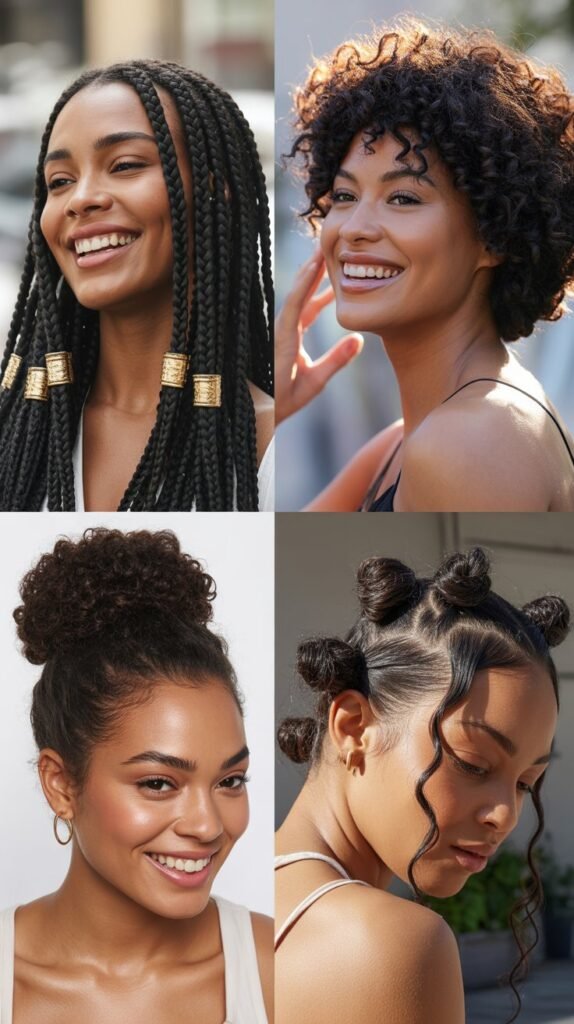
Highlighting hair before or during protective styling requires careful planning to showcase the color while protecting hair health.
The right approach allows you to enjoy colorful dimension even when hair is braided, twisted, or otherwise protected.
Pre-Color or Post-Installation?
- Coloring before braiding: Ensures even, controlled color application on your natural hair; color is visible throughout the protective style.
- Coloring braiding hair: Allows you to enjoy highlighted looks without processing your natural hair; requires dyeing synthetic or human hair extensions.
- Timing considerations: Color natural hair 1-2 weeks before installation to allow recovery time before manipulation.
- Hair health: Pre-existing highlights can handle protective styling if hair is properly strengthened and moisturized beforehand.
Best Protective Styles for Highlighted Hair
- Box braids: Highlights show throughout the length of braids, creating colorful dimension in a classic protective style.
- Twists: Two-strand twists and Senegalese twists beautifully display color variations while protecting hair.
- Faux locs: Highlighted locs create a multi-dimensional dreadlock effect without permanent commitment.
- Cornrows: Geometric parting patterns showcase highlights in the natural hair between braided sections.
Maintaining Color Under Protection
- Apply leave-in conditioner with UV protection before installing protective styles to prevent sun fading.
- Use color-safe, diluted cleansing products when washing protective styles to avoid stripping color.
- Avoid styles so tight they cause tension on previously lightened, more vulnerable sections.
- Limit protective style duration to 6-8 weeks maximum to minimize the time highlighted hair goes without direct conditioning.
- Deep condition thoroughly between protective style installations to restore moisture and maintain color vibrancy.
29. Copper and Caramel Combination
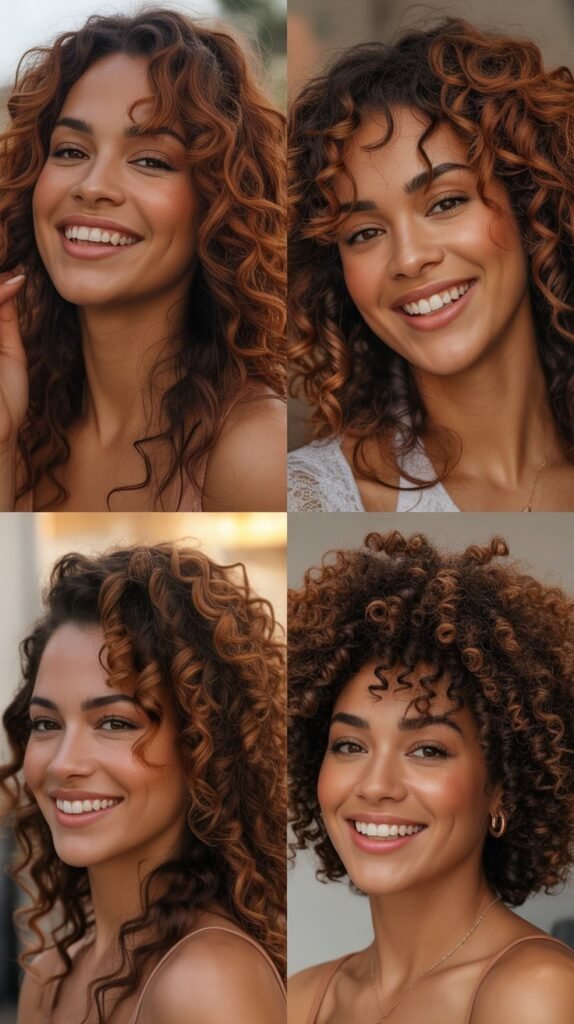
Combining copper and caramel creates a luxurious, multi-dimensional effect that layers warm tones for depth, richness, and eye-catching movement.
This sophisticated pairing offers the best of both warm highlight shades.
Why This Combination Works
- Both colors share warm undertones, creating harmonious blending rather than competing tones.
- The slight difference in intensity (copper being brighter, caramel being softer) creates subtle dimension.
- Multiple warm tones prevent hair from appearing flat or one-dimensional even within the same color family.
- The combination is universally flattering for warm and neutral skin undertones.
Strategic Application
- Use caramel as the primary highlight color throughout most of the hair for a balanced, wearable base.
- Add copper as accent highlights in strategic locations like face-framing sections or through the top layer.
- Alternate copper and caramel in thin ribbons throughout for seamless blending and complex dimension.
- Concentrate copper at the ends and caramel at mid-lengths for a gradient effect within warm tones.
Maintenance Approach
- Copper fades faster than caramel, so use copper-toned color-depositing products to maintain vibrancy.
- The similar warm tones mean fading happens within the same color family, maintaining overall aesthetic even between touch-ups.
- Gloss treatments in warm golden-brown tones refresh both colors simultaneously.
- Sun protection becomes crucial as both warm tones are susceptible to fading from UV exposure.
30. Ash Blonde Highlights for Contrast
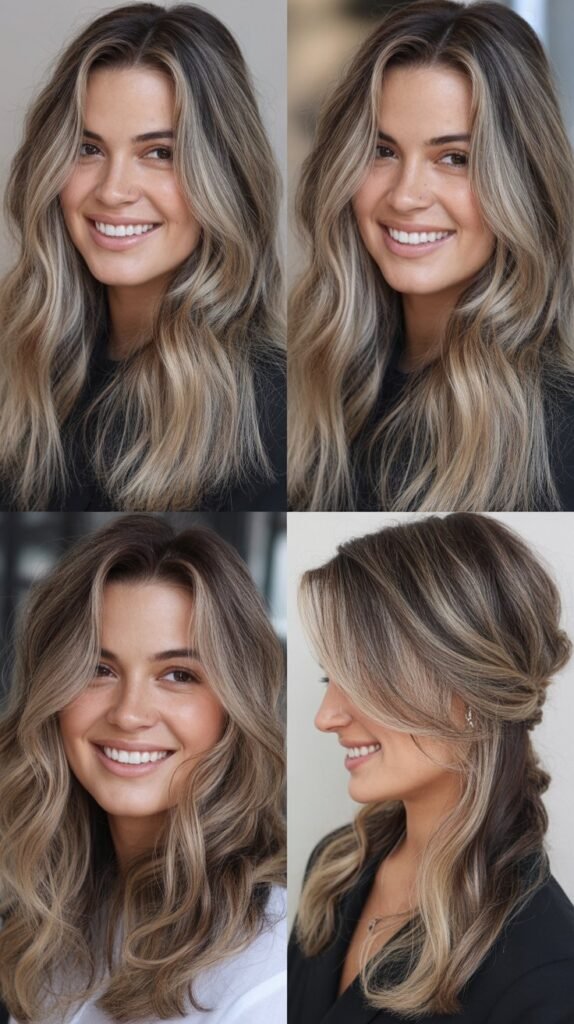
Ash blonde highlights create striking, high-contrast dimension on brown hair, offering a cool-toned, modern alternative to traditional warm highlights.
This dramatic combination makes a bold style statement.
The Cool-Toned Appeal
- Ash blonde’s gray-based, cool tones create maximum contrast against warm brown bases.
- The modern, edgy aesthetic appeals to fashion-forward individuals seeking contemporary looks.
- Cool tones can make skin appear brighter and more even-toned, particularly for those with cool undertones.
- The dramatic contrast makes a definitive style statement without using unnatural fashion colors.
Achieving True Ash Blonde
- Brown hair must be lifted significantly to achieve pale ash blonde, requiring expert processing to minimize damage.
- Purple and blue toners are essential to neutralize unwanted warmth and achieve true ash tones.
- Multiple sessions may be necessary to lift dark brown to ash blonde safely without over-processing.
- Regular toning appointments (every 4-6 weeks) maintain the ash tone and prevent brassy warmth from developing.
Commitment Level
- Ash blonde on brown hair requires significant maintenance due to high contrast showing obvious re-growth.
- The cool tones fade relatively quickly, necessitating frequent toning to maintain the desired ash effect.
- Hair care becomes intensive with purple shampoos, deep conditioning, and potentially protein treatments.
- Financial commitment is substantial with both initial color application and ongoing maintenance requiring professional services.
31. Mahogany Highlights for Richness
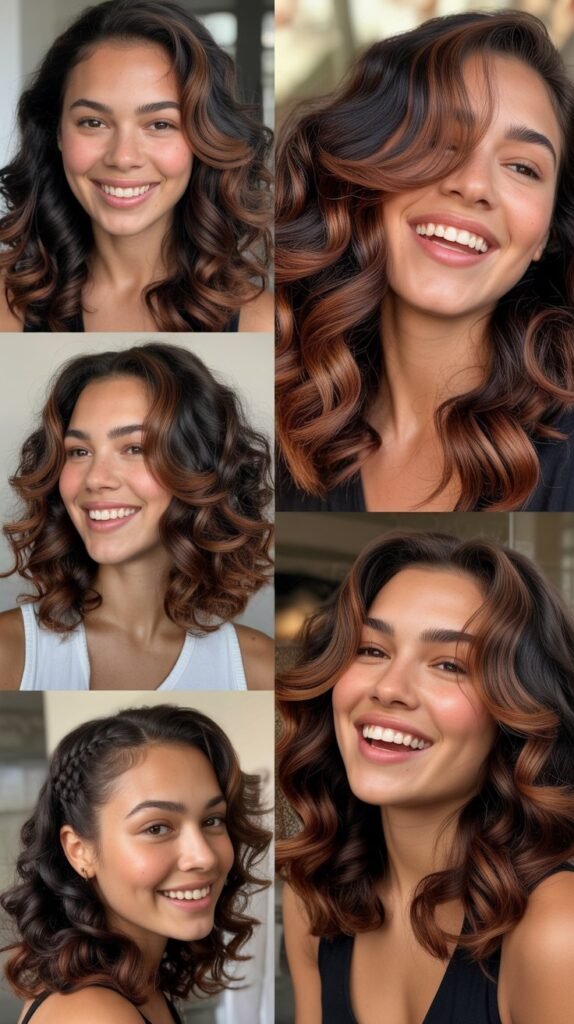
Mahogany highlights add deep, rich red-brown dimension to brown hair, creating a luxurious, sophisticated effect that’s particularly stunning on deeper skin tones.
These jewel-toned highlights offer warmth without brightness.
Understanding Mahogany
- Mahogany is a deep reddish-brown with purple undertones, named after the rich wood tone.
- This shade adds dimension through richness and depth rather than lightening or brightening.
- The red and purple tones create movement and interest while maintaining an overall dark, sophisticated appearance.
- Mahogany complements deep brown bases seamlessly, blending while still providing noticeable dimension.
Application Techniques
- Lowlights and highlights combination: Use mahogany as lowlights with lighter caramel or chestnut highlights for comprehensive dimension.
- All-over mahogany highlights: Create uniform richness throughout brown hair without introducing lighter tones.
- Ombré to mahogany: Transition from dark brown roots to mahogany ends for subtle, rich gradient effects.
- Face-framing mahogany: Strategic placement around the face adds warmth and dimension where it’s most visible.
Complementary Styling
- Glossy, sleek styles showcase the rich sheen and depth of mahogany tones beautifully.
- Curls and waves allow the mahogany to catch light differently at various angles, creating dynamic color effects.
- Updos reveal the multi-dimensional interplay between mahogany highlights and brown base colors.
- Natural texture styles show mahogany’s richness throughout the hair’s natural movement and form.
32. Platinum Blonde Accents
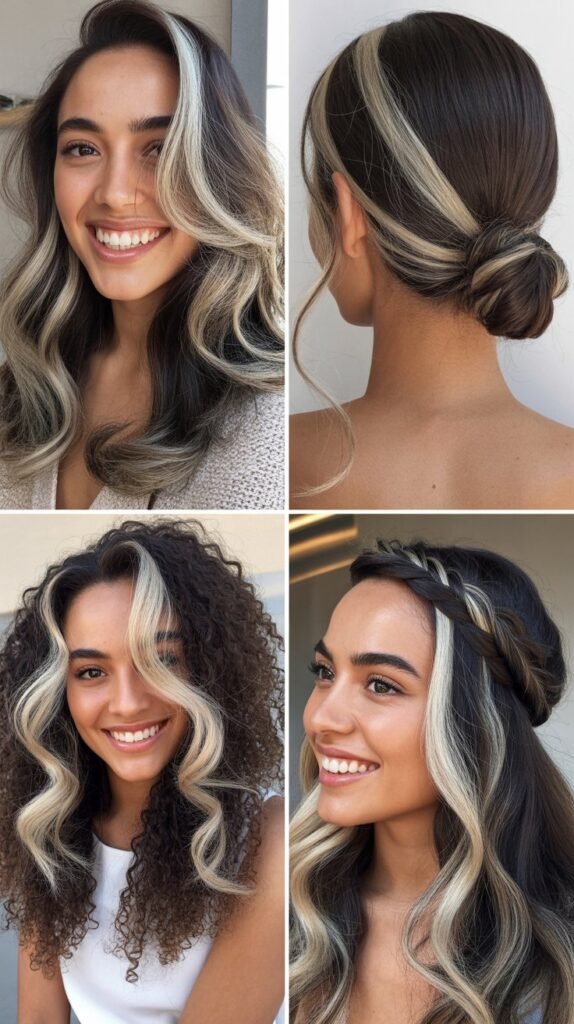
Platinum blonde accents create the highest possible contrast on brown hair, offering a bold, fashion-forward look that’s undeniably striking.
This dramatic approach suits confident individuals ready for significant maintenance commitment.
The Ultra-High Contrast Look
- Platinum blonde represents the lightest possible highlight shade, creating maximum visual impact against brown bases.
- The stark contrast draws immediate attention and makes an unforgettable style statement.
- This look requires confidence as it’s impossible to hide or downplay—it demands to be noticed.
- The modern, edgy aesthetic aligns with contemporary fashion and celebrity-inspired trends.
Processing Realities
- Achieving platinum on brown hair requires extensive lifting, typically involving bleach and potentially multiple sessions.
- Hair damage risk is highest with platinum highlighting due to the extreme color removal necessary.
- Expert colorists are essential—platinum highlighting is not a DIY-friendly process.
- Pre-lightening treatments and bond-building products are crucial for minimizing damage during intense processing.
Intensive Maintenance Requirements
- Purple shampoo becomes a weekly necessity to combat the brassiness platinum develops extremely quickly.
- Professional toning appointments every 3-4 weeks maintain the bright, cool-toned platinum shade.
- Deep conditioning treatments should be done 2-3 times weekly to combat the dryness of heavily processed hair.
- Root touch-ups are needed every 4-6 weeks as the high contrast makes re-growth immediately obvious.
- Protective styling and minimal heat usage help preserve the integrity of compromised platinum sections.
Placement Strategies
- Money piece only: Limit platinum to face-framing sections for bold impact with less processing.
- Scattered accents: Strategic platinum pieces throughout create dimension without full-head commitment.
- Ombré to platinum: Transition brown to platinum at ends only, limiting root maintenance needs.
- Underlayer platinum: Peekaboo placement allows you to hide the dramatic color when needed for versatility.
33. Honey Balayage on Dark Brown
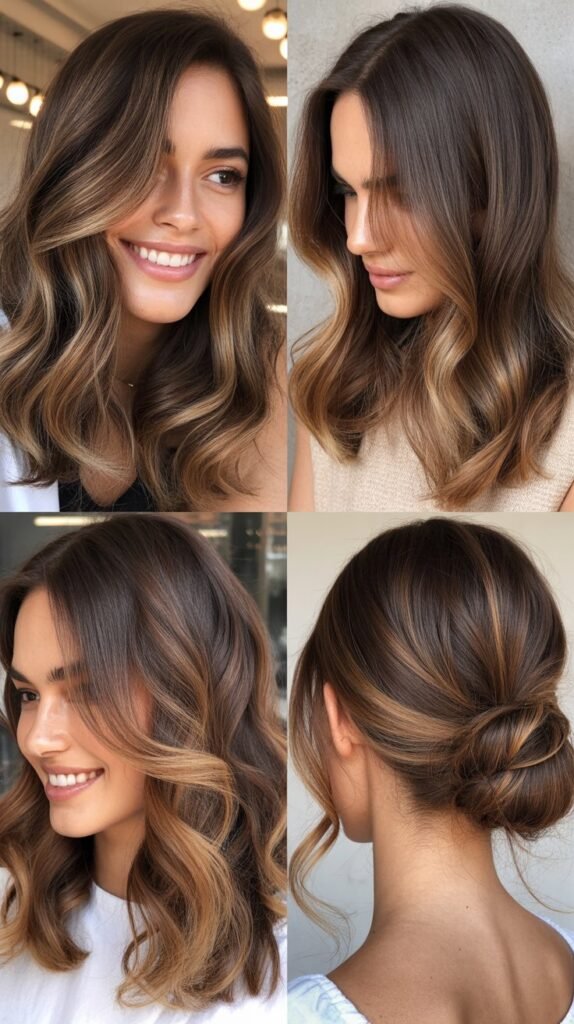
Honey balayage on dark brown hair creates a stunning sun-kissed effect with significant contrast that’s still warmer and more natural-looking than blonde highlights.
This popular combination offers the perfect balance of drama and wearability.
Why This Combination Excels
- The contrast between dark brown and honey is significant enough to be noticeable without being as stark as blonde.
- Honey’s warm golden tones complement the rich warmth in dark brown hair and in many Black women’s skin tones.
- The balayage technique creates natural-looking dimension that doesn’t appear artificially applied.
- Maintenance is moderate—more involved than subtle caramel but less intensive than platinum.
Placement for Maximum Impact
- Concentrate honey heavily around the face to maximize the brightening, complexion-enhancing effects.
- Gradually increase honey saturation from mid-lengths to ends, creating a natural sun-kissed gradient.
- Keep roots intentionally dark (root shadow technique) for low-maintenance grow-out and natural dimension.
- Paint honey sparingly through the top layer only, keeping underneath dark for depth and contrast.
Seasonal Adjustments
| Season | Adjustment Strategy |
|---|---|
| Spring/Summer | Add more honey, increase brightness, extend lightness higher up the hair shaft |
| Fall/Winter | Tone down with glazes, add deeper caramel lowlights, concentrate honey more at ends |
| Transition periods | Use glossing treatments to shift tones without complete reapplication |
| Year-round option | Maintain consistent honey placement with tonal adjustments through glosses |
34. Mocha Highlights for Subtlety
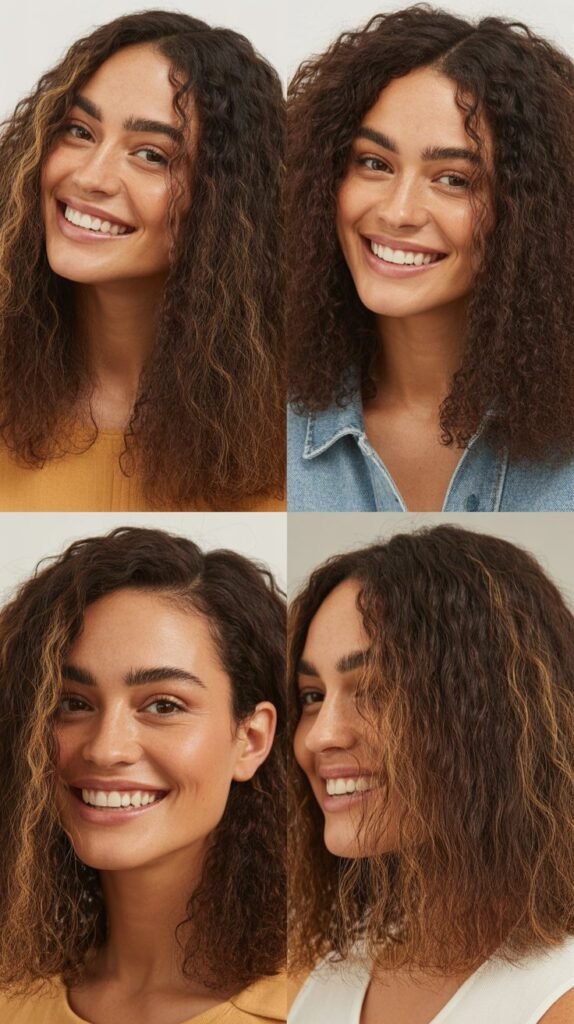
Mocha highlights offer the most subtle approach to dimensional color, adding just a hint of lighter brown that creates soft dimension without obvious contrast.
This conservative option is perfect for professional environments or color novices.
The Mocha Shade
- Mocha is a medium brown with slight warmth—essentially coffee with cream translated into hair color.
- The shade sits only 1-2 levels lighter than most dark brown bases, creating minimal but noticeable dimension.
- Subtle enough to appear natural, as if your hair naturally has slight color variation.
- The barely-there quality makes mocha highlighting ideal for conservative workplaces and first-time color clients.
Professional Environment Appropriateness
- Mocha highlights remain appropriate in the most conservative professions: law, medicine, finance, education, government.
- The subtle nature prevents hair from becoming a distraction or topic of conversation in professional settings.
- Maintains a polished, well-groomed appearance without appearing high-maintenance or trend-focused.
- Demonstrates attention to personal appearance while respecting workplace decorum and expectations.
Application Best Practices
- Use fine sections to create soft, blended dimension rather than noticeable distinct highlights.
- Apply mocha throughout the entire head rather than in concentrated areas for subtle all-over enhancement.
- Avoid strong contrast placement like money pieces or heavy face-framing that would draw attention.
- Request a toner closely matching your natural color to further blend and soften the already-subtle difference.
35. Rose Gold Highlights
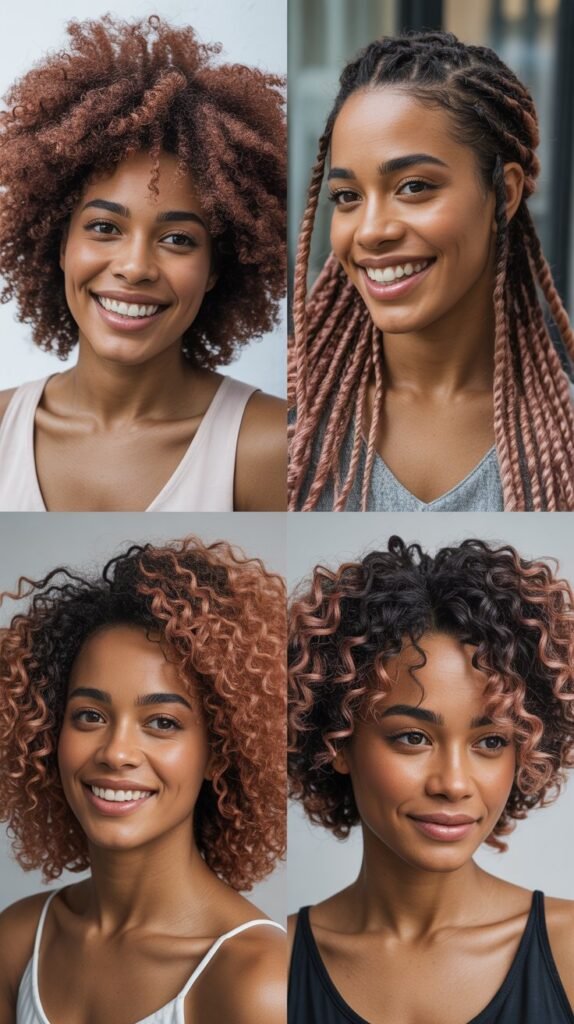
Rose gold highlights combine warm copper with cool pink tones, creating a contemporary, romantic shade that’s fashion-forward while remaining wearable.
This trendy color offers unique dimension that stands out from traditional warm highlights.
The Rose Gold Phenomenon
- Rose gold combines warm orange-copper with cool pink, creating a complex, multi-tonal shade.
- The color became wildly popular due to rose gold jewelry, accessories, and technology products.
- In hair, rose gold adds feminine, romantic dimension that’s distinctive without being unnatural.
- The shade works surprisingly well on various skin tones, particularly those with neutral to cool undertones.
Achieving the Perfect Rose Tone
- Hair must be pre-lightened to a pale yellow or blonde base for rose gold tones to show properly.
- Rose gold requires custom color mixing, combining copper, pink, and sometimes peach toners.
- The exact shade varies from peachy-rose to pink-copper based on formulation and base color.
- Professional application is strongly recommended as rose gold is challenging to achieve accurately.
Maintenance and Longevity
- Rose gold fades relatively quickly, typically lasting 4-6 weeks before requiring refresh toners.
- The color fades to softer peachy or copper tones rather than going brassy, creating graceful transitions.
- Use rose gold-tinted color-depositing conditioners weekly to extend vibrancy between salon visits.
- Avoid clarifying shampoos and hot water, both of which strip the delicate pink tones rapidly.
- Professional glossing every 4-6 weeks restores the rosy tones and maintains the unique color.
36. Highlights for Gray Coverage
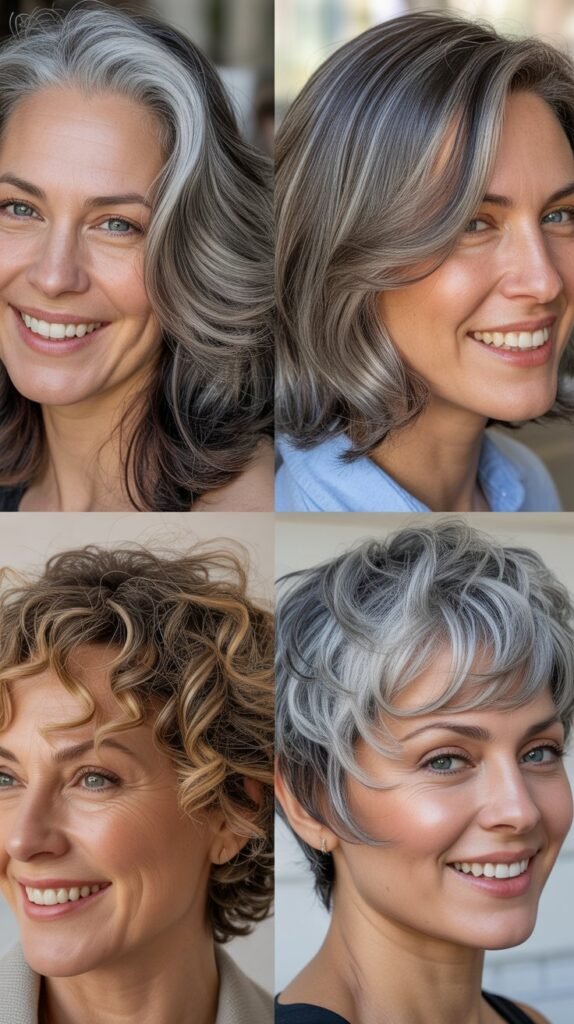
Strategic highlighting can effectively blend gray hair with colored hair, creating dimension that disguises gray rather than completely covering it.
This approach offers a lower-maintenance alternative to full color for those with emerging gray.
The Blending Approach
- Rather than fighting gray, highlights embrace it by adding similar light tones throughout the hair.
- The varied dimension created by multiple shades makes individual gray strands less noticeable.
- This technique extends the time between color appointments compared to solid all-over color.
- As more gray emerges, additional highlights can be added to maintain the blended effect.
Highlight Shades for Gray Blending
- Choose highlight shades 2-3 levels lighter than your base to match the lightness of gray strands.
- Warm highlights (caramel, honey) add dimension while cool tones in gray won’t show distinct warmth.
- Consider adding multiple complementary shades to create complex dimension that further camouflages gray.
- Avoid single-shade highlighting which may not provide enough variety to effectively blend gray coverage.
Transitioning to Silver/Gray
- If embracing gray fully, highlights can help transition by gradually adding cooler, ashier tones.
- Platinum or ash blonde highlights bridge the gap between brown and silver as gray grows in.
- The gradual approach reduces the shock of going fully gray and maintains style throughout the process.
- Eventually, the highlights and natural gray will blend, eliminating the need for further color services.
37. Caramel Ombré Effect
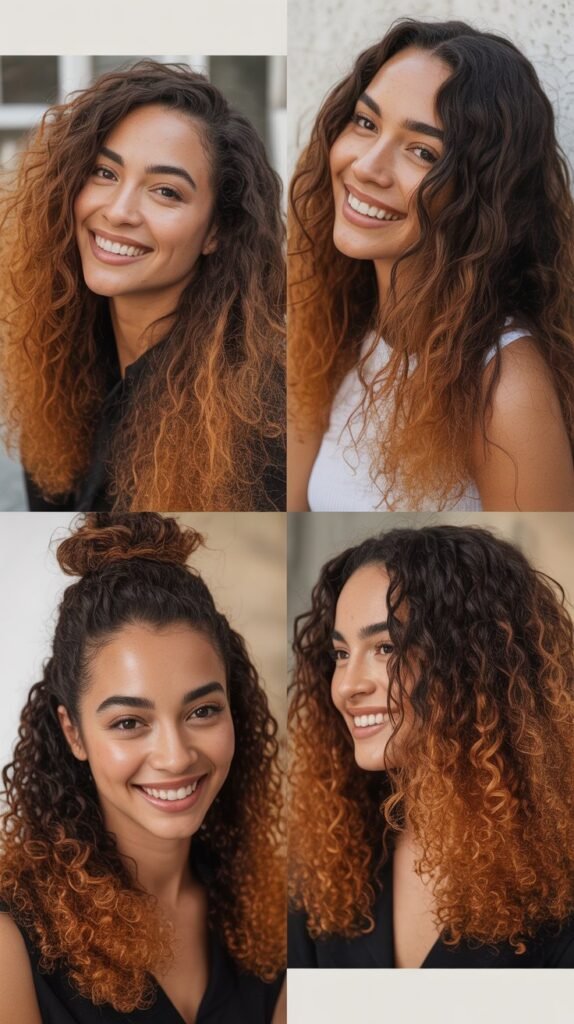
Caramel ombré combines the popular gradient technique with warm, universally-flattering caramel tones, creating a low-maintenance, high-impact look that transitions from dark brown roots to sweet caramel ends.
The Sweet Gradient
- Caramel ombré maintains natural dark roots while creating increasingly warm, light caramel toward the ends.
- The warm tone family creates a harmonious transition that feels natural despite the color difference.
- This technique flatters nearly all skin tones, particularly those with warm and neutral undertones.
- The gradient effect adds perceived length by drawing the eye downward along the color journey.
Blending Techniques
- Soft blending is crucial—the transition zone should span several inches rather than creating harsh lines.
- Backbrushing or teasing during application diffuses color for seamless gradients without obvious demarcation.
- Multiple caramel shades (light and medium) create more natural-looking transitions than single-shade application.
- Balayage strokes within the transition zone add dimension that further softens the gradient.
Length Considerations
| Hair Length | Ombré Considerations |
|---|---|
| Short (chin-length or shorter) | Limited space for gradient; consider balayage instead for better proportion |
| Medium (shoulder-length) | Ideal for ombré; sufficient length for visible gradient without extreme contrast |
| Long (past shoulders) | Perfect canvas for dramatic gradients; can start transition lower for subtlety |
| Very long (waist-length+) | Maximum gradient potential; can create extended, ultra-gradual color journey |
38. Highlights for Different Seasons
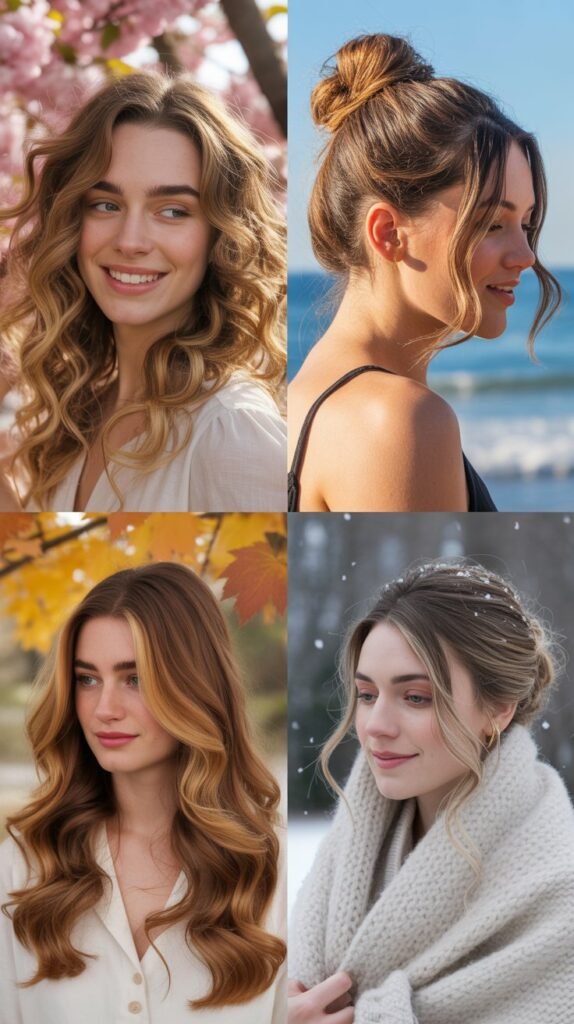
Adjusting your brown hair highlights seasonally allows you to embrace changing color trends, complement seasonal wardrobes, and refresh your look throughout the year with strategic color modifications.
Spring Highlights
- Embrace lighter, brighter tones: golden blonde, bright honey, and light caramel for fresh, renewed energy.
- Add warmth after winter’s darker tones to complement blooming flowers and increasing sunshine.
- Face-framing highlights brighten your complexion as you emerge from winter’s layers and heavy clothing.
- Consider pastel-toned highlights for a playful, springtime twist on traditional blonde or caramel.
Summer Highlights
- Go for maximum brightness: sun-kissed blonde, platinum accents, or vibrant copper for vacation-ready hair.
- Embrace the beachy, lived-in look with balayage or sombre techniques mimicking natural sun lightening.
- Honey and golden tones complement tanned skin and summer’s warm, sunny aesthetic.
- Consider the maintenance reality of summer activities (pools, ocean, sun) which can fade color quickly.
Fall Highlights
- Transition to richer, deeper tones: auburn, copper, deep caramel, burgundy, and chestnut for autumnal warmth.
- Add red-based highlights that complement fall fashion’s earth tones and cozy textures.
- Deepen existing highlights with glosses or glazes rather than completely changing your color.
- Embrace jewel tones like mahogany and deep burgundy for sophisticated fall dimension.
Winter Highlights
- Choose between two directions: icy cool tones (ash, platinum) for winter chic or rich deep tones (mocha, espresso lowlights) for warmth.
- Cool-toned highlights complement winter’s neutral fashion palette and create modern, sophisticated looks.
- Alternatively, add richness and depth to combat winter’s dullness with warm, deep lowlights.
- Consider lower-maintenance options as winter weather and indoor heating can stress colored hair.
39. Three-Dimensional Color Technique
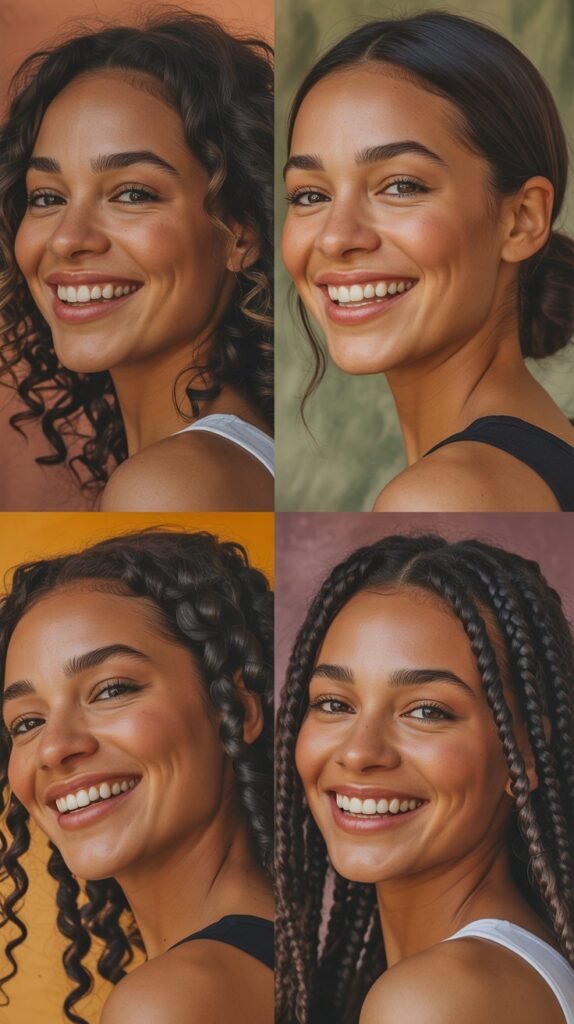
Three-dimensional color combines highlights, lowlights, and base color adjustments to create ultra-realistic depth and dimension that mimics natural hair variation with professional-level complexity.
The Three Elements
- Base color: The foundation shade applied to roots and throughout, providing the dominant color.
- Lowlights: Darker sections (1-2 shades deeper than base) adding depth and shadow for richness.
- Highlights: Lighter sections (2-3 shades lighter than base) bringing forward dimension and brightness.
Why Three Tones Work
- Natural hair is never truly one color—sun, shadow, and natural variation create multiple tones throughout.
- Three-dimensional color replicates this organic variation, making colored hair appear naturally beautiful.
- The technique prevents hair from appearing flat or one-dimensional, common with single-color applications.
- Multiple tones create movement—hair appears to shift and change color as it moves and catches light.
Application Strategy
- Apply base color to roots and any areas needing coverage or toning, establishing the foundation.
- Add lowlights strategically underneath and at the nape for depth and shadow where hair naturally appears darker.
- Place highlights throughout top layers and around face where light naturally hits and brightens hair.
- Blend all three colors at their meeting points to ensure seamless transitions rather than distinct sections.
Professional Requirements
- Three-dimensional color requires expert color theory knowledge and advanced application skills.
- The technique takes significantly longer (3-5 hours) than single-process highlighting or coloring.
- Cost reflects the complexity: expect to pay premium prices ($200-$500+) for this advanced service.
- Home application is not recommended—the precision and expertise required make professional services essential.
40. Tortoiseshell Hair Color
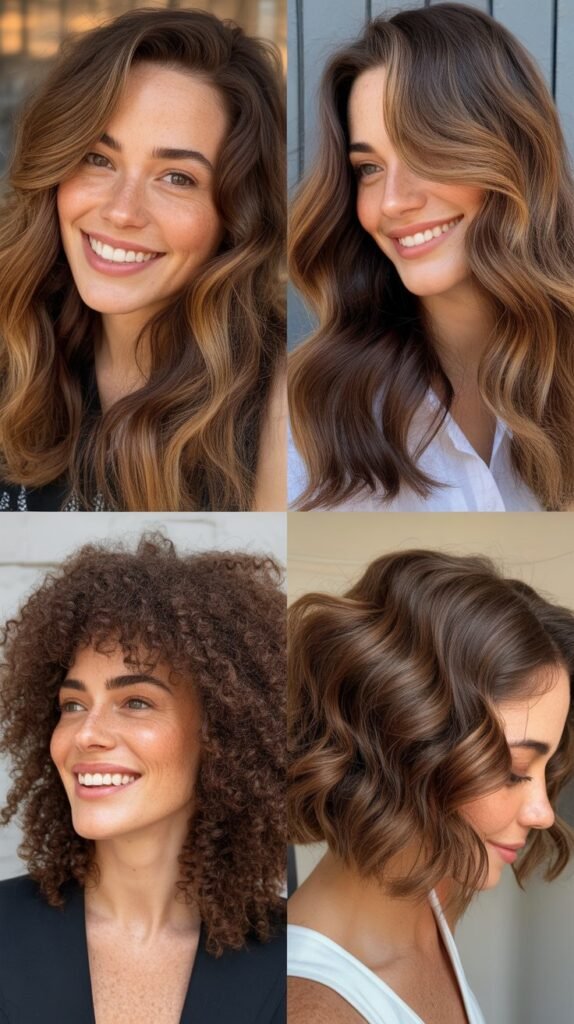
Tortoiseshell hair mimics the beautiful mottled pattern of tortoiseshell material, combining warm browns, ambers, caramels, and occasional deeper mahogany tones for a rich, multi-dimensional effect unique to each individual.
Understanding Tortoiseshell
- The name comes from the natural pattern found in tortoiseshell accessories—warm browns mixed with honey and amber.
- Unlike uniform highlighting, tortoiseshell intentionally creates irregular, organic color placement for artistry.
- Multiple warm tones are hand-painted and blended to create a one-of-a-kind color pattern.
- The result appears natural yet complex, sophisticated yet lived-in, intentional yet organic.
Color Palette
- Base tones: Deep chocolate or espresso brown providing rich foundation.
- Mid-tones: Warm brown, chestnut, and caramel creating transitional depth.
- Highlights: Honey, amber, and golden blonde adding brightness and light-reflection.
- Accents: Occasional copper or light mahogany adding warmth and interest.
Application Process
- Colors are hand-painted using balayage techniques, creating organic, irregular placement.
- Multiple shades are applied simultaneously and overlapped for seamless blending and complex dimension.
- The colorist works artistically rather than following a strict pattern, making each result unique.
- Processing times vary by section, creating varied tonal results even within the same color family.
41. Highlights for Warm Skin Tones
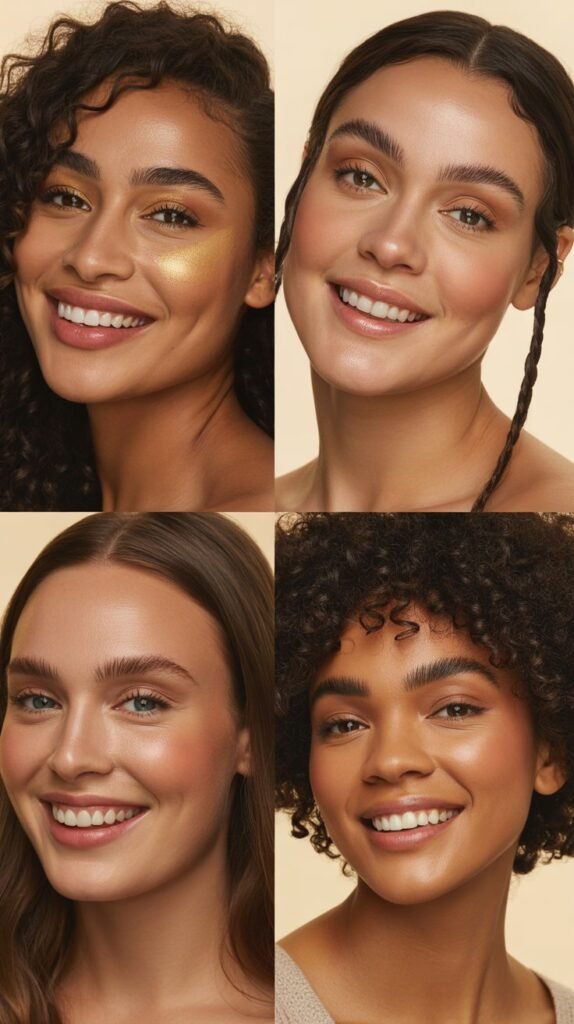
Selecting highlights that complement warm skin undertones enhances your natural radiance and creates a harmonious, cohesive appearance.
The right warm-toned highlights make your complexion glow.
Identifying Warm Undertones
- Warm undertones appear golden, peachy, or yellow beneath the skin’s surface.
- Gold jewelry typically appears more flattering than silver on individuals with warm undertones.
- Veins on the inner wrist appear greenish rather than blue or purple.
- Skin tans easily and may have golden or olive qualities even without sun exposure.
Best Highlight Shades for Warmth
- Golden blonde: Brings out the gold in your skin, creating luminous, cohesive warmth.
- Honey: Sweet golden-amber tones that harmonize beautifully with peachy undertones.
- Caramel: Classic warm highlight that complements golden skin without overwhelming it.
- Copper: Bold warm choice that enhances red and golden undertones dramatically.
- Warm brown: Subtle mocha or toffee highlights add dimension while staying within the warm family.
Avoiding Cool Tones
- Ash, platinum, and cool-toned highlights can clash with warm skin, creating unflattering contrast.
- If desiring lighter highlights, choose warm blonde over cool/ash blonde for harmonious results.
- Even when experimenting with trends, ensure colors have warm bases or golden undertones.
- Consult with colorists about adding warm toners to cooler highlight shades for better compatibility.
42. Highlights for Cool Skin Tones
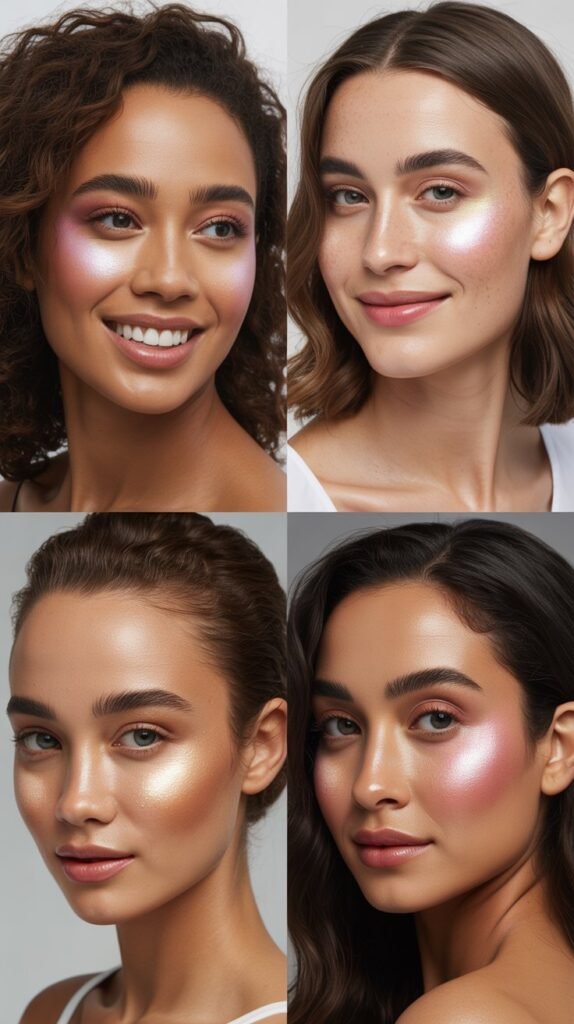
Cool-toned highlights complement cool skin undertones, creating sophisticated dimension that enhances rather than fights your natural coloring.
The right cool shades make your complexion appear bright and even.
Identifying Cool Undertones
- Cool undertones appear pink, red, or bluish beneath the skin’s surface.
- Silver jewelry typically appears more flattering than gold on individuals with cool undertones.
- Veins on the inner wrist appear blue or purple rather than green.
- Skin may burn more easily in sun and has rosy or pink qualities.
Best Highlight Shades for Cool Tones
- Ash brown: Cool-toned brown highlights with gray undertones that complement cool skin beautifully.
- Taupe: Grayish-brown highlights offering subtle, sophisticated dimension without warmth.
- Cool blonde: Platinum or champagne blonde with silver undertones rather than golden hues.
- Burgundy: Cool red-purple tones that add richness while staying within the cool family.
- Mushroom brown: Trendy gray-brown hybrid perfect for cool undertones seeking contemporary looks.
Avoiding Warm Clash
- Golden, honey, and copper highlights can clash with cool skin, creating jarring contrast.
- If drawn to warm trends, request ash or cool-toned versions of popular warm shades.
- Toners become essential for neutralizing any unwanted warmth that develops in cool highlights.
- Work with colorists experienced in cool-toned coloring to avoid accidental warmth introduction.
43. Highlights for Neutral Skin Tones
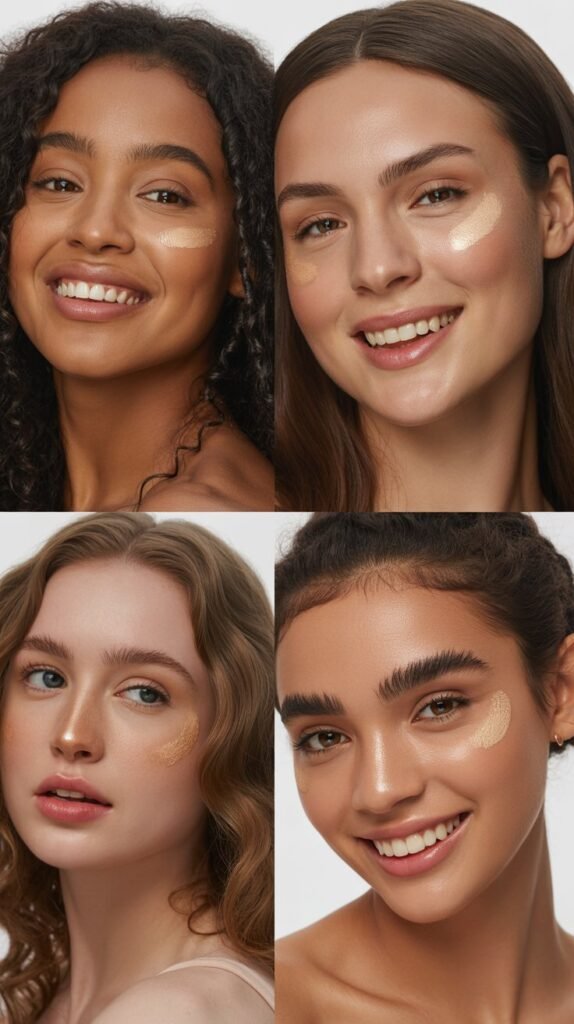
Neutral skin undertones offer maximum versatility, allowing you to wear both warm and cool-toned highlights successfully.
This flexibility opens endless highlighting possibilities without undertone restrictions.
Identifying Neutral Undertones
- Neutral undertones display a balanced mix of warm and cool, without strong dominance of either.
- Both gold and silver jewelry look equally flattering, offering no clear preference.
- Veins appear blue-green, showing characteristics of both warm and cool undertones.
- Skin may tan or burn depending on exposure, without consistently predictable reactions.
Versatile Highlight Options
- Experiment freely: Nearly any highlight shade will work harmoniously with neutral undertones.
- Warm tones: Caramel, honey, golden blonde, copper all complement neutral skin beautifully.
- Cool tones: Ash, platinum, burgundy, taupe create sophisticated dimension without clash.
- Mixed tones: Combine warm and cool highlights for ultra-dimensional, customized results.
Maximizing Your Advantage
- Use your versatility to follow seasonal trends without undertone compatibility concerns.
- Experiment with fashion-forward colors that those with strong undertones must avoid.
- Change highlight tones based on mood, season, or wardrobe rather than being limited by undertones.
- Work with colorists to create completely customized color combinations impossible for others.
44. Eco-Friendly Highlighting Options
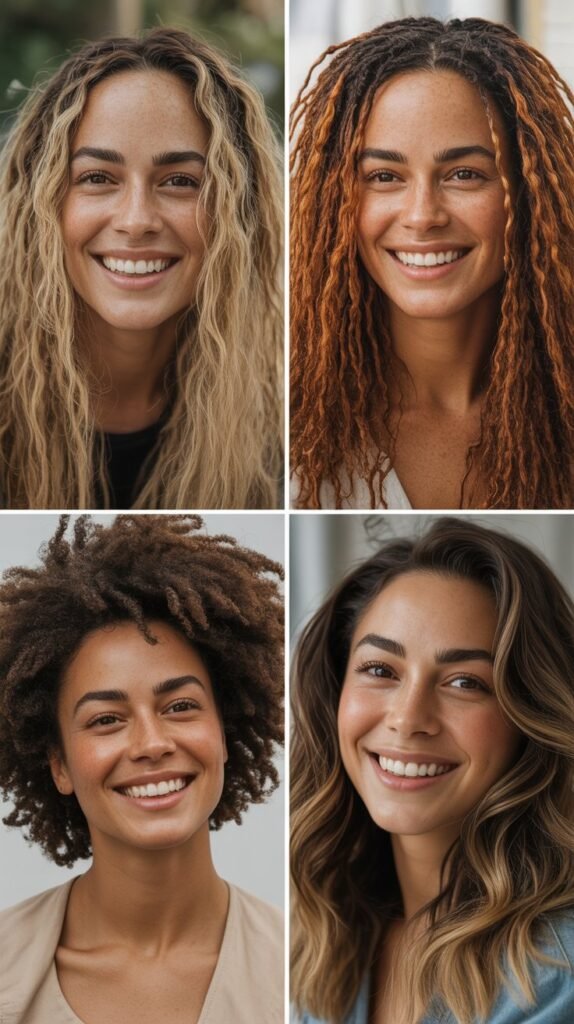
Eco-conscious highlighting uses plant-based, ammonia-free, and less-toxic color products to minimize environmental impact and reduce exposure to harsh chemicals while still achieving beautiful dimensional color.
Natural and Organic Color Options
- Henna-based highlights: Plant-derived colors offering red-brown to auburn tones, though limited color range.
- Vegetable-based dyes: Gentler than chemical colors, though typically less permanent and more limited in shade options.
- Ammonia-free formulas: Professional color lines eliminating harsh ammonia while maintaining effectiveness.
- Low-PPD formulas: Reducing potentially irritating para-phenylenediamine found in many permanent dyes.
Benefits of Eco-Friendly Color
- Reduced chemical exposure benefits both clients and salon professionals who work with color daily.
- Less environmental impact from manufacturing, application, and rinse-off chemicals entering water systems.
- Often gentler on hair with reduced damage compared to harsh traditional lighteners and colors.
- Better for sensitive scalps and those prone to allergic reactions to conventional hair color ingredients.
Limitations to Consider
| Aspect | Eco-Friendly Options | Traditional Color |
|---|---|---|
| Color range | More limited, especially for dramatic lifts | Virtually unlimited shade possibilities |
| Longevity | Often less permanent, fading faster | More permanent, longer-lasting results |
| Gray coverage | Variable effectiveness | Reliable, complete coverage |
| Lifting power | Limited ability to lighten dark hair | Can achieve significant lightening |
| Cost | Often more expensive | Wide range of price points |
| Availability | Fewer salons offer these services | Widely available everywhere |
45. DIY Highlighting at Home
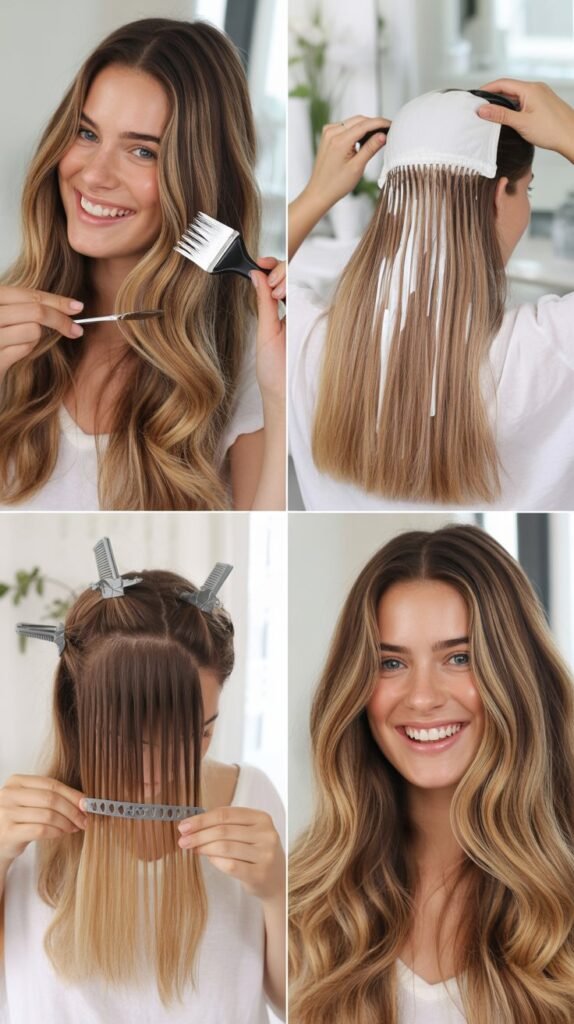
When DIY Makes Sense
- Subtle touch-ups between professional appointments rather than major color changes.
- Face-framing highlights or money pieces with limited hair processing for manageable application.
- When budget absolutely prevents professional services, understanding that results will vary.
- For those with color experience willing to invest time learning proper technique.
Essential Materials and Tools
- Quality highlighting kit: Choose reputable brands specifically designed for brown hair, not generic one-size-fits-all products.
- Developer strength: Use 20-volume developer maximum; higher volumes increase damage risk significantly.
- Application tools: Highlighting cap with hook, or foils with clips and brushes for sectioning.
- Protective items: Gloves, old towels, petroleum jelly for hairline protection, timer.
- After-care products: Deep conditioner, toning shampoo if going blonde, color-safe shampoo.
Step-by-Step Best Practices
- Perform strand test: Test color on a hidden section 48 hours before full application to check results and reaction.
- Start small: Highlight conservatively your first time—you can always add more, but can’t easily remove color.
- Work in sections: Divide hair into manageable quadrants, working methodically rather than randomly.
- Check processing: Monitor frequently after 20 minutes; don’t exceed recommended maximum time even if not light enough.
- Rinse thoroughly: Ensure all color is removed, then condition deeply to restore moisture.
Realistic DIY Limitations
- Home kits lack the customization and control of professional formulations, limiting achievable results.
- Proper placement requires being able to see all angles of your head—nearly impossible when working alone.
- Damage risk increases significantly without professional knowledge of hair health, porosity, and processing.
- Correcting DIY mistakes professionally often costs more than having it done right initially.
- Color theory knowledge prevents common issues like brassiness, uneven lift, and unflattering tone selection.
When to Call a Professional
- Any dramatic color change (more than 3-4 shades lighter) requires professional expertise.
- Previously colored or chemically treated hair needs expert assessment to avoid damage.
- Correcting existing color, evening out previous highlights, or fixing DIY mistakes demands professional skill.
- All-over highlighting or complex techniques like balayage, color melting require expert application.
46. Highlights for Box Braids and Weaves
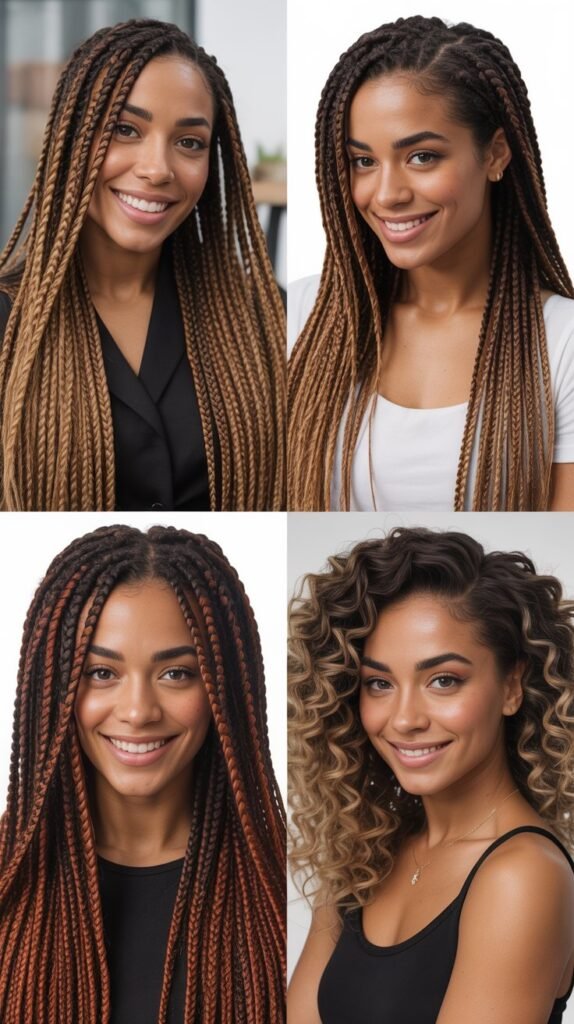
Adding highlights to braiding hair or weave extensions allows you to enjoy dimensional color without processing your natural hair, offering temporary color experimentation with protective benefits.
Coloring Braiding Hair
- Pre-dye extensions: Color braiding hair before installation using fabric dye, semi-permanent color, or hair dye specifically.
- Human hair vs. synthetic: Human hair accepts color better, but quality synthetic can be dyed with appropriate methods.
- Color techniques: Dip-dye, ombré, or highlighted sections can be created before braiding for dimensional effects.
- Testing: Always test color on a small section first, as different braiding hair brands react differently to dyes.
Weave Highlighting Options
- Purchase pre-highlighted or ombré human hair bundles for instant dimensional color without DIY effort.
- Have a professional colorist highlight human hair bundles before installation for customized results.
- Mix different colored bundles during installation to create natural-looking dimension throughout the weave.
- Add clip-in highlighted extensions for temporary dimensional accents you can remove anytime.
Benefits of Extension Highlighting
- Zero damage to your natural hair since only extensions are colored, maintaining natural hair health.
- Experiment with bold colors and dramatic techniques without permanent commitment or consequences.
- Change colors with each new installation, enjoying variety impossible with natural hair coloring.
- Protective styling benefits remain intact while enjoying the dimensional color you desire.
47. Highlights with Heat Damage Considerations
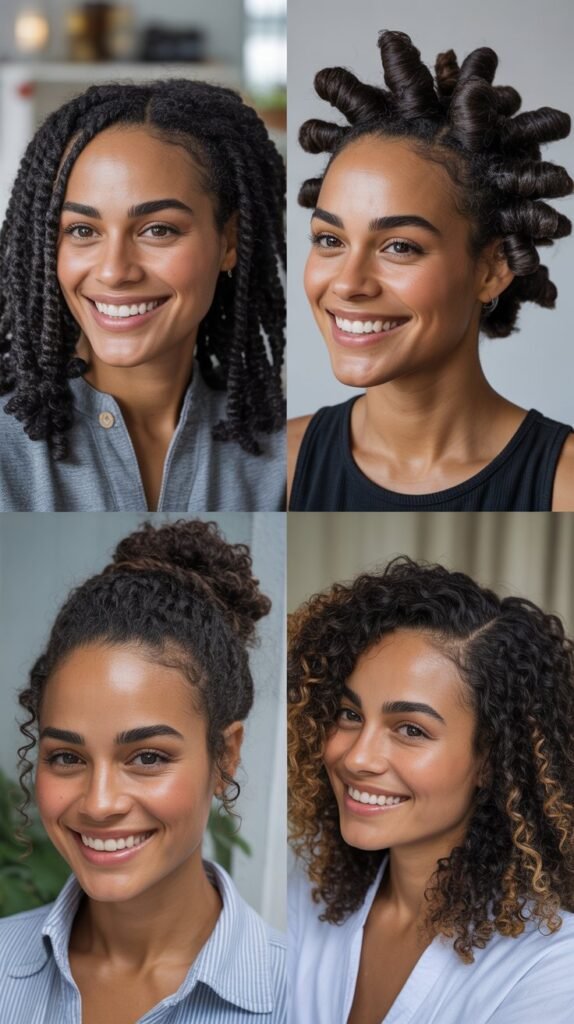
Heat-damaged hair requires extra care when highlighting to avoid further weakening fragile strands.
Strategic color approaches can add dimension while prioritizing hair health and minimizing additional damage.
Assessing Heat Damage
- Signs include: persistent straightness in naturally curly hair, lack of elasticity, excessive breakage, rough texture.
- Heat-damaged hair is more porous, meaning color processes faster and can result in unintentional over-processing.
- Compromised protein structure makes hair more vulnerable to chemical damage from highlighting products.
- Honest assessment with a professional colorist determines if hair can handle highlighting or needs repair first.
Protective Highlighting Approaches
- Lower developer volumes: Use 20-volume or even 10-volume developer to minimize additional damage during lifting.
- Shorter processing times: Check frequently and stop processing as soon as desired level is reached.
- Bond-building treatments: Products like Olaplex or similar bond-builders should be mandatory during the process.
- Strategic placement: Highlight only the healthiest sections, avoiding the most damaged areas entirely.
- Gentler techniques: Choose balayage or foilayage over traditional foils for more controlled, gentle processing.
Pre and Post-Color Care
- Deep condition weekly for 4-6 weeks before coloring to improve hair condition and resilience.
- Protein treatments strengthen hair structure, providing better foundation for chemical processing.
- Trim damaged ends before coloring to remove the weakest, most compromised sections.
- After highlighting, intensive conditioning becomes essential—deep treatments 2-3 times weekly minimum.
- Eliminate or drastically reduce heat styling post-color to prevent compounding damage on already-compromised hair.
48. Highlights for Different Hair Lengths
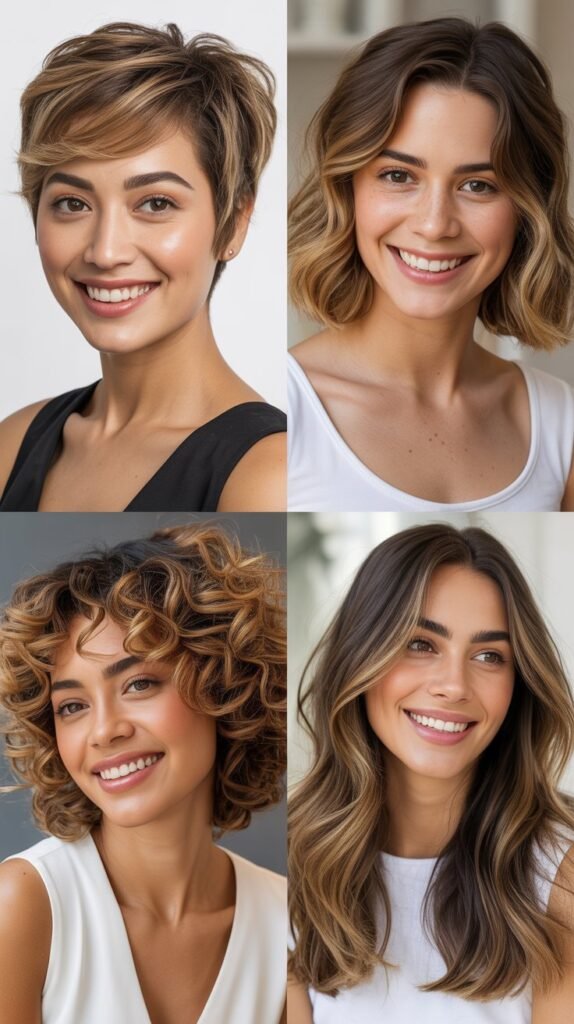
Hair length significantly impacts highlight placement, technique selection, and overall effect.
Understanding length-specific considerations ensures your highlights are optimally suited to your hair’s length.
Short Hair (Pixie, TWA, Short Crops)
- Focus on top sections where hair is longest and most visible for maximum impact.
- All-over color or color melting may be more effective than traditional highlights on very short hair.
- Frequent haircuts mean highlights may be cut away quickly—consider low-commitment techniques.
- Bold contrast works well as shorter length limits the amount of dramatic color present.
Medium-Short Hair (Bobs, Lobs)
- Face-framing highlights deliver high impact with manageable maintenance on this length.
- Balayage from mid-shaft to ends creates dimension without needing frequent root touch-ups.
- Money piece highlights work particularly well, creating statement color without full-head processing.
- This length offers good versatility for both subtle and bold highlighting approaches.
Medium-Long Hair (Shoulder to Mid-Back)
- Ideal canvas for most highlighting techniques with sufficient length for beautiful gradients.
- Ombré and sombre techniques showcase beautifully with enough length for smooth transitions.
- Multiple highlight shades can coexist without overcrowding thanks to adequate hair length.
- Versatile styling options allow you to display dimensional color in various ways.
Long Hair (Mid-Back to Waist or Beyond)
- Maximum canvas for dramatic ombré, extensive balayage, and complex multi-dimensional techniques.
- End-focused techniques work well as older, more damaged hair at ends is already compromised.
- Consider the maintenance investment—more hair means more product, time, and cost for highlighting.
- Long hair showcases color movement and dimension exceptionally well when styled in waves or curls.
49. Glossing and Toning Highlights
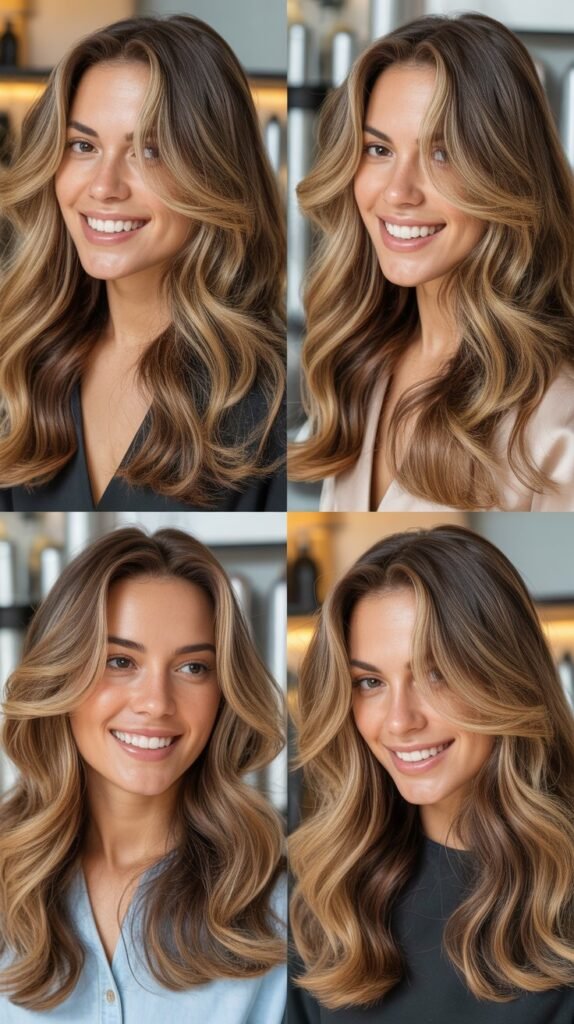
Gloss and toner treatments refresh, adjust, and perfect highlighted hair between major color appointments.
These semi-permanent services maintain vibrancy, correct unwanted tones, and add incredible shine.
Understanding Glosses vs. Toners
- Gloss: Adds shine and can deposit subtle color while being more translucent and shine-focused.
- Toner: Specifically corrects unwanted tones (neutralizing brass, adding ash) with more pigment concentration.
- Both: Semi-permanent, lasting 4-6 weeks depending on hair care and washing frequency.
- Application: Can be done professionally in-salon or at home with proper products and technique.
When to Use Each
- Use gloss when highlights look dull, lackluster, or faded but the tone is still acceptable.
- Use toner when highlights have developed unwanted warmth, brassiness, or incorrect undertones.
- Use color-depositing gloss when highlights need both tone correction and vibrancy refresh simultaneously.
- Schedule treatments every 4-6 weeks to maintain optimal color and shine between major highlighting appointments.
DIY Glossing Options
- Purple shampoos and conditioners provide gentle toning for blonde highlights between professional treatments.
- At-home glossing kits offer salon-quality shine and subtle color refresh in convenient formats.
- Color-depositing conditioners in your highlight shade maintain vibrancy with weekly use.
- Clear glosses add shine without color adjustment when tone is perfect but luster has faded.
Professional Gloss Services
| Service | Purpose | Duration | Cost |
|---|---|---|---|
| Clear gloss | Maximum shine, no color change | 20-30 minutes | $30-$60 |
| Color gloss | Refresh color, enhance tone, add shine | 30-45 minutes | $40-$80 |
| Toner | Correct unwanted tones, adjust color | 20-40 minutes | $35-$75 |
| Bond-building gloss | Strengthen while glossing | 45-60 minutes | $60-$100+ |
50. Highlights for Growing Out Color
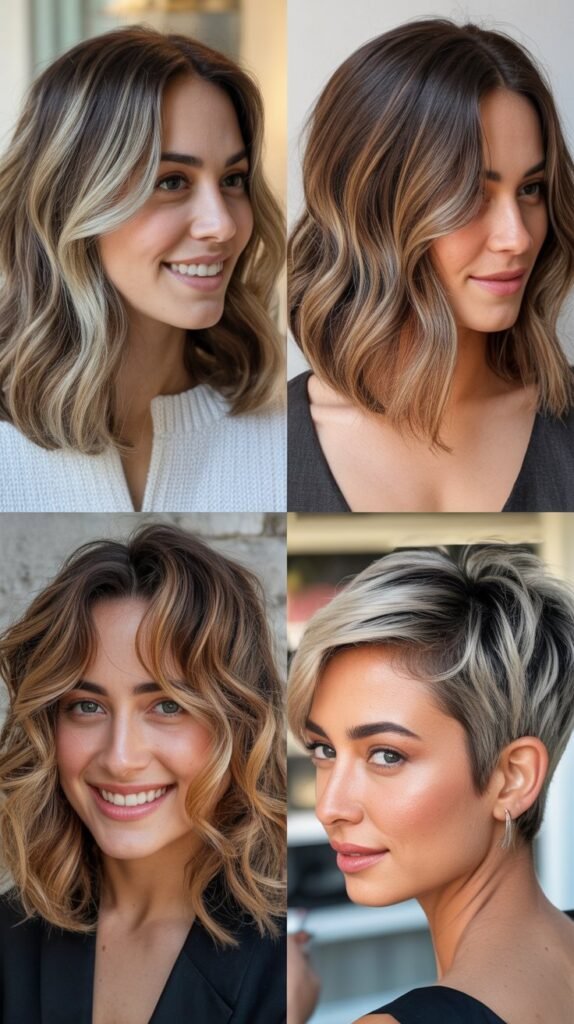
Strategic highlighting can ease the transition when growing out previous color, making regrowth less obvious while gradually returning to your natural shade with style and intention.
The Root Shadow Technique
- Applying darker color at roots blends regrowth with existing highlights, creating intentional-looking dimension.
- The shadow creates a gradient effect rather than a harsh line where natural color meets lightened sections.
- This technique can be refreshed every 8-12 weeks, extending time between appointments significantly.
- Root shadowing works with your natural color, making it appear intentionally darker at the root.
Adding Lowlights
- Darker lowlights woven throughout existing highlights break up the contrast with natural regrowth.
- The multi-dimensional effect makes the eye focus on overall color variation rather than distinct root lines.
- Lowlights can gradually darken hair overall, helping transition back toward natural color.
- This approach maintains some dimensional interest while reducing the lightness you’re growing out.
Strategic Highlight Refresh
- Add new highlights only where needed rather than full-head applications, working with natural color.
- Place fresh highlights to blend with regrowth and existing color, creating cohesive dimension.
- Gradually reduce highlight frequency and quantity as you grow out, slowly transitioning to natural.
- Focus new highlights around the face where dimensional color remains most impactful.
Conclusion
Throughout this comprehensive exploration of 66 stunning brown hair with highlights for Black women that pop, we’ve journeyed through every facet of highlighting—from classic caramel and honey tones to bold copper and platinum accents, from subtle babylights to dramatic ombré transitions.
The versatility of brown hair combined with strategic highlighting offers endless possibilities for Black women to enhance their natural beauty, express their personal style, and create dimension that truly makes a statement.
Whether you prefer the low-maintenance elegance of balayage, the contemporary appeal of money piece highlights, the rich sophistication of mahogany tones, or the fashion-forward boldness of ash blonde contrast, there’s a perfect highlighting technique waiting for you.
Remember that successful highlighting considers your skin’s undertones, your hair’s texture and health, your lifestyle and maintenance commitment, and most importantly, your personal style preferences.
With proper care, the right professional colorist, and regular maintenance, highlighted brown hair can remain vibrant, healthy, and absolutely stunning.
The key is understanding your options, communicating clearly with your stylist, and committing to the care your beautiful highlighted hair deserves.
These 66 stunning brown hair with highlights for Black women that pop represent more than just color techniques—they’re opportunities for self-expression, confidence, and celebrating the unique beauty that you bring to the world.