

Brown hair with brown highlights creates a dimensional, sun-kissed effect that enhances your natural beauty without dramatic color changes.
Whether you’re looking to add depth to dark chocolate locks or brighten light brown hair with caramel ribbons, brown-on-brown highlighting offers endless possibilities for a sophisticated, low-maintenance look.
This comprehensive guide to 68 Subtle Brown Hair Ideas With Brown Highlights That Look Soft and Natural will walk you through various techniques, shades, placement strategies, and styling tips to help you achieve that perfectly blended, effortlessly beautiful result.
From balayage and babylights to traditional foiling methods, you’ll discover how different brown tones work together to create movement, texture, and richness while maintaining that coveted natural appearance that makes people wonder if you were simply blessed with gorgeous hair.
1. Understanding Brown Hair and Highlight Basics

Before diving into specific styles, understanding the fundamentals of brown hair highlighting helps you make informed decisions about your hair transformation.
- Brown hair exists on a spectrum from light golden brown to nearly black espresso shades, each requiring different highlighting approaches.
- Highlights work by lifting your natural pigment or depositing lighter brown tones to create contrast and dimension.
- The key to natural-looking brown highlights lies in selecting shades only 1-3 levels lighter than your base color.
- Warm brown bases pair beautifully with caramel, honey, and golden highlights, while cool brown bases complement ash, taupe, and mushroom tones.
- Understanding your skin’s undertone helps determine which brown highlight shades will look most flattering and harmonious.
- Professional colorists use terms like “base color,” “mid-tones,” and “face-framing pieces” to describe different highlighting zones.
- The difference between highlights and lowlights is that highlights lighten while lowlights add darker tones for additional depth.
2. Caramel Highlights on Medium Brown Hair
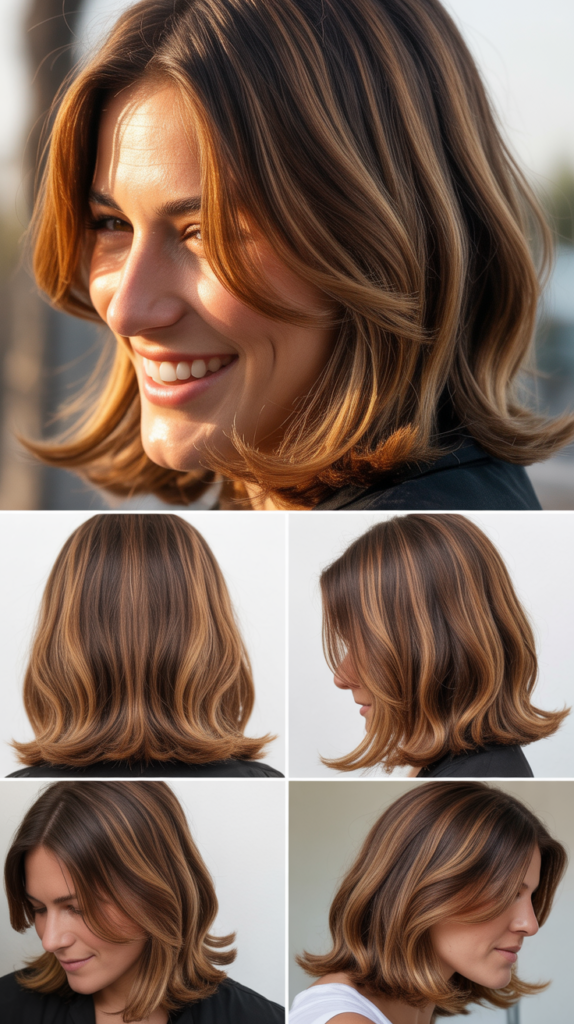
Caramel highlights bring warmth and luminosity to medium brown hair, creating a sweet, approachable look that works across seasons.
- Caramel tones sit in the warm spectrum between light brown and amber, offering rich golden undertones.
- These highlights work exceptionally well on medium brown bases because they provide noticeable lift without appearing brassy.
- Placing caramel highlights around the face brightens your complexion and draws attention to facial features.
- The sweetness of caramel complements warm and neutral skin undertones particularly well.
- For maximum naturalness, caramel highlights should be blended through mid-lengths and ends rather than starting at the roots.
- This color combination requires less frequent touch-ups since the grow-out blends seamlessly with your natural color.
- Caramel highlights catch light beautifully, creating movement and dimension even in simple hairstyles.
3. Chocolate Brown Base With Honey Highlights

The combination of deep chocolate brown and warm honey creates a luxurious contrast that remains soft and natural.
- Chocolate brown provides a rich, sophisticated base that makes honey highlights truly pop without looking harsh.
- Honey tones contain golden and amber notes that add warmth without reading as yellow or brassy.
- This pairing works beautifully for those transitioning from darker hair who want noticeable but natural brightening.
- The deeper base color helps honey highlights appear more dimensional rather than flat.
- Strategically placing honey pieces near the face creates a brightening effect similar to natural sun exposure.
- This combination suits olive, medium, and warm skin tones particularly well.
- The contrast between chocolate and honey provides enough dimension to make fine hair appear fuller and thicker.
4. Light Brown Hair With Sandy Blonde Highlights
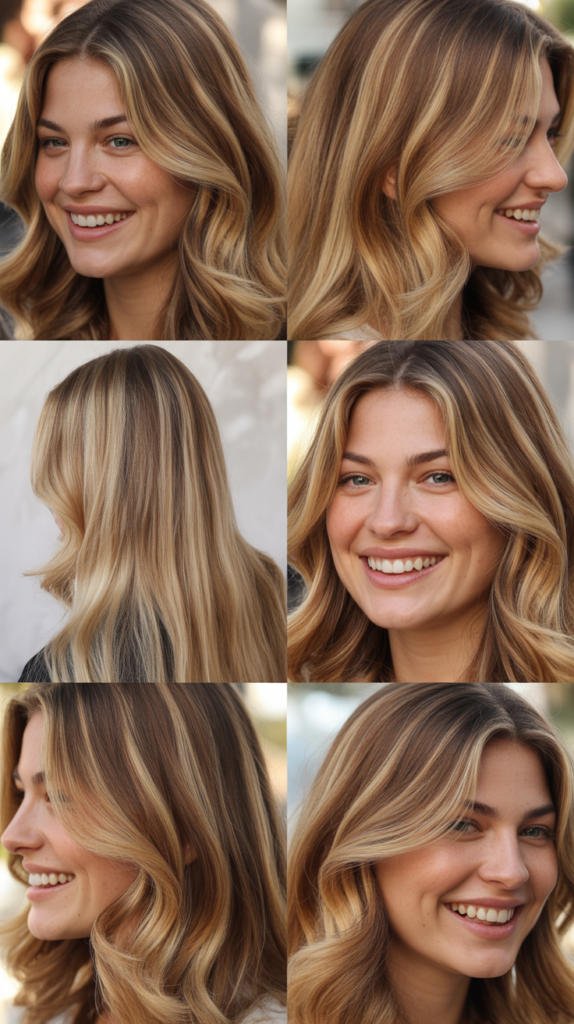
Sandy blonde highlights on light brown hair create a beachy, effortless aesthetic perfect for those seeking subtle brightening.
- Sandy blonde contains neutral undertones that prevent highlights from appearing too warm or cool.
- This subtle lift works particularly well for light brown hair because the color difference remains minimal yet effective.
- The beachy quality of sandy blonde evokes vacation vibes and sun-lightened summer hair.
- These highlights blend so seamlessly that they appear as natural color variation rather than intentional coloring.
- Sandy tones complement fair to medium skin tones and pair beautifully with blue or green eyes.
- The neutral quality of sandy blonde means less risk of unwanted warmth or brassiness developing over time.
- This combination requires minimal maintenance since the soft contrast allows for extended time between salon visits.
5. Balayage Technique for Brown Hair
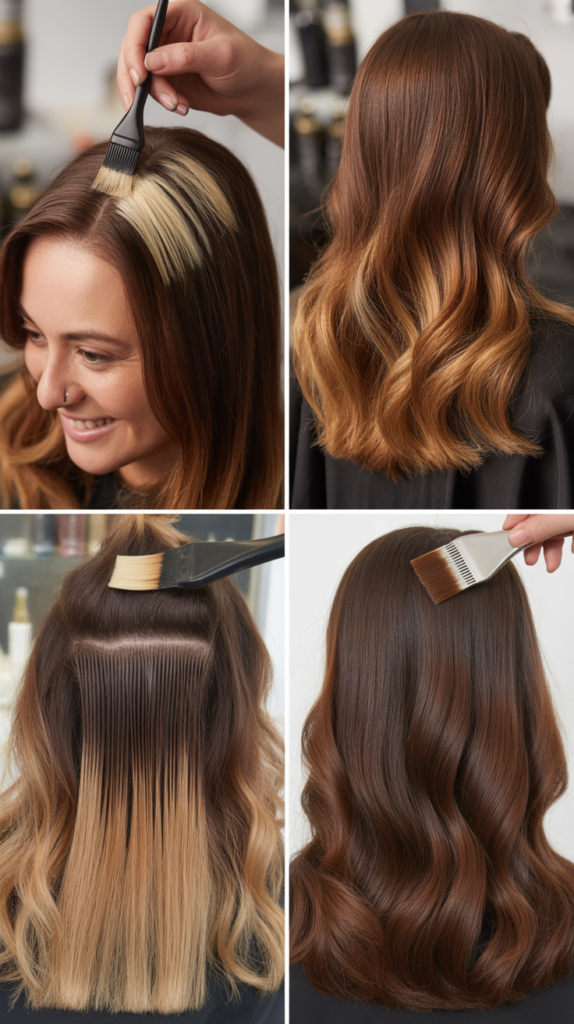
Balayage delivers the most natural-looking brown highlights through hand-painted application that mimics how sun naturally lightens hair.
- The French word “balayage” means “to sweep,” describing how colorists paint highlights onto hair in sweeping motions.
- This freehand technique allows for customized placement that follows your hair’s natural movement and fall.
- Balayage creates a gradual gradient effect with darker roots transitioning to lighter ends.
- The technique works on any brown shade from light to dark, adapting to your specific base color.
- Results appear softer and more diffused than traditional foil highlights because there are no distinct lines of demarcation.
- Balayage typically requires less frequent maintenance since the grow-out looks intentional rather than rooty.
- Colorists can concentrate highlights in face-framing areas while keeping the back more subtle for natural dimension.
6. Babylights for Ultra-Natural Brown Dimension
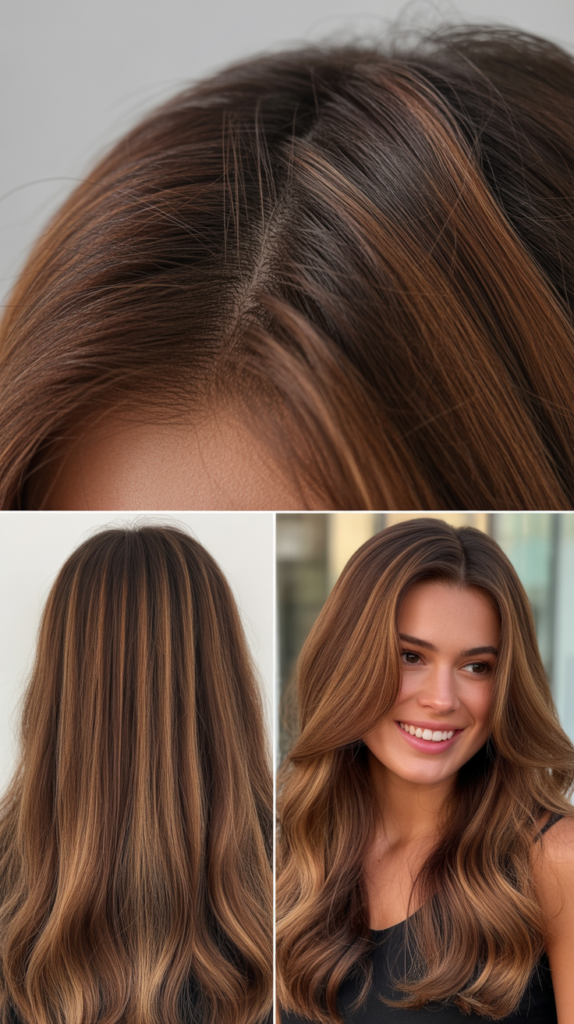
Babylights create the finest, most delicate highlights that replicate the subtle color variations seen in children’s sun-kissed hair.
- Babylights use extremely thin sections of hair, much finer than traditional highlighting techniques.
- The result mimics the natural, delicate highlights that children often have before their hair darkens with age.
- This technique creates the most subtle dimension possible, perfect for those wanting enhancement without obvious color.
- Babylights work exceptionally well on fine to medium hair textures where larger highlights might look chunky.
- The application process takes longer due to the precision required in sectioning such small pieces.
- Multiple shades can be woven throughout for even more natural depth and complexity.
- This method suits conservative work environments or anyone preferring extremely understated color enhancement.
7. Ombre Effect With Brown Tones
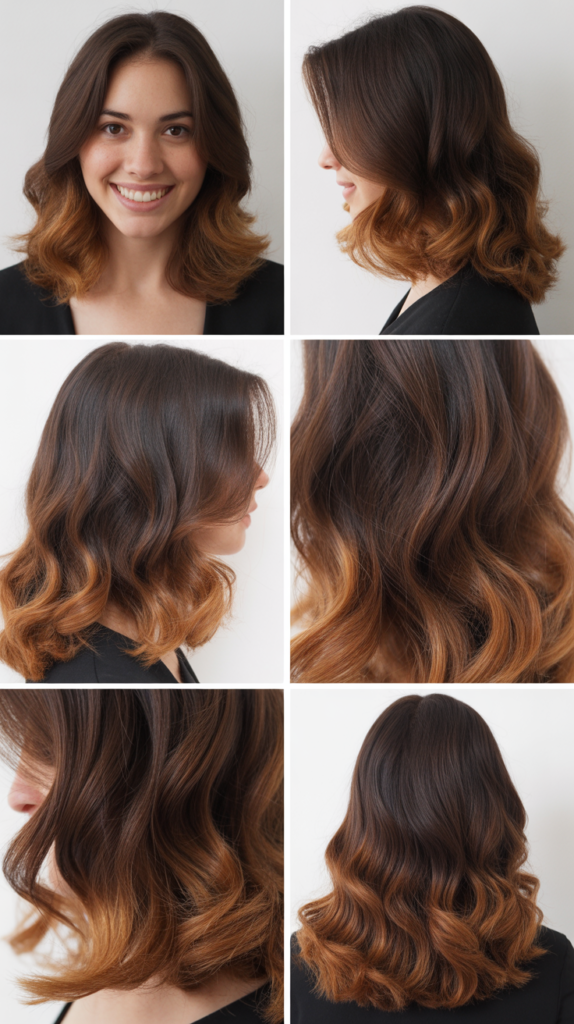
Brown ombre features darker roots gradually transitioning to lighter brown ends, creating a low-maintenance yet striking look.
- Ombre creates a distinct gradient from dark to light, with the transition zone typically starting at mid-length.
- Brown ombre allows you to go lighter on the ends without committing to all-over lightening.
- The technique works particularly well for long hair where there’s enough length to showcase the gradient.
- Darker roots mean you can extend time between color appointments since regrowth blends naturally.
- The ends can be lifted to honey, caramel, or even lighter brown shades depending on your desired contrast level.
- Ombre pairs beautifully with long layers that blend the color transition zones seamlessly.
- This style offers versatility since you can trim away lighter ends if you ever want to return to solid color.
8. Face-Framing Brown Highlights
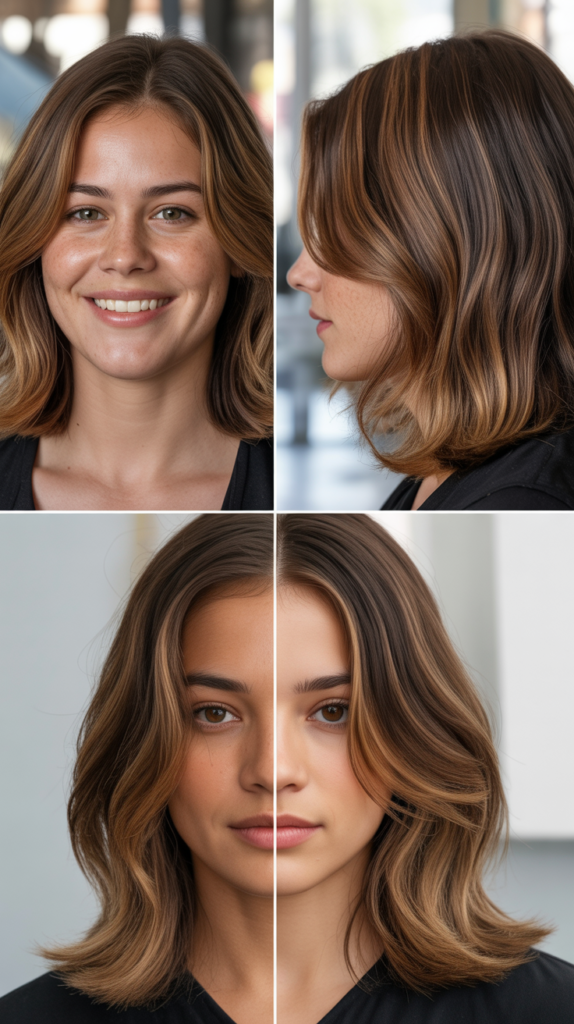
Strategic placement of highlights around the face brightens your complexion and draws attention to your features.
- Face-framing highlights concentrate lighter pieces around the hairline, temples, and front sections.
- This placement creates a brightening effect similar to professional lighting or makeup contouring.
- Lighter pieces near the face can soften strong features or add definition to softer facial structures.
- The technique works on any length from pixie cuts to long hair, adapting to your specific style.
- Face-framing can be subtle with just a few strategic pieces or more dramatic with ribbon-like sections.
- These highlights require more frequent maintenance since they’re most visible and frame your face directly.
- Combining face-framing pieces with more subtle highlights throughout creates a balanced, dimensional look.
9. Lowlights to Add Depth to Brown Hair

While highlights lighten, lowlights add darker brown tones to create shadow and depth for a more three-dimensional appearance.
- Lowlights use shades 1-2 levels darker than your base to create natural-looking shadow and dimension.
- This technique prevents highlighted hair from appearing flat or one-dimensional by adding tonal variation.
- Lowlights work particularly well on previously highlighted hair that needs more depth and richness restored.
- The darker pieces create contrast that makes adjacent highlights appear brighter and more vibrant.
- Strategic lowlight placement can add the illusion of thickness and body to fine or thin hair.
- Combining highlights and lowlights in one service creates the most natural, multi-dimensional color result.
- Lowlights fade more gracefully than highlights since they’re adding rather than removing pigment from hair.
10. Warm Versus Cool Brown Highlights

Understanding the difference between warm and cool brown tones helps you select highlights that complement your natural coloring.
- Warm brown highlights contain golden, red, or orange undertones including shades like caramel, honey, and copper.
- Cool brown highlights have ash, gray, or blue undertones including shades like taupe, mushroom, and cool chestnut.
- Determining your skin’s undertone helps guide whether warm or cool highlights will look most harmonious.
- Warm highlights complement warm or neutral skin undertones and bring out golden or peachy complexion notes.
- Cool highlights flatter cool or neutral skin undertones and prevent unwanted warmth in the hair color.
- Mixed warm and cool highlights can work together for complex, natural dimension, though this requires skilled application.
- The wrong undertone can make your complexion appear sallow or washed out, so proper selection matters significantly.
11. Tortoiseshell Hair Color Technique
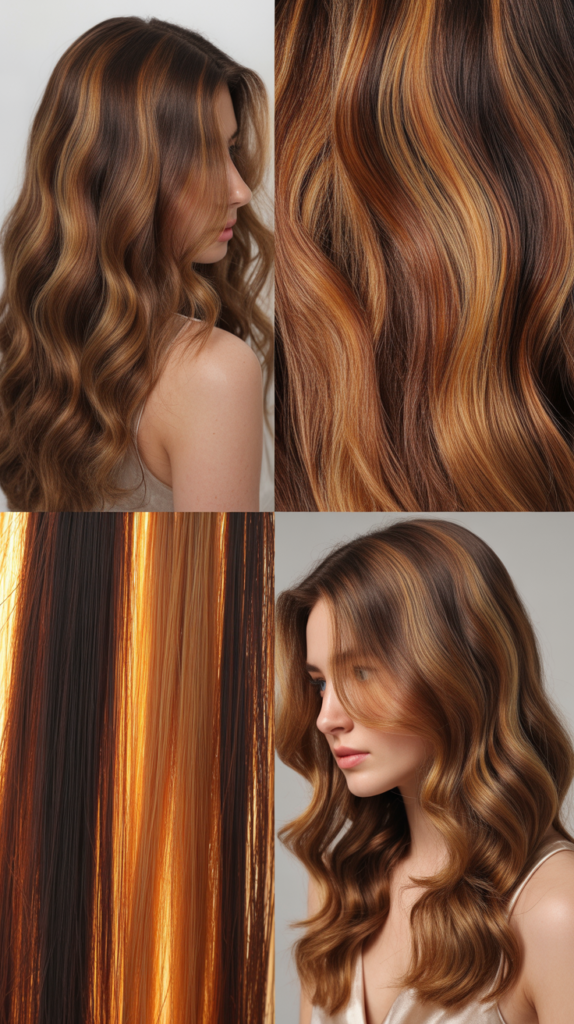
Tortoiseshell blends warm brown, amber, and caramel tones in a dimensional pattern inspired by the natural material.
- This trend takes inspiration from the rich, varied tones found in natural tortoiseshell patterns.
- Multiple shades of brown from dark chocolate to warm caramel are blended throughout for complex dimension.
- The technique works best on medium to dark brown bases where the warm tones can truly shine.
- Tortoiseshell color typically emphasizes warm undertones with golden, amber, and honey notes throughout.
- The multi-dimensional approach creates movement and interest without requiring dramatic lightening.
- This coloring suits warm and neutral skin tones particularly well due to its inherently warm palette.
- The blended nature of tortoiseshell means low-maintenance upkeep with graceful, natural-looking grow-out.
12. Subtle Red-Brown Highlights
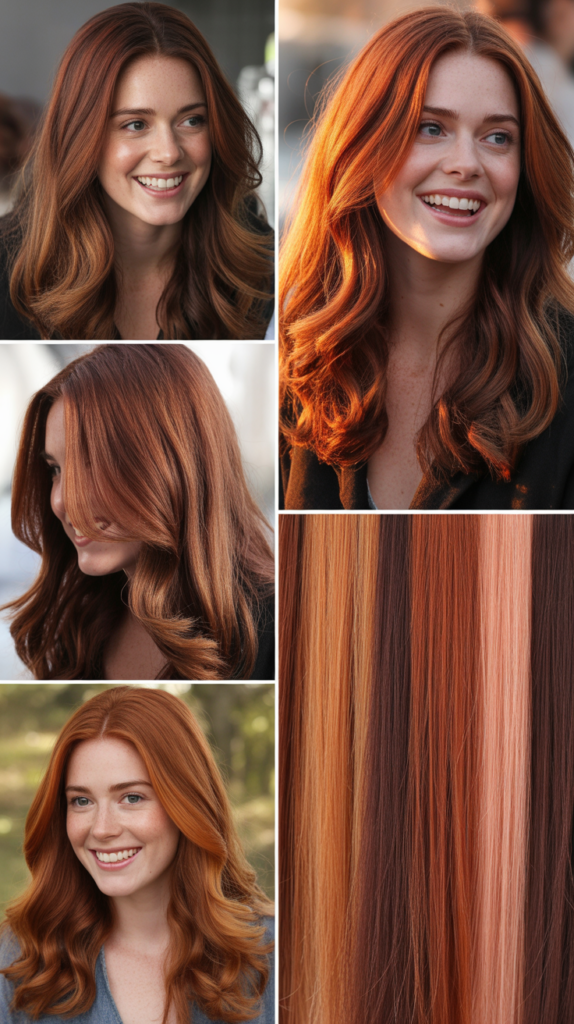
Adding auburn or mahogany highlights to brown hair introduces warmth and richness with a subtle red undertone.
- Red-brown highlights range from subtle auburn to deeper mahogany, depending on desired warmth level.
- These tones add richness and dimension while remaining within the brown family rather than appearing distinctly red.
- Red undertones work beautifully on warm and olive skin tones, adding complementary warmth.
- Auburn highlights catch light particularly well, creating luminosity and shine in brown hair.
- The red pigment fades more quickly than other tones, so color-safe shampoo and maintenance treatments are essential.
- Subtle red-brown pieces look especially appropriate for fall and winter color palettes.
- This option works well for those wanting to try warm tones without committing to obvious red hair.
13. Ash Brown Highlights for Cool-Toned Hair
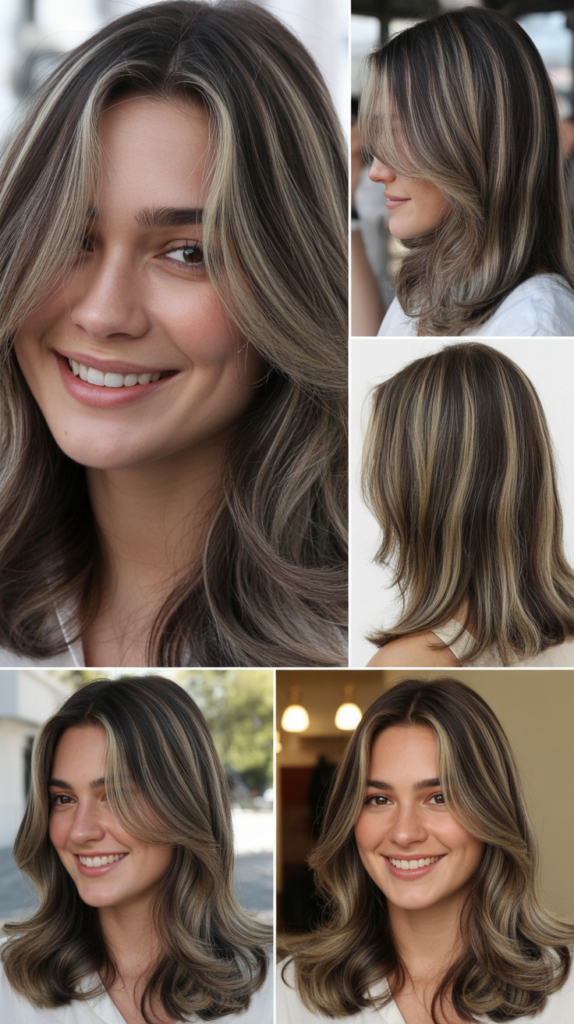
Ash brown highlights provide cool, sophisticated dimension without adding warmth or brassy tones to brown hair.
- Ash tones contain gray or blue undertones that neutralize warmth and create a cool, modern aesthetic.
- These highlights work particularly well for those with cool skin undertones or pink complexions.
- Ash brown prevents the brassy, orange tones that can develop in highlighted brown hair over time.
- The sophisticated, muted quality of ash highlights suits professional or minimalist style preferences.
- Achieving and maintaining ash tones requires purple or blue-toned shampoos to prevent warmth from developing.
- Ash highlights provide subtle dimension while keeping the overall look cohesive and understated.
- This option works beautifully for those transitioning to gray hair or embracing cooler color palettes.
14. Brunette Highlights for Dark Brown to Black Hair
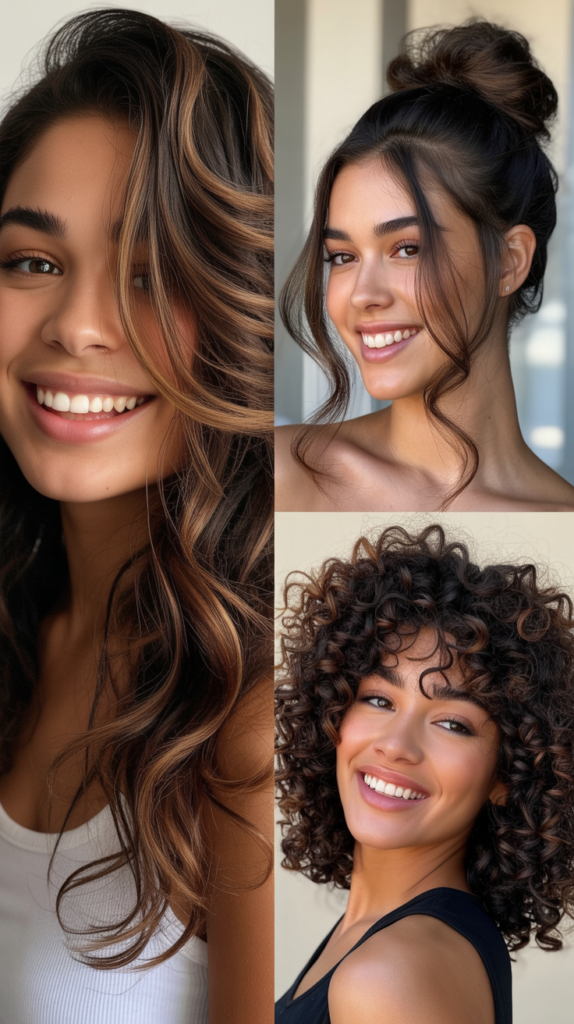
Lifting very dark hair to brown highlight shades creates dramatic yet natural dimension on nearly black bases.
- Very dark hair requires more intensive lightening to achieve visible brown highlights without appearing brassy.
- The contrast between nearly black bases and brown highlights creates striking dimension and movement.
- Choosing the right brown shade matters significantly—too light appears harsh, while appropriate tones look natural.
- Chocolate, chestnut, and warm brown highlights work particularly well on dark bases.
- The lifting process requires professional expertise to prevent damage and achieve even, beautiful results.
- Dark hair with brown highlights benefits from glossing treatments to add shine and tone the highlights.
- This dramatic yet natural approach suits those wanting noticeable change while staying within the brown family.
15. Golden Brown Highlights for Warmth
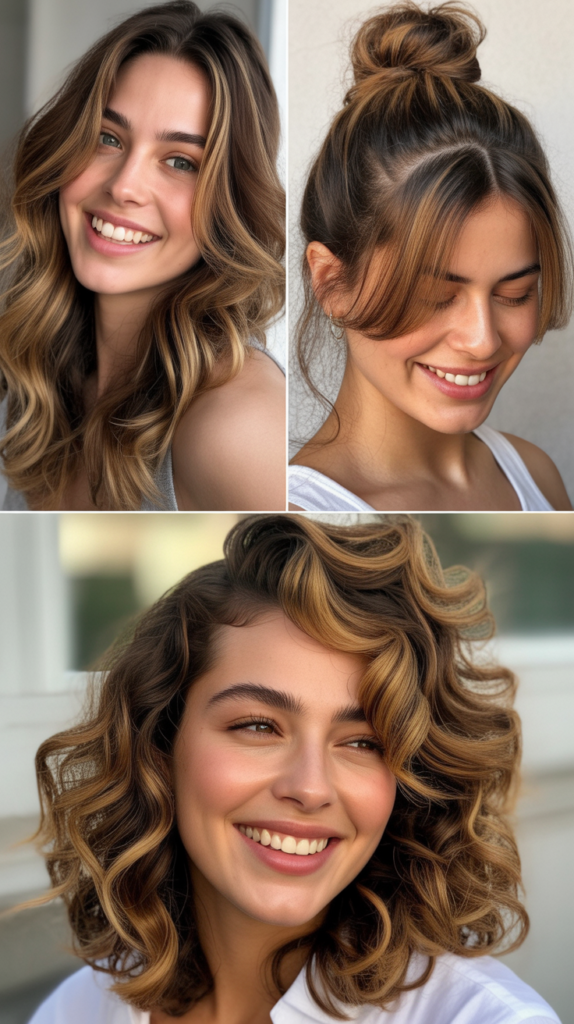
Golden brown highlights infuse hair with sunny warmth, creating a luminous effect that brightens your overall appearance.
- Golden brown sits between honey blonde and medium brown, offering noticeable warmth without excessive lightness.
- The warm, sunny quality of golden highlights creates an approachable, friendly aesthetic.
- These tones work beautifully on warm and neutral skin undertones, enhancing natural radiance.
- Golden highlights complement hazel, brown, and green eyes particularly well through complementary color theory.
- The warmth requires proper toning to prevent excessive yellow or brassy development over time.
- Golden pieces catch light exceptionally well, adding dimension and movement to any hairstyle.
- This option delivers noticeable brightening while remaining firmly in the natural brown spectrum.
16. Maintenance Tips for Brown Highlighted Hair
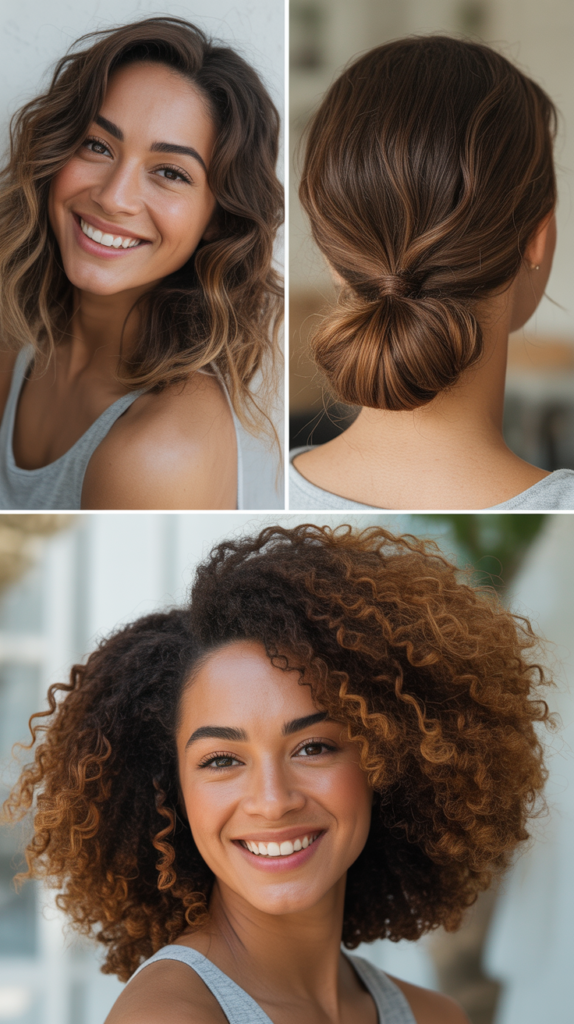
Proper care extends the life of your brown highlights and keeps them looking fresh, natural, and vibrant between salon visits.
| Maintenance Task | Frequency | Purpose |
|---|---|---|
| Purple/Blue Shampoo | 1-2x weekly | Neutralize brass and maintain tone |
| Deep Conditioning | Weekly | Restore moisture and prevent damage |
| Glossing Treatment | Every 4-6 weeks | Add shine and refresh color |
| Trim | Every 8-12 weeks | Remove damaged ends and maintain shape |
| Touch-up Color | Every 8-16 weeks | Refresh highlights and blend regrowth |
- Color-safe, sulfate-free shampoo prevents premature fading and maintains vibrancy of brown highlights.
- Purple shampoo neutralizes unwanted warmth in cool-toned highlights, while blue shampoo works for warm tones.
- Deep conditioning masks restore moisture lost during the highlighting process and prevent breakage.
- Heat protectant spray is essential before using hot tools to prevent additional damage to highlighted sections.
- Limiting heat styling frequency helps maintain hair health and color integrity over time.
- Professional glossing treatments add shine and can subtly adjust tone without re-highlighting.
- Touch-up frequency depends on highlight placement—balayage can go longer between appointments than traditional highlights.
17. Ribbon Highlights for Defined Dimension
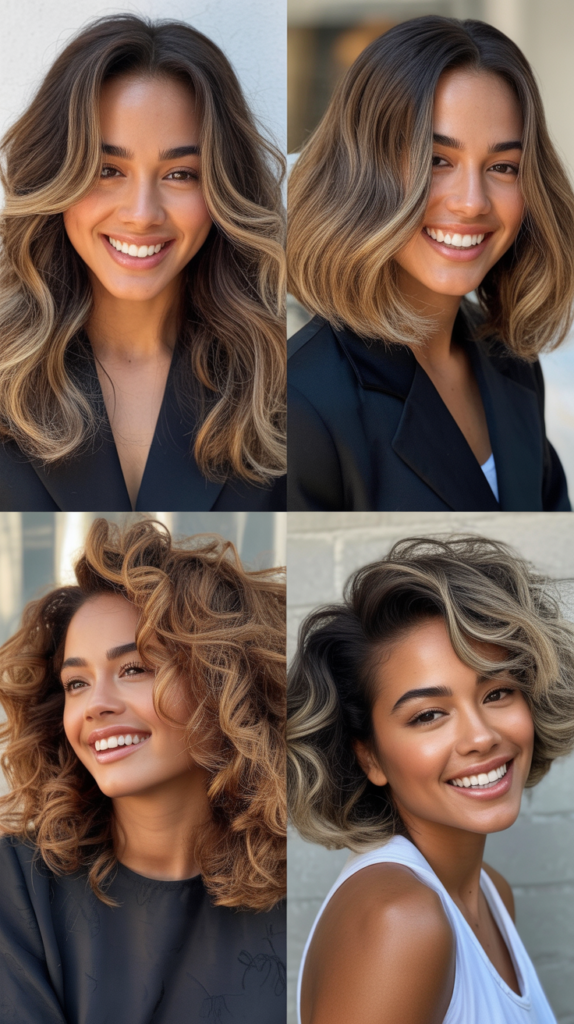
Ribbon highlights feature thicker, more visible sections of color that create bold dimension while remaining natural-looking.
- Ribbon highlights use thicker sections than babylights but remain blended for a natural yet noticeable effect.
- The larger sections create more dramatic dimension and movement, especially visible in styled hair.
- This technique works well for thick hair where fine highlights might get lost in the density.
- Ribbons can be placed strategically to enhance layers, frame the face, or add brightness throughout.
- The thicker sections lighten more effectively, allowing for greater lift from darker bases.
- Ribbon highlights require less time than ultra-fine techniques while still delivering beautiful dimension.
- This approach sits between subtle and dramatic, offering noticeable color without appearing harsh or over-processed.
18. Mocha Brown Highlights
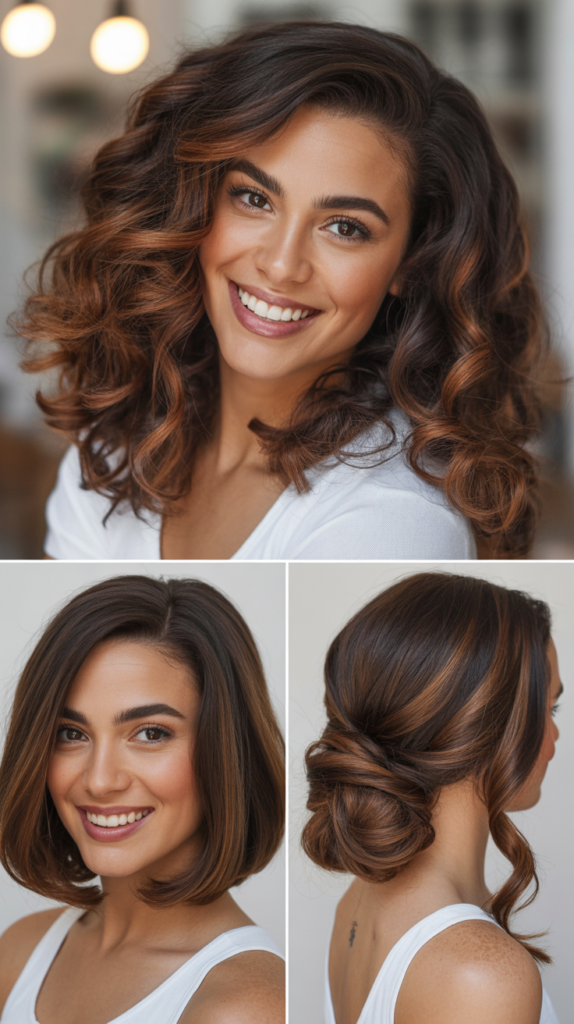
Mocha combines chocolate brown with subtle warmth, creating sophisticated highlights reminiscent of the beloved coffee beverage.
- Mocha brown offers a perfect middle ground between cool ash browns and warm caramel tones.
- The slightly warm, slightly cool nature of mocha makes it universally flattering across different skin tones.
- These highlights provide subtle dimension without dramatic contrast, perfect for conservative preferences.
- Mocha works particularly well on medium brown bases where it adds depth without excessive lightening.
- The sophisticated, coffee-inspired tone suits professional environments and classic style preferences.
- This shade requires less maintenance than lighter highlights since the subtle contrast allows graceful grow-out.
- Mocha highlights add richness and complexity to brown hair while maintaining an understated, elegant appearance.
19. Hazelnut Brown for Medium to Light Hair
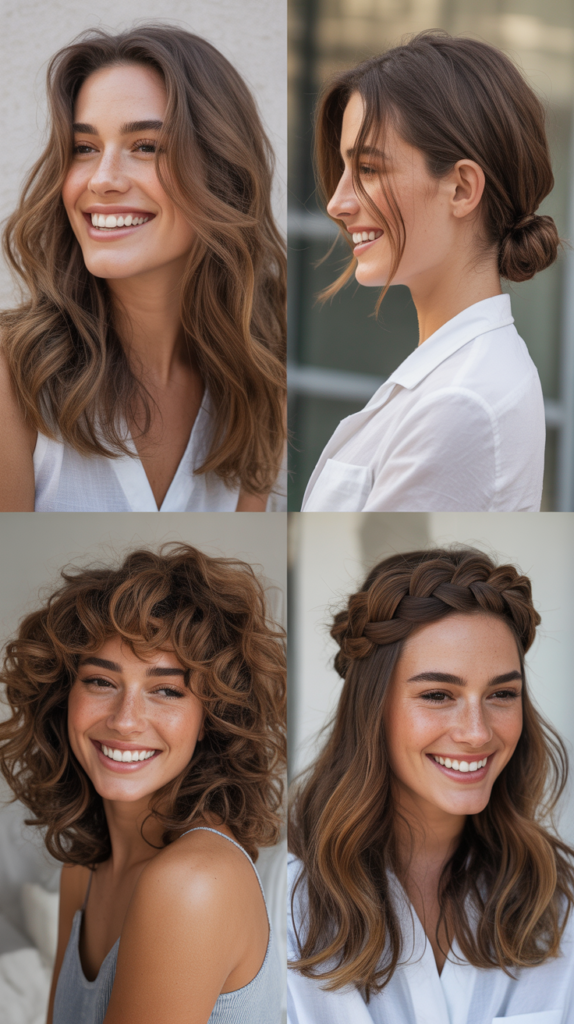
Hazelnut brown brings a perfect blend of warm brown and golden tones for soft, natural-looking highlights.
- Hazelnut sits in the warm brown spectrum with golden undertones that catch light beautifully.
- This shade works particularly well on medium to light brown bases where it provides gentle lift.
- The natural, nutty quality creates dimension that appears sun-kissed rather than salon-processed.
- Hazelnut complements warm and neutral skin undertones without appearing too yellow or brassy.
- These highlights blend seamlessly with natural brown bases for low-maintenance color that grows out gracefully.
- The warm yet subtle nature of hazelnut makes it appropriate for all seasons and occasions.
- This tone adds enough warmth to brighten complexion without requiring frequent toning or maintenance.
20. Chestnut Highlights for Rich Warmth
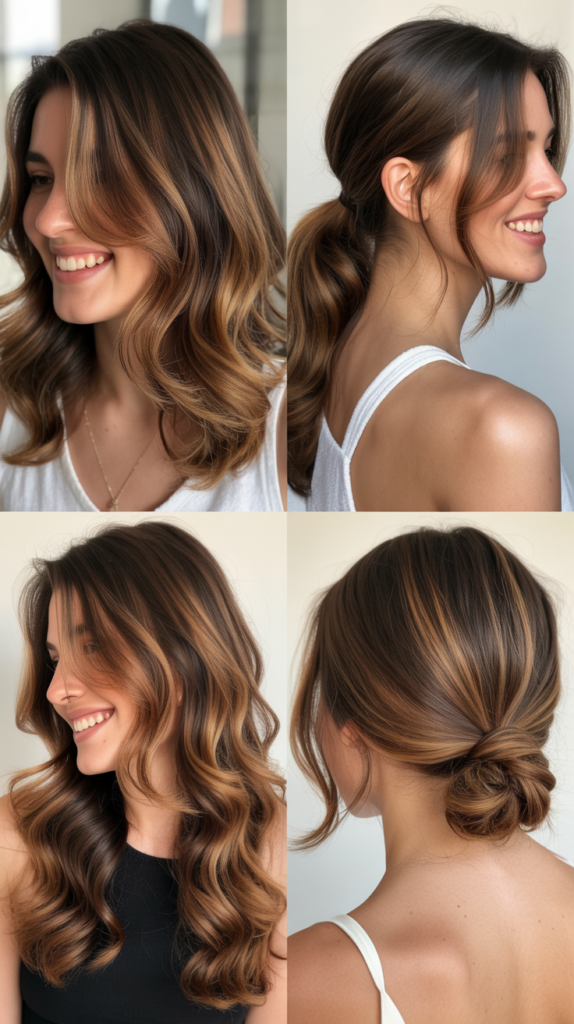
Chestnut brown highlights deliver rich, reddish-brown warmth that adds depth and dimension to brown hair.
- Chestnut contains warm reddish-brown undertones that add richness without appearing distinctly red.
- This shade works beautifully on medium to dark brown bases where the warmth creates subtle contrast.
- The earthy, natural quality of chestnut suits autumn and winter color palettes particularly well.
- Chestnut highlights complement warm skin undertones and bring out golden or peach complexion notes.
- The subtle red undertones add vibrancy and prevent brown hair from appearing flat or dull.
- These highlights require color-safe products to maintain the red pigment which tends to fade faster than other tones.
- Chestnut creates sophisticated warmth that enhances brown hair while remaining firmly in the neutral-warm spectrum.
21. Foil Highlights Versus Balayage
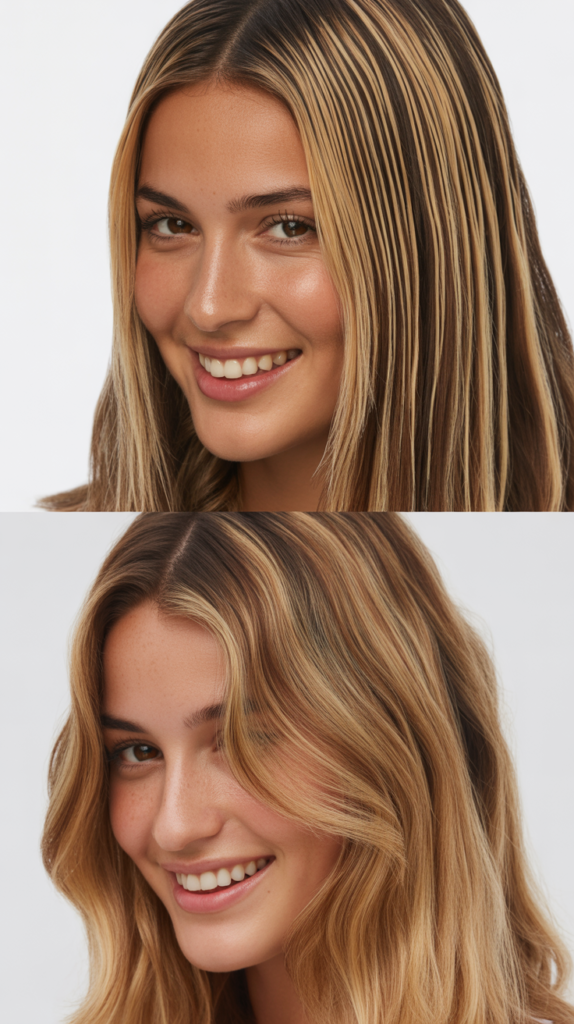
Understanding the difference between traditional foil highlights and modern balayage helps you choose the best technique for your desired result.
| Characteristic | Foil Highlights | Balayage |
|---|---|---|
| Application Method | Hair in foils with product | Hand-painted on surface |
| Precision Level | Very precise, uniform | Artistic, customized |
| Root Application | Can start at scalp | Typically starts below roots |
| Maintenance Frequency | Every 6-10 weeks | Every 10-16 weeks |
| Best For | All-over lightening | Natural, sun-kissed effect |
| Processing Time | Faster, more heat | Slower, natural processing |
- Foil highlights involve sectioning hair, applying lightener or color, and wrapping sections in foil for controlled processing.
- Balayage uses a freehand painting technique where color is swept onto hair without foils for a softer result.
- Foils create more uniform, precise highlighting with consistent lightness throughout each section.
- Balayage delivers softer, more natural dimension with varied lightness that mimics sun exposure.
- Foiled highlights typically require more frequent maintenance since the grow-out shows a distinct root line.
- Balayage grows out more gracefully since the color starts below the roots and blends naturally.
- Both techniques can achieve beautiful brown highlights—the choice depends on your desired level of precision and maintenance commitment.
22. Peekaboo Highlights in Brown Tones
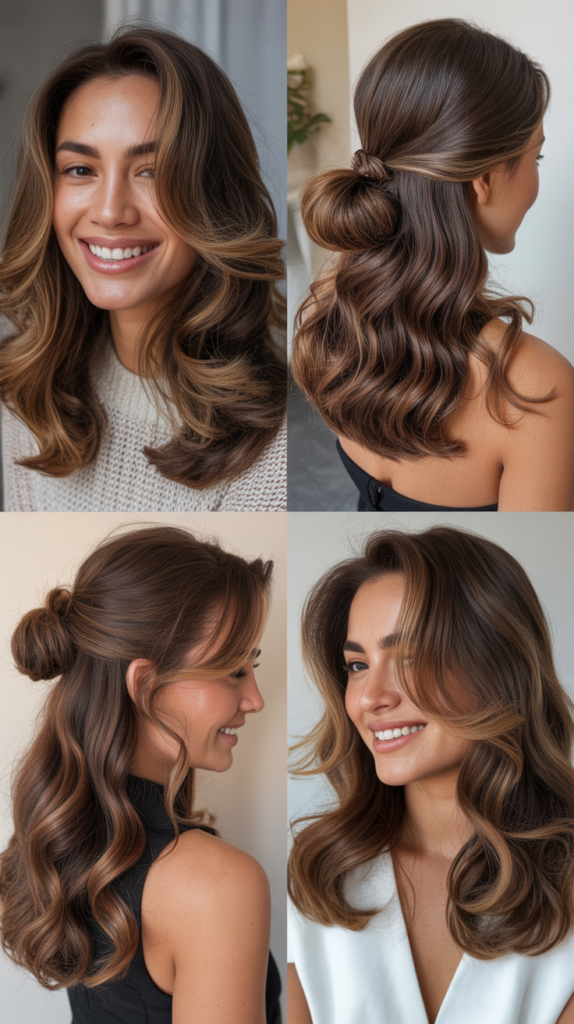
Peekaboo highlights hide underneath top layers, revealing themselves with movement for a subtle surprise element.
- Peekaboo placement involves highlighting the underneath layers while keeping top sections your natural color.
- This technique allows you to experiment with lighter tones while maintaining a conservative appearance when hair is down.
- The highlights peek through when hair moves, is styled up, or parts differently, creating visual interest.
- Peekaboo works particularly well for professional environments where dramatic color might not be appropriate.
- The hidden nature means less visible grow-out and extended time between maintenance appointments.
- This placement suits shorter haircuts where the underneath sections are frequently visible through layers.
- Peekaboo highlights can be as subtle or bold as you prefer since they’re concealed by your top layers.
23. Highlights for Brown Hair With Different Hair Lengths
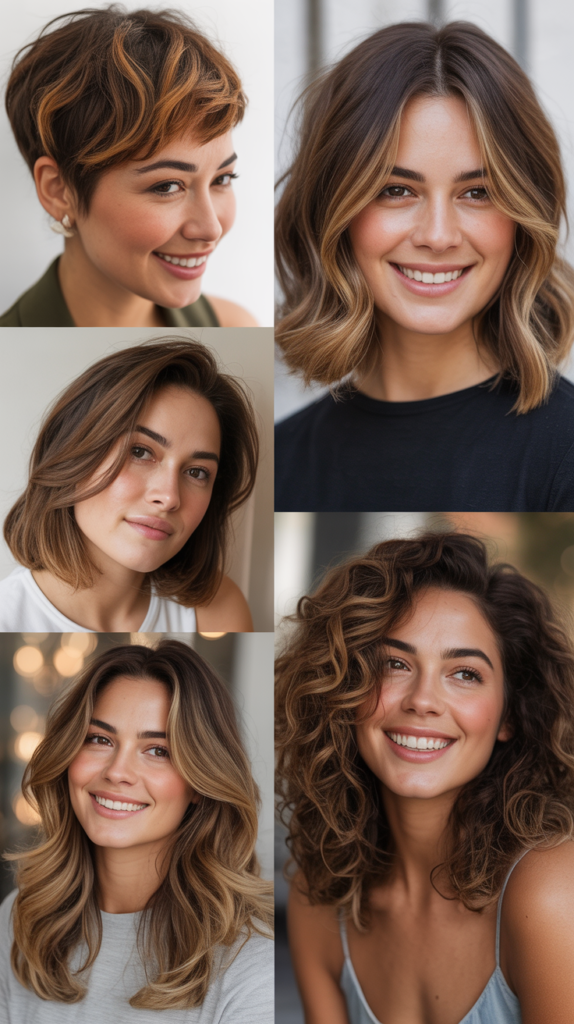
Brown highlight placement and technique vary significantly depending on whether you have short, medium, or long hair.
- Short hair benefits from face-framing highlights and subtle dimension throughout to enhance the cut’s shape.
- Bob-length hair showcases highlights beautifully with enough length to display color gradation and blend.
- Shoulder-length hair allows for more complex highlighting patterns including partial balayage or ombre effects.
- Long hair provides maximum canvas for elaborate highlighting techniques like full balayage, ombre, or ribbon highlights.
- Very short styles like pixie cuts require strategic highlight placement since there’s limited hair to work with.
- The same highlighting technique will look different on various lengths due to how color distributes across hair.
- Longer hair allows for more gradual color transitions while shorter hair showcases highlights more immediately and boldly.
24. Sun-Kissed Brown Hair Highlights

Sun-kissed highlighting replicates the natural lightening effect of sun exposure for an effortlessly beautiful result.
- Sun-kissed highlights concentrate lighter pieces around the face and crown where sun naturally lightens hair first.
- The technique uses multiple shades of brown for varied dimension rather than uniform highlighting.
- Ends are typically lighter than mid-lengths, mimicking how sun exposure affects hair over time.
- This natural approach works on any brown shade from light to dark, adapting to your base color.
- Sun-kissed highlighting pairs beautifully with textured styles like beachy waves or casual updos.
- The random, natural placement means exceptionally low maintenance with graceful, intentional-looking grow-out.
- This technique captures that “just back from vacation” glow year-round.
25. Mahogany and Brown Highlight Combination
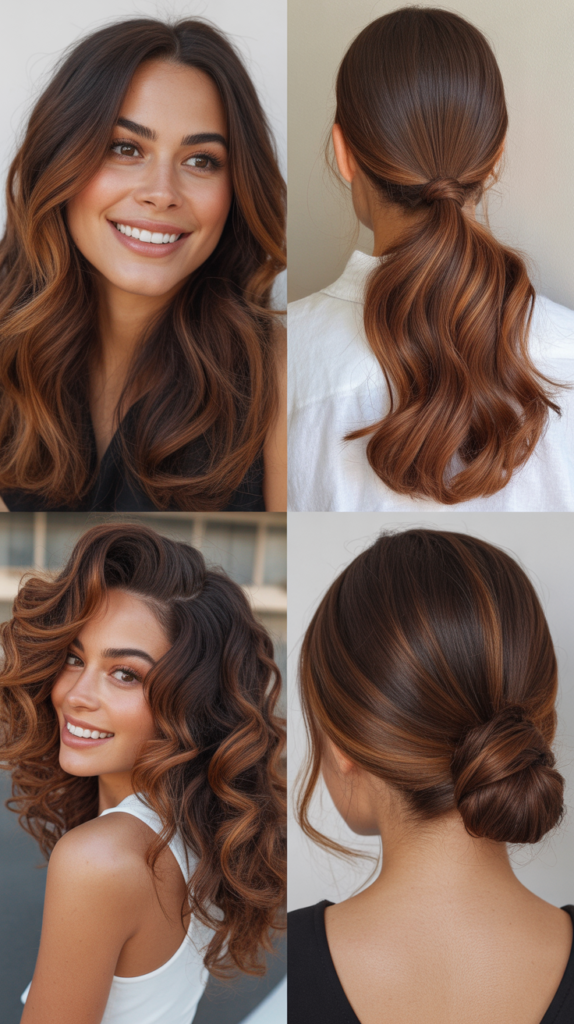
Combining mahogany’s rich red-brown tones with lighter brown highlights creates depth and sophisticated warmth.
- Mahogany provides a deep, reddish-brown base that makes lighter brown highlights appear more luminous.
- The red undertones add richness and prevent brown hair from appearing flat or lifeless.
- This combination works particularly well on medium to dark brown natural bases.
- Lighter brown highlights on mahogany base create beautiful contrast while remaining within the brown family.
- The warmth suits fall and winter color palettes but can be worn year-round with proper styling.
- Mahogany requires color-depositing products to maintain the red pigment between salon visits.
- This sophisticated pairing suits those wanting dimensional color with rich, warm undertones.
26. Blonde-Brown Balayage for Subtle Contrast
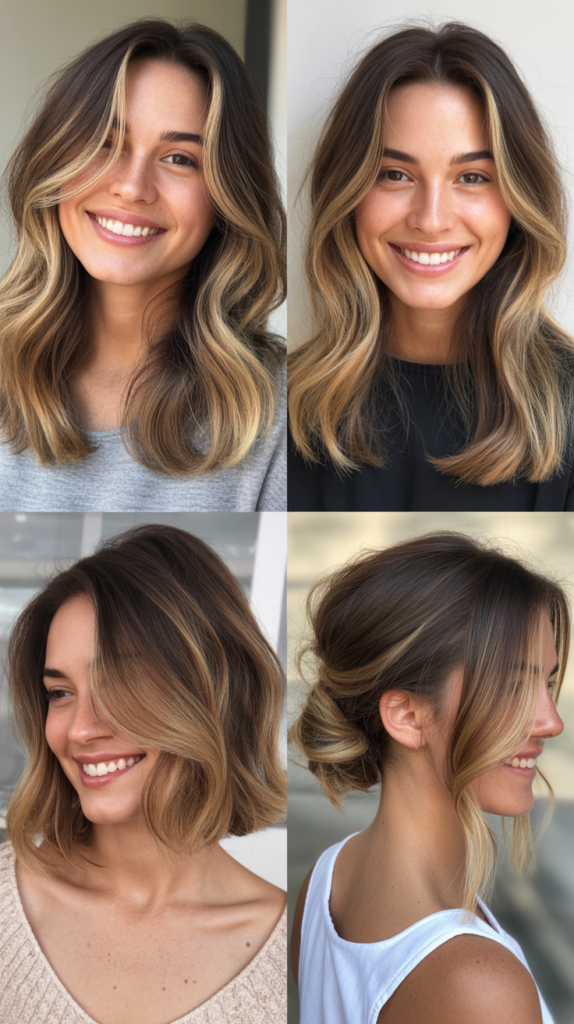
Blending blonde tones with brown through balayage creates soft, natural contrast for a sun-lightened appearance.
- Blonde-brown balayage combines the richness of brown with the brightness of blonde for noticeable yet natural dimension.
- The hand-painted technique ensures blonde pieces blend seamlessly rather than appearing stripey or harsh.
- Choosing the right blonde shade matters—too light appears unnatural while appropriate tones blend beautifully.
- Honey, champagne, and butterscotch blonde work particularly well with brown bases.
- The blonde should appear as a natural progression from brown rather than a distinct color change.
- This combination requires more maintenance than brown-on-brown highlighting to prevent blonde sections from becoming brassy.
- Blonde-brown balayage suits those wanting noticeable brightening while maintaining brown as the dominant color.
27. Toffee Brown Highlights for Sweet Warmth
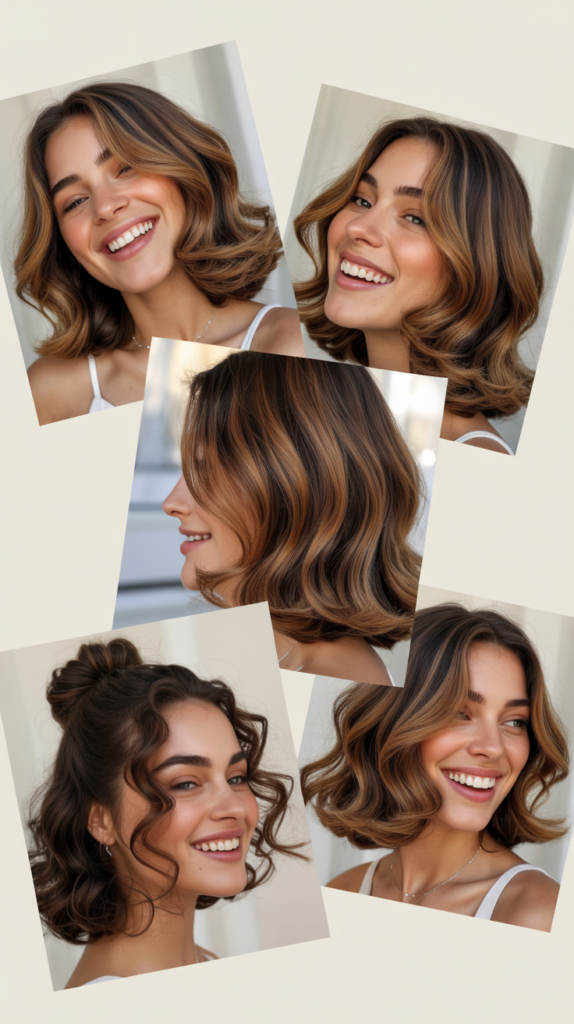
Toffee brown delivers sweet, caramel-like warmth with slightly deeper tones than traditional caramel highlights.
- Toffee sits between caramel and chocolate brown, offering rich warmth without excessive lightness.
- The buttery, golden quality adds depth and dimension while maintaining a natural appearance.
- This shade works beautifully on medium brown bases where it provides subtle yet noticeable lift.
- Toffee complements warm and neutral skin undertones particularly well through its balanced warmth.
- The deeper quality of toffee means less maintenance than lighter highlights since regrowth blends more seamlessly.
- These highlights add sweetness and approachability to your overall aesthetic without appearing overly trendy.
- Toffee catches light beautifully while remaining understated enough for conservative preferences.
28. Dimensional Brown Hair Color
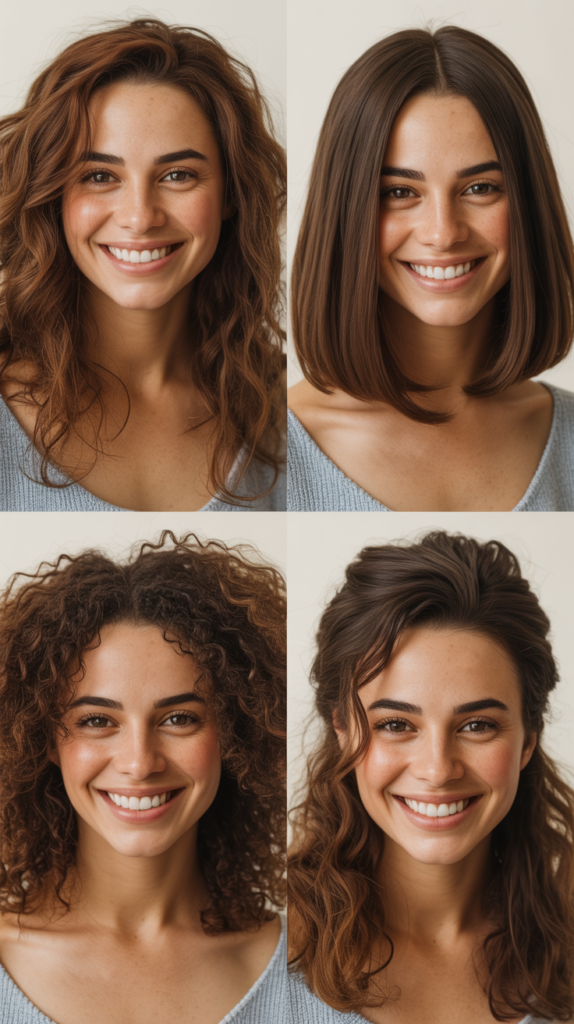
Achieving true dimension requires combining multiple brown shades through highlights, lowlights, and toning for complex depth.
- Dimensional color uses at least 3-4 different shades of brown throughout hair for realistic depth and movement.
- Combining highlights and lowlights creates contrast that prevents hair from appearing flat or one-tonal.
- The interplay between lighter and darker sections makes hair appear thicker and fuller.
- Dimensional coloring mimics how natural, virgin hair contains subtle color variation throughout.
- Strategic placement of different tones creates the illusion of texture and movement even in straight hair.
- This approach requires skilled colorist expertise to blend multiple shades seamlessly and naturally.
- Dimensional brown hair reflects light more interestingly than solid color, creating visual depth and richness.
29. Soft Brown Highlights for Fine Hair
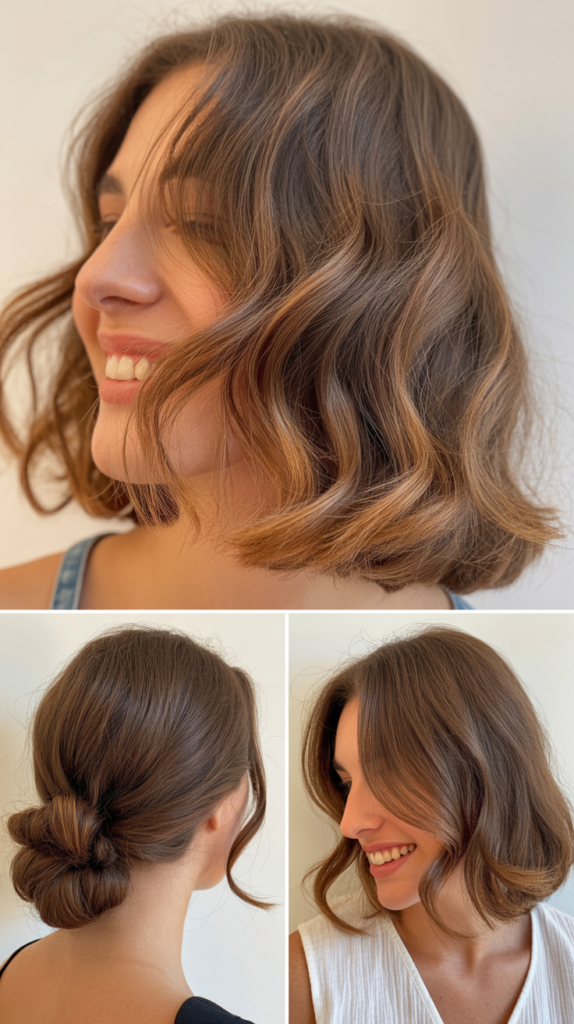
Fine hair requires special highlighting considerations to add dimension without creating harsh lines or visible separation.
- Fine hair benefits from micro-fine highlights like babylights that won’t create obvious sectioning.
- Softer, closer-toned highlights prevent the “stripey” appearance that can occur with excessive contrast on fine hair.
- Multiple subtle shades create the illusion of thickness and body that fine hair often lacks naturally.
- Overlapping highlights in thin sections adds dimension without weighing down delicate hair texture.
- The highlighting process can actually make fine hair appear fuller due to the multi-dimensional effect.
- Gentle processing prevents damage that fine hair is particularly susceptible to experiencing.
- Soft, blended highlights maintain fine hair’s natural movement without creating stiff, separated sections.
30. Brown Highlights for Thick Hair
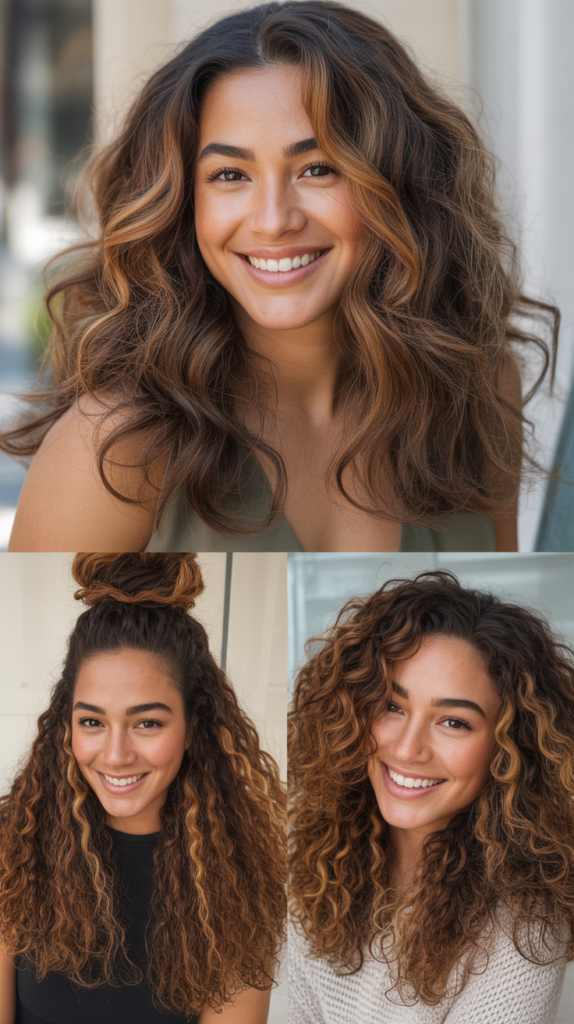
Thick hair can handle bolder highlighting techniques and provides ample canvas for complex color work.
- Thick hair benefits from more substantial highlight sections since fine work can get lost in the density.
- The volume and fullness allow for dramatic dimension without appearing over-processed.
- Multiple highlighting sessions may be necessary to achieve desired brightness throughout all layers of thick hair.
- Ribbon highlights and chunky balayage work particularly well on thick textures.
- The density means highlights can be distributed throughout without creating an overly light or unnatural appearance.
- Thick hair holds color well and often requires less frequent touch-ups than finer textures.
- Strategic layering combined with highlights creates movement and reduces bulk in thick hair.
31. Seasonal Brown Highlighting
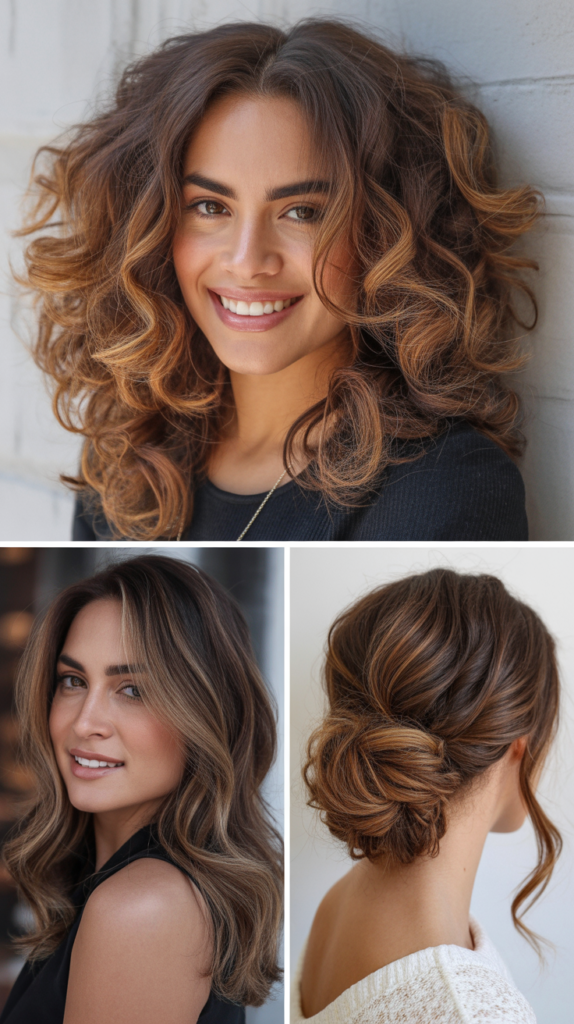
Adjusting brown highlight tones seasonally keeps your color fresh and aligned with changing fashion and environmental aesthetics.
| Season | Recommended Tones | Aesthetic Goal |
|---|---|---|
| Spring | Honey, light caramel, golden brown | Fresh, renewed, bright |
- Spring highlights incorporate fresh, warm tones like honey and golden brown for a renewed appearance.
- Summer calls for sun-kissed caramel and sandy tones that evoke beach vacations and outdoor living.
- Fall welcomes richer, deeper highlights including auburn, chestnut, and mahogany for cozy warmth.
- Winter suits cooler tones like ash brown and mocha for sophisticated, elegant dimension.
- Seasonal adjustments can be subtle toning changes rather than complete re-highlighting.
- Adapting your highlights seasonally keeps your look current and harmonious with your wardrobe.
- Some prefer to maintain one tone year-round, which is equally valid—seasonal changes remain optional.
32. Glossing Treatments for Brown Highlights
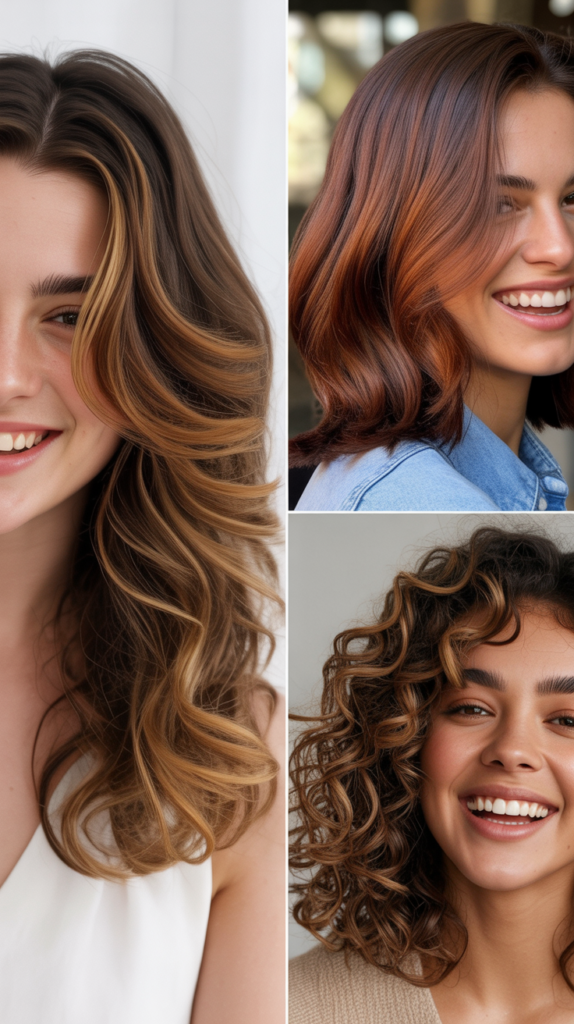
Glossing enhances shine, adjusts tone, and refreshes brown highlights between full color appointments.
- Gloss treatments deposit semi-permanent color that adds shine and can subtly adjust highlight tones.
- These treatments seal the hair cuticle, creating reflective surface that enhances dimensional color.
- Glossing can neutralize unwanted warmth or add warmth depending on the formula used.
- The treatment lasts approximately 4-6 weeks, gradually fading without creating harsh lines or roots.
- Clear gloss adds shine without changing color, perfect for maintaining current highlight tones.
- Tinted glosses can refresh faded highlights or subtly adjust tone between highlighting appointments.
- Regular glossing extends the life of highlights and keeps brown hair looking salon-fresh longer.
33. Root Smudging for Natural Grow-Out

Root smudging blends highlights into natural roots for seamless grow-out and extended maintenance intervals.
- Root smudging applies a slightly darker tone at the root area to create gradual transition into highlights.
- This technique eliminates the harsh line of demarcation where highlights meet natural roots.
- The blended root allows highlights to grow out for months without appearing noticeably unnatural.
- Root smudging works with any highlighting technique including balayage, foils, or babylights.
- The darker root creates a shadow effect that adds depth and dimension to highlighted hair.
- This method significantly reduces maintenance frequency, extending time between color appointments.
- The soft, blended roots appear intentional rather than neglected as highlights grow out naturally.
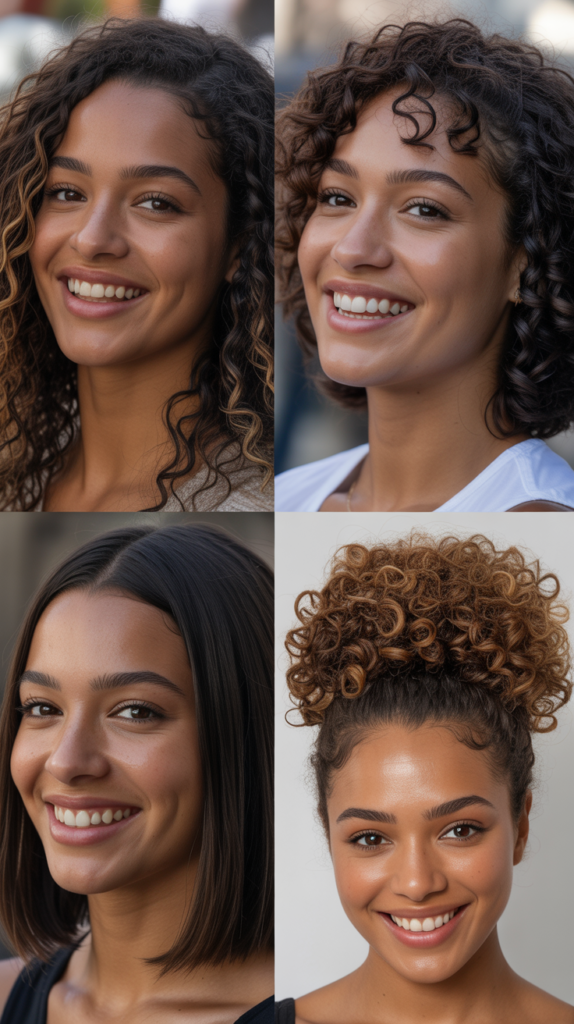
34. Brown Highlights for Curly Hair
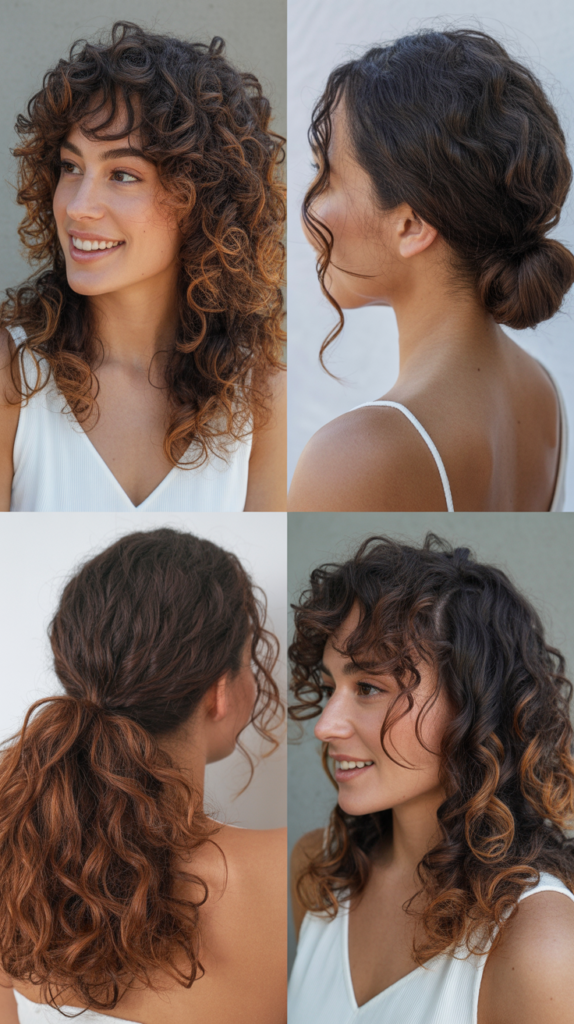
Curly hair showcases highlights beautifully as the curl pattern creates natural dimension and light reflection.
- Curly hair’s natural texture creates movement that shows off dimensional highlights exceptionally well.
- Highlights should be distributed throughout curls rather than just on surface layers for visible dimension.
- The curl pattern means highlights appear and disappear with movement, creating dynamic color shifts.
- Curly hair often requires gentler processing to prevent damage and maintain curl integrity.
- Highlight placement should consider the curl pattern and how hair naturally falls when dry.
- Multiple subtle shades work better on curls than stark contrast which can appear too bold.
- Moisturizing treatments are essential for curly highlighted hair to maintain healthy, defined curls.
35. Honey Brown Highlights

Honey brown combines golden warmth with medium brown depth for sweet, natural-looking dimension.
- Honey brown contains rich golden undertones that warm up brown hair without appearing too light.
- This shade sits perfectly between caramel and medium brown on the color spectrum.
- Honey highlights work beautifully on light to medium brown bases where they provide gentle lift.
- The warmth complements golden or warm skin undertones particularly well.
- These highlights catch and reflect light beautifully, adding luminosity to brown hair.
- Honey brown requires less maintenance than lighter highlights since it’s closer to many natural brown shades.
- The sweet, approachable quality makes honey brown universally flattering across age groups.
36. Rooty Brown Highlights

Intentionally darker roots have become a desirable aesthetic for low-maintenance yet dimensional brown highlights.
- Rooty highlights intentionally leave natural roots darker, creating a soft shadow effect.
- This modern approach embraces darker regrowth as a design element rather than a maintenance issue.
- The technique allows highlights to grow out for extended periods without appearing unkempt.
- Rooty highlighting pairs beautifully with balayage for an effortlessly natural aesthetic.
- The darker roots add depth that prevents over-highlighted hair from appearing flat.
- This style suits busy lifestyles where frequent salon visits aren’t practical or desired.
- The intentional root creates dimension even in simple styles like ponytails or braids.
37. Two-Toned Brown Highlighting
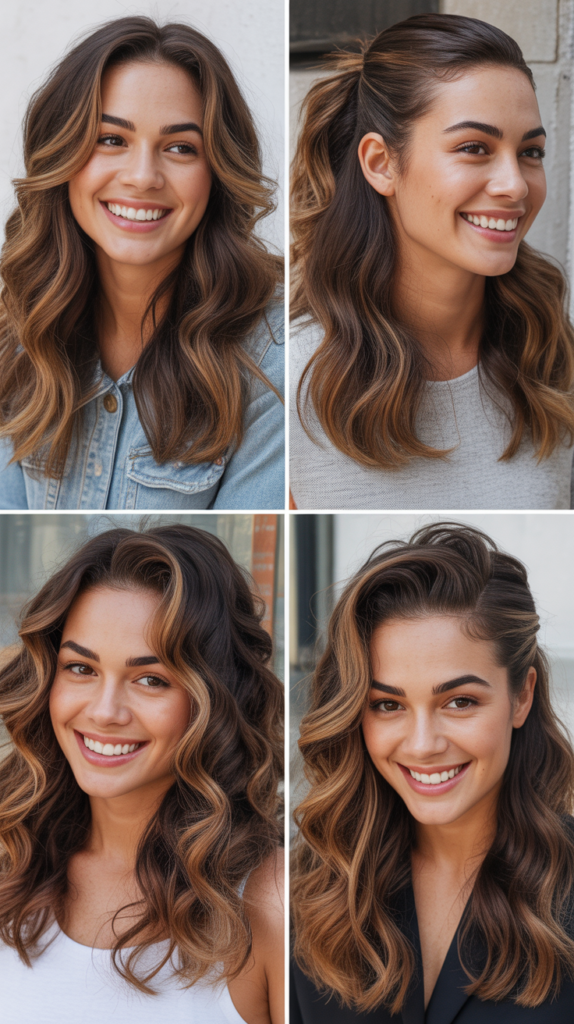
Strategic use of two distinct brown shades creates bold dimension while remaining within the brown color family.
- Two-toned highlighting uses one shade for mid-lengths and another for ends to create noticeable contrast.
- This technique works particularly well with a deeper brown base and lighter brown ends.
- The two tones can be subtle neighbors on the color spectrum or more contrasting for drama.
- Popular combinations include chocolate brown with caramel, chestnut with honey, or dark brown with toffee.
- This approach creates clear dimension without requiring multiple subtle shades throughout.
- Two-toned brown suits those wanting noticeable color without committing to blonde or unnatural tones.
- The bold yet natural effect works beautifully with long hair where both tones can be fully showcased.
38. Brown Highlights for Gray Coverage
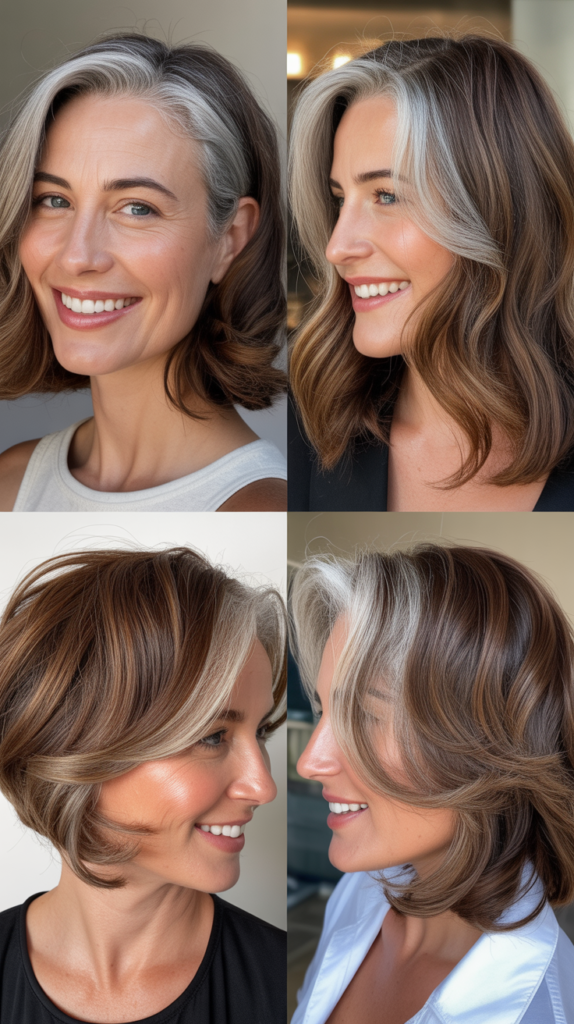
Strategic brown highlighting can blend gray hair naturally while adding dimension and disguising new silver growth.
- Highlights create dimension that makes gray regrowth less noticeable than solid all-over color.
- The varied tones blend with both natural brown and gray hair for seamless coverage.
- Lighter brown highlights specifically placed around the face can brighten complexion as skin tone changes.
- Multiple brown shades throughout create natural variation that disguises both gray and regrowth.
- This approach allows for longer intervals between color appointments than traditional all-over coverage.
- Highlights add youthful dimension while transitioning gradually toward natural gray if desired.
- The technique works for any level of gray from minimal silver threads to significant gray coverage needs.
39. Espresso Brown Base With Lighter Highlights

Deep espresso brown provides a dramatic base that makes lighter brown highlights truly stand out with luxurious contrast.
- Espresso provides one of the darkest brown bases, almost black but with warm brown undertones.
- The deep base makes even subtle highlights appear more dimensional and noticeable.
- Caramel, toffee, and mocha highlights create beautiful contrast against espresso without appearing unnatural.
- This combination suits those who want to maintain dark hair while adding brightness around the face.
- The dramatic depth requires professional expertise to achieve even, beautiful highlights without damage.
- Espresso with highlights creates a rich, luxurious appearance appropriate for all seasons.
- The contrast means highlights may require slightly more frequent toning to maintain ideal color balance.
40. Painted Brown Highlights
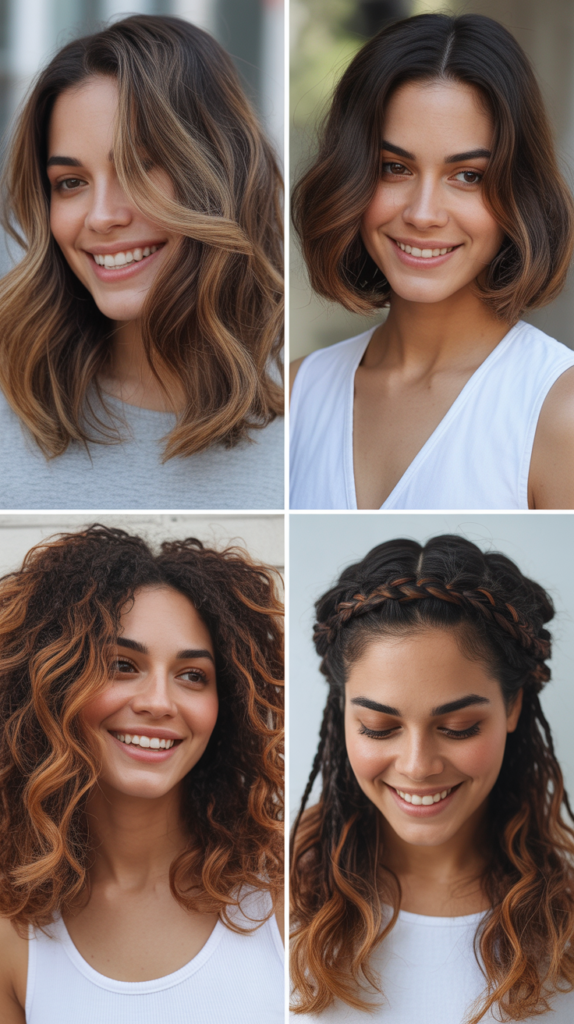
Hand-painted highlighting techniques create artistic, customized dimension tailored to your hair’s unique features.
- Painted highlights use brushes or applicators to freehand color directly onto hair sections.
- This artistic approach allows colorists to customize placement based on your face shape, cut, and natural hair patterns.
- The technique includes methods like balayage, hair painting, and freehand application.
- Painted highlights typically create softer, more diffused results than precisely foiled highlights.
- The customized approach means each painted highlight application is unique to the individual.
- Results appear more natural and sun-kissed than geometric, uniformly placed highlights.
- Painted techniques allow for creative expression and truly personalized color work.
41. Chocolate Cherry Brown Highlights
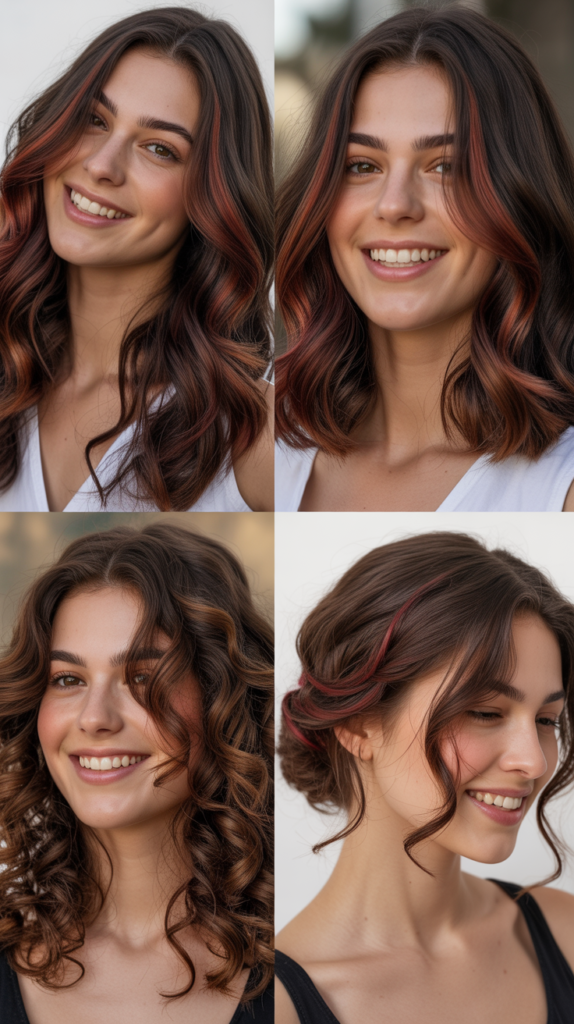
Combining chocolate brown with subtle cherry undertones creates rich, slightly cool-toned dimension with personality.
- Chocolate cherry combines deep brown with cool red undertones for sophisticated dimension.
- The cherry notes add interest without appearing distinctly red or purple in most lighting.
- This combination works beautifully on medium to dark brown bases seeking cool-toned warmth.
- The subtle red undertones suit cool and neutral skin undertones particularly well.
- Chocolate cherry provides more personality than standard chocolate while remaining professional.
- The cool red requires purple-toned products to maintain color and prevent fading to brassy tones.
- This sophisticated combination suits those wanting dimension beyond traditional warm or cool browns.
42. Sombré Brown Hair

Sombré delivers subtle ombre with softer color gradation for barely-there dimension that enhances rather than transforms.
- Sombré is “subtle ombré” with gentler color transitions and less dramatic contrast than traditional ombre.
- The technique creates barely noticeable color gradation that adds dimension without obvious color work.
- Sombré works particularly well on brown hair where natural-looking enhancement is desired.
- The subtle nature means exceptionally low maintenance with virtually invisible grow-out.
- This method suits conservative environments or those preferring understated color enhancement.
- Multiple brown shades blend throughout for soft dimension rather than distinct color zones.
- Sombré delivers the dimensional benefits of ombre without the commitment to dramatic color change.
43. Cinnamon Brown Highlights
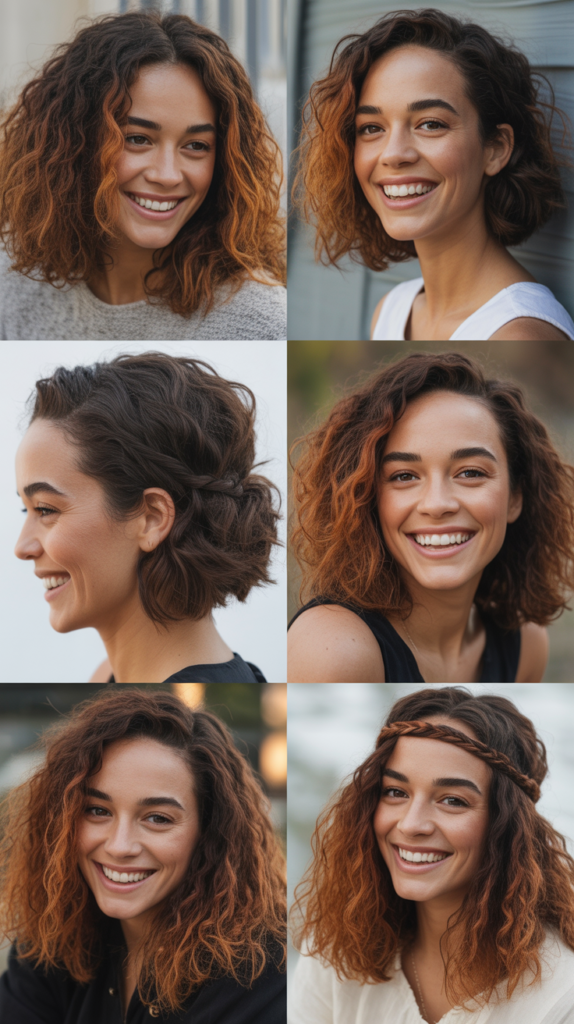
Cinnamon brings warm, spicy reddish-brown tones to brown hair for cozy autumn-inspired dimension.
- Cinnamon contains warm red and orange undertones that add spicy dimension to brown hair.
- This shade works particularly well on medium brown bases where the warmth creates subtle contrast.
- The cozy, autumn-inspired quality makes cinnamon highlights especially popular for fall and winter.
- Cinnamon complements warm skin undertones and brings out golden or peachy complexion notes.
- The red undertones require color-depositing shampoo to maintain vibrancy between appointments.
- These highlights add personality and warmth while remaining within the natural brown spectrum.
- Cinnamon creates approachable, friendly dimension that suits casual and professional settings equally.
44. Brown Highlights With Money Pieces
Money pieces feature bold face-framing highlights that brighten and frame facial features with strategic placement.
- Money pieces are chunky highlights placed at the front hairline to frame and brighten the face.
- These bold sections can be lighter brown, caramel, or even blonde depending on desired contrast.
- The technique draws attention to facial features and creates a brightening effect around the face.
- Money pieces work on any length from short bobs to long hair, adapting to your style.
- The front-focused placement means lower maintenance since only visible sections require frequent touch-ups.
- These statement pieces pair beautifully with more subtle highlighting throughout the rest of hair.
- Money pieces suit those wanting noticeable brightening without lightening all of their hair.
45. Mushroom Brown Highlights for Cool Tone

Mushroom brown combines gray and brown tones for sophisticated, cool-toned dimension with modern appeal.
- Mushroom brown contains gray and taupe undertones mixed with brown for a cool, muted aesthetic.
- This trendy shade works particularly well on those with cool skin undertones or ash-toned natural hair.
- The gray notes create modern, sophisticated dimension without traditional warm or golden tones.
- Mushroom brown suits those embracing or transitioning to gray hair naturally.
- The cool tones require purple shampoo to prevent unwanted warmth from developing.
- This shade provides unique dimension that stands out from typical warm brown highlighting.
- Mushroom brown creates an understated yet distinctly modern appearance perfect for minimalist aesthetics.
46. Gradient Brown Highlighting
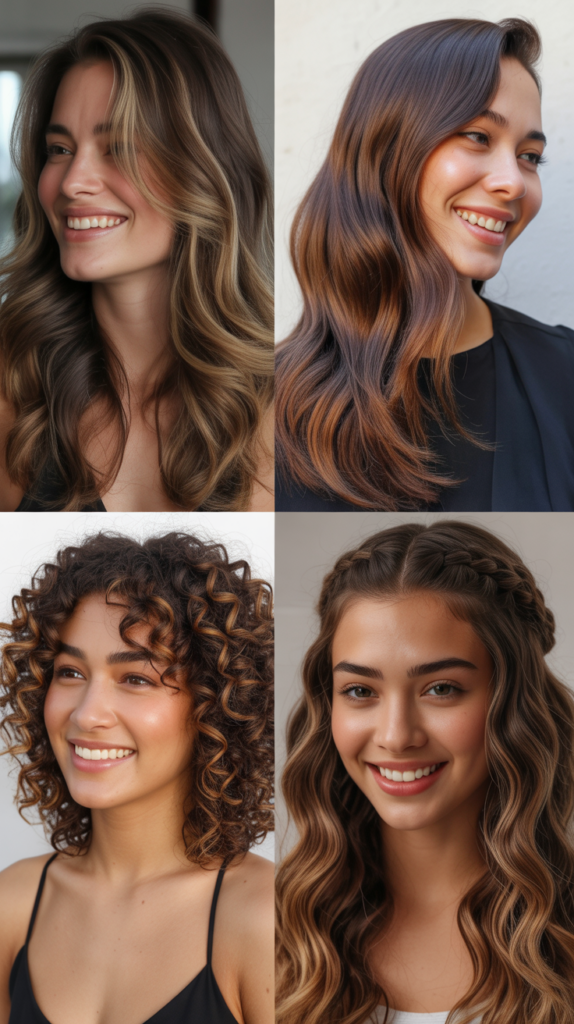
Gradient techniques create smooth color transitions from dark to light for seamless, flowing dimension.
- Gradient highlighting creates continuous color flow rather than distinct zones of light and dark.
- The smooth transitions eliminate harsh lines for the most natural-looking dimensional color.
- This technique works beautifully on long hair where there’s length to showcase the gradual change.
- Multiple brown shades blend throughout to create the seamless gradient effect.
- Gradient coloring requires skilled application to achieve smooth transitions without banding.
- The flowing nature of gradient highlights suits those wanting dimension without obvious highlighting.
- This approach grows out exceptionally well since there’s already intentional color variation throughout.
47. Brown Highlights for Different Skin Tones
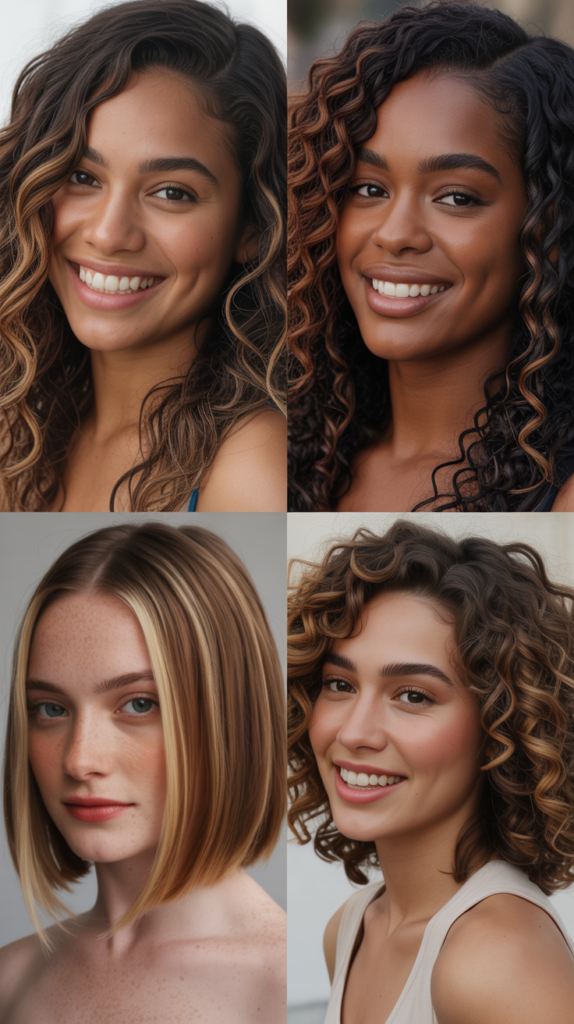
Selecting brown highlight shades that complement your skin’s undertone ensures harmonious, flattering color results.
| Skin Undertone | Recommended Highlight Shades | Shades to Avoid |
|---|---|---|
| Warm | Golden brown, caramel, honey, toffee | Ash, cool brown, mushroom |
| Cool | Ash brown, mocha, cool chestnut, taupe | Golden, brassy caramel, auburn |
| Neutral | Most browns, hazelnut, natural caramel | Extreme warm or cool shades |
| Olive | Chocolate, warm chestnut, caramel | Very cool ash, very warm golden |
- Fair skin with cool undertones looks beautiful with ash brown and cool mocha highlights.
- Fair skin with warm undertones benefits from honey, caramel, and golden brown highlights.
- Medium skin tones can wear a wider range of brown highlights from warm to cool.
- Olive skin looks stunning with rich chocolate, warm chestnut, and caramel highlights.
- Dark skin beautifully showcases warm caramel, toffee, and honey brown highlights with noticeable dimension.
- Identifying your undertone involves checking if your veins appear blue/purple (cool) or green (warm).
- The right highlight shade enhances your natural complexion while wrong shades can appear sallow or harsh.
48. Subtle Highlights for Professional Settings

Conservative highlighting approaches provide dimension suitable for corporate or traditional work environments.
- Professional highlighting emphasizes subtle, natural dimension rather than dramatic color changes.
- Close-toned highlights that differ only 1-2 levels from base color appear most conservative.
- Babylights and subtle balayage techniques create barely-noticeable yet beautiful dimension.
- Face-framing pieces can brighten without appearing too bold for traditional environments.
- Cooler brown tones often read as more professional than very warm or golden highlights.
- The understated approach ensures focus remains on professionalism rather than hair color.
- Subtle highlighting suits industries like finance, law, healthcare, and government where conservative appearance matters.
49. Lived-In Brown Hair Color
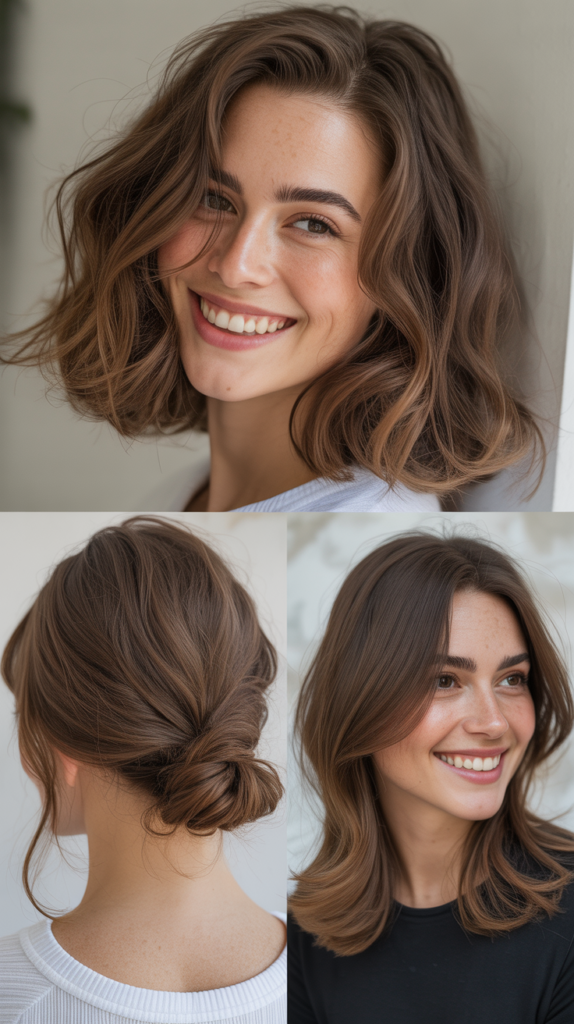
Lived-in color creates low-maintenance dimension that intentionally appears grown-out for effortless style.
- Lived-in color deliberately creates the appearance of naturally sun-lightened, slightly grown-out hair.
- The technique combines multiple methods including root smudging, balayage, and varied highlight placement.
- Results appear effortlessly dimensional rather than freshly colored or obviously maintained.
- This approach allows 4-6 months between color appointments versus traditional 6-10 week maintenance.
- Lived-in color suits busy lifestyles and those who appreciate natural, undone aesthetics.
- The intentionally imperfect quality creates modern, fashionable dimension without high maintenance.
- This style embraces natural root growth as part of the overall color design rather than fighting it.
50. Maple Brown Highlights
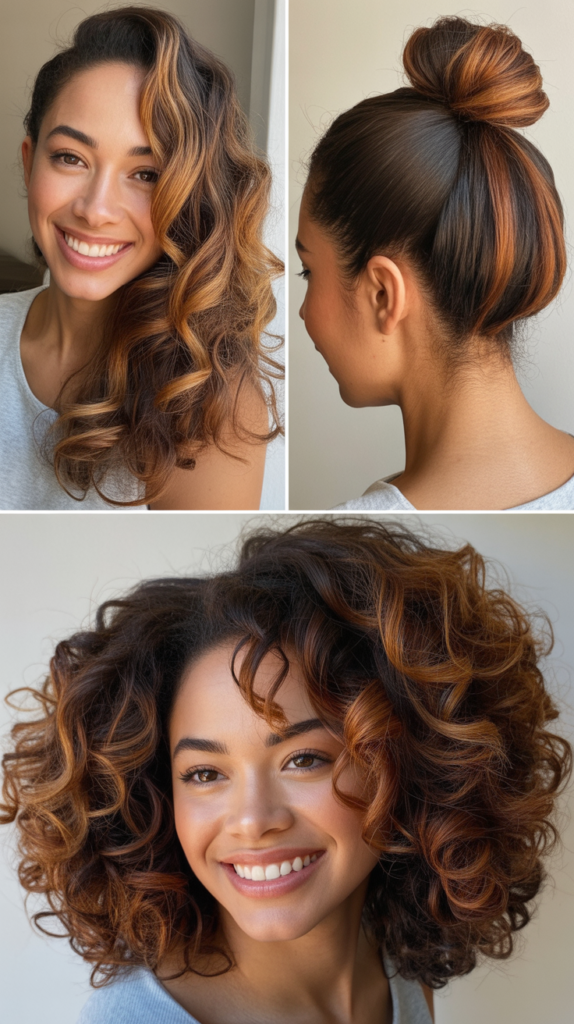
Maple brown combines warm reddish-brown tones reminiscent of autumn maple leaves for cozy dimension.
- Maple contains warm red and amber undertones that create rich autumn-inspired dimension.
- This shade works beautifully on medium to dark brown bases where the warmth adds subtle brightness.
- The cozy, seasonal quality makes maple highlights particularly popular during fall months.
- Maple complements warm and neutral skin undertones through its golden-red warmth.
- The red pigment requires color-safe products and occasional toning to maintain vibrancy.
- These highlights add personality and seasonal flair while remaining natural-looking.
- Maple creates approachable warmth that brightens brown hair without excessive lightening.
51. Highlighting Patterns for Maximum Dimension
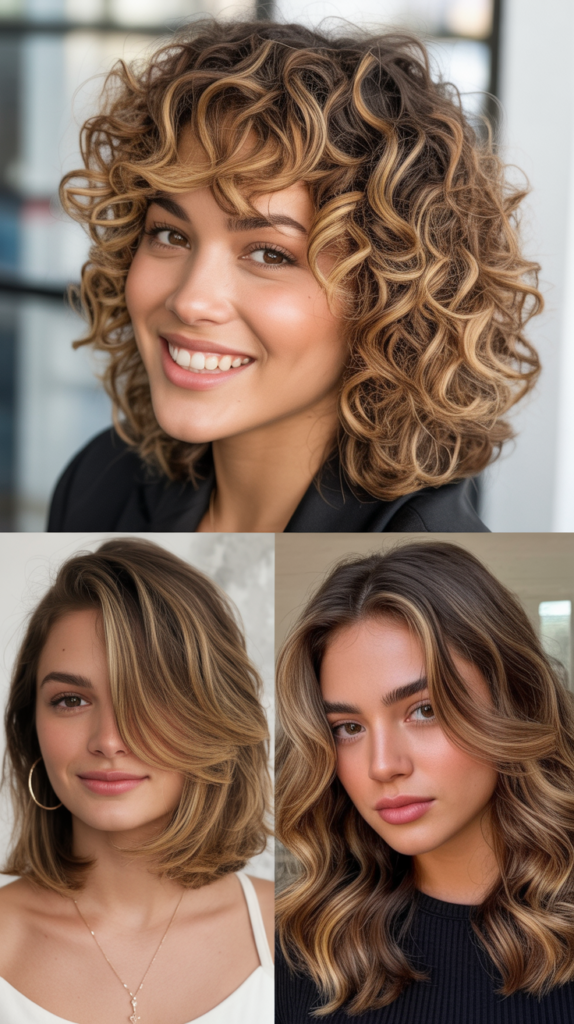
Strategic highlight placement patterns determine how dimensional and natural your brown highlights appear.
- Face-framing patterns concentrate highlights around hairline and front sections for maximum brightening effect.
- All-over patterns distribute highlights evenly throughout for uniform lightening and dimension.
- Layered patterns place highlights strategically through different layers for natural depth and movement.
- Underneath highlighting adds dimension visible when hair moves without obvious color when hair is down.
- Scattered patterns mimic natural sun lightening with random placement throughout hair.
- The V-pattern places more highlights toward the front, gradually decreasing toward the back.
- Different patterns suit different goals—brightening, adding volume, creating movement, or subtle enhancement.
52. Brown Highlights With Minimal Damage
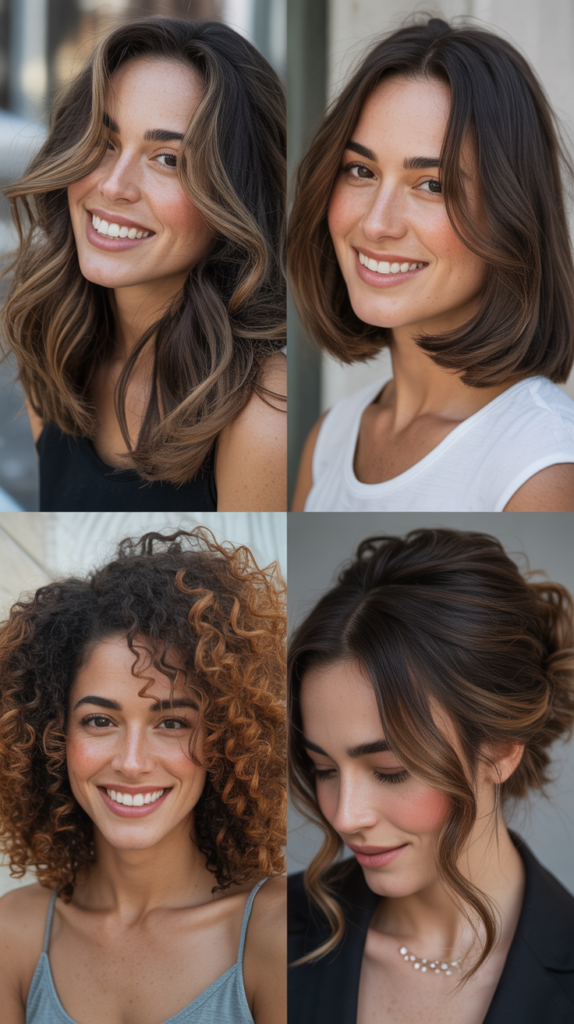
Protective highlighting techniques and products minimize damage while achieving beautiful brown dimension.
- Lower volume developers cause less damage while still achieving subtle lift for brown highlights.
- Techniques like balayage typically cause less damage than full-head foils due to less product application.
- Bond-building treatments during the highlighting process protect hair integrity and minimize damage.
- Spacing out highlighting sessions allows hair to recover between color applications.
- Choosing highlight shades closer to your natural color requires less intensive processing.
- Pre-treatment with conditioning masks strengthens hair before the chemical process.
- Post-highlight care including deep conditioning, reduced heat styling, and color-safe products maintains healthy highlighted hair.
53. Reverse Highlights or Lowlights

Sometimes adding darker pieces creates better dimension than additional lightening, especially on over-highlighted hair.
- Reverse highlights add darker tones to break up overly light or brassy highlighted hair.
- Lowlights restore depth and dimension to hair that appears flat from too much lightening.
- Strategic darker pieces make remaining highlights appear brighter through contrast.
- This technique works beautifully on previously highlighted hair needing more richness and dimension.
- Reverse highlighting causes less damage since it deposits color rather than lifting it.
- The addition of lowlights creates more realistic, natural dimension than highlights alone.
- This approach helps transition from very light highlights back toward more natural brown tones.
54. Techniques for Blending Brown Highlights
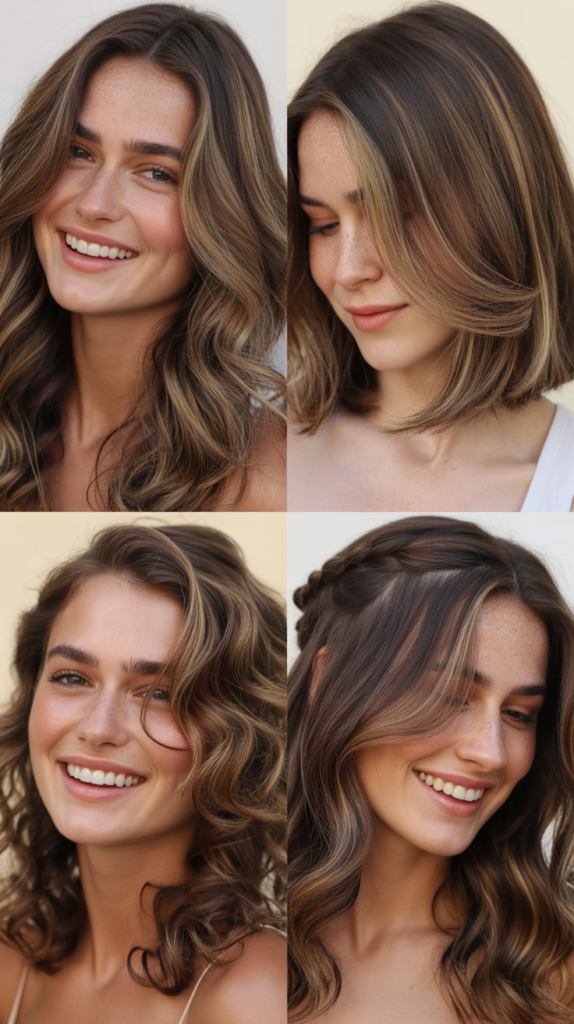
Proper blending ensures brown highlights look natural and seamless rather than stripy or obvious.
- Teasing hair at roots before applying color creates softer, more diffused highlight lines.
- Feathering the lightener through mid-lengths and ends creates gradual color transitions.
- Root smudging blends highlights into natural roots for seamless grow-out.
- Overlapping multiple shades throughout hair creates dimensional blending rather than distinct sections.
- Processing time affects blending—slightly under-processing creates softer results than full processing.
- Toning treatments after highlighting blend and harmonize all pieces into cohesive color.
- Proper sectioning and application technique during highlighting determines how well colors will blend.
55. Brown Highlights for Textured and Natural Hair

Natural hair textures showcase brown highlights beautifully while requiring specialized techniques and gentle processing.
- Natural hair requires gentler processing due to its structure and potential fragility when chemically treated.
- Highlights should enhance natural texture rather than require straightening to be visible.
- The curl pattern beautifully displays dimensional color as light hits different angles.
- Professional expertise with textured hair is essential to prevent damage and achieve beautiful results.
- Honey, caramel, and warm brown highlights typically complement natural hair’s warm undertones beautifully.
- Moisture-rich aftercare is crucial for maintaining healthy natural hair after highlighting.
- Strategic placement throughout curls and coils creates dimension visible in natural styling rather than only when straightened.
56. Tonal Brown Highlighting
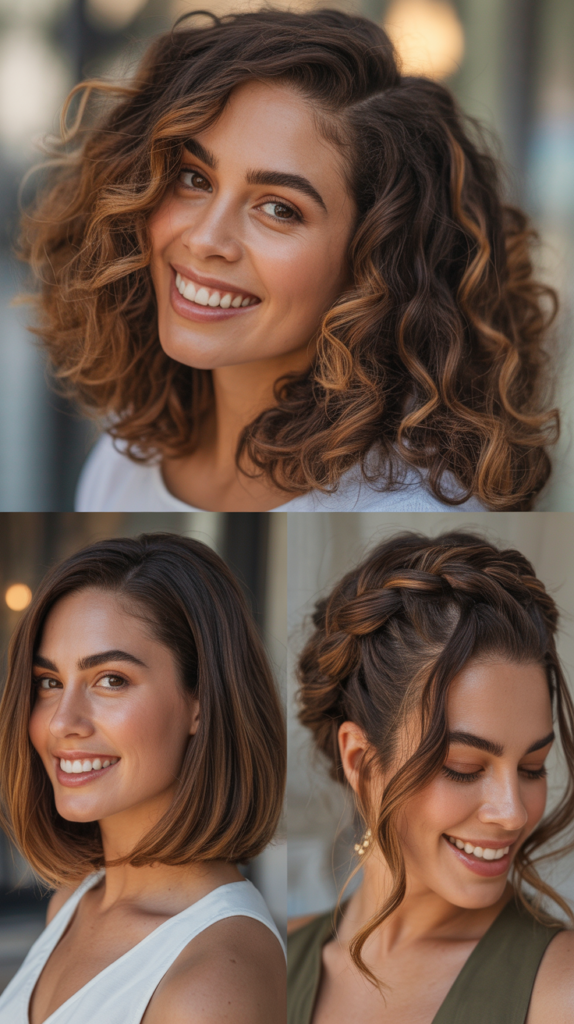
Using various shades within the same brown tone family creates subtle, sophisticated dimension.
- Tonal highlighting uses shades from the same color family rather than contrasting warm and cool tones.
- All-warm or all-cool approaches create cohesive dimension without conflicting undertones.
- This method suits those wanting subtle enhancement rather than dramatic color changes.
- Tonal brown highlighting appears exceptionally natural since all shades complement each other harmoniously.
- The similar undertones blend seamlessly for foolproof dimension.
- This conservative approach works well for first-time highlighting or traditional preferences.
- Tonal highlighting reduces risk of unwanted color results since all shades are complementary.
57. Brown Highlights Versus All-Over Color
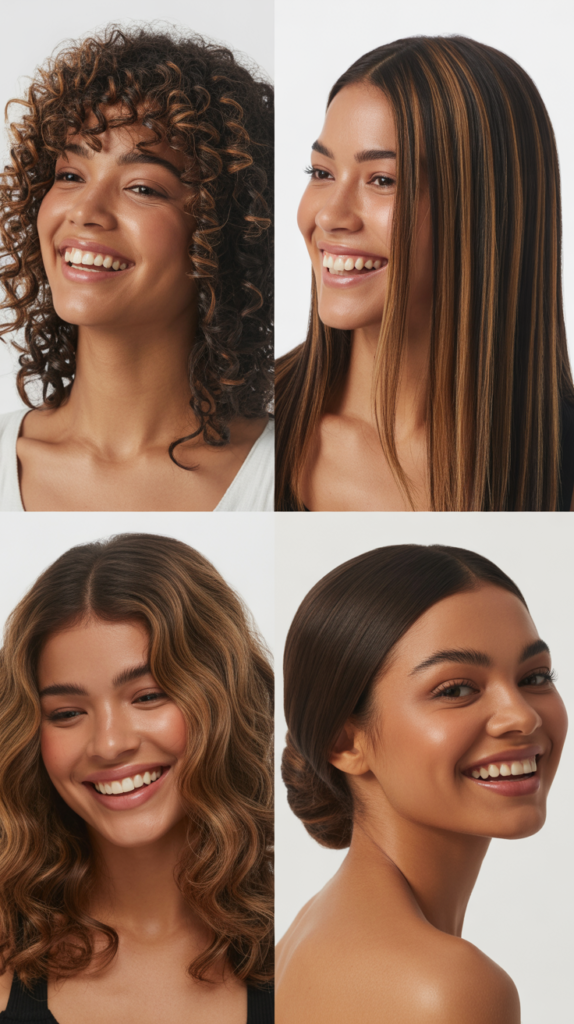
Understanding the difference between dimensional highlighting and solid all-over color helps determine the best approach.
| Characteristic | Brown Highlights | All-Over Brown Color |
|---|---|---|
| Dimension | Multi-tonal, dimensional | Single-tone, flat |
| Maintenance | Lower, grows out naturally | Higher, shows distinct roots |
| Processing | Selective sections | Every hair strand |
| Natural appearance | Very natural, varied | Can appear less natural |
| Time required | 2-4 hours typically | 1-2 hours typically |
| Best for | Adding dimension, brightening | Complete color change, gray coverage |
- Highlights create dimension through varied tones while all-over color delivers uniform single-shade coverage.
- All-over color works better for complete color changes or full gray coverage needs.
- Highlights appear more natural since hair naturally contains subtle color variation.
- Maintenance for highlights is typically lower since grow-out blends rather than creating distinct root lines.
- All-over color provides more dramatic transformation while highlights enhance existing color.
- Some clients benefit from combining both techniques—all-over base color with highlights for dimension.
- The right choice depends on your goals—transformation versus enhancement, coverage versus dimension.
58. Caramel Balayage Versus Caramel Highlights
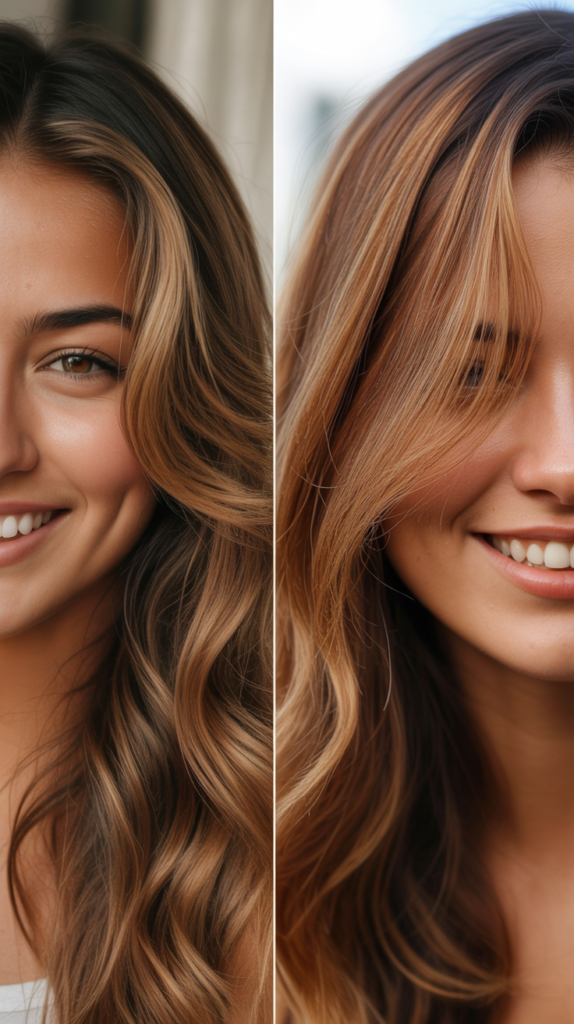
While both use caramel tones, balayage and traditional highlights create distinctly different results.
- Caramel balayage creates softer, painted dimension with varied placement and natural gradation.
- Caramel highlights deliver more uniform, predictable color distribution throughout sectioned hair.
- Balayage typically starts below roots for seamless grow-out while highlights can start at the scalp.
- The hand-painted nature of balayage allows customization to your specific hair movement and cut.
- Traditional highlights provide more complete lightening and coverage throughout all hair layers.
- Balayage maintenance intervals are typically longer due to intentionally grown-in root area.
- Both techniques achieve beautiful caramel dimension—the choice depends on desired precision and maintenance preference.
59. Styling Tips to Showcase Brown Highlights
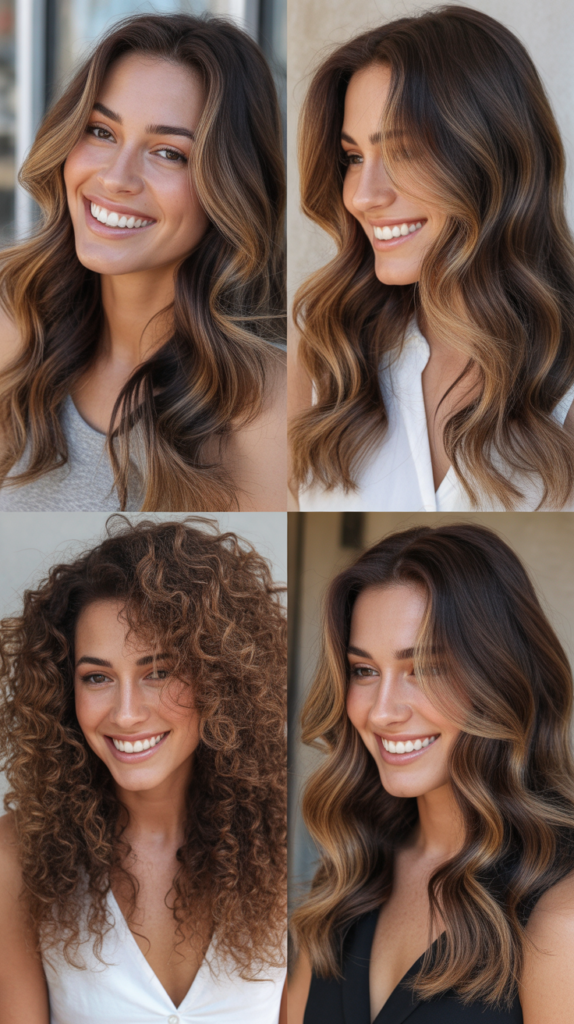
Proper styling techniques maximize the dimensional effect of your brown highlights.
- Loose waves showcase highlights beautifully as the dimensional color catches light at different angles.
- Straight styles display smooth color gradation and blending from roots to ends.
- Curls create movement that reveals and conceals highlights for dynamic dimensional effect.
- Half-up styles show off face-framing highlights while displaying dimension throughout pulled-back sections.
- High ponytails and buns reveal underneath highlighting and create gradient effects from root to ends.
- Side parts direct highlights to frame one side of face dramatically for maximum brightening effect.
- Strategic curling of just highlighted pieces draws attention to dimensional color placement.
60. Brown Highlights for Different Ages

Highlighting approaches can be adapted to suit different life stages and age-appropriate aesthetics.
- Teens and young adults often prefer sun-kissed, beachy highlighting with maximum brightness around the face.
- Twenties and thirties clients frequently choose dimensional balayage for low-maintenance sophistication.
- Forties often see first significant grays, making highlights both fashionable and functional for blending silver.
- Fifties-plus may incorporate highlights strategically to brighten complexion as skin tone changes with age.
- Face-framing pieces become increasingly important with age as they provide facial brightening and softening.
- Warmer highlights can counteract sallowness that sometimes develops in maturing skin.
- Subtlety often increases with age as many prefer sophisticated, natural dimension over bold contrast.
61. Maintaining Brown Highlight Vibrancy

Specific products and routines keep brown highlights looking fresh and vibrant between salon appointments.
- Color-safe, sulfate-free shampoo prevents premature fading and maintains highlight vibrancy.
- Purple or blue shampoo weekly neutralizes unwanted brassiness in brown highlights depending on undertone.
- Weekly deep conditioning masks restore moisture and prevent dryness that makes highlights appear dull.
- UV protection products prevent sun damage that can cause fading and unwanted color shifts.
- Limiting heat styling prevents additional damage and color degradation from high temperatures.
- Cool water rinses seal hair cuticle better than hot water, enhancing shine and color retention.
- Regular glossing treatments every 4-6 weeks refresh tone and add shine between full highlighting services.
62. Correcting Brassy Brown Highlights
When brown highlights turn brassy or orange, specific correction techniques restore beautiful color.
- Brassiness occurs when unwanted warm (orange/yellow) tones develop in brown highlights over time.
- Purple shampoo neutralizes yellow brass while blue shampoo neutralizes orange brass.
- Professional toning treatments deposit cool pigments that counteract unwanted warmth.
- Over-lightened brown highlights are more prone to brassiness than properly lifted shades.
- Hard water minerals can contribute to brassy tones developing faster.
- Lowlights can be added to blend and neutralize overly brassy highlighted sections.
- Preventing brassiness through proper products and maintenance is easier than correcting it after it develops.
63. Budget-Friendly Brown Highlighting Options
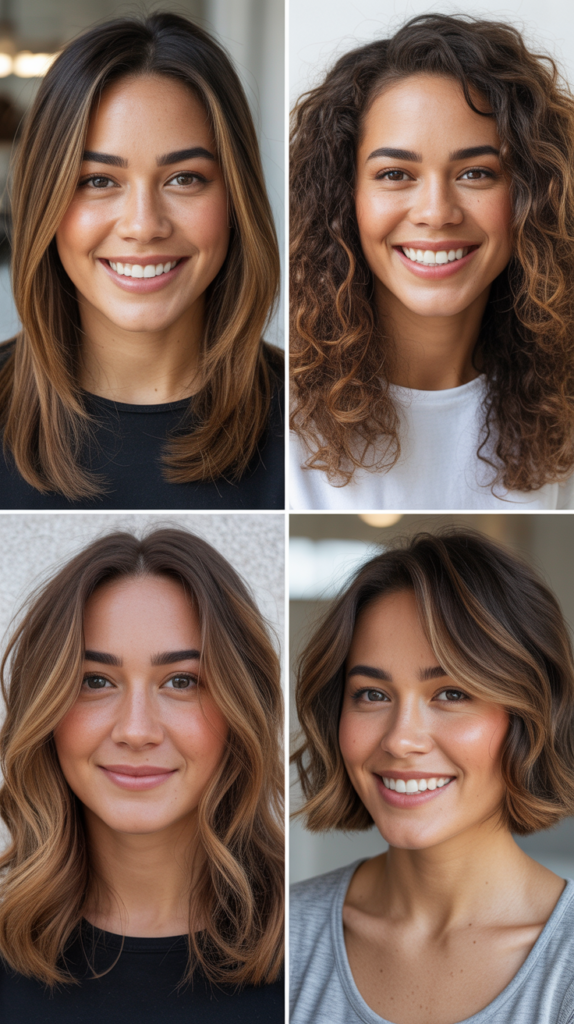
Various highlighting techniques and maintenance approaches suit different budget levels.
| Highlighting Option | Average Cost Range | Maintenance Frequency | Best For |
|---|---|---|---|
| Full Balayage | $150-$300+ | Every 12-16 weeks | Maximum dimension |
| Partial Highlights | $75-$150 | Every 10-12 weeks | Budget-conscious dimension |
| Face-Framing Only | $50-$100 | Every 8-10 weeks | Minimal investment brightening |
| Root Touch-Up | $50-$100 | Every 6-8 weeks | Maintaining existing color |
- Partial highlighting treats only the top sections of hair, reducing product usage and service time.
- Face-framing highlights provide maximum impact with minimum cost by focusing on visible front sections.
- Balayage and rooted techniques reduce maintenance frequency, lowering annual color costs despite higher initial service price.
- At-home highlighting kits cost significantly less but risk uneven results or damage without professional expertise.
- Building to desired lightness gradually over multiple sessions is gentler on hair but increases total cost.
- Some salons offer new client discounts or promotional pricing for highlighting services.
- Extending time between appointments through proper maintenance and low-maintenance techniques reduces annual spend.
64. Brown Highlights for Wedding and Special Events
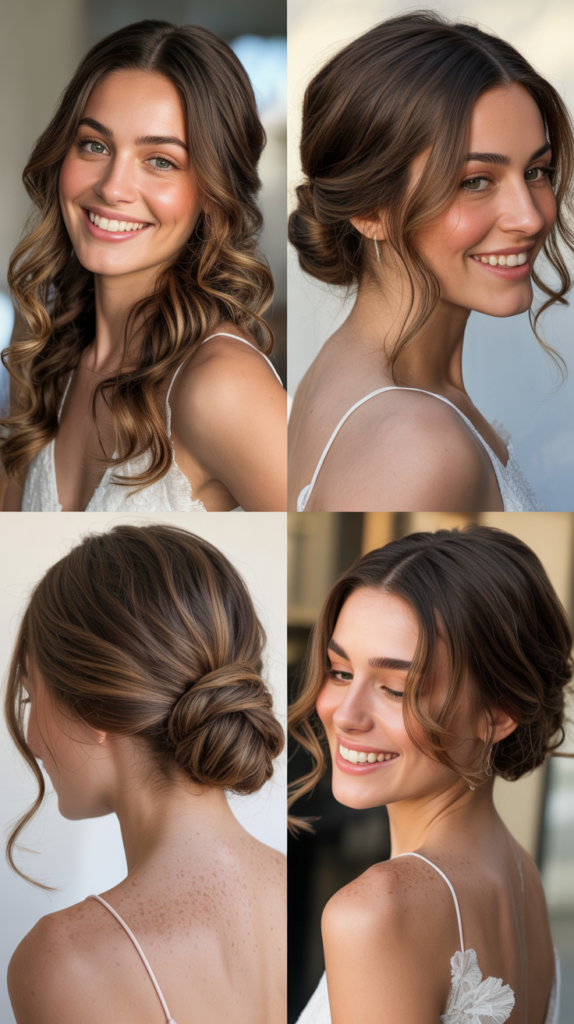
Special occasion highlighting requires timing, planning, and techniques that photograph beautifully.
- Schedule highlighting services 1-2 weeks before events allowing color to settle and soften naturally.
- Face-framing highlights brighten bridal makeup and create beautiful framing in wedding photography.
- Dimensional brown highlighting photographs better than flat single-tone color by adding depth.
- Glossing treatments 2-3 days before events maximize shine and vibrancy for photographs.
- Avoid trying completely new colors right before major events—test runs prevent unwanted results.
- Natural brown highlights suit all wedding styles from classic to boho without appearing too trendy.
- Professional photography lighting makes highlights particularly visible, so well-blended dimension is essential.
65. Combining Multiple Brown Highlighting Techniques
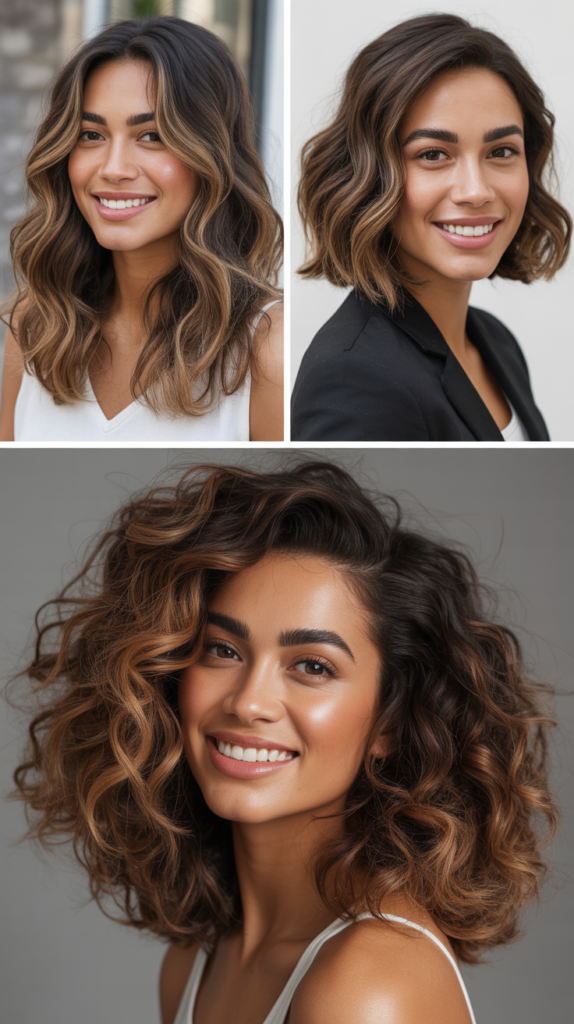
Layering different highlighting methods creates the most natural, dimensional brown hair color.
- Combining balayage with traditional foils creates dimension throughout while maximizing brightness where desired.
- Babylights plus ribbon highlights add both subtle and noticeable dimension for complex color.
- Face-framing money pieces combined with subtle all-over balayage deliver focal brightness and overall dimension.
- Highlights and lowlights together create the most realistic, natural dimensional effect.
- Root smudging combined with any highlighting technique ensures seamless grow-out.
- Layering techniques allows colorists to customize results to your specific hair needs and goals.
- The combined approach typically takes longer and costs more but delivers superior dimensional results.
66. Brown Highlights for Different Hair Lengths
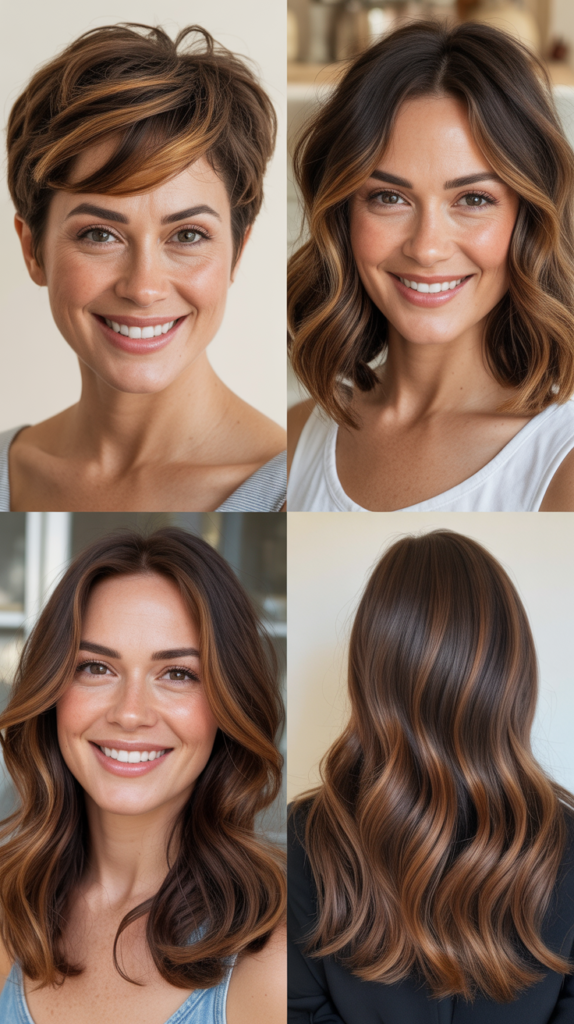
Optimal highlighting approaches vary depending on whether you have short, medium, or long hair.
- Pixie cuts benefit from subtle face-framing and crown highlights that enhance the cut’s shape.
- Bob-length hair showcases balayage beautifully with enough length to display color graduation.
- Lobs (long bobs) provide ideal canvas for dimensional highlighting from face-framing to all-over color.
- Shoulder-length hair allows for more complex highlighting patterns including ombre and sombré effects.
- Long hair provides maximum space for elaborate highlighting techniques and dramatic color gradations.
- Very short hair shows highlights more immediately and boldly due to concentrated color in small space.
- Length determines which highlighting patterns will be most visible and effective for your specific style.
67. Seasonal Transitioning of Brown Highlights
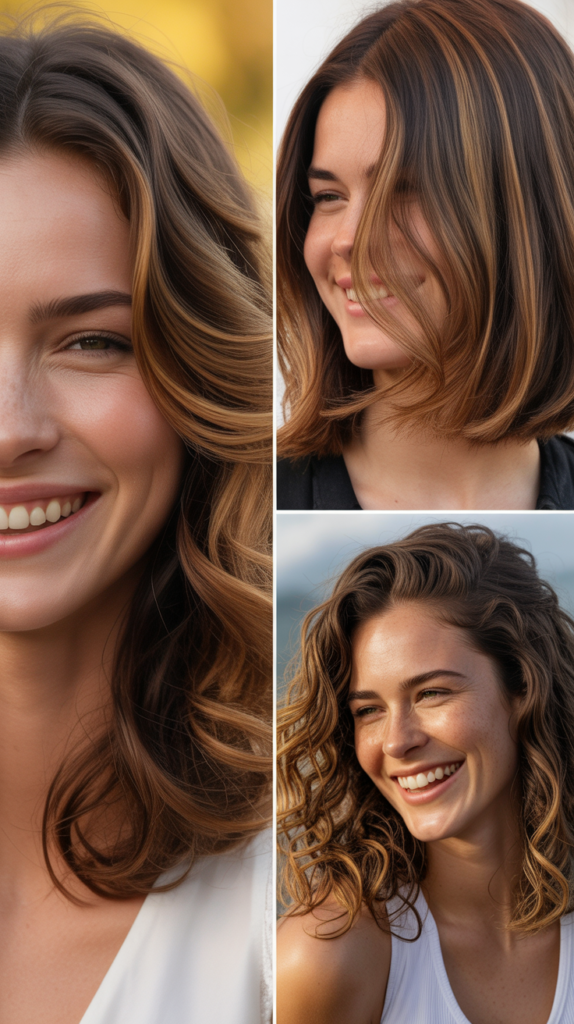
Adjusting highlight intensity and tone seasonally keeps your look current and fresh.
- Summer-to-fall transitions involve adding deeper lowlights or toning highlights richer for cozy depth.
- Winter-to-spring transitions lighten and brighten highlights to reflect seasonal renewal and fresh starts.
- Fall often welcomes warmer auburn and chestnut tones while spring favors fresh honey and caramel.
- Seasonal glossing treatments adjust tone without requiring complete re-highlighting.
- Some prefer maintaining consistent highlights year-round rather than seasonal adjustments.
- Transitional appointments typically cost less than full highlighting since they’re maintenance rather than complete color changes.
- Seasonal changes align your hair color with your wardrobe and overall seasonal aesthetic.
68. Consulting With Colorists About Brown Highlights
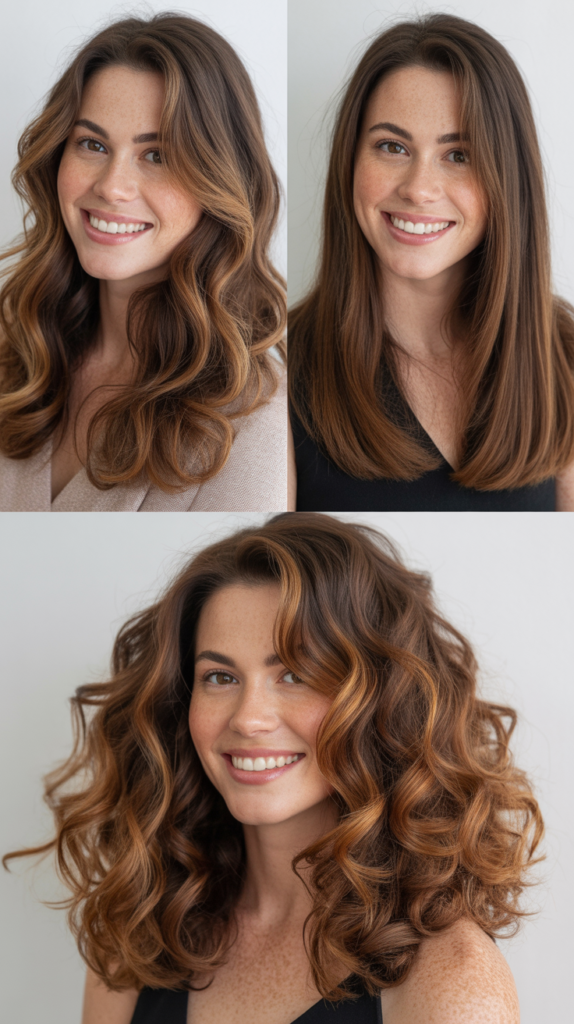
Effective communication with your colorist ensures you achieve your desired brown highlight results.
- Bring multiple inspiration photos showing highlights you love from various angles and lighting conditions.
- Discuss your lifestyle and maintenance commitment honestly to determine appropriate highlighting technique.
- Explain your natural hair history including previous color treatments that might affect new highlighting.
- Ask questions about expected maintenance, cost, timing, and realistic results for your specific hair.
- Discuss your skin undertone and which brown highlight shades will be most flattering.
- Request a strand test if you’re concerned about how your hair will process or the final result.
- Professional colorists can assess your hair and recommend techniques and shades that suit your unique needs.
- Be open to colorist suggestions based on their expertise while advocating for your preferences.
- Understanding realistic expectations prevents disappointment when hair can’t achieve certain looks due to its condition or history.
Conclusion
Exploring these 68 Subtle Brown Hair Ideas With Brown Highlights That Look Soft and Natural reveals the incredible versatility and beauty that dimensional brown color offers.
From the warm embrace of caramel and honey highlights to the sophisticated coolness of ash and mushroom tones, brown-on-brown highlighting provides endless options for enhancing your natural beauty.
Whether you choose the low-maintenance grace of balayage, the precision of traditional foiling, the delicate subtlety of babylights, or any combination of techniques, the key to gorgeous brown highlights lies in selecting shades that complement your skin tone, lifestyle, and personal style.
Remember that the most beautiful brown highlights appear soft and natural, as if the sun itself hand-painted dimension throughout your hair, and with proper maintenance, the right technique, and skilled colorist expertise, you can achieve and maintain that effortlessly beautiful brown hair you’ve been dreaming of.