
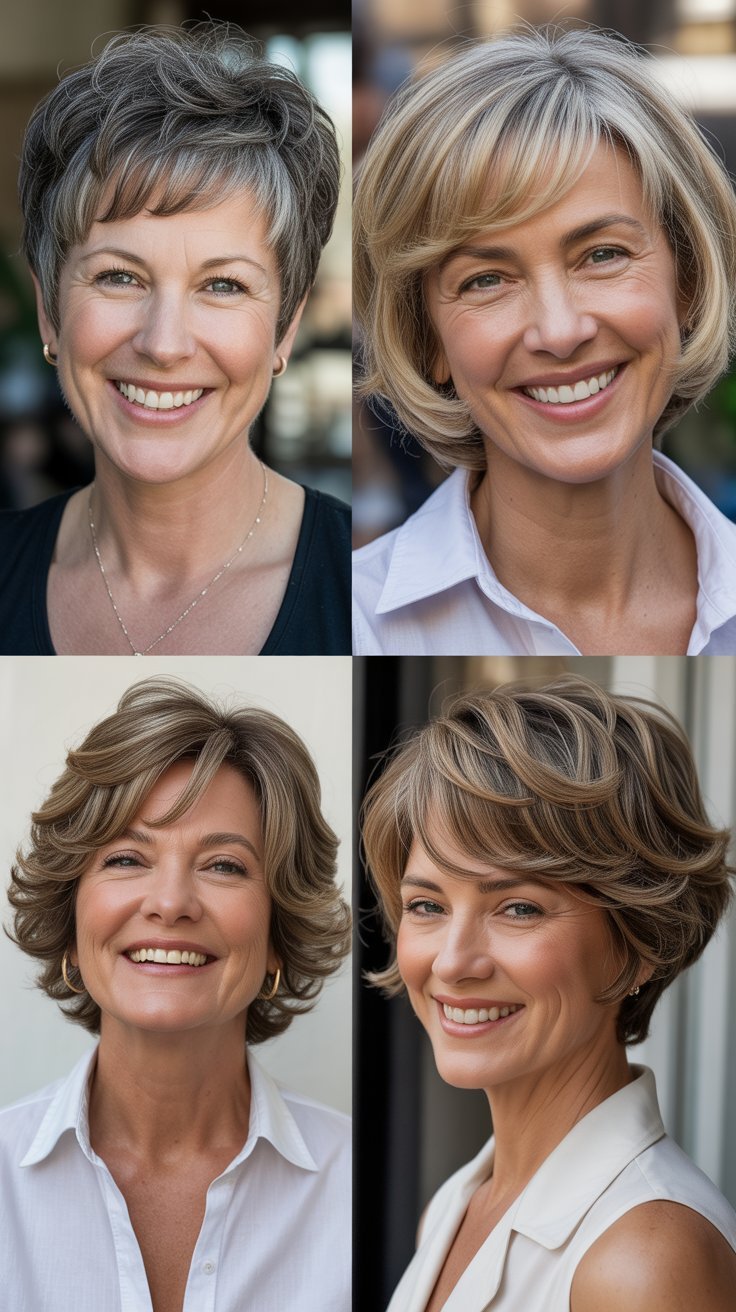
Finding the perfect haircut after 50 can feel like searching for a needle in a haystack, especially when fine hair seems determined to lie flat against your scalp.
But here’s the truth that stylists have known for decades: the right short layered cut doesn’t just add volume—it transforms your entire appearance, taking years off your face while giving you that confident, effortless style you’ve been craving.
This comprehensive guide to 51 Volumizing Short Layered Haircuts for Women Over 50 That Lift Fine Hair will walk you through every style option, from classic pixies to textured bobs, revealing exactly which cuts work with your hair’s natural texture rather than against it.
You’ll discover why layers are the secret weapon against flat, lifeless hair, learn which face shapes pair best with specific cuts, and understand the styling techniques that make these haircuts work in real life, not just in salon chairs.
Whether you’re ready for a dramatic change or simply want to breathe new life into your current style, these volumizing cuts prove that fine hair after 50 isn’t a limitation—it’s an opportunity to showcase dimension, movement, and sophistication that turns heads wherever you go.
1. Understanding Why Fine Hair Changes After 50
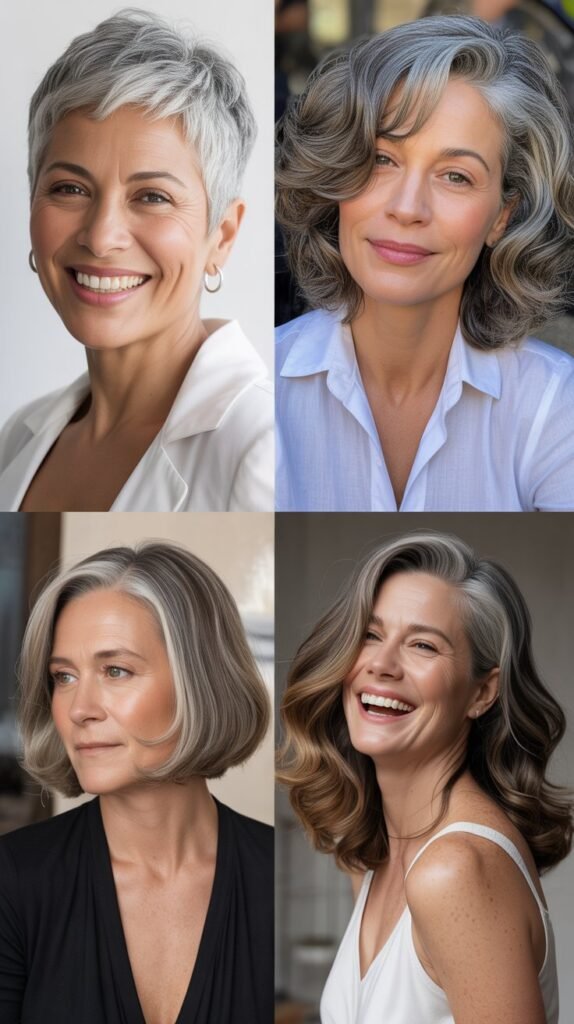
Fine hair undergoes significant transformations as we age, and understanding these changes is the first step toward choosing a cut that works with your hair rather than against it.
- Hormonal shifts during and after menopause reduce estrogen levels, which directly impacts hair follicle size and the diameter of individual hair strands.
- The hair growth cycle slows down considerably, meaning each strand spends less time in the active growth phase and more time in the resting phase.
- Natural oil production from the scalp decreases with age, which paradoxically can make fine hair look both drier and limper at the same time.
- Hair density typically decreases by approximately 50% between ages 20 and 50, with women losing an average of 250 strands daily compared to 100 strands in younger years.
- The protein structure of hair weakens over time, making each strand more susceptible to breakage and less able to hold volume and style.
- Blood circulation to the scalp diminishes with age, reducing the nutrient supply to hair follicles and affecting overall hair vitality.
- Many women experience a shift in hair texture, with previously straight hair developing slight waves or vice versa, requiring new styling approaches.
- Understanding these biological changes helps explain why the same haircut that worked beautifully at 30 may fall completely flat at 50, making strategic layering essential rather than optional.
2. The Science Behind Layered Cuts and Volume Creation
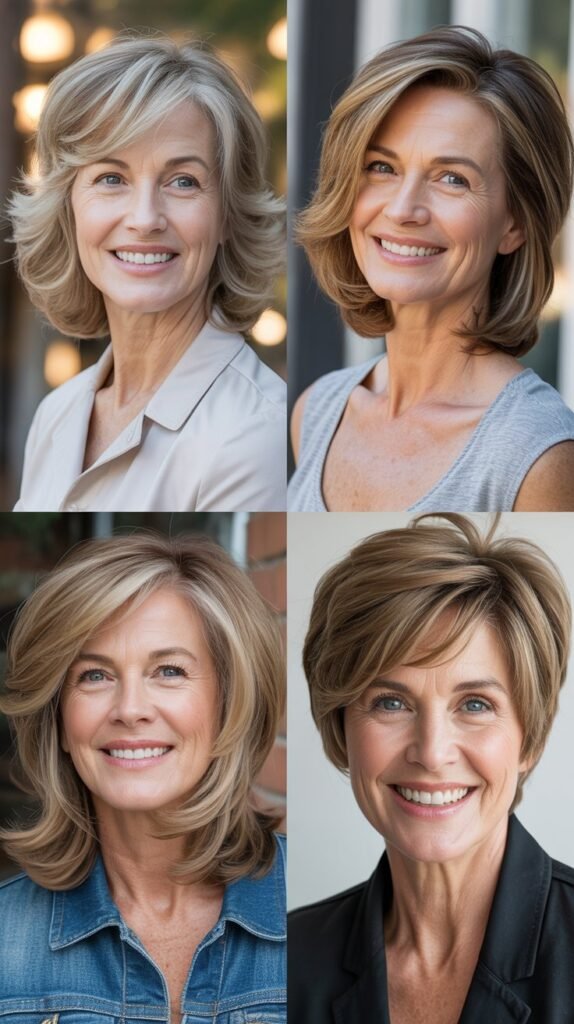
Layering isn’t just a styling trend—it’s a mathematically sound approach to creating the illusion of thickness and movement in fine hair.
- Layers work by removing weight from specific sections of hair, allowing the remaining strands to lift away from the scalp instead of being pulled down by their own mass.
- Strategic layer placement creates natural separation between hair sections, which reflects light differently and makes hair appear fuller and more dimensional.
- The elevation angle at which hair is cut determines how much volume the finished style will have, with higher elevations (45-90 degrees) creating maximum lift.
- Point cutting and slide cutting techniques soften the edges of layers, preventing the blunt, heavy look that makes fine hair appear even thinner.
- Shorter top layers act as a foundation that props up longer layers, creating a scaffolding effect that maintains volume throughout the day.
- Graduated layers near the crown area specifically target the zone where fine hair typically falls flattest, engineering built-in lift exactly where it’s needed most.
- The spacing between layers matters tremendously—layers too close together create a wispy, thin appearance, while properly spaced layers generate substantial volume.
- Professional colorists often recommend combining layers with dimensional color placement, as highlights and lowlights work synergistically with the physical structure of layers to amplify the volumizing effect even further.
3. Classic Pixie Cut with Textured Layers
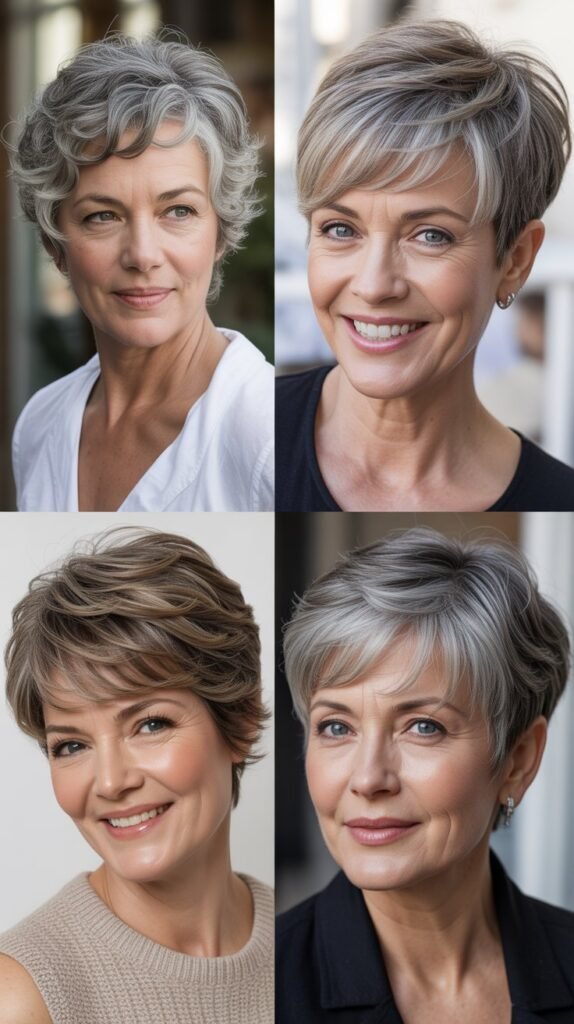
The pixie cut remains one of the most liberating and volumizing choices for women over 50, especially when executed with strategic texture and layering.
- The pixie eliminates the weight of longer hair entirely, allowing fine strands to stand up and out rather than lying flat against the head.
- Textured layers throughout the top section create deliberate piece-y separation that makes each strand count, maximizing the appearance of density.
- Slightly longer lengths at the crown (2-4 inches) provide enough hair to style upward and backward, creating impressive height where fine hair typically collapses.
- Tapered sides and back remove bulk in areas where volume isn’t needed, drawing all attention to the fuller, more voluminous top section.
- The pixie’s short length means less daily styling time while actually providing more styling versatility through various product applications.
- This cut works exceptionally well for women with oval, heart-shaped, or oblong faces, as it emphasizes facial features and draws attention to the eyes.
- Maintenance requires salon visits every 4-6 weeks to maintain the precise shape, but daily styling takes just 5-10 minutes with the right products.
- A texturizing spray or lightweight mousse applied to damp hair before blow-drying creates the foundation for all-day volume that fine hair desperately needs.
4. Choppy Bob with Razored Ends
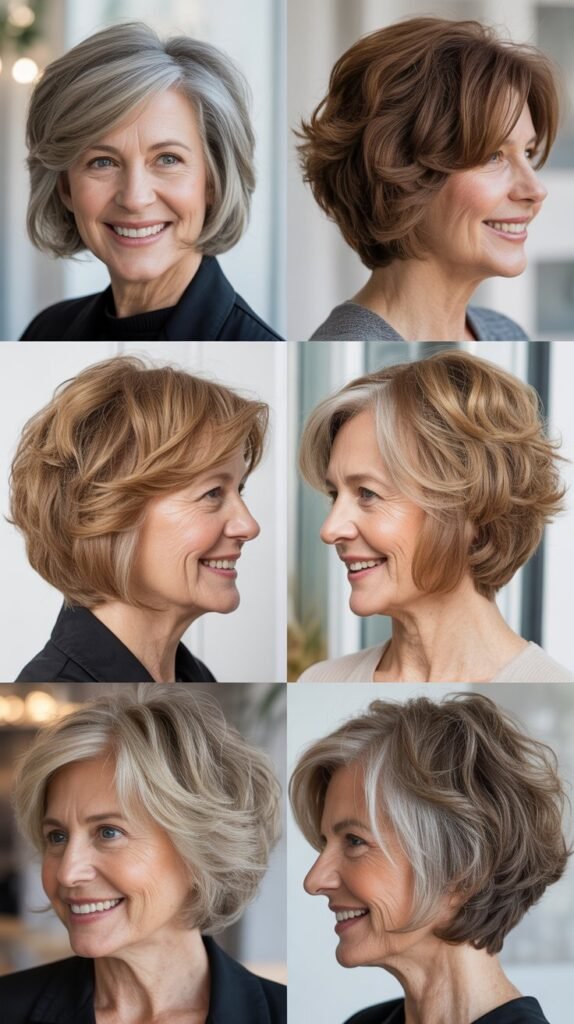
The choppy bob delivers an edgy, contemporary look while solving the volume problems that plague fine-haired women over 50.
- Razor cutting creates softer, more textured ends compared to traditional scissor cuts, which removes the blunt heaviness that weighs fine hair down.
- The “choppy” element comes from varying layer lengths throughout the cut, creating intentional irregularity that translates to volume and movement.
- Length typically falls between chin and shoulder level, long enough to provide styling options but short enough to maintain lift at the roots.
- Disconnected layers—where the length difference between layers is more dramatic—create gaps that allow air and light between sections, amplifying fullness.
- The style works beautifully with both straight and slightly wavy fine hair, adapting to your natural texture rather than fighting against it.
- Face-framing layers around the perimeter soften facial features and can be customized to flatter round, square, or diamond face shapes.
- This cut requires less frequent maintenance than shorter styles, with salon visits needed every 6-8 weeks to maintain the choppy texture.
- Styling involves rough-drying with your head flipped upside down, then using a flat iron or curling iron to add piece-y texture, followed by a texturizing spray for separation and hold.
5. Stacked Bob with Graduated Layers
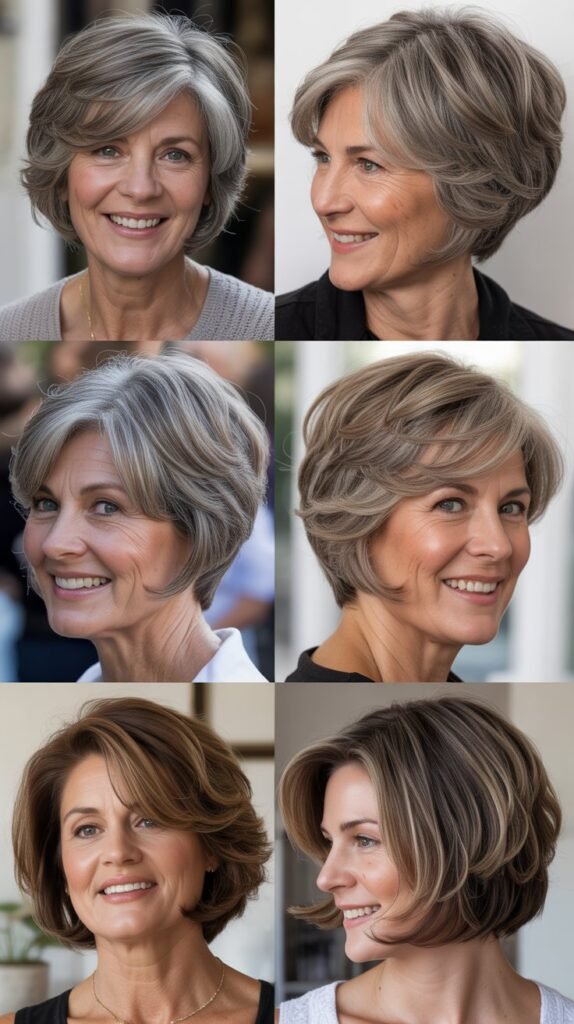
The stacked bob creates dramatic volume through an architecturally precise graduation of layers that builds height in the back while maintaining length in the front.
- Stacking refers to progressively shorter layers in the back section, creating a rounded, voluminous silhouette that adds significant height to the crown area.
- The graduation angle typically ranges from 15-45 degrees, with steeper angles producing more dramatic volume and rounder shapes.
- Longer front sections frame the face while the shorter back prevents the style from looking bottom-heavy or dated.
- This cut is particularly effective for women with fine, straight hair because the geometric structure doesn’t rely on natural wave or texture to maintain its shape.
- The stacked back section maintains its volume even as the day progresses, unlike many cuts where fine hair gradually deflates.
- Ideal face shapes include round and oval faces, as the height created in the back balances facial proportions beautifully.
- Styling requires blow-drying with a round brush, focusing on directing the back sections forward and upward to emphasize the stacked volume.
- A lightweight hairspray or volumizing powder applied at the roots of the back sections helps maintain the lift throughout the day without making hair stiff or crunchy.
6. Asymmetrical Lob with Face-Framing Layers
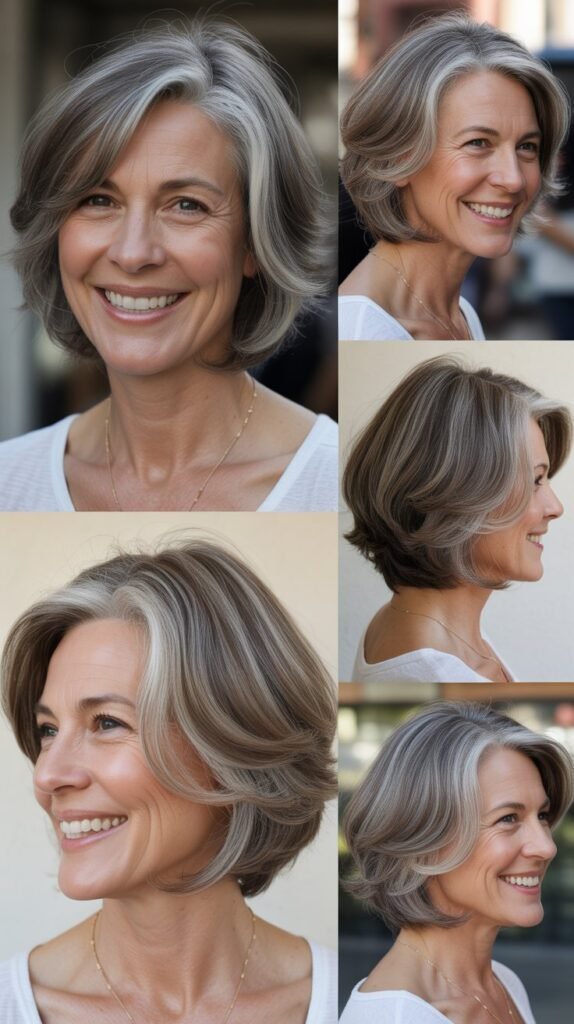
The asymmetrical lob offers a modern, fashion-forward approach to volume while maintaining enough length for versatility in styling options.
- “Lob” stands for long bob, typically falling between the chin and collarbone, providing more length than traditional bobs while still maximizing volume.
- The asymmetrical element involves intentionally cutting one side longer than the other, creating visual interest and the illusion of thickness through dramatic angles.
- Face-framing layers that start at cheekbone level draw attention to facial features while adding movement around the face.
- The longer side can be styled behind the ear or swept forward, offering multiple looks from a single cut.
- Internal layers throughout the cut remove weight without sacrificing length, allowing fine hair to move freely rather than hanging limp.
- This style particularly flatters women with square or rectangular face shapes, as the asymmetry softens angular features.
- Maintenance falls in the moderate range, requiring salon visits every 6-8 weeks to maintain the precise asymmetrical line and layer integrity.
- Styling options include sleek and straight for a polished look, or loose waves created with a curling iron or flat iron for added volume and texture.
7. Feathered Shag Cut
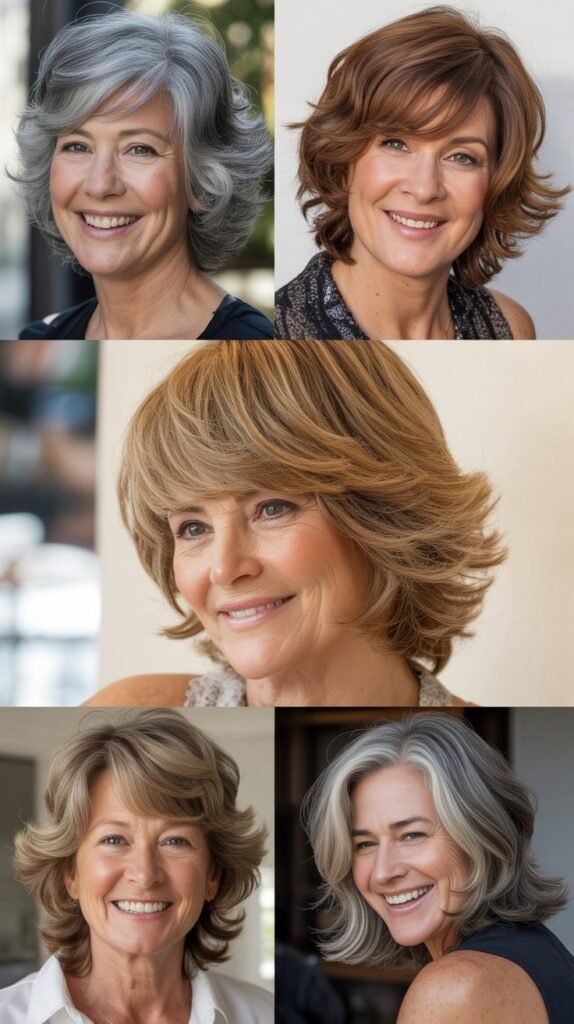
The shag makes a triumphant return as one of the most volumizing cuts available, with modern updates that look sophisticated rather than dated.
- Feathering refers to the technique of cutting hair at angles that create soft, wispy ends that move away from the head rather than lying flat.
- The shag incorporates layers throughout the entire head—not just at the ends—creating all-over volume from roots to tips.
- Shorter layers around the crown area provide lift where fine hair needs it most, while longer perimeter layers maintain overall length and style options.
- The cut’s inherent texture means it looks intentionally tousled, which is perfect for fine hair that struggles to hold perfectly smooth styles.
- Face-framing fringe or bangs integrated into the shag soften facial features and draw attention to the eyes.
- This versatile cut works with virtually all face shapes when customized properly, with layer length and density adjusted to flatter individual features.
- The shag requires minimal daily styling—often just rough-drying with fingers and a texturizing product creates the desired tousled effect.
- Regular trims every 5-7 weeks maintain the feathered edges and prevent the cut from growing out into a shapeless, flat style.
8. Layered Pixie with Long Bangs
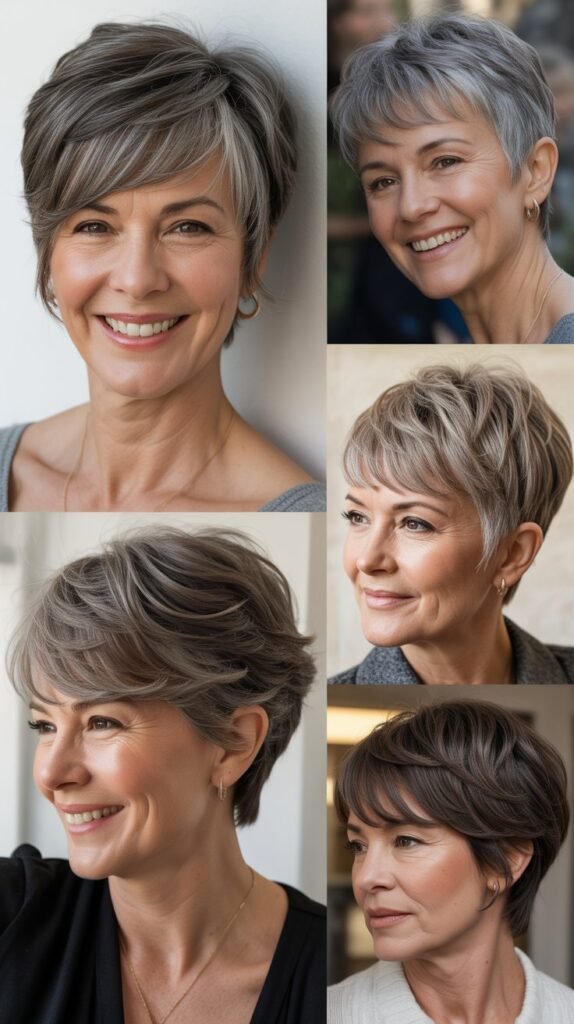
Combining the volume benefits of a pixie with the femininity and face-softening effects of longer bangs creates a balanced, flattering style for fine hair.
- Long bangs typically extend to eyebrow level or slightly below, providing enough length to sweep to the side or style across the forehead.
- The contrast between cropped sides and back with longer top and bang sections creates natural volume by eliminating competing weight.
- Layering within the bang section prevents it from looking heavy or blunt, maintaining the light, airy feel essential for fine hair.
- This style offers remarkable versatility—bangs can be styled forward, swept to the side, or even tucked behind ears for completely different looks.
- The longer bang section helps balance facial proportions, particularly for women with longer or narrower face shapes.
- Texturizing the bangs with point-cutting or slide-cutting techniques creates movement and prevents the flat, straight-across look that can be aging.
- Daily styling involves applying volumizing mousse to damp hair, blow-drying the bangs with a round brush, and using fingers to direct the back and sides.
- This cut requires frequent maintenance every 4-5 weeks, with bang trims needed every 2-3 weeks to maintain the ideal length.
9. Curly Layered Bob for Fine Hair
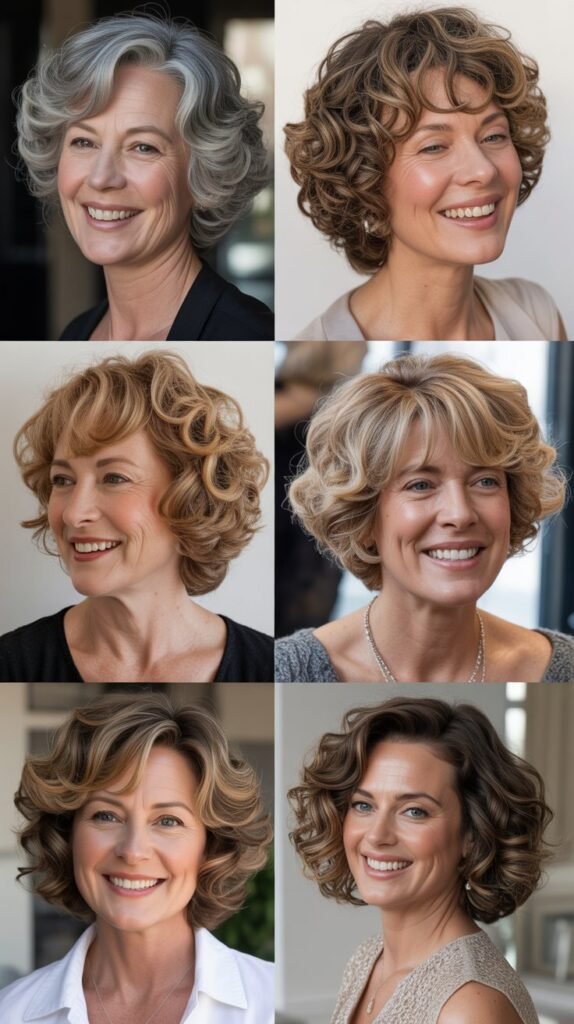
Women with naturally curly fine hair face unique challenges, but the right layered bob celebrates curls while maximizing volume.
- Layering curly fine hair requires specialized techniques, as curls shrink up when dry, making the finished length significantly shorter than the wet cutting length.
- Diagonal-forward layering directs weight and volume toward the face rather than allowing it to spread outward into an unflattering triangle shape.
- The bob length—typically between chin and shoulder—provides enough weight to elongate curls slightly while still maintaining bounce and volume.
- Removing weight from the interior of the cut through internal layering allows curls to spring up and separate rather than clumping together.
- This cut works best with curl patterns ranging from loose waves (type 2B) to medium curls (type 3B), as tighter coils may require different approaches.
- Dry cutting techniques, where hair is cut while completely dry and styled in its natural curl pattern, ensure accuracy and prevent unpleasant surprises.
- Styling focuses on enhancing natural curl pattern with curl-defining creams, diffusing on low heat, and avoiding over-manipulation that causes frizz.
- Maintenance includes regular trims every 8-10 weeks to maintain shape and remove any damaged ends that weigh down fine curls.
10. Inverted Bob with Stacked Back
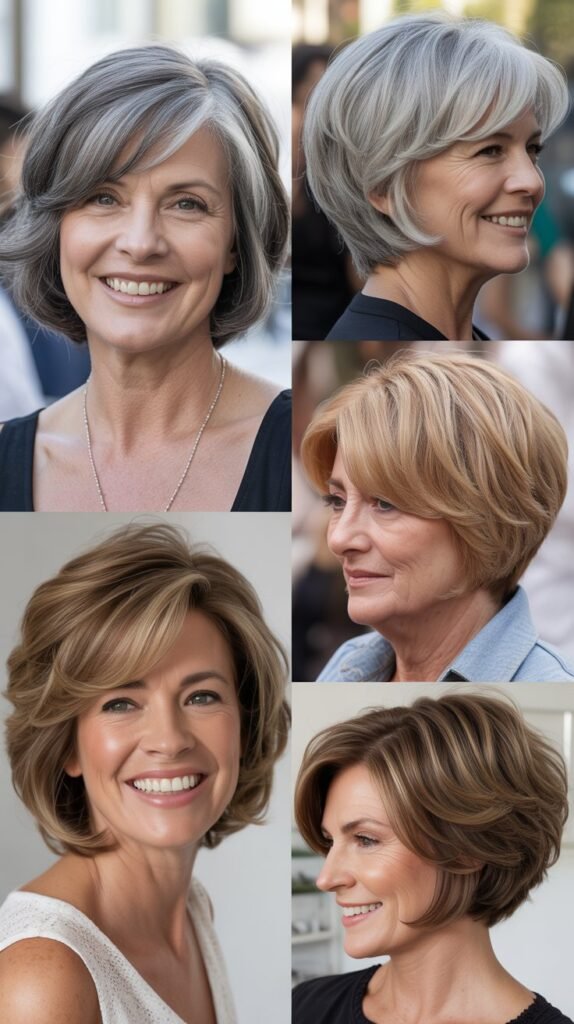
The inverted bob creates a fashion-forward silhouette with maximum volume in the back, tapering to longer lengths in the front for a dramatic, elongating effect.
- “Inverted” describes the sharp angle created by progressively longer hair from back to front, typically with a difference of 2-4 inches between the shortest and longest points.
- The severely stacked back section creates a rounded, voluminous shape that adds height and fullness where fine hair typically falls flat.
- Longer front sections elongate the face and neck, creating a slimming effect that’s particularly flattering for women over 50.
- The dramatic angle draws the eye downward along the jawline, highlighting facial features and creating a contemporary, edgy aesthetic.
- This cut requires precision and should only be executed by experienced stylists familiar with graduated cutting techniques.
- The inverted bob works exceptionally well for heart-shaped and oval faces, though it can overwhelm petite features or very small faces.
- Styling involves blow-drying with a round brush, lifting the back sections upward and forward to emphasize the stacked volume and maintain the inverted angle.
- Because the cut has such a specific shape, maintenance is crucial—salon visits every 5-6 weeks keep the angle sharp and the volume intact.
11. Layered Crop with Textured Top
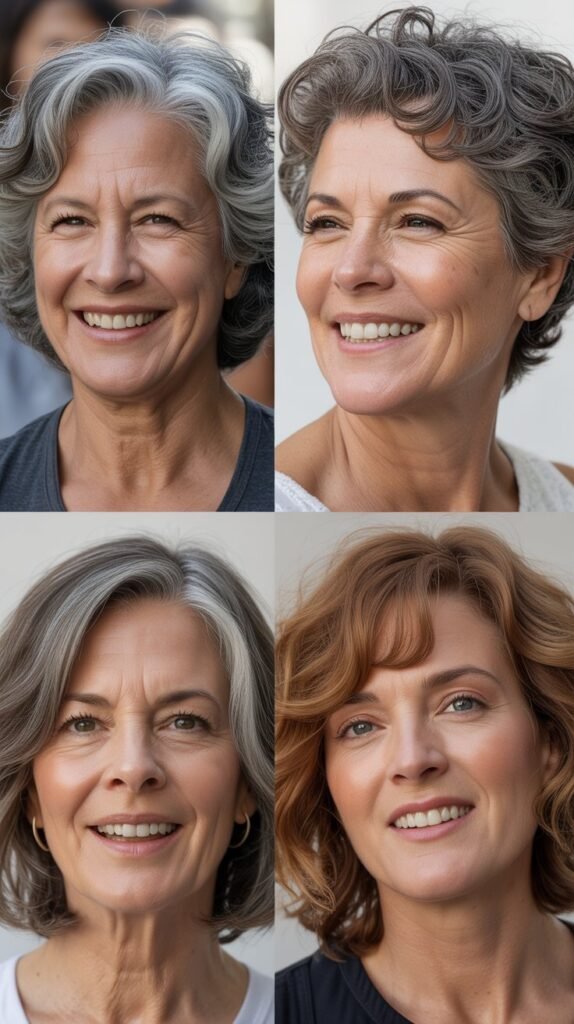
The layered crop offers maximum impact with minimum length, using heavy texturizing on top to create the illusion of substantially thicker hair.
- Crop cuts typically maintain 1-2 inches of length on top with even shorter sides, creating a bold, confident statement that’s surprisingly easy to maintain.
- Heavy layering throughout the top section with point-cutting and texturizing techniques creates deliberate separation between strands.
- The textured, piece-y look prevents fine hair from lying flat and clumping together, instead showcasing individual strands that collectively appear fuller.
- Extremely short sides and back eliminate bulk where it’s not needed, focusing all attention and volume on the textured top section.
- This cut works beautifully for women with strong facial features, as it draws attention to the eyes, cheekbones, and bone structure.
- Styling requires minimal time—typically just applying a small amount of texturizing paste or clay to damp or dry hair and using fingers to create piece-y texture.
- The crop is particularly suitable for active women or those who prefer wash-and-go convenience, as it looks intentionally tousled even with minimal styling.
- Regular maintenance every 4-5 weeks keeps the proportions correct and prevents the style from growing into an unflattering, shapeless look.
12. Soft Layered Bob with Curved Edges
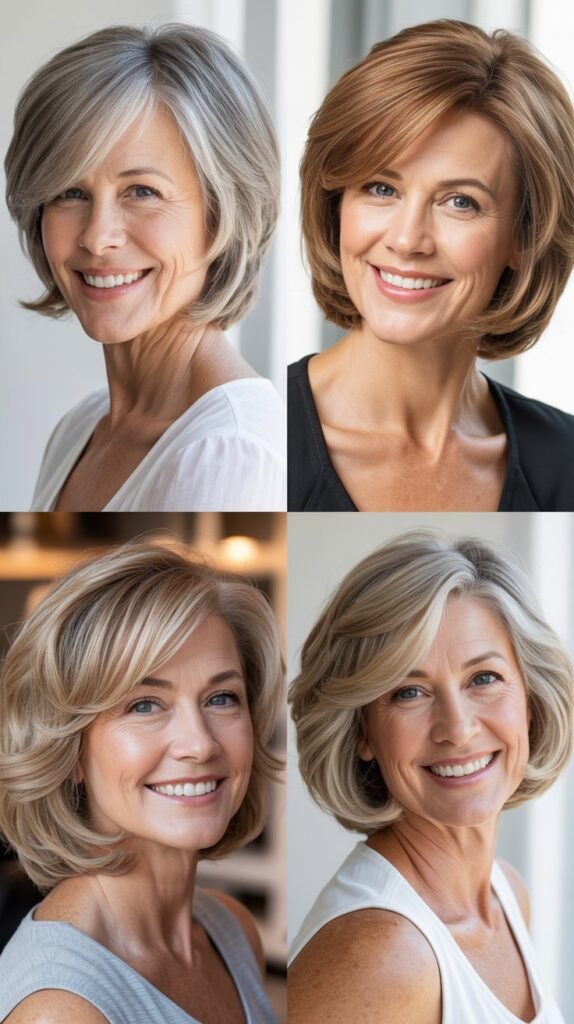
For women seeking volume without dramatic styling or edgy cuts, the soft layered bob provides gentle volume and timeless elegance.
- “Soft” refers to the subtle, gradual layering that creates volume without harsh lines or dramatic angles that might feel too bold.
- Curved cutting techniques around the perimeter create a gentle, rounded shape that’s universally flattering and professionally appropriate.
- Layers are concentrated near the crown and top sections, removing just enough weight to create lift without sacrificing density at the ends.
- The length typically falls between chin and collarbone, providing versatility for both professional and casual styling.
- This cut is ideal for conservative professional environments or women who prefer classic, understated styles over trendy, attention-grabbing cuts.
- The soft layering approach works with all face shapes when customized appropriately, making it one of the most adaptable styles available.
- Styling involves blow-drying with a round brush, rolling sections under or away from the face depending on preference, creating either a polished or slightly tousled look.
- Maintenance is moderate, requiring salon visits every 7-8 weeks to maintain the soft layer integrity and shape without becoming too blunt or heavy.
13. Layered Pixie-Bob Hybrid
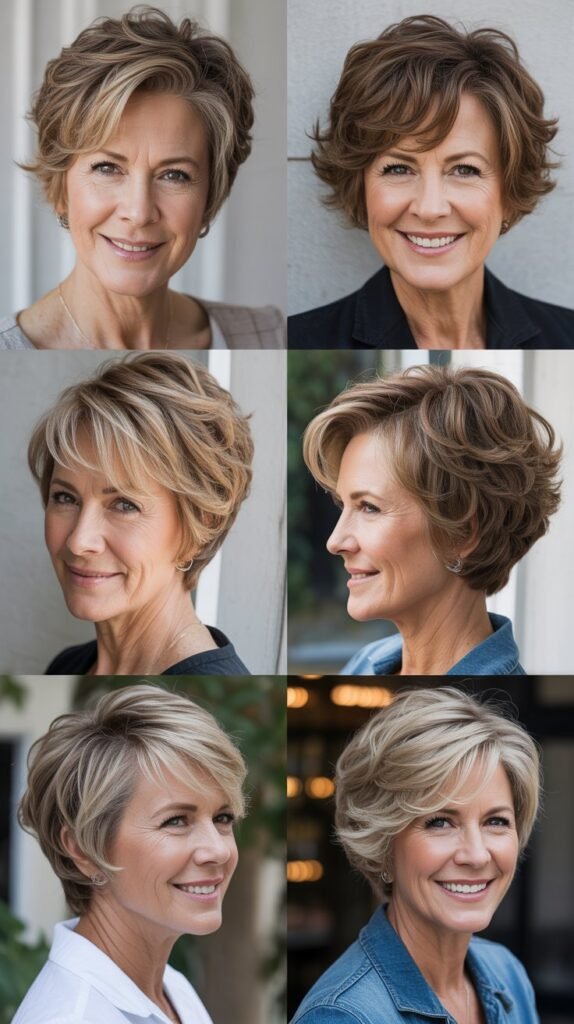
The pixie-bob hybrid combines the best elements of both cuts—pixie volume with bob versatility—creating a unique style that maximizes fine hair’s potential.
- This hybrid maintains pixie length and volume at the back and sides while extending length through the top and front to bob-like proportions.
- The graduated transition from very short to relatively long creates natural volume through the sheer physics of hair elevation.
- Longer top sections (3-5 inches) provide enough length for various styling options, including slicked back, textured forward, or swept to the side.
- The contrast between lengths creates visual interest and dimension that makes fine hair appear significantly fuller than it actually is.
- This cut flatters most face shapes, as the length can be customized—longer in front for rounder faces, shorter overall for longer faces.
- Styling versatility is a major benefit—the same cut can look edgy and textured or sleek and polished depending on product choice and technique.
- Daily styling ranges from quick and casual (rough-dried with fingers and texturizing spray) to polished (blow-dried smooth with a round brush).
- Maintenance requires salon visits every 5-6 weeks to maintain the precise balance between the shorter and longer sections that makes this hybrid work.
14. Wispy Layered Cut with Side-Swept Bangs
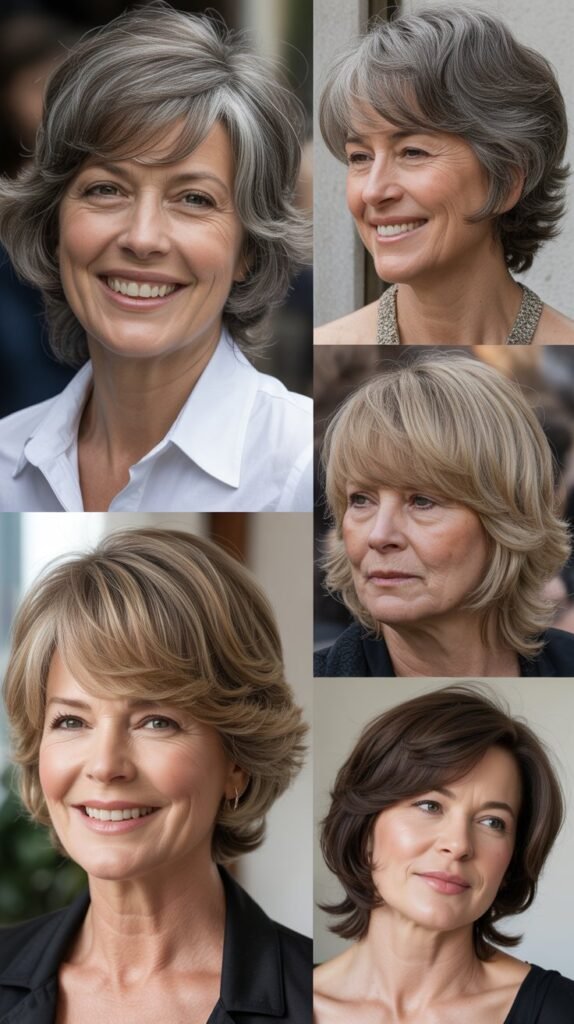
Wispy layers combined with side-swept bangs create a soft, romantic look that adds substantial volume while maintaining a feminine aesthetic.
- “Wispy” describes the feather-light, soft-textured ends created through point-cutting and slide-cutting techniques that remove bulk without creating harsh lines.
- Layers are distributed throughout the cut but with more subtle length variation than choppier styles, creating gentle rather than dramatic movement.
- Side-swept bangs start at approximately eyebrow level and angle across the forehead, softening facial features and drawing attention to the eyes.
- The wispy texture throughout prevents fine hair from clumping together, instead creating airy separation that appears fuller and more voluminous.
- This style is particularly flattering for women with angular features, as the softness counterbalances strong jawlines or prominent cheekbones.
- The cut works with lengths from chin-length bobs to shoulder-length styles, maintaining the wispy texture regardless of overall length.
- Styling involves blow-drying with a round brush, directing the bangs to the desired side, and using a light-hold spray to maintain the wispy texture without stiffness.
- Maintenance includes full cuts every 6-8 weeks with bang trims every 3-4 weeks to prevent the side-swept sections from becoming too long or heavy.
15. Crown-Boosting Layered Pixie
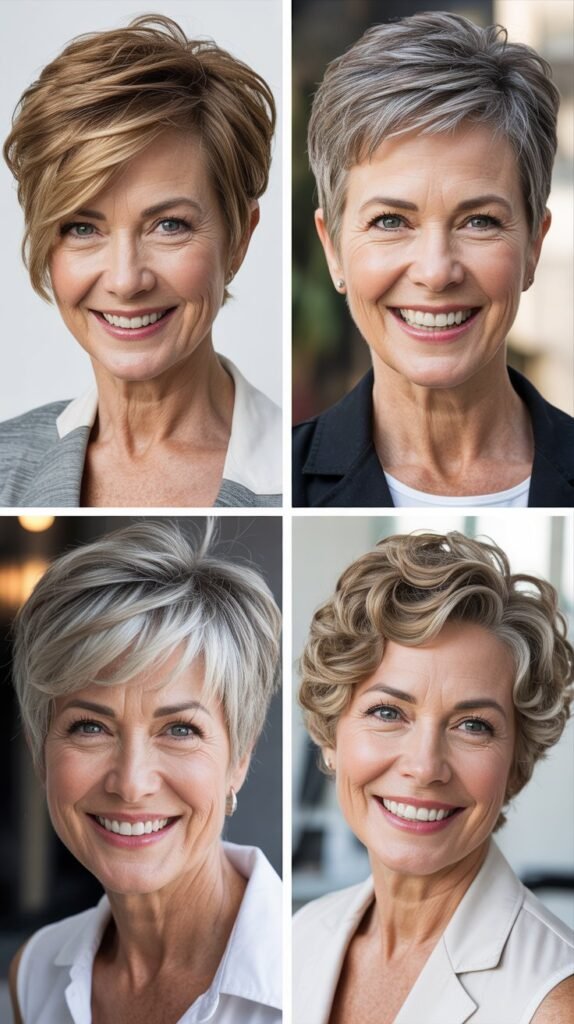
When maximum crown volume is the primary goal, this specialized pixie variation concentrates layers specifically at the crown for dramatic lift.
- Strategic layering focuses on the crown area, where fine hair typically lies flattest, with shorter layers (1-2 inches) specifically engineered to stand upward.
- The sides and back are kept relatively smooth and close to the head, which emphasizes the crown volume by creating contrast.
- Texturizing techniques within the crown layers create separation that prevents hair from lying flat even hours after styling.
- This cut is ideal for women whose fine hair is particularly problematic at the crown, often due to natural growth patterns or thinning in that specific area.
- The crown focus draws the eye upward, creating an elongating effect on the face and neck that’s universally flattering.
- Styling requires concentrating blow-drying efforts on the crown, using a small round brush or fingers to lift hair at the roots while directing it upward and slightly backward.
- Products are key—volumizing mousse or powder applied specifically at the crown area before styling creates the foundation for all-day lift.
- Maintenance every 4-5 weeks is essential, as even small amounts of growth can significantly reduce the crown volume that makes this cut effective.
16. A-Line Bob with Interior Layers
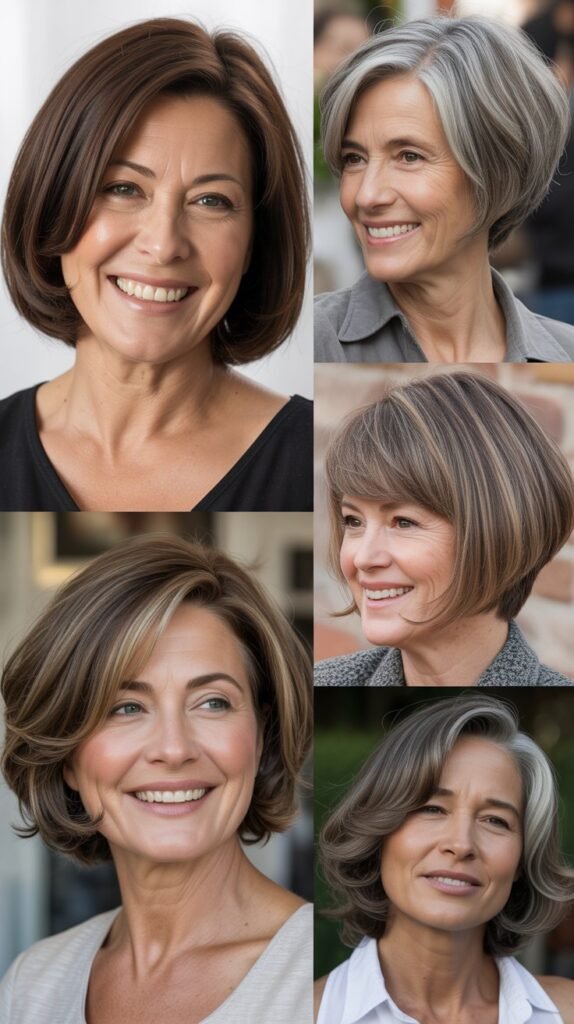
The classic A-line shape gets a volume upgrade through strategic interior layering that removes weight without disrupting the signature angled silhouette.
- A-line refers to the graduated angle from shorter back to longer front, creating a sleek, elongating line along the jawbone.
- Interior layers hidden beneath the surface layer remove weight and bulk, allowing the outer perimeter to maintain smooth, clean lines.
- This technique provides the volume benefits of layering without the piece-y, textured appearance that some women prefer to avoid.
- The length typically ranges from chin to shoulder level, with 1-3 inches of difference between back and front lengths.
- This sophisticated cut works particularly well in professional environments where polished, controlled styles are preferred over tousled, casual looks.
- The A-line angle flatters virtually all face shapes, as it can be customized to be more subtle or dramatic based on individual features.
- Styling involves smooth blow-drying with a paddle brush or round brush, creating sleek volume rather than textured volume.
- Maintenance requires precision cutting every 6-7 weeks to maintain the clean A-line angle and the internal layer structure that provides hidden volume.
17. Messy Textured Bob
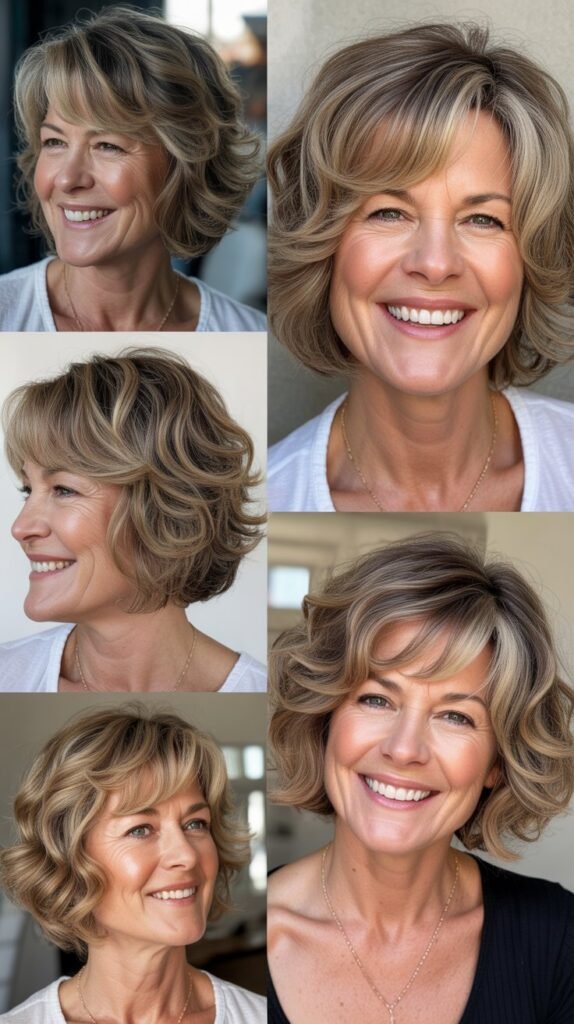
Embracing intentional messiness, this textured bob uses strategic cutting and styling to make fine hair look deliberately tousled and significantly fuller.
- The “messy” aesthetic relies on irregular, varied-length layers throughout that create natural-looking disorder rather than smooth uniformity.
- Point-cutting and razor-cutting techniques create soft, uneven ends that prevent the blunt look that makes fine hair appear thinner.
- Length typically falls between chin and shoulder level, long enough to show movement but short enough to maintain volume at the roots.
- This style celebrates the imperfect, eliminating the pressure for fine-haired women to achieve smooth, sleek perfection that their hair texture naturally resists.
- The deliberately tousled look is actually easier to maintain than smooth styles, as fine hair’s tendency to move and separate becomes an asset rather than a problem.
- Styling involves rough-drying with fingers, scrunching in texturizing products, and possibly adding waves with a curling iron or flat iron before separating them for a piece-y effect.
- The messy bob works beautifully for casual lifestyles and is particularly popular among creative professionals or women with relaxed dress codes.
- Maintenance is relatively low-commitment, requiring salon visits every 7-9 weeks, with the style actually looking better as it grows out slightly and becomes even more textured.
18. Micro Bangs with Layered Crown
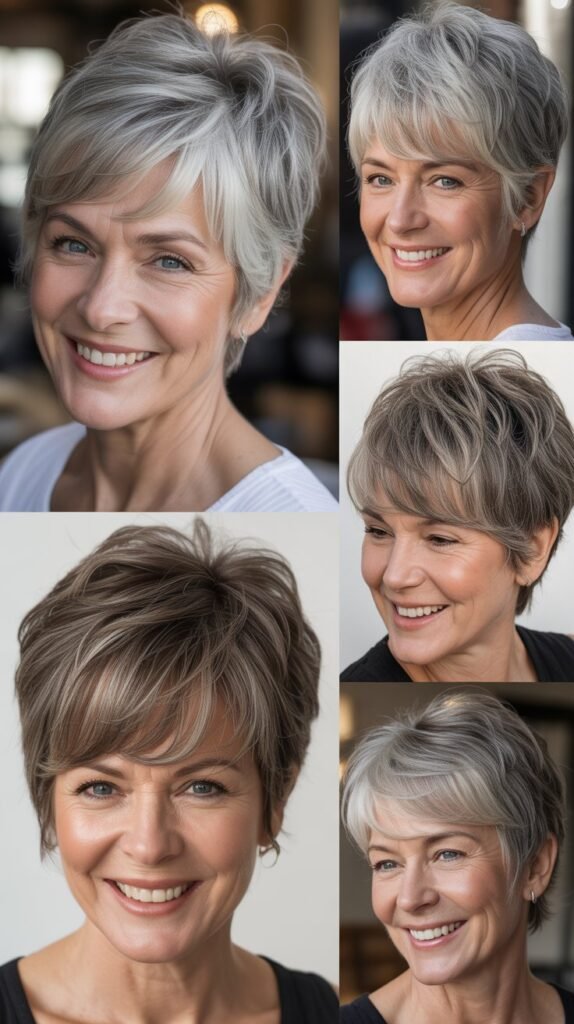
Micro bangs create a bold, contemporary statement while drawing attention upward, complemented by crown layering that adds significant volume where needed most.
- Micro bangs typically hit mid-forehead or higher, creating a dramatic, youthful look that’s trending across all age groups.
- The short bang length draws the eye to the eyes themselves, creating a focal point that distracts from fine hair concerns elsewhere.
- Crown layering behind the bangs creates volume that balances the weight of the fringe, preventing a top-heavy appearance.
- This bold style requires confidence and works best for women with strong features and well-defined bone structure that can carry such a statement.
- The overall cut length can vary from pixie to bob to longer styles—micro bangs adapt to multiple cut styles while maintaining their dramatic effect.
- Face shape considerations are important—micro bangs particularly flatter oval and heart-shaped faces, while round faces may need longer side sections for balance.
- Styling the bangs requires blow-drying them forward and flat, while the crown is styled with volume-building techniques for contrast.
- Frequent bang trims every 2-3 weeks are necessary to maintain the micro length, though the overall cut maintenance schedule depends on the style beneath the bangs.
19. Voluminous Shaggy Pixie
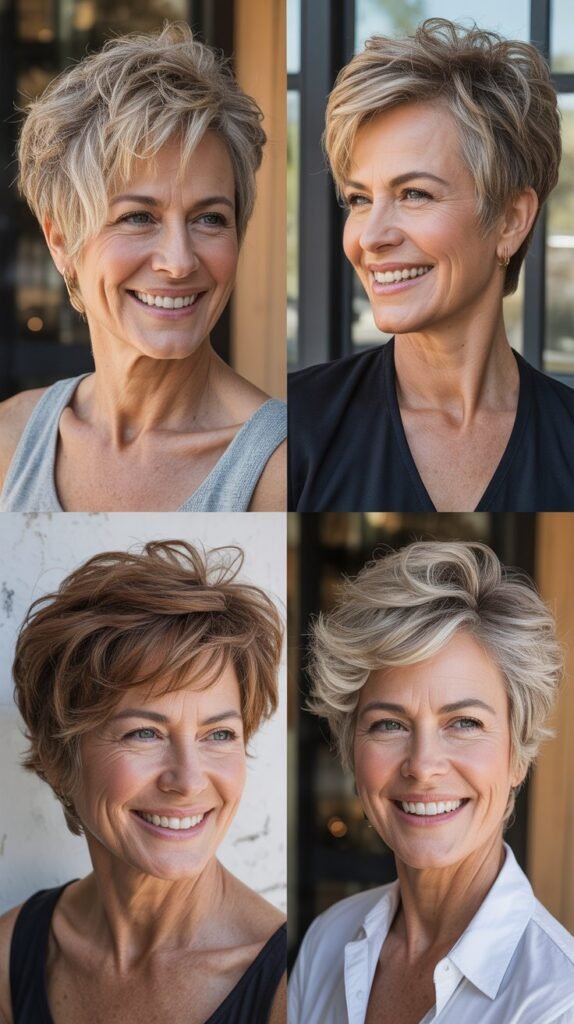
The shaggy pixie maximizes the volume potential of short hair through all-over texture and deliberate dishevelment that makes fine hair look substantially thicker.
- “Shaggy” indicates heavy layering throughout the entire cut with varied lengths creating maximum texture and movement.
- Multiple layer lengths from 1-4 inches create a stacked, scaffolded effect where shorter underneath layers support and prop up longer top layers.
- The deliberately undone aesthetic works with fine hair’s natural tendencies rather than against them, embracing movement and separation.
- Texturizing techniques including point-cutting, slide-cutting, and razor work create soft, feathered ends that add to the voluminous appearance.
- This cut offers surprising versatility—it can be styled sleek for professional settings or fully tousled for casual occasions.
- The shaggy pixie particularly flatters women with oval or heart-shaped faces, as the volume around the crown balances facial proportions.
- Styling is minimal and quick—rough-drying while scrunching with fingers and a small amount of texturizing paste or cream creates the desired effect.
- Maintenance requires salon visits every 5-6 weeks, as the precise layer structure that creates the volume requires regular refinement.
20. Graduated Bob with Beveled Edges
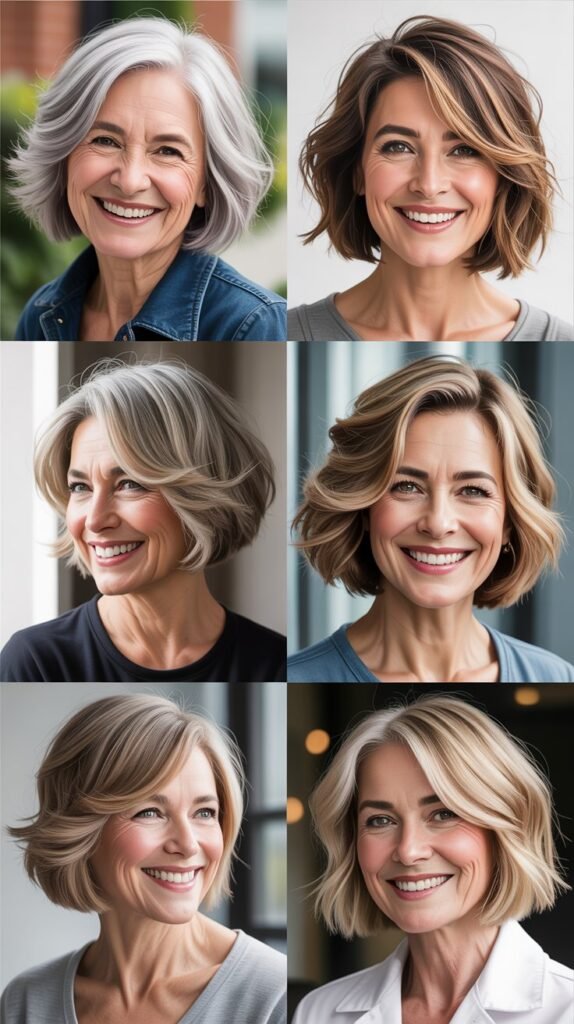
The graduated bob uses precise angle cutting to build volume from back to front, with beveled edges that create soft, rounded fullness.
- Graduation refers to the systematic increase in length from the nape of the neck to the front hairline, creating an angled silhouette.
- Beveling involves cutting the hair at an angle that curves under, creating rounded rather than blunt edges that enhance fullness.
- The back section is typically 2-4 inches shorter than the front, creating dramatic volume in the back and crown area.
- This architectural approach to cutting creates volume through structure rather than relying solely on styling products or techniques.
- The graduated bob works exceptionally well for fine, straight hair that holds shape well and benefits from geometric cutting.
- Face shape compatibility is broad—the cut can be customized with more or less severe angles to flatter different facial structures.
- Styling involves blow-drying with a round brush, rolling sections under to enhance the beveled curve while lifting at the roots for volume.
- Precision maintenance every 5-6 weeks is essential to maintain the graduated angle and beveled edges that create this cut’s signature volume.
21. Tousled Crop with Irregular Layers
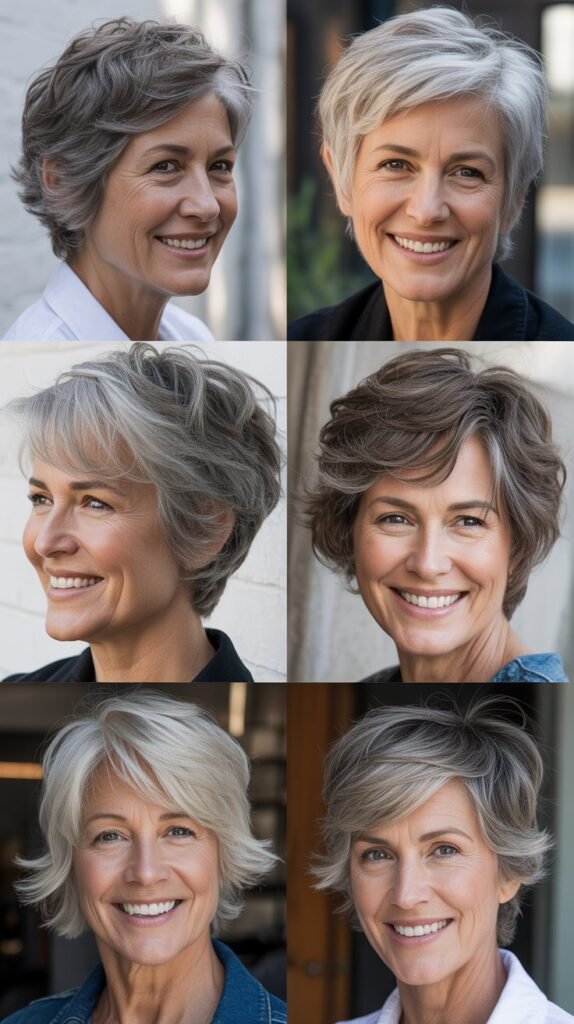
The tousled crop embraces calculated chaos through irregular layering that creates an effortlessly cool, voluminous look perfect for fine hair.
- Irregular layers means intentionally varying the length and spacing of layers throughout the cut rather than following uniform patterns.
- This approach creates organic, natural-looking volume and movement that appears unstudied and effortless.
- Crop length keeps the overall style short (typically 2-4 inches at the longest point), which automatically reduces weight and increases volume potential.
- The tousled effect is built into the cut itself through the irregular layering, meaning minimal styling effort produces maximum visual impact.
- This modern, fashion-forward cut projects confidence and works particularly well for women with contemporary personal style.
- Texturizing products are essential for styling—applying small amounts of clay, paste, or texturizing spray to damp or dry hair enhances the piece-y separation.
- The crop requires comfortable confidence with very short hair and works best for women with well-defined facial features that can carry such a bold cut.
- Maintenance visits every 4-5 weeks keep the irregular layer structure intact and prevent the style from losing its deliberately imperfect shape.
22. Layered Bob with Curtain Bangs
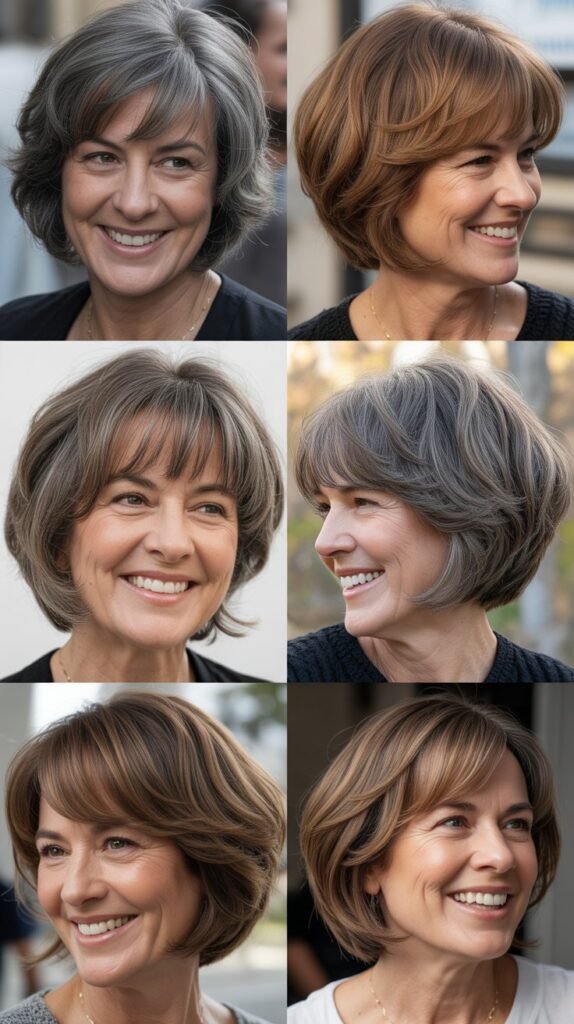
Curtain bangs paired with a layered bob create a ’70s-inspired look that’s thoroughly modern and remarkably effective at adding volume to fine hair.
- Curtain bangs are parted in the middle and fall to each side, framing the face like curtains frame a window, typically reaching cheekbone length.
- The center part creates instant volume at the crown by directing hair away from the scalp in two directions rather than lying flat.
- Layers throughout the bob portion of the cut complement the bangs, creating cohesive movement and volume from roots to ends.
- This style is particularly effective for softening strong or angular facial features, as the curtain bangs create a gentle, romantic frame.
- The bob length beneath the bangs typically falls between chin and shoulder level, providing balance to the face-framing bang sections.
- Styling involves blow-drying the bangs away from the face using a round brush, then styling the bob with either smooth volume or textured waves.
- This cut works beautifully with natural movement in the hair—slight waves or texture enhance the curtain bang effect rather than fighting against it.
- Maintenance includes full cuts every 6-8 weeks with bang trims every 3-4 weeks to maintain the ideal curtain bang length and shape.
23. Edgy Asymmetrical Pixie
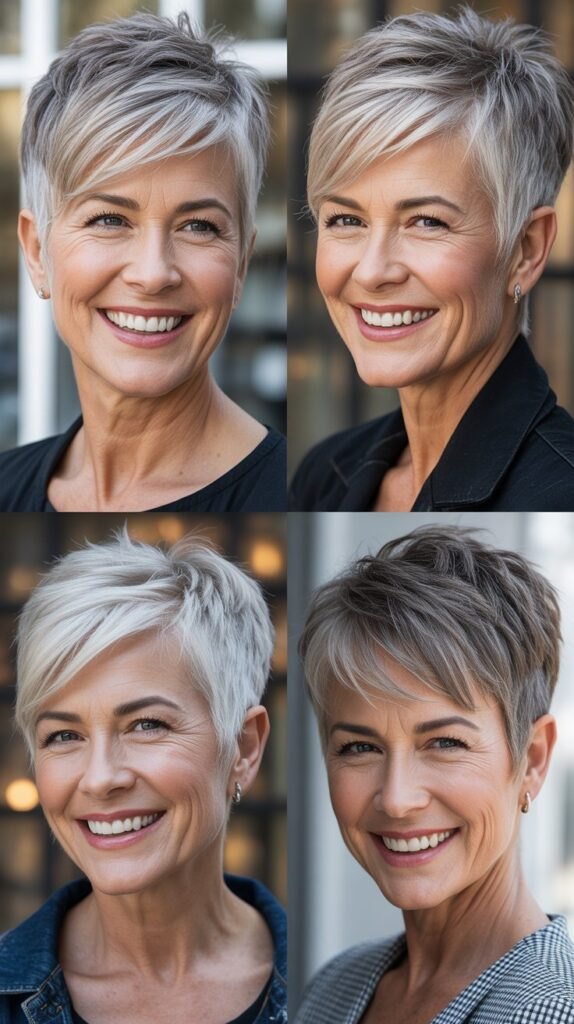
Maximum drama and volume meet in the edgy asymmetrical pixie, where contrasting lengths create both visual interest and structural lift.
- Asymmetry in pixie cuts typically involves one side being significantly shorter than the other—sometimes by 2-3 inches or more.
- The longer side provides styling versatility and can be swept across the forehead, tucked behind the ear, or styled with added texture.
- The shorter side eliminates weight and draws attention to facial features, particularly the eyes and cheekbones.
- This bold, modern cut makes a statement and works best for women with confident personal style and strong facial features.
- The dramatic contrast between lengths creates the illusion of significantly more hair than actually exists, as the eye focuses on the longer section.
- Styling the longer side with volume-building techniques while keeping the short side sleek creates additional contrast that enhances the overall effect.
- This cut requires a skilled stylist experienced with asymmetrical cutting to ensure proper balance and wearability.
- Maintenance every 4-5 weeks is crucial, as even minor growth disrupts the precise asymmetrical balance that makes this cut work.
24. Rounded Bob with Internal Layering
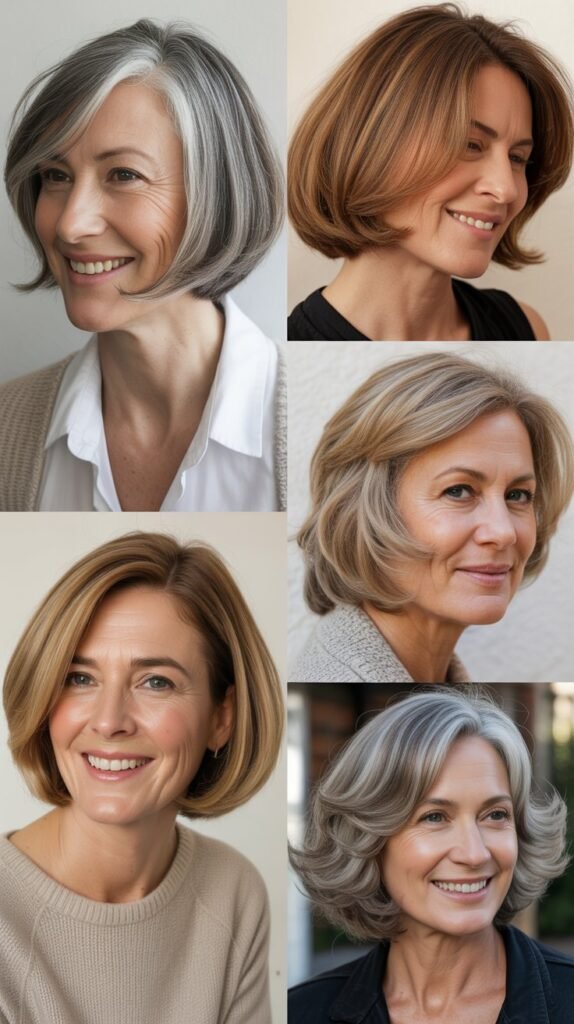
The rounded bob uses hidden internal layers to create a soft, feminine silhouette with surprising volume despite maintaining smooth external appearance.
- The rounded shape is achieved through careful graduation and layering that creates a curved, full appearance from all angles.
- Internal layering removes weight from the interior of the cut without disturbing the smooth outer perimeter that defines the rounded silhouette.
- This technique allows for the polished, professional appearance some women prefer while still providing the volume benefits of a layered cut.
- The rounded shape is universally flattering and works across face shapes when customized with appropriate length and curve intensity.
- This cut is ideal for women who want volume without visible texture, maintaining a classic, timeless aesthetic.
- Blow-drying technique is critical—using a round brush to curl ends under while lifting at the roots creates and maintains the rounded shape.
- The smooth exterior requires more careful styling than textured cuts, making this better suited for women who enjoy the styling process.
- Maintenance every 6-7 weeks maintains the precise rounded shape and internal structure that creates volume without visible layering.
25. Textured French Bob
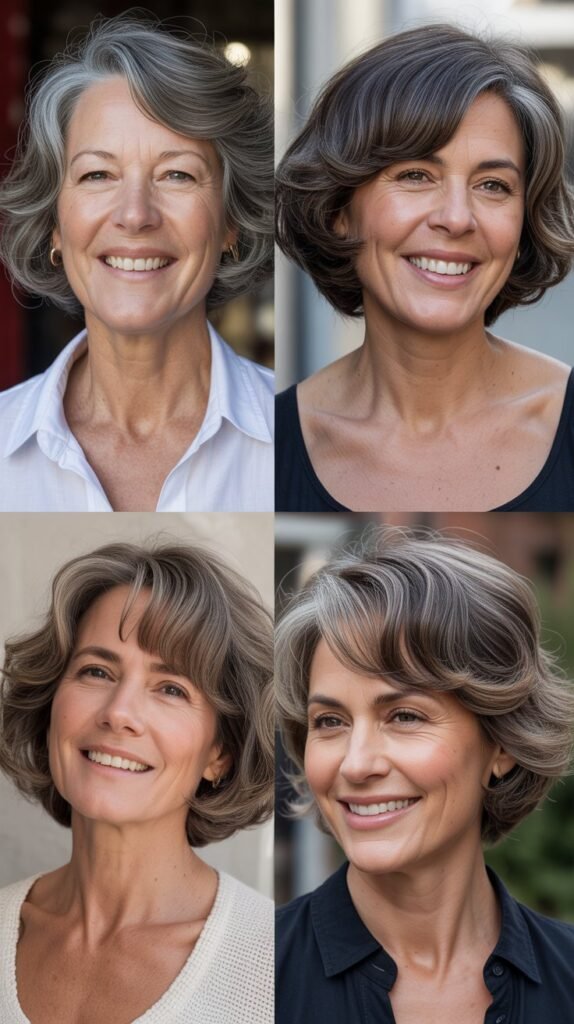
The French bob brings Parisian chic to fine hair through blunt cutting combined with subtle internal texturizing that creates subtle but effective volume.
- The French bob typically hits just below the jaw or at chin length, creating a distinctly sophisticated, timeless silhouette.
- Despite appearing quite blunt and solid from the exterior, internal texturizing removes weight without disrupting the clean perimeter line.
- The style often includes slightly blunt-cut or subtly textured bangs that graze the eyebrows, completing the French-inspired aesthetic.
- This cut works particularly well with naturally straight or slightly wavy fine hair that holds the blunt shape without excessive styling.
- The textured French bob projects understated elegance and works beautifully in both professional and social settings.
- Styling can range from sleek and smooth to slightly tousled, with the internal texture allowing movement without destroying the signature shape.
- Face shape considerations favor oval, heart, and oblong faces, though length adjustments can make it work for other shapes.
- Maintenance requires precision cutting every 6-7 weeks to maintain the clean perimeter and internal texture that defines this sophisticated style.
26. Spiky Textured Pixie
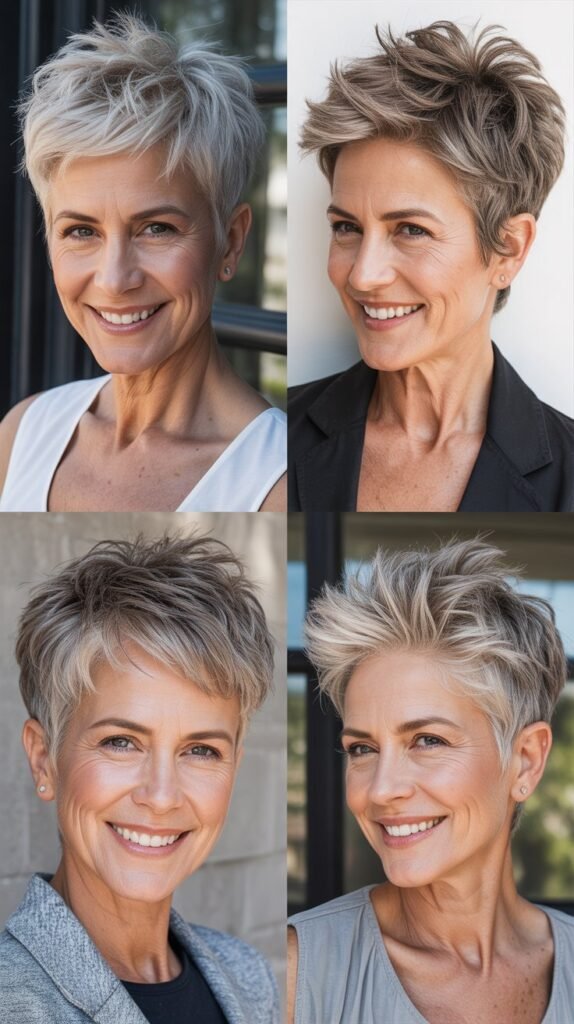
For maximum volume and contemporary edge, the spiky textured pixie uses heavy product application and strategic cutting to make fine hair stand up and out.
- Spikes are created through a combination of short layered cutting and styling products that provide strong hold without stiffness.
- Layer lengths typically range from 1-3 inches, with shorter lengths at the sides and back supporting longer, spike-able lengths on top.
- This bold style makes a strong statement and works best for women with confident, contemporary personal style.
- The vertical orientation of the spikes creates maximum height and volume, making fine hair appear substantially thicker and fuller.
- Texturizing techniques within the cut create natural separation that allows individual spikes to form rather than hair clumping together.
- Styling requires applying strong-hold gel, pomade, or clay to damp hair, then using fingers or a comb to direct sections upward into spikes.
- The intensity of the spiky effect can be varied—subtle texture for professional settings or dramatic spikes for casual occasions.
- Maintenance every 4-5 weeks keeps the layer structure precise enough to create well-defined spikes rather than random, unflattering texture.
27. Soft Layered Lob with Waves
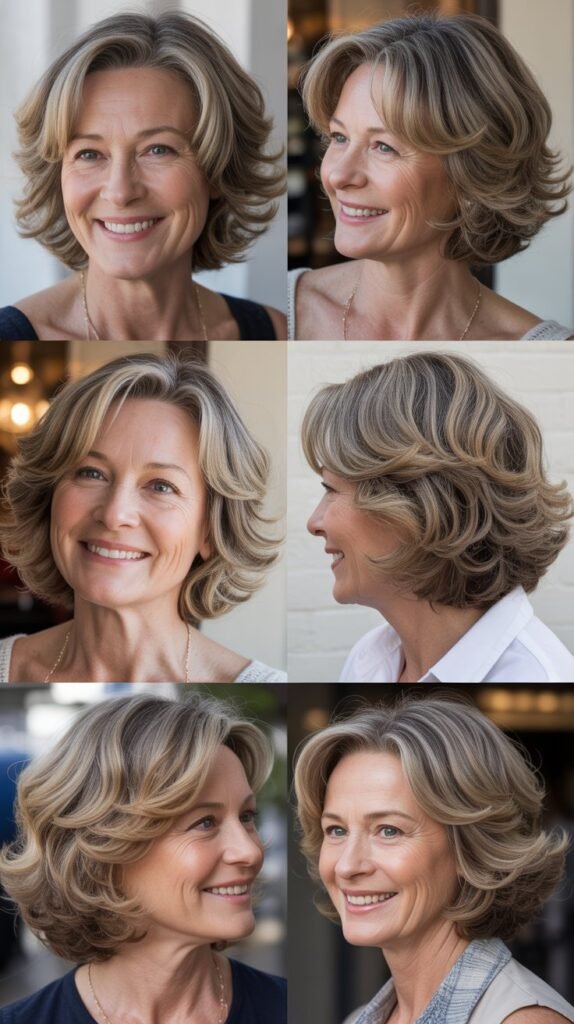
The soft layered lob gains dramatic volume when combined with loose waves, creating a romantic, feminine style perfect for fine hair.
- The lob length (collarbone to shoulder) provides enough length to create substantial waves while remaining short enough to maintain root volume.
- Soft layers throughout the cut create dimension and movement that’s amplified when waves are added through styling.
- Loose waves rather than tight curls work best with fine hair, as they create volume without overwhelming the hair’s natural texture.
- This versatile style transitions seamlessly from professional to social settings, offering sophistication with romantic softness.
- The combination of layers and waves creates significant volume that lasts throughout the day, even in fine hair prone to falling flat.
- Styling involves creating waves with a curling iron, flat iron, or braiding when damp, then gently separating the waves for soft, volumized texture.
- Product application is key—volumizing mousse at roots before styling, texturizing spray after styling, and light-hold hairspray to maintain without stiffness.
- Maintenance includes cuts every 7-8 weeks to maintain layer structure, with the style looking beautiful both immediately after cutting and as it grows out slightly.
28. Choppy Pixie with Disconnected Layers
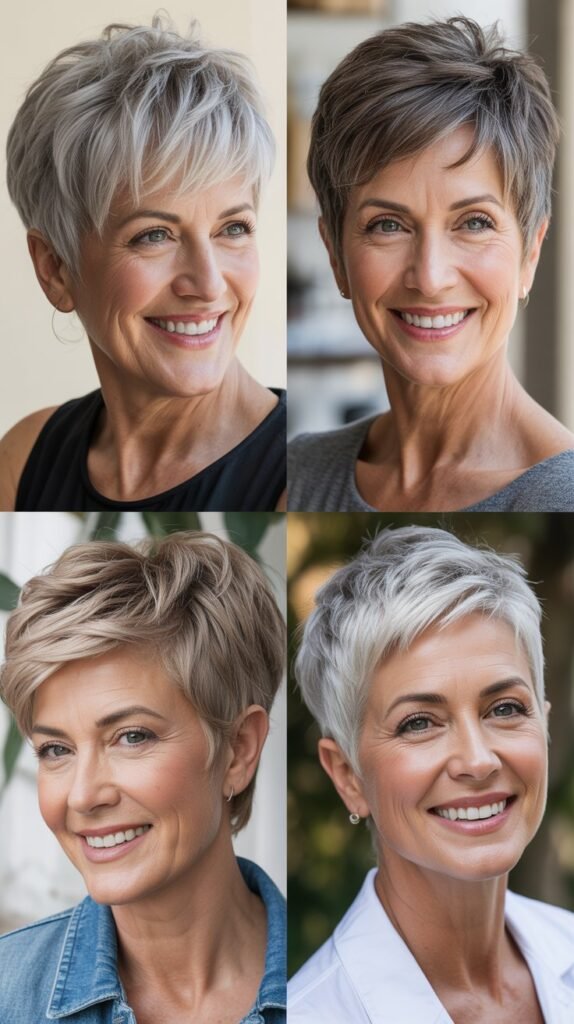
Disconnected layering takes the pixie cut to new volume heights by creating dramatic length variations that prevent fine hair from lying flat.
- Disconnected layers feature significant length differences between sections—sometimes 2+ inches—creating gaps that generate volume and visual interest.
- The choppy aesthetic relies on irregular, non-uniform cutting that creates intentional texture rather than smooth blending.
- Longer sections on top (3-5 inches) provide enough length for versatile styling while shorter sides (1-2 inches) emphasize the volume contrast.
- This modern, edgy cut works best for women comfortable with bold, attention-getting hairstyles that make a statement.
- The disconnection between layers creates natural separation that makes fine hair appear significantly thicker and more abundant.
- Styling options range from slicked back for sophistication to heavily textured for casual edge, all from the same base cut.
- Products should enhance separation—texturizing paste, clay, or pomade applied to individual sections emphasizes the choppy, disconnected effect.
- Maintenance every 4-5 weeks is essential to keep the disconnected layer structure precise and prevent unwanted blending as hair grows.
29. Butterfly Layers for Medium Length
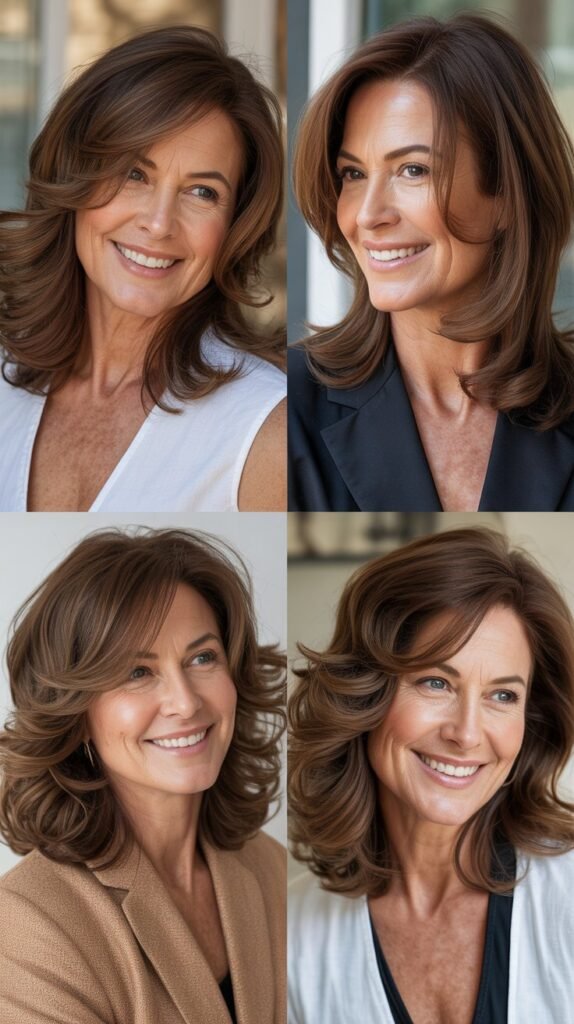
Butterfly layers create a distinctive shape with shorter layers around the face that gradually lengthen toward the back, generating volume through strategic weight distribution.
- The “butterfly” name comes from the shape created—shorter layers around the face that “open up” like wings as they extend toward the back.
- Face-framing layers typically start at cheekbone or chin level, removing weight near the face where it’s most visible and impactful.
- Gradually increasing length toward the back maintains overall style length while creating dimension and movement throughout.
- This technique is particularly effective for women who want to keep length in the back for ponytails or updos while gaining volume around the face.
- The butterfly effect works with lengths from lob to shoulder-length styles, adapting to various personal preferences.
- Styling involves blow-drying the face-framing layers away from the face while styling the back sections smoothly or with added waves.
- This cut flatters most face shapes, as the shorter face-framing layers can be customized to highlight best features and minimize concerns.
- Maintenance every 7-8 weeks keeps the butterfly shape distinct and prevents the style from becoming too heavy or losing its dimensional effect.
30. Blunt Bob with Subtle Internal Texture
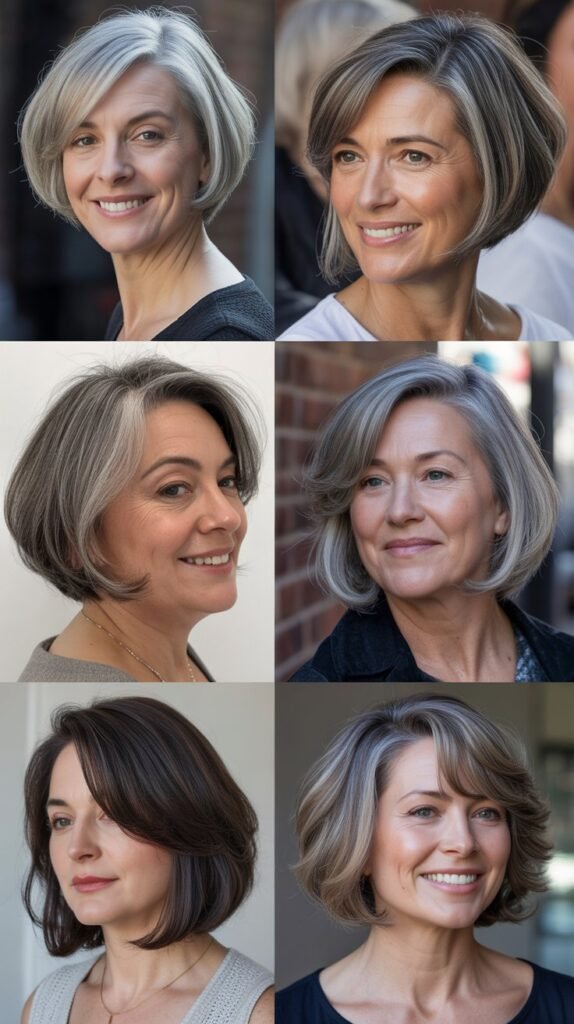
For women who love the look of blunt cuts but need volume, this style uses hidden internal texture to create fullness without disturbing the clean exterior lines.
- The exterior perimeter is cut bluntly at a single length, creating the solid, clean line characteristic of blunt bobs.
- Internal texturizing through point-cutting or slide-cutting removes weight from the interior without affecting the external appearance.
- This technique allows women to enjoy the sophisticated blunt bob aesthetic while gaining the volume benefits typically associated with layered cuts.
- The contrast between blunt exterior and textured interior creates movement within the cut that prevents fine hair from hanging limp.
- Length typically ranges from chin to shoulder level, with the blunt line creating a strong horizontal emphasis.
- This style works particularly well for fine hair that’s relatively straight, as the blunt perimeter holds shape better without natural wave.
- Styling involves smooth blow-drying with a paddle brush or round brush, focusing on volume at the roots while maintaining sleek ends.
- Precision maintenance every 6-7 weeks keeps the blunt line sharp and the internal texture effective without becoming visible from the exterior.
31. Razored Shag with Fringe
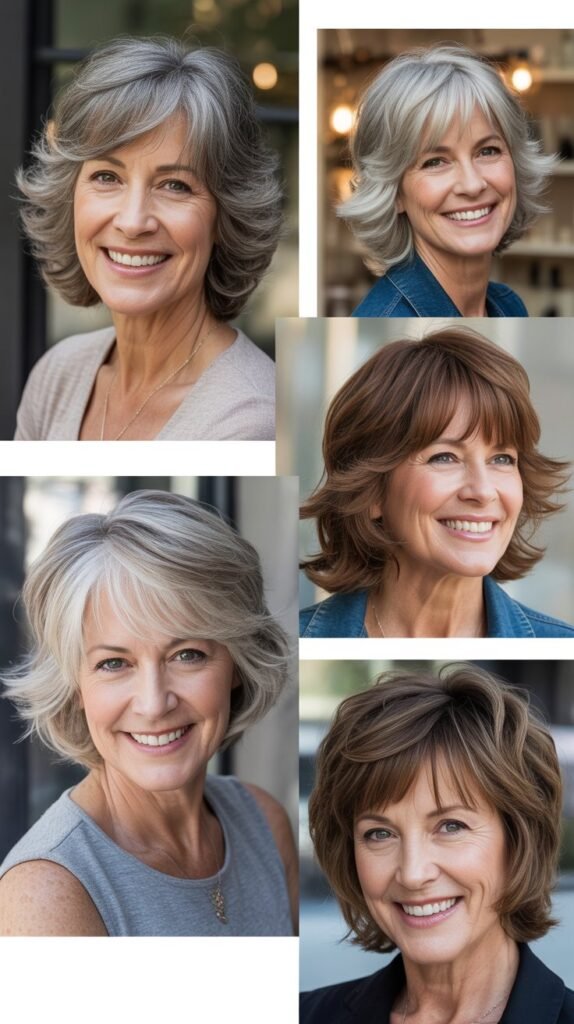
The razored shag uses specialized cutting techniques to create ultra-fine, feathered layers that make fine hair appear surprisingly full and textured.
- Razor cutting creates softer, more textured edges than scissor cutting, removing weight while creating natural-looking, piece-y ends.
- Shag layering throughout the cut ensures volume from crown to ends, with varied layer lengths creating maximum dimension.
- Fringe (bangs) integrated into the shag can be wispy and side-swept or fuller and more blunt, depending on personal preference and face shape.
- The combination of razor texture and shag layers creates extraordinary movement that makes fine hair look substantially thicker.
- This style embraces a deliberately undone aesthetic that works beautifully for casual lifestyles and creative professional environments.
- Styling is wonderfully low-maintenance—rough-drying with fingers and minimal product creates the desired tousled, textured effect.
- The razored edges create natural separation without requiring heavy product application, preventing the weighed-down look that plagues fine hair.
- Maintenance every 6-8 weeks keeps the feathered texture fresh, though this cut gracefully grows out better than many precision cuts.
32. Stacked Layers with Tapered Nape
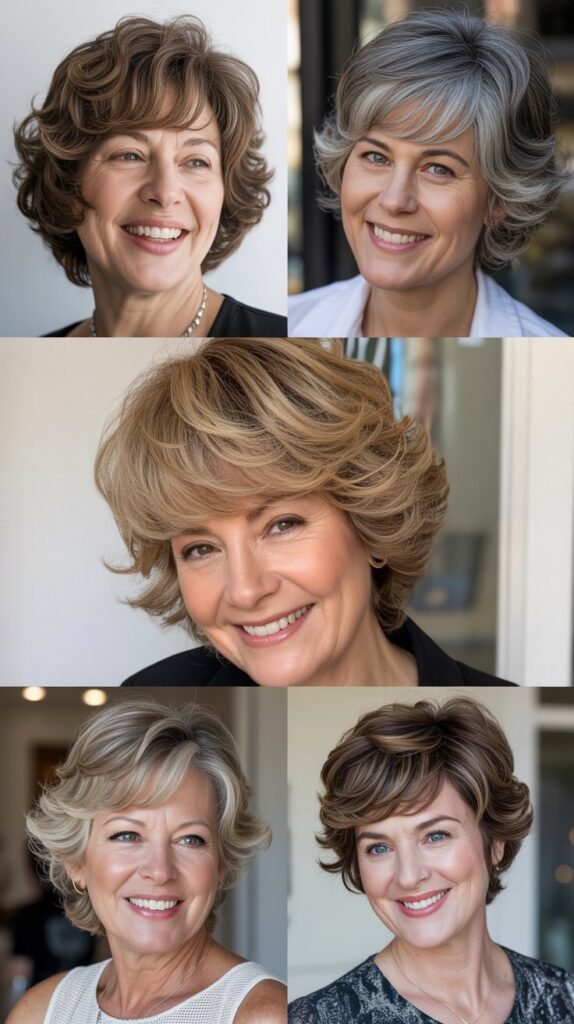
Maximum back volume combines with a sleek, tapered nape in this style that creates dramatic height while maintaining a feminine silhouette.
- Stacked layers in the crown and back create progressive volume that builds upward, generating significant height and fullness.
- The tapered nape is cut very short and close to the neck, creating a graceful, elongating effect that balances the voluminous crown.
- This contrast between fullness above and sleekness below creates a sophisticated, balanced silhouette that’s extremely flattering.
- The style works particularly well for women with longer necks, as the tapered nape showcases this feature beautifully.
- Front sections can be customized to various lengths—longer for more versatility or shorter for a more dramatic, cohesive look.
- Styling focuses on blow-drying the stacked sections upward and forward to maximize volume while keeping the nape smooth and close.
- This cut requires an experienced stylist comfortable with graduated cutting techniques to achieve proper stacking and tapering.
- Maintenance every 5-6 weeks is essential, as the precise structure—particularly the tapered nape—requires regular refinement to maintain its shape.
33. Textured Collarbone Cut with Layers
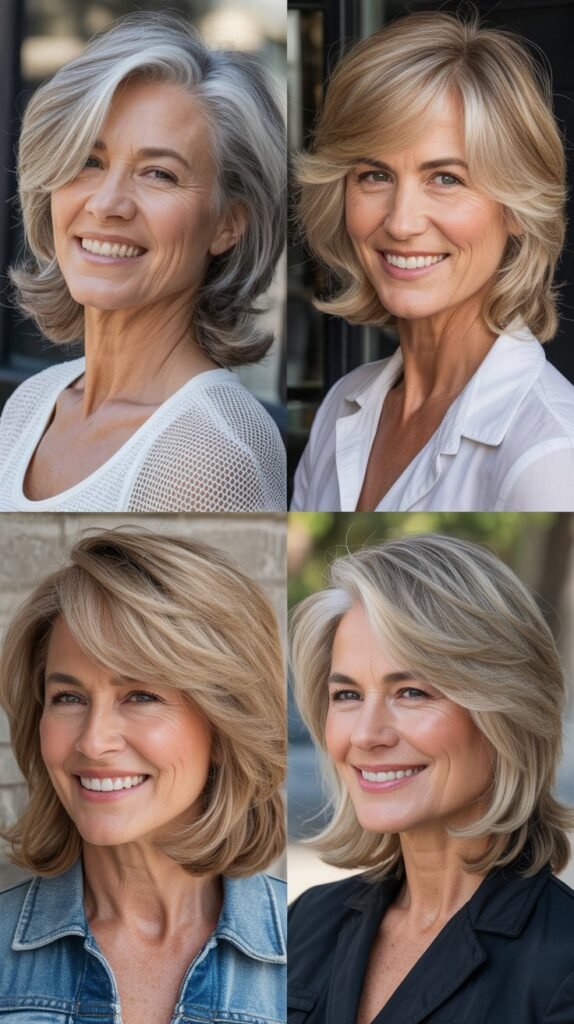
The collarbone length provides maximum versatility while strategic layering creates volume that works beautifully for fine hair needing substance.
- Collarbone length hits at the perfect point—long enough for ponytails and updos, short enough to maintain volume at the roots.
- Layers throughout the cut remove weight systematically, with shorter layers near the crown creating lift and longer layers at the perimeter maintaining length.
- Texturizing techniques create piece-y separation rather than solid, heavy sections that make fine hair appear thin.
- This length and layer combination works with virtually all face shapes when customized with appropriate face-framing.
- The style transitions beautifully from straight and sleek to wavy and textured, offering multiple looks from a single cut.
- Styling options include smooth blowouts with body, loose waves for volume and romance, or even sleek straight styles for contemporary polish.
- This versatile cut works equally well in professional settings and casual environments, adapting to various lifestyle needs.
- Maintenance every 7-8 weeks keeps layers fresh and prevents the cut from becoming too heavy or losing its volumizing structure.
34. Layered Pixie with Undercut
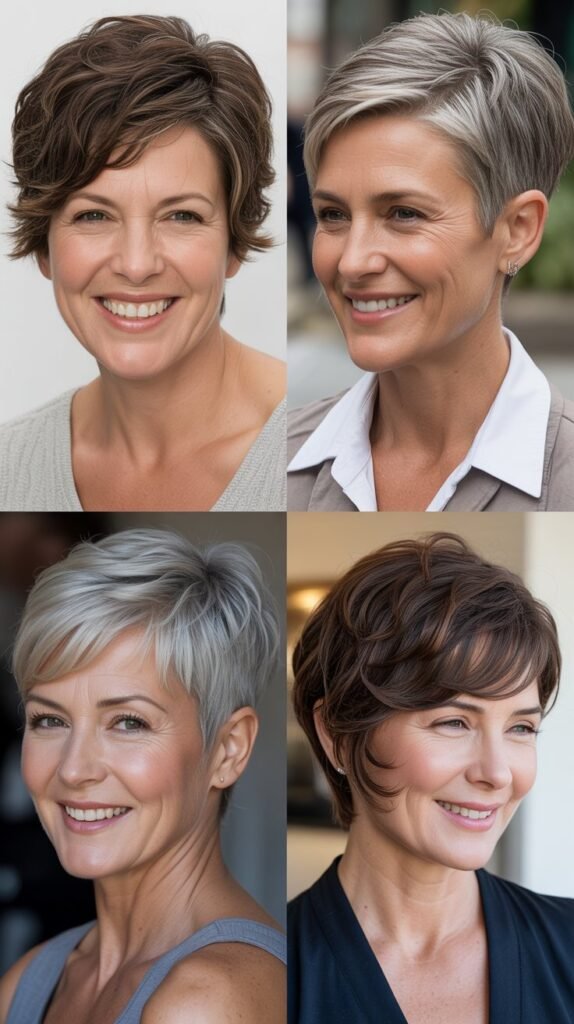
The undercut adds modern edge while the layered top provides volume—a contemporary combination that transforms fine hair into a bold statement.
- Undercuts involve shaving or cutting the hair extremely short (often with clippers) at the nape, sides, or both, creating dramatic contrast.
- The longer layered top section has all weight removed from below, allowing maximum lift and volume without any pulling-down effect.
- This edgy, fashion-forward style makes a strong statement and works best for confident women with contemporary personal aesthetic.
- Undercut patterns can be simple or elaborate, with some women choosing designs or patterns shaved into the undercut section.
- The contrast between extremely short undercut and volumized top makes fine hair appear significantly fuller and more abundant.
- Styling the top section is easier than traditional pixies because there’s no hair underneath to weigh it down or create bulk.
- This cut requires comfortable confidence with very short sections and regular maintenance of the undercut between full cuts.
- Maintenance includes full cuts every 5-6 weeks with undercut touch-ups every 2-3 weeks to maintain the clean, precise contrast.
35. Soft Shag with Long Bangs
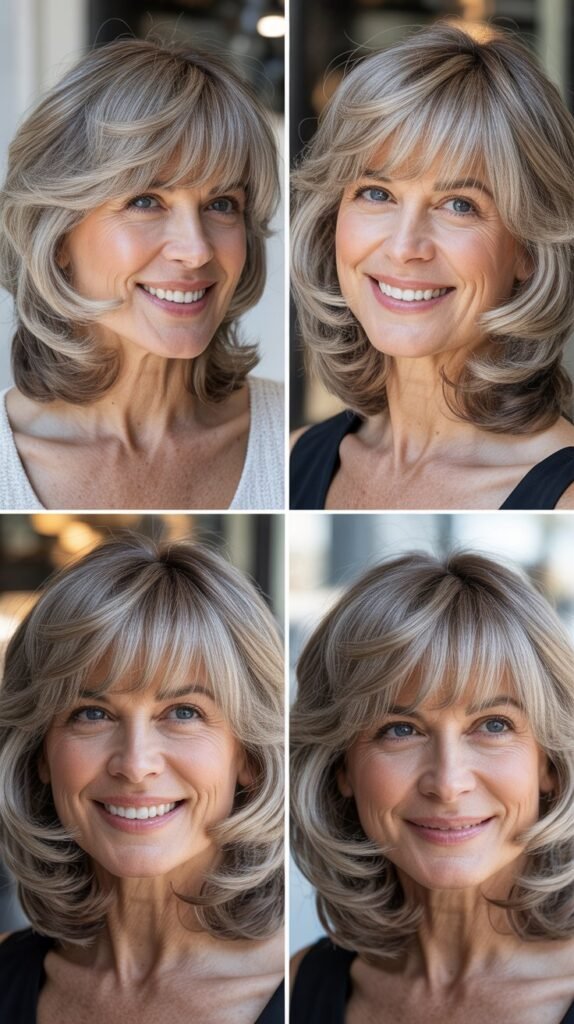
Combining the volume benefits of a shag with the face-softening effect of long bangs creates a flattering, dimensional style for fine hair.
- “Soft” indicates gentle, blended layering throughout rather than dramatic, choppy layer variations that might feel too edgy.
- Long bangs typically extend to cheekbone length or below, providing face-framing softness that can be styled in multiple ways.
- Shag layers throughout the rest of the cut create all-over volume and movement without requiring the bangs to be similarly short.
- This combination works beautifully for women who want volume and dimension without dramatically short or edgy styling.
- The soft approach makes this version of the shag appropriate for conservative professional environments while maintaining volume benefits.
- Styling versatility is a major advantage—bangs can be swept to the side, parted in the middle, or even pinned back for different looks.
- The gentle layering throughout creates movement without excessive texture, appealing to women who prefer somewhat controlled styles.
- Maintenance includes full cuts every 6-8 weeks with bang trims every 3-4 weeks to maintain the ideal length and shape.
36. Choppy Lob with Textured Ends
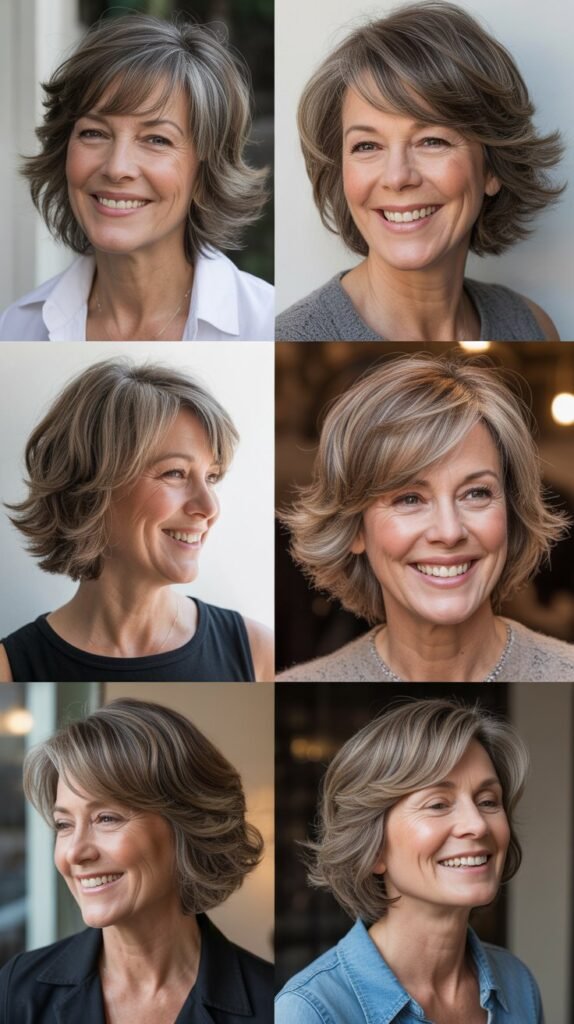
The lob length gains dramatic volume and contemporary edge through choppy cutting and heavily textured ends that make fine hair appear thicker.
- Choppy cutting creates intentionally irregular, non-uniform lengths throughout the cut rather than smoothly blended layers.
- Textured ends are achieved through point-cutting, razor work, or slide-cutting that creates soft, piece-y rather than blunt endings.
- The lob length (collarbone to shoulder) provides enough hair to show off the textured, choppy effect while maintaining overall volume.
- This style embraces a deliberately undone, effortlessly cool aesthetic that’s surprisingly easy to maintain daily.
- The irregular nature of the cut means it looks intentionally textured even when growing out, extending time between salon visits.
- Styling involves enhancing the natural texture with volumizing products and either air-drying or rough-drying for casual effect.
- The choppy lob works beautifully with slight natural wave or texture in fine hair, though it’s equally effective on straight hair.
- Maintenance every 7-9 weeks keeps the choppy texture intentional rather than grown-out, though this cut is forgiving between appointments.
37. Voluminous Crown with Tapered Sides
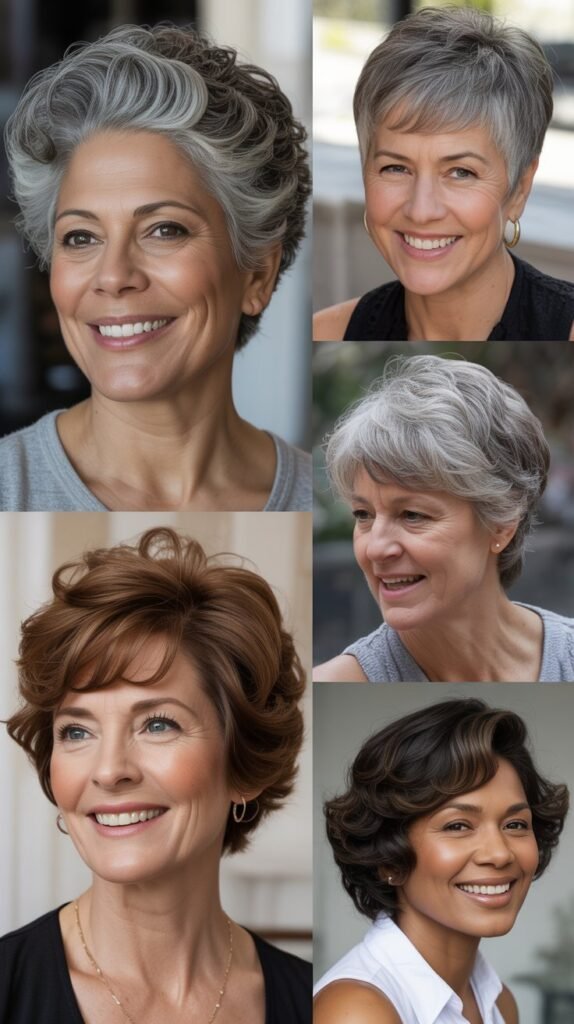
Strategic contrast between a voluminous crown and close-tapered sides creates maximum height and contemporary style perfect for fine hair.
- Crown layers are cut shorter and heavily textured to create maximum lift and volume exactly where fine hair needs it most.
- Tapered sides are cut progressively shorter toward the ears and neckline, removing all competing weight from the crown area.
- This dramatic contrast draws all attention to the voluminous crown, making fine hair appear substantially thicker and fuller.
- The style works particularly well for women with strong facial features that can carry such a bold, architectural cut.
- Overall length can vary—the crown can be relatively short (2-3 inches) or longer (4-5 inches) depending on desired volume intensity.
- Styling requires concentrating efforts on the crown, using blow-drying and product application to maximize height while keeping sides smooth.
- This contemporary cut makes a statement and projects confidence, working best for women with modern personal style.
- Maintenance every 5-6 weeks keeps the crown volume precise and the tapered sides clean, as the contrast is essential to the look.
38. Graduated Pixie with Long Front Sections
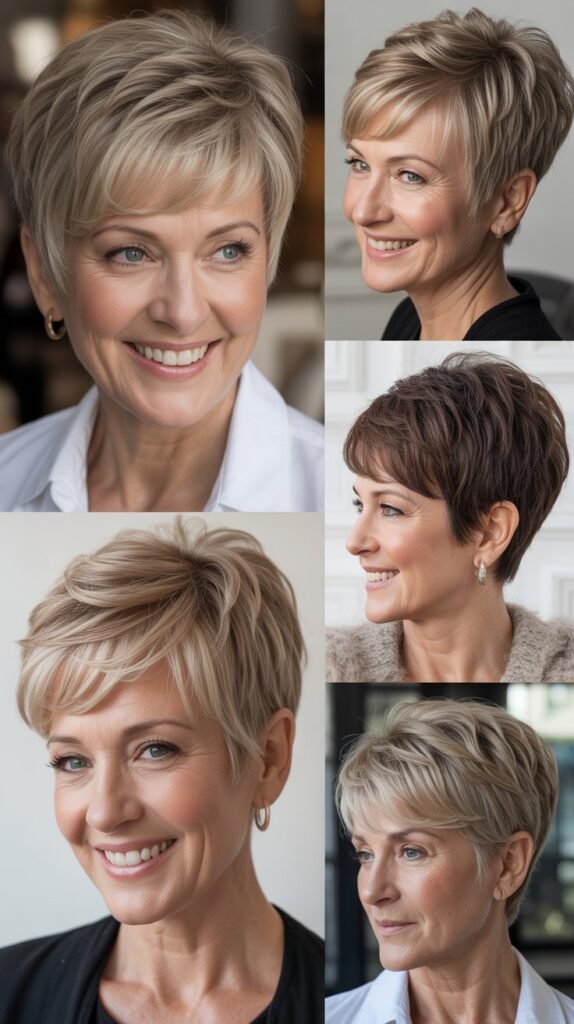
This pixie variation maintains very short back and sides while extending front sections significantly longer, creating versatile styling options and built-in volume.
- The graduation refers to the smooth transition from very short back (often less than 1 inch) to longer front sections (3-5 inches or more).
- Extended front sections can be styled forward as bangs, swept to the side dramatically, or even slicked back for completely different looks.
- The removal of weight in the back allows the longer front sections to have maximum lift and volume without being pulled down.
- This style offers remarkable versatility—different styling techniques create drastically different appearances from the same cut.
- The graduated shape creates natural volume through the physics of elevation, with longer hair standing away from shorter hair beneath.
- Face shape considerations favor oval and heart shapes particularly well, though length adjustments make it adaptable.
- Styling ranges from quick and casual (rough-dried and textured) to polished and sophisticated (smoothly styled with products).
- Maintenance every 5-6 weeks maintains the precise graduation, with the front sections often requiring trims every 3-4 weeks.
39. Feathered Bob with Volume Layers
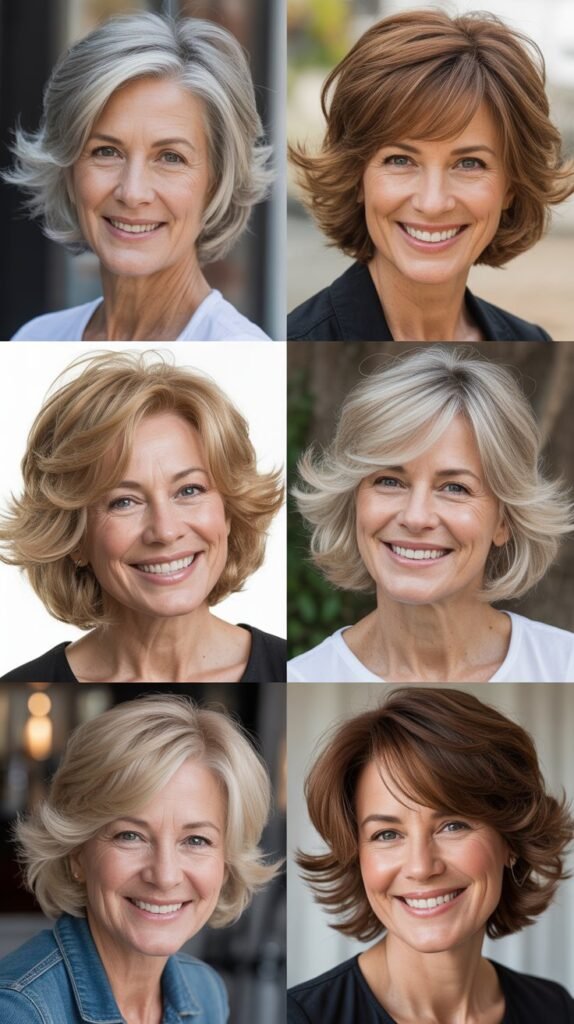
Classic feathering techniques combine with strategic volume layers to create a timeless yet voluminous style perfect for fine-haired women over 50.
- Feathering involves cutting hair at angles that create soft, wing-like ends that flip outward rather than lying flat or curving under.
- Volume layers are concentrated at the crown and throughout the top sections, creating lift where fine hair typically falls flat.
- The bob length (typically chin to collarbone) provides enough hair to showcase the feathered texture while maintaining manageability.
- This classic technique has stood the test of time because it genuinely creates the appearance of fuller, thicker hair.
- The feathered ends create natural movement and prevent the heavy, blunt look that makes fine hair appear even thinner.
- Styling involves blow-drying with a round brush, directing sections away from the face while rolling the ends to emphasize the feathered flip.
- This style works beautifully for women who appreciate classic, timeless aesthetics over trendy, contemporary cuts.
- Maintenance every 6-7 weeks keeps the feathered ends precise and the volume layers effective at creating lift.
40. Asymmetrical Bob with Deep Side Part
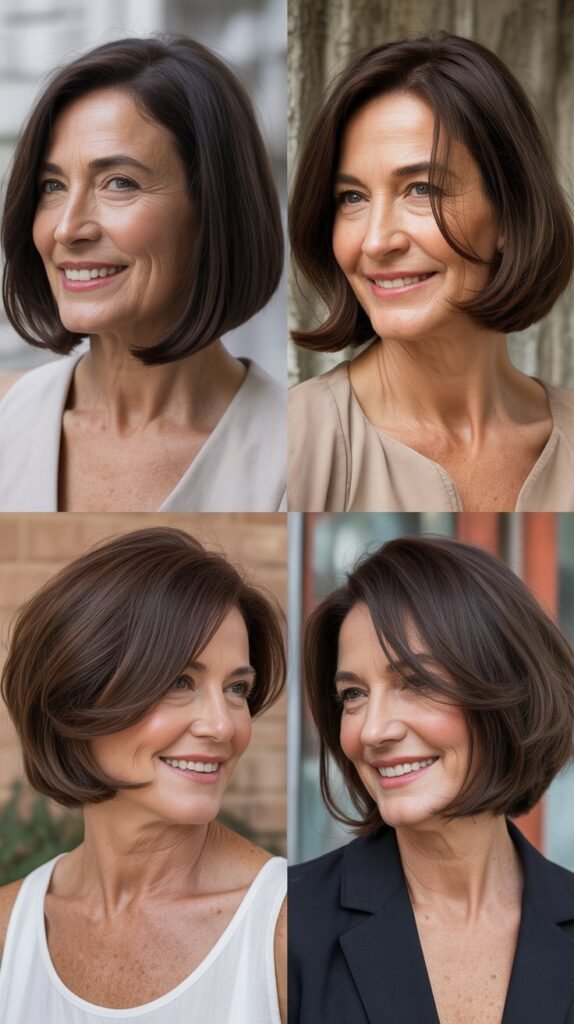
The deep side part creates instant volume at the crown while asymmetrical length adds contemporary edge and visual interest.
- Deep side parts (positioned 2-3 inches from center) create immediate volume on the heavier side by directing hair away from the scalp at a dramatic angle.
- Asymmetrical cutting provides one side longer than the other, creating visual interest that distracts from fine hair concerns.
- The combination of deep part and asymmetry generates natural volume without requiring extensive styling or heavy product use.
- This sophisticated, fashion-forward style works beautifully in both professional and social settings.
- The longer side can be styled in multiple ways—tucked behind the ear, swept forward across the face, or styled with waves for added volume.
- Face shapes that benefit most include round, square, and oval, as the asymmetry creates elongating visual lines.
- Styling involves blow-drying hair away from the part using a round brush, focusing on lifting the roots on the heavier side for maximum volume.
- Maintenance every 6-7 weeks maintains the precise asymmetrical line and ensures the cut continues to work with the deep part placement.
41. Textured Crop with Fringe
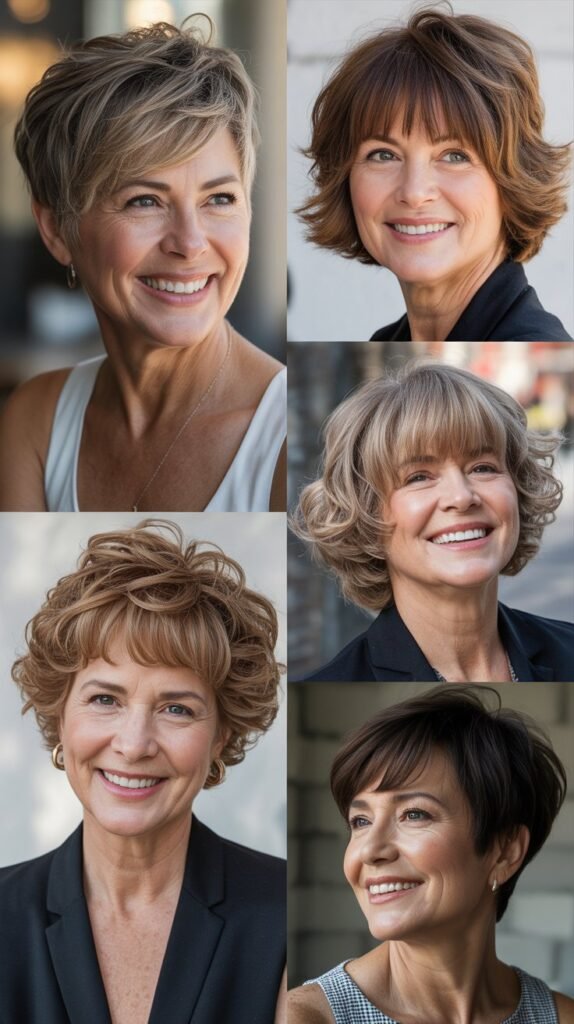
The ultra-short crop gains personality and volume through heavy texturizing and face-framing fringe that balances the boldness.
- Crop cuts maintain 1-3 inches of length maximum, with the shortest sections at sides and back and slightly longer textured sections on top.
- Heavy texturizing throughout creates piece-y separation that makes each strand count, maximizing the appearance of fullness.
- Fringe (bangs) adds a feminine touch to the otherwise bold crop, typically cut to eyebrow length or slightly longer and textured to match the top.
- This confident, contemporary cut works best for women comfortable with very short hair and strong personal style.
- The minimal length means styling takes just minutes—apply a small amount of texturizing product and style with fingers for piece-y texture.
- Face shape considerations favor strong, well-defined features that can carry such a bold, attention-getting cut.
- The textured crop projects confidence and modernity, working well for women with active lifestyles or those who prefer minimal hair maintenance.
- Maintenance every 4-5 weeks is essential to prevent the style from losing its precise shape and textured structure.
42. Layered Bob with Babylights
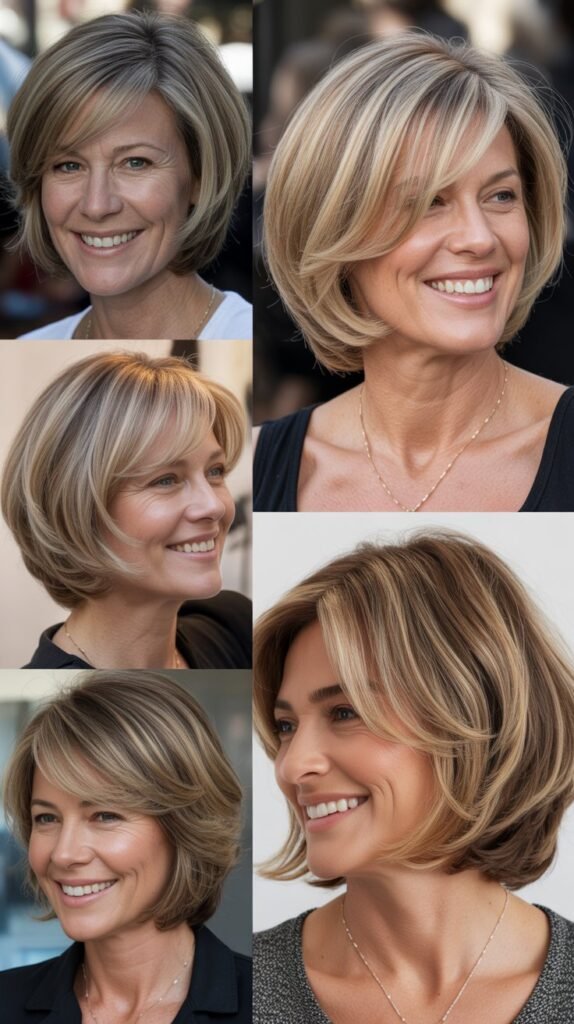
Strategic layering combined with babylights (very fine highlights) creates both dimensional color and structural volume for fine hair.
- Babylights are extremely fine, delicate highlights that mimic natural sun-lightening and create subtle dimensional color.
- When combined with layers, the lighter pieces catch light differently, creating the illusion of significantly more volume and thickness.
- The layering provides physical structure and lift while the color adds visual dimension that makes fine hair appear fuller.
- Placement of babylights should follow the layer structure, with highlights concentrated where volume is desired most—typically crown and face-framing sections.
- This combination approach addresses fine hair from both cutting and coloring perspectives for maximum volumizing effect.
- Maintenance includes cuts every 6-8 weeks and color touch-ups every 8-12 weeks depending on natural hair color and highlight placement.
- Styling remains the same as any layered bob, but the dimensional color makes volume appear even more pronounced.
- The subtle nature of babylights means they grow out gracefully, making them ideal for women seeking low-maintenance color enhancement.
43. Disconnected Pixie-Bob
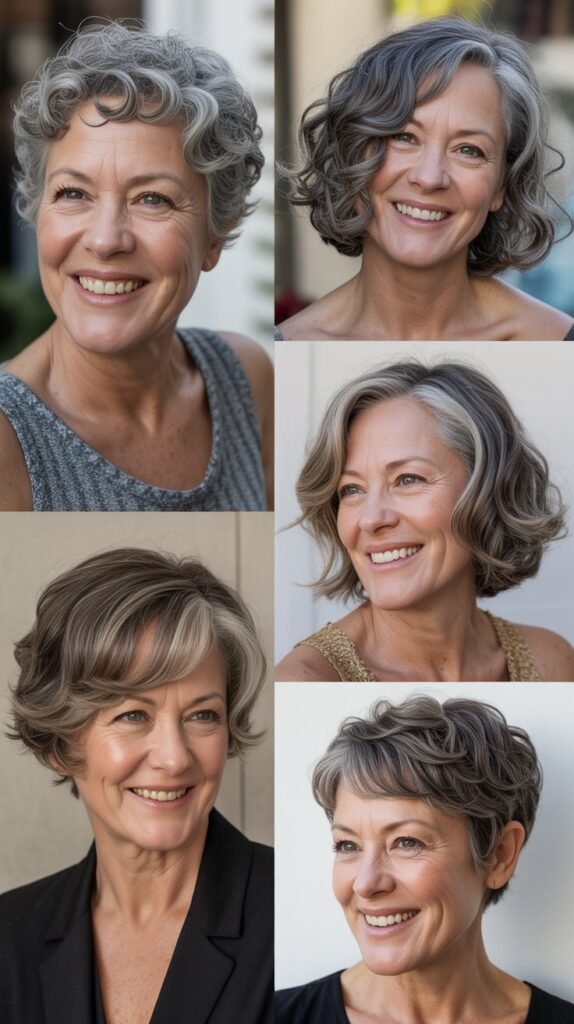
Extreme disconnection between lengths creates architectural volume and contemporary edge in this hybrid style perfect for fine hair.
- Disconnection means significant length differences between sections with minimal blending—often 3+ inches of variation.
- The pixie-short back and sides create maximum lift for the bob-length top and front sections through dramatic contrast.
- This architectural approach generates volume through structure rather than relying solely on styling products or techniques.
- The bold, contemporary aesthetic works best for confident women with modern personal style and appreciation for edgy fashion.
- Styling options vary dramatically—the longer sections can be sleek, textured, wavy, or dramatically swept, all from the same base cut.
- Face shape considerations include ensuring the longer sections are proportioned correctly to balance individual facial features.
- This statement-making cut requires skilled execution by a stylist experienced with disconnected cutting techniques.
- Maintenance every 5-6 weeks keeps the dramatic disconnection precise, as even slight growth can diminish the striking contrast.
44. Crown-Focused Layers with Sleek Perimeter
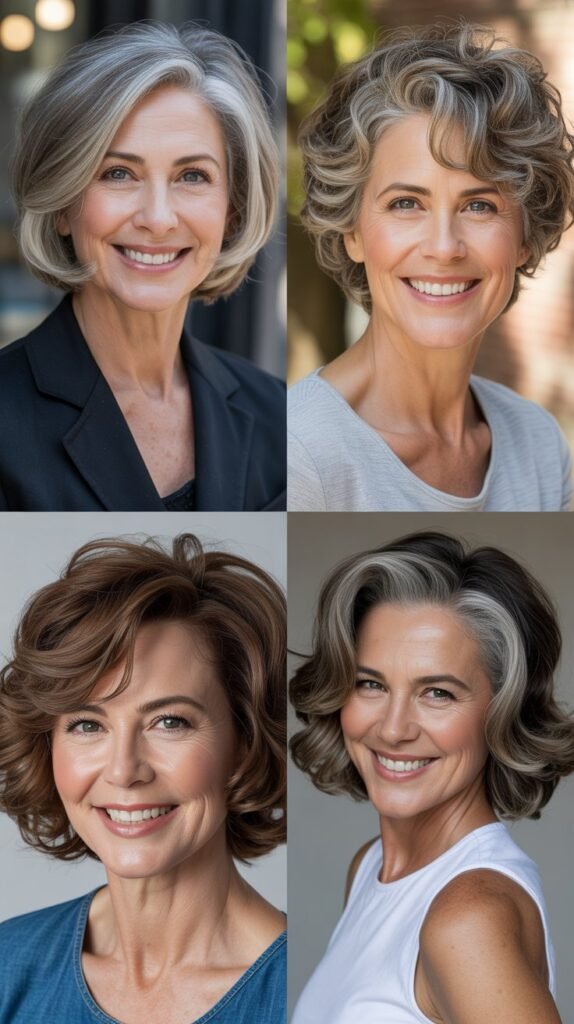
Concentrating layers exclusively at the crown while maintaining a sleek perimeter creates focused volume exactly where fine hair needs it most.
- This technique places all volume-creating layers in the crown area while keeping perimeter sections one length for a polished appearance.
- The contrast between volumized crown and sleek perimeter creates sophisticated elegance with strategic fullness.
- Internal crown layers are typically 1-2 inches shorter than the perimeter, creating substantial lift without visible choppy texture.
- This approach works beautifully for professional environments where controlled, polished styles are preferred over casual, tousled looks.
- Overall length can vary from bob to shoulder-length, with the crown layering technique adapting to different length preferences.
- Styling focuses on blow-drying the crown area with lift while smoothing the perimeter sections for contrast.
- The hidden layers mean the style looks polished and intentional even with minimal styling effort.
- Maintenance every 6-7 weeks keeps the crown layers effective while maintaining the sleek perimeter that defines this sophisticated style.
45. Wispy Pixie with Textured Top
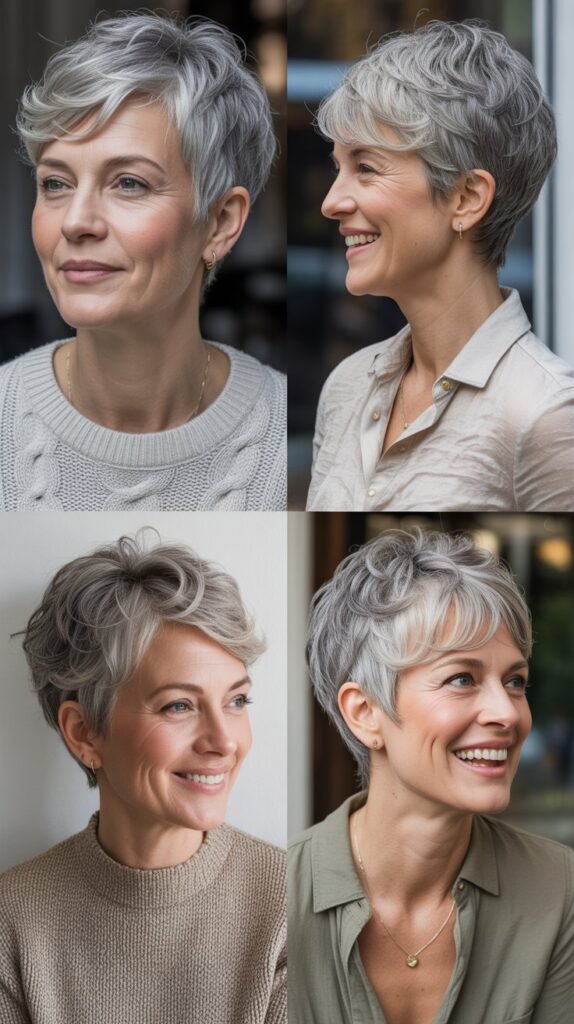
Delicate, wispy cutting throughout combined with heavily textured top sections creates an airy, feminine pixie perfect for fine hair.
- Wispy cutting creates ultra-fine, feather-light ends that prevent any heaviness or bulk that would flatten fine hair.
- The textured top features varied lengths and heavy point-cutting that creates deliberate, piece-y separation.
- This approach generates volume through both structure (varied lengths) and texture (separated pieces) working together.
- The wispy aesthetic is inherently feminine and soft, countering any concerns that pixie cuts might appear too harsh or masculine.
- Styling requires minimal effort—a small amount of lightweight product applied to damp or dry hair and styled with fingers creates the desired effect.
- The delicate, airy quality of this cut makes it particularly appropriate for women with fine facial features or petite builds.
- Face shape compatibility is broad, as the wispy texture can be customized to flatter different facial structures through varied layer placement.
- Maintenance every 5-6 weeks keeps the wispy texture fresh and prevents the style from becoming too heavy or losing its airy quality.
46. Voluminous Shag with Side Bangs
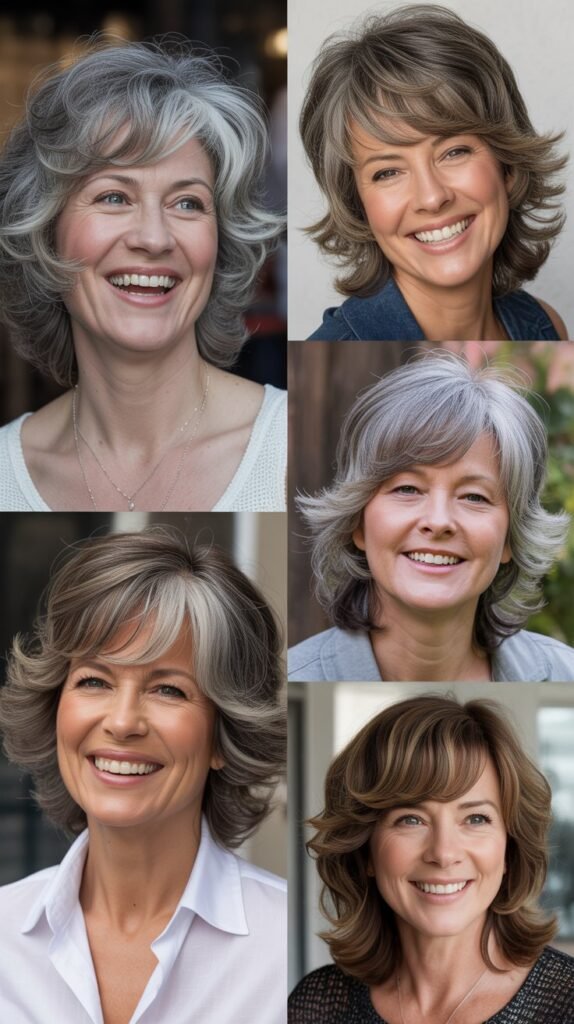
The classic shag gets updated with side-swept bangs that add face-framing softness while layers throughout create all-over volume.
- Shag layering throughout the entire cut ensures volume from crown to ends, with varied layer lengths creating maximum dimension and movement.
- Side bangs sweep across the forehead to one side, softening facial features and adding a feminine touch to the textured shag.
- The combination of all-over layers plus face-framing bangs addresses volume from multiple angles simultaneously.
- This style works with lengths from chin to shoulder, adapting to different preferences while maintaining the voluminous shag structure.
- The deliberately tousled aesthetic means the cut looks intentionally styled even with minimal effort, perfect for busy lifestyles.
- Styling involves rough-drying while scrunching with fingers, applying texturizing product throughout, and styling bangs with a round brush or flat iron.
- The shag’s inherent texture and movement make it forgiving between styling sessions, maintaining volume even on second or third-day hair.
- Maintenance every 6-8 weeks keeps the shag layers dimensional and the side bangs at the ideal length for face-framing effect.
47. Precision-Cut Bob with Hidden Layers
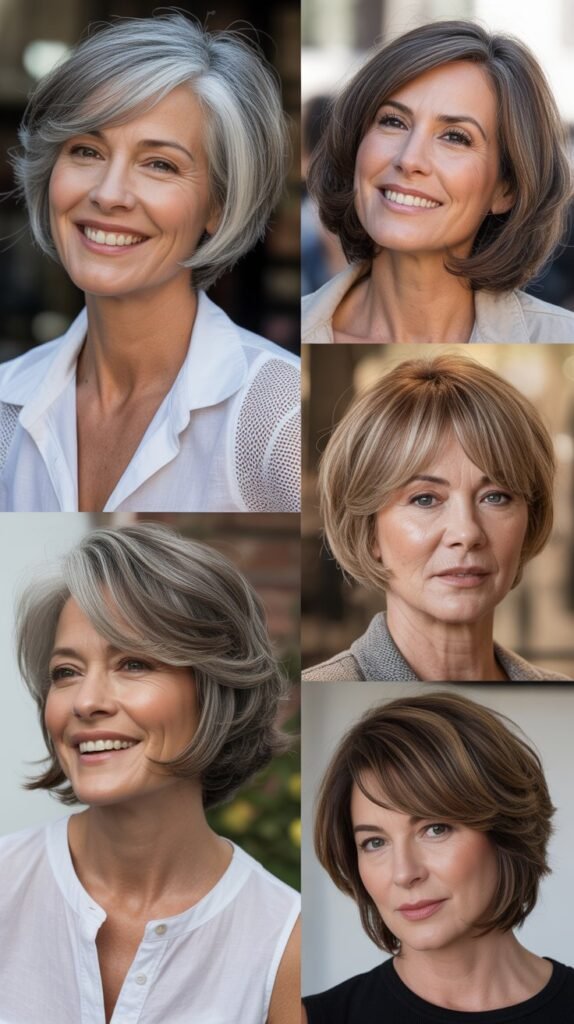
This sophisticated approach maintains a precision-cut exterior while hiding volume-creating layers inside for the best of both worlds.
- Precision cutting creates clean, sharp lines around the perimeter for a polished, sophisticated appearance.
- Hidden internal layers remove weight systematically without disrupting the crisp exterior line that defines the cut.
- This technique appeals to women who appreciate clean, controlled styles but need volume that typical blunt cuts cannot provide.
- The contrast between structured exterior and texturized interior creates volume that appears naturally built-in rather than styled-in.
- Length typically ranges from chin to shoulder, with the precision line creating strong horizontal emphasis.
- This cut works particularly well for straight or slightly wavy fine hair that holds clean lines effectively.
- Styling involves smooth blow-drying that emphasizes the precision perimeter while lifting at the roots to activate the hidden layers.
- Maintenance every 6-7 weeks maintains both the sharp perimeter line and the internal layer structure that generates volume.
48. Tousled Lob with Curtain Bangs
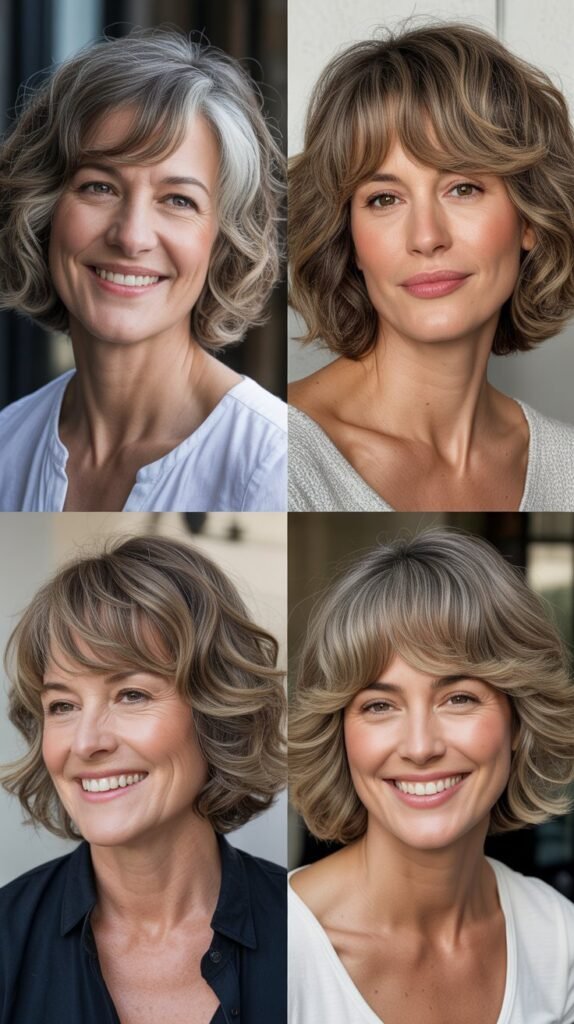
Combining the effortless tousled lob with face-framing curtain bangs creates a romantic, voluminous style perfect for fine hair.
- The tousled aesthetic embraces deliberate imperfection through irregular layers and textured styling that makes fine hair appear thicker.
- Curtain bangs parted in the middle create instant crown volume by directing hair away from the scalp in two directions.
- Lob length (collarbone to shoulder) provides enough hair to create substantial tousled texture while maintaining overall lift.
- This effortlessly romantic style works beautifully for both casual and dressed-up occasions.
- The center part of the curtain bangs complements face shapes with balanced proportions—oval, heart, and diamond shapes particularly.
- Styling involves creating loose waves with a curling iron or flat iron, then separating them for piece-y texture, with curtain bangs blown dry away from the face.
- The intentionally undone quality means the style looks good even as it naturally tousles throughout the day.
- Maintenance includes cuts every 7-8 weeks with bang trims every 3-4 weeks to maintain ideal curtain bang length and shape.
49. Edgy Crop with Asymmetrical Fringe
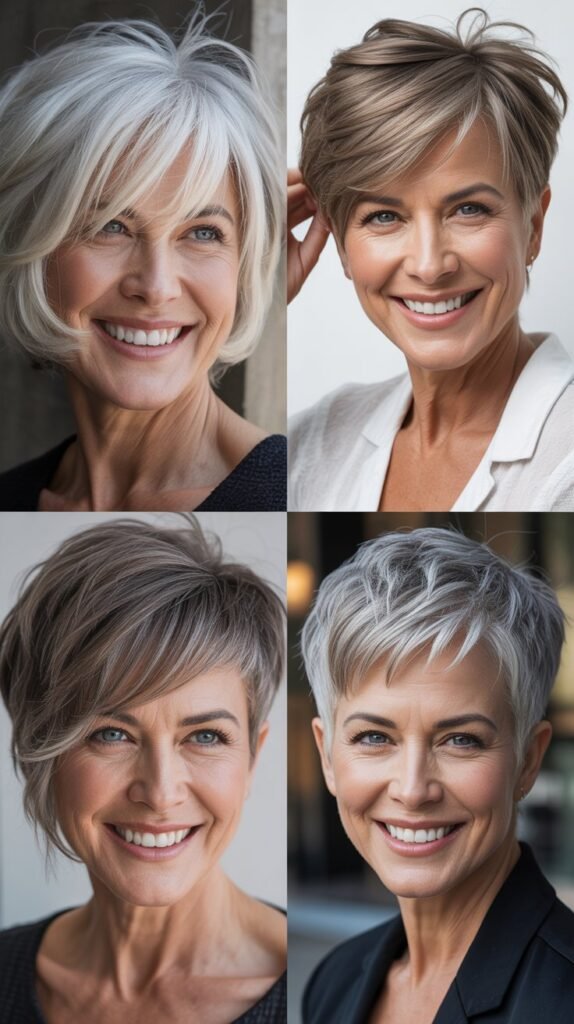
Maximum contemporary edge meets practical volume in this ultra-short crop with dramatically asymmetrical fringe.
- The crop keeps sides and back extremely short (often clipper-cut) while maintaining slightly longer top sections for styling versatility.
- Asymmetrical fringe angles dramatically across the forehead, typically with one side reaching eyebrow level while the other is significantly shorter.
- This bold, fashion-forward style makes a strong statement and works best for women with confident, contemporary personal aesthetic.
- The minimal length throughout eliminates all weight, allowing fine hair to stand up and out rather than lying flat.
- Styling requires just minutes—apply a small amount of strong-hold product to the top and fringe, style with fingers for piece-y texture.
- Face shape considerations include ensuring the asymmetrical fringe angles in a direction that flatters individual features.
- This attention-getting cut projects confidence and modernity, perfect for women who embrace bold personal style.
- Maintenance every 4-5 weeks is crucial to maintain the precise crop length and asymmetrical fringe angle that defines the style.
50. Layered Bob with Balayage Dimension
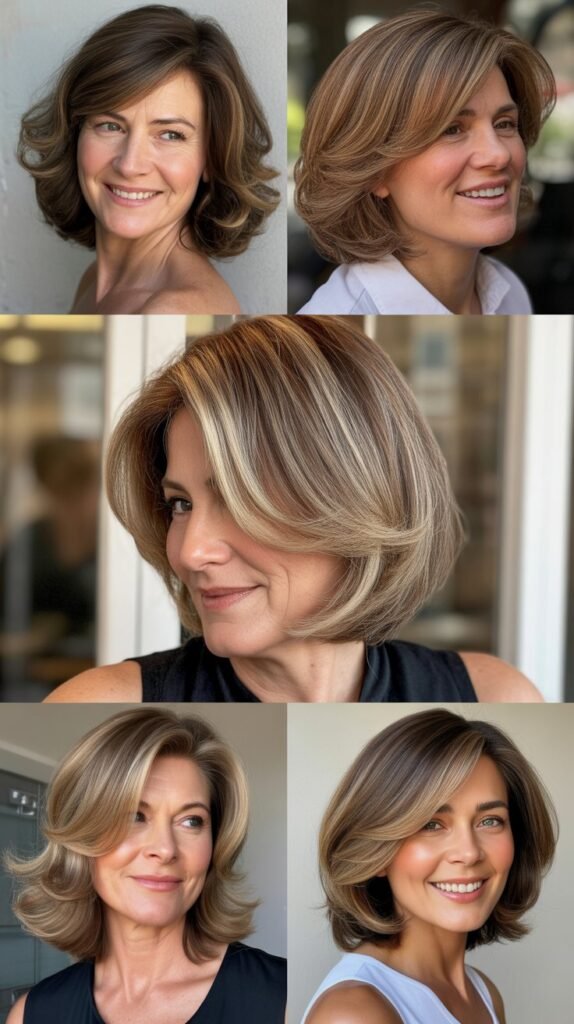
Combining strategic layering with balayage color technique creates both structural and visual dimension that makes fine hair appear remarkably fuller.
- Balayage involves hand-painting highlights onto hair in a sweeping motion, creating natural-looking dimensional color.
- When combined with layers, the lighter pieces strategically placed throughout catch light differently, amplifying the volumizing effect of the cut.
- Color placement should follow the layer structure, with lighter pieces concentrated at crown and face-framing sections where volume is most needed.
- This dual approach addresses volume from both cutting (physical structure) and coloring (visual illusion) perspectives simultaneously.
- The natural, sun-kissed effect of balayage means it grows out gracefully without harsh regrowth lines, reducing maintenance frequency.
- Overall bob length can vary based on preference, with the layering and color technique adapting to different lengths.
- Maintenance includes cuts every 6-8 weeks and color refresh every 10-14 weeks, making this a moderate-maintenance option.
- Styling remains standard for any layered bob, but the dimensional color makes volume appear even more pronounced with minimal effort.
51. Multi-Dimensional Pixie with Variable Lengths
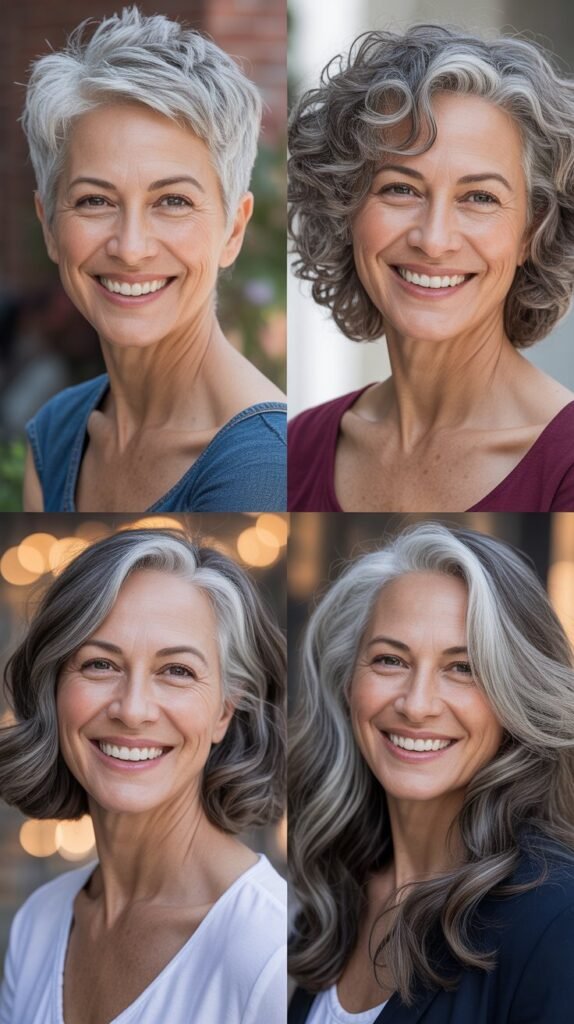
The ultimate volumizing pixie uses multiple length variations throughout—from ultra-short to relatively long—creating architectural volume and maximum styling versatility.
- This advanced pixie incorporates at least three distinct length zones—typically ultra-short sides/back (0.5-1 inch), medium sides/crown (2-3 inches), and longer top/front (4-6 inches).
- The multiple length variations create natural volume through elevation, with each section propping up the sections above it.
- Extreme versatility is a hallmark—the same cut can be styled sleek, spiky, textured, swept, or even with faux-hawk elements.
- This sophisticated approach to pixie cutting requires an experienced stylist skilled in architectural cutting techniques.
- The varied lengths create visual interest that makes fine hair appear significantly thicker and more abundant than it actually is.
- Styling options are nearly limitless, with different products and techniques creating dramatically different appearances.
- Face shape compatibility is excellent when the length variations are customized to individual facial proportions and features.
- Maintenance every 5-6 weeks maintains the precise multiple-length structure, though the cut remains wearable as it grows out slightly between appointments.
Conclusion
Finding the perfect haircut can feel overwhelming, but armed with the knowledge from these 51 Volumizing Short Layered Haircuts for Women Over 50 That Lift Fine Hair, you now have the tools to make a confident decision that transforms your appearance and simplifies your daily routine.
The secret to voluminous fine hair after 50 isn’t fighting against your natural texture—it’s working with it through strategic layering, smart length choices, and cuts specifically engineered to create lift exactly where you need it most.
Whether you’re drawn to the bold confidence of a textured pixie, the sophisticated elegance of a graduated bob, or the romantic softness of a layered lob with curtain bangs, there’s a volumizing cut that matches your personal style, face shape, and lifestyle needs.
Remember that the most successful haircut is one that makes you feel confident and beautiful while being realistic about the time and effort you’re willing to invest in daily styling.
Take these options to a skilled stylist who understands fine hair, bring photos of the styles that speak to you, and don’t be afraid to ask questions about maintenance requirements and styling techniques.
Your fine hair after 50 isn’t a limitation to work around—it’s an opportunity to showcase a beautifully layered, voluminous style that celebrates exactly who you are right now, with the wisdom, confidence, and style that comes with experience.