
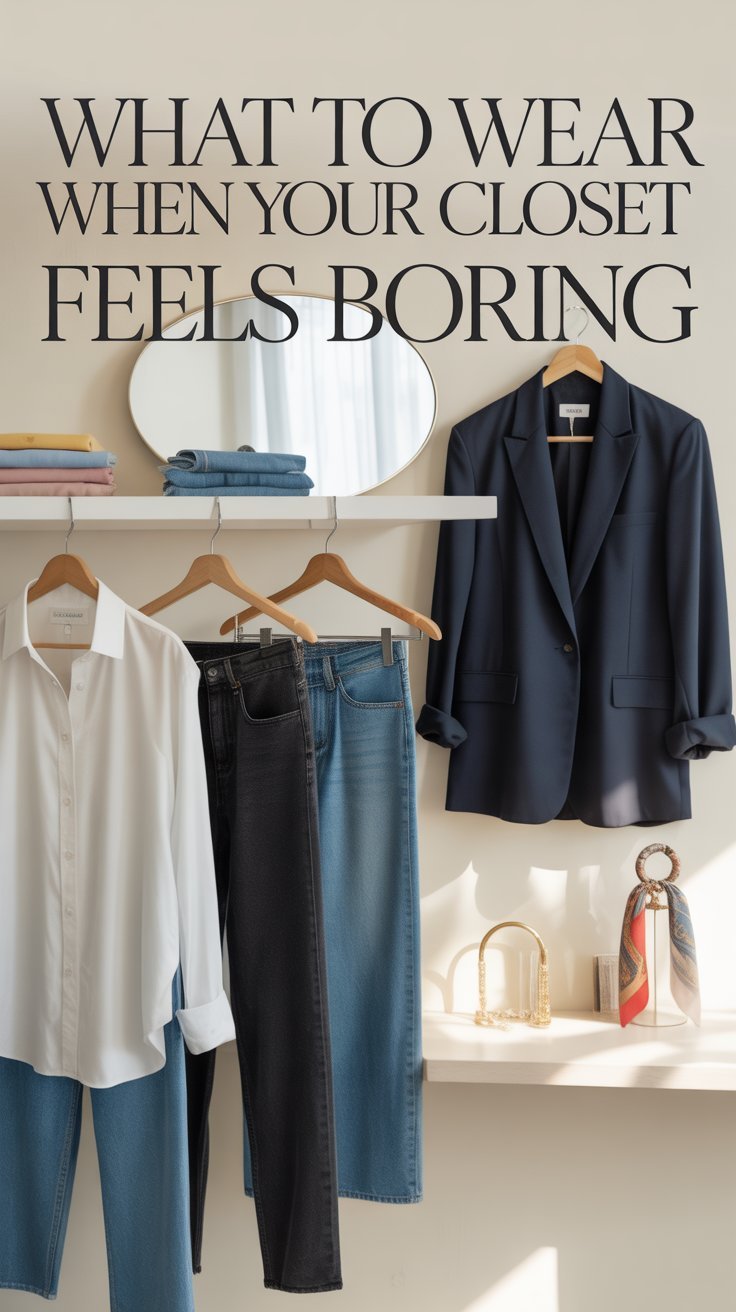
We’ve all been there—standing in front of a packed closet yet feeling like we have absolutely nothing to wear.
When your wardrobe starts to feel monotonous and uninspiring, it’s not necessarily time for a complete overhaul or a shopping spree.
The answer often lies in rediscovering what you already own and learning simple styling tricks that breathe new life into familiar pieces.
This article on “What to Wear When Your Closet Feels Boring” will guide you through practical strategies to revitalize your everyday outfits, from mastering the art of layering to experimenting with unexpected accessories.
You’ll discover how to mix textures, play with proportions, and create fresh combinations that make getting dressed exciting again.
We’ll explore color theory basics, the power of statement pieces, and creative ways to reimagine your existing wardrobe without spending a fortune.
Whether you’re working with a minimal capsule collection or an overflowing closet, these actionable tips will help you see your clothes through fresh eyes and develop a renewed sense of style confidence.
1. Assess What You Already Own
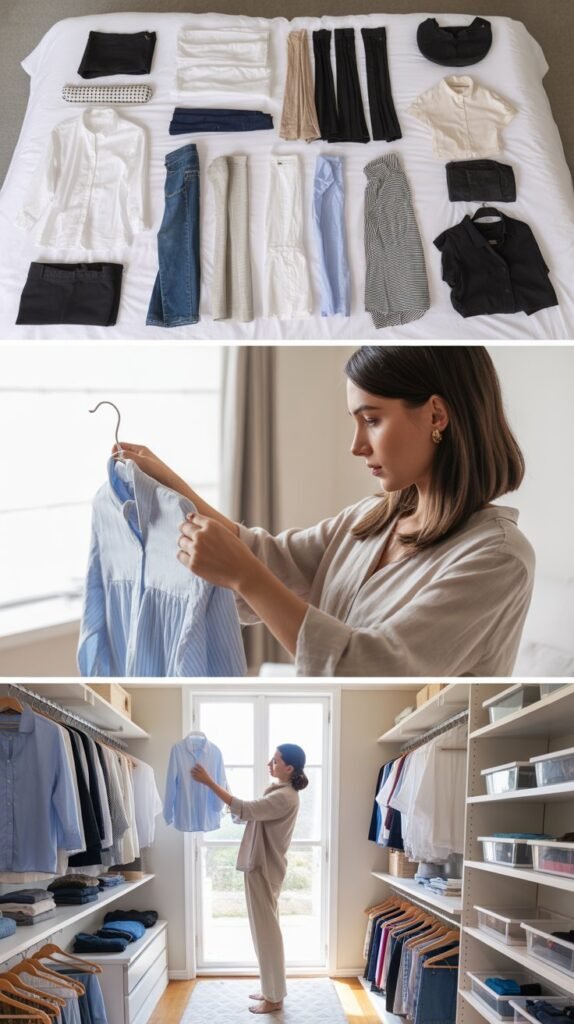
Before declaring your closet boring, take inventory of what’s actually hanging there.
Many people overlook perfectly good pieces simply because they’re buried or forgotten, and a thorough assessment can reveal hidden gems you’ve been ignoring for months.
• Start by removing everything from your closet and laying items out where you can see them clearly.
• Group similar items together—all tops in one area, bottoms in another, dresses separately—to understand what categories dominate your wardrobe.
• Identify pieces you haven’t worn in six months and ask yourself honestly whether they still fit your lifestyle and body.
• Look for quality basics that can serve as foundation pieces for multiple outfits, such as well-fitted jeans, neutral blazers, or classic white shirts.
• Note any items with sentimental value that no longer serve you practically, and consider whether they deserve closet space or should be stored elsewhere.
• Create three piles: keep and wear regularly, keep but needs styling help, and donate or sell.
• Take photos of your favorite pieces to reference later when planning outfits or shopping for complementary items.
2. Master the Art of Layering
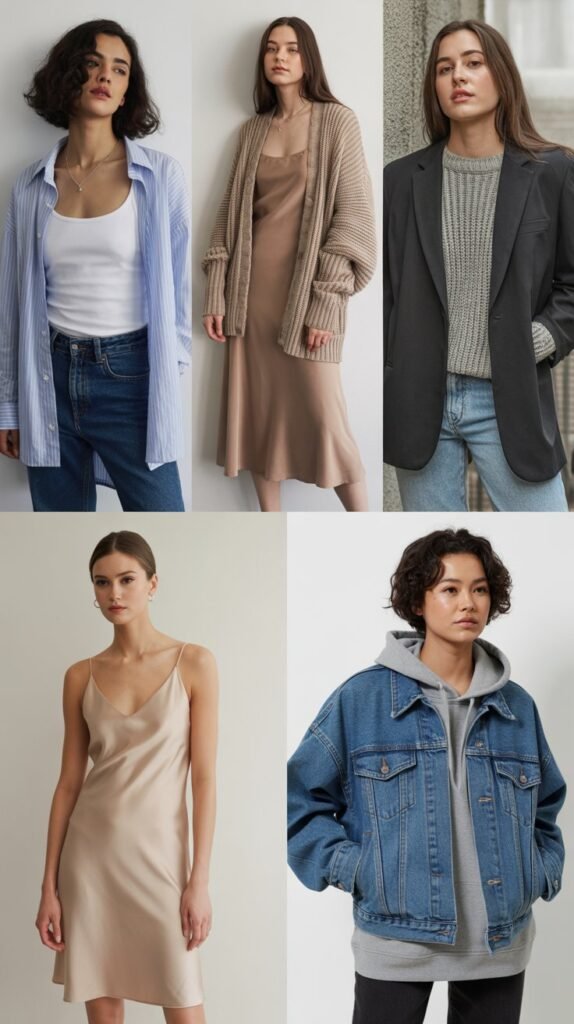
Layering transforms simple outfits into complex, interesting looks without requiring new purchases.
This technique adds depth, dimension, and versatility to even the most basic pieces in your wardrobe.
• Begin with a fitted base layer like a tank top or thin turtleneck that sits close to your body.
• Add a mid-layer such as a button-down shirt, lightweight sweater, or cardigan that introduces texture or color.
• Incorporate an outer layer like a blazer, denim jacket, or long coat to complete the dimensional effect.
• Experiment with different length combinations—try a longer shirt under a cropped sweater or a long cardigan over a shorter dress.
• Play with sleeve lengths by pushing up sleeves on outer layers to reveal the layers underneath.
• Mix weights and fabrics, such as pairing a silky blouse under a chunky knit for textural contrast.
• Don’t be afraid to layer prints and patterns, starting with one dominant pattern and adding a subtler complementary one.
• Use layering to transition seasonal pieces year-round, like wearing a summer dress over a turtleneck in fall.
3. Experiment with Unexpected Combinations
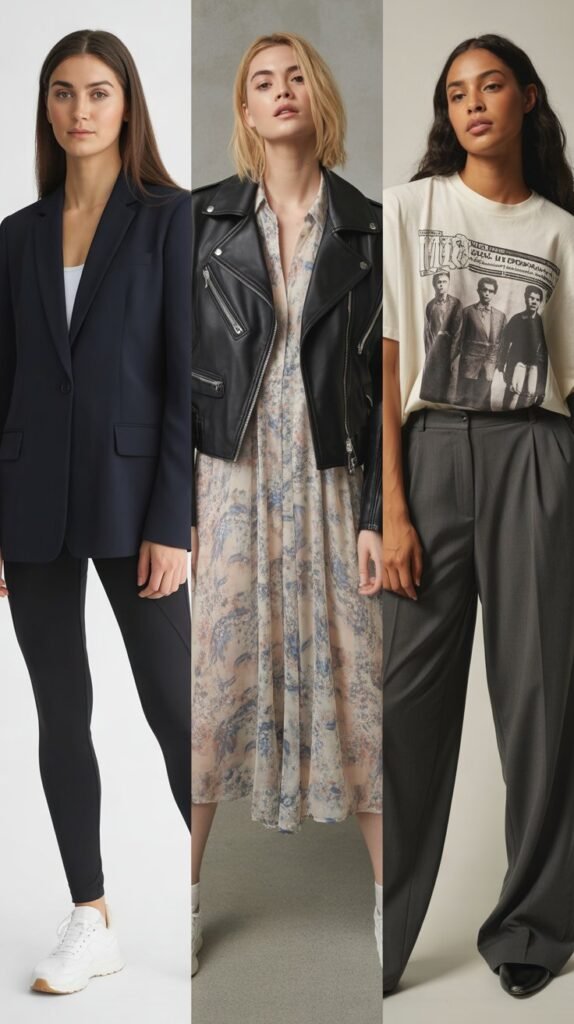
Breaking your usual pairing habits opens up exponential outfit possibilities.
Pieces you never thought would work together often create the most interesting and fresh looks.
• Pair dressy items with casual pieces, like wearing sneakers with a midi skirt or a blazer with joggers.
• Combine different style aesthetics in one outfit, such as mixing feminine florals with edgy leather or bohemian pieces with minimalist basics.
• Try wearing two patterns together by ensuring they share at least one color or vary significantly in scale.
• Experiment with wearing summer pieces in winter and vice versa, like shorts with tights and boots or a lightweight sweater over a slip dress.
• Take a formal piece like tailored trousers and dress it down with a graphic tee and sneakers.
• Layer dresses over pants or wear them as tops by belting them and pairing with jeans or trousers underneath.
• Mix metals in your accessories instead of sticking to all gold or all silver.
• Combine different denim washes in one outfit, challenging the old rule about matching your denim pieces.
4. Play with Proportions and Silhouettes
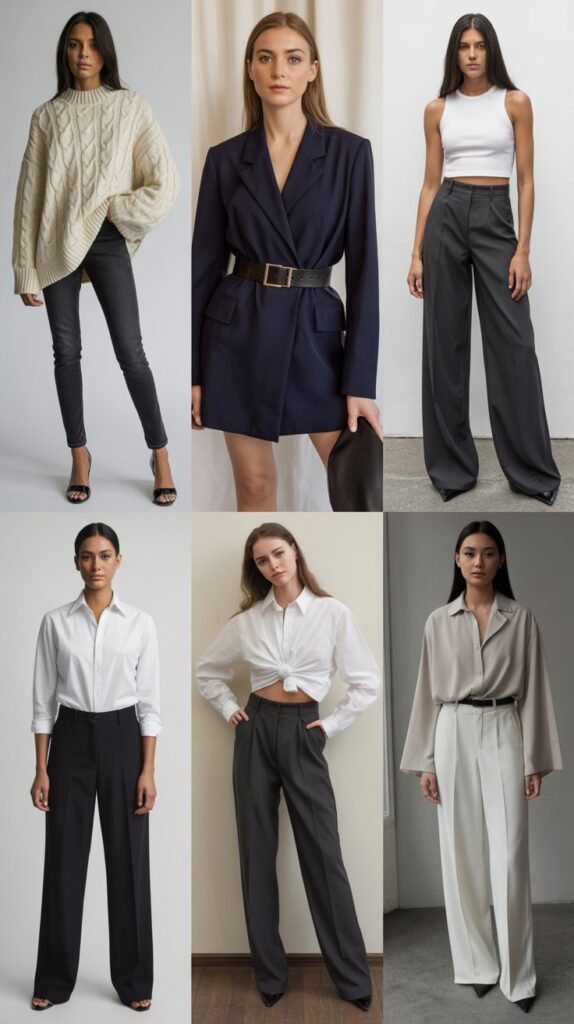
Changing the proportions of your outfit dramatically alters its overall impact and can make familiar pieces look completely new.
Understanding how different silhouettes work together creates visual interest and flatters your figure in fresh ways.
• Follow the basic rule of balancing volumes: if you wear something fitted on top, try something looser on bottom, and vice versa.
• Experiment with oversized pieces by pairing a boyfriend blazer or large sweater with slim-fitting pants or a pencil skirt.
• Try the unexpected by pairing two loose pieces together, ensuring one is slightly more structured to maintain shape.
• Use belts to cinch oversized items at the waist, creating definition and an entirely different silhouette.
• Explore different hem lengths and how they interact, like a cropped top with high-waisted wide-leg pants.
• Tuck in your tops in various ways—full tuck, half tuck, or front tuck—to change proportions instantly.
• Play with sleeve lengths and volumes, rolling up sleeves or choosing statement sleeves to add interest.
• Consider where items hit on your body and adjust with tailoring or styling tricks to create more flattering proportions.
5. Incorporate Statement Accessories
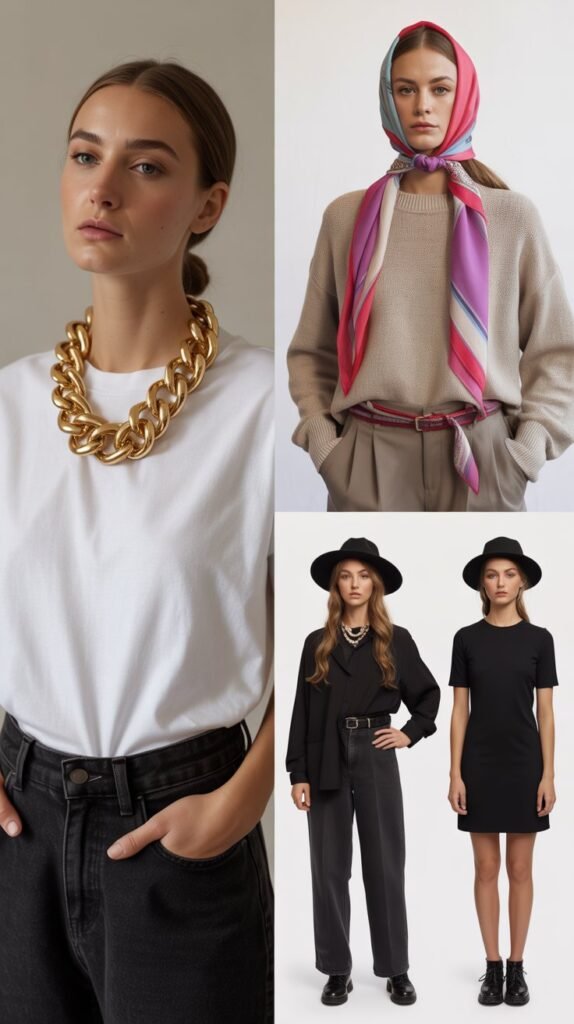
Accessories possess transformative power that can completely change the vibe of an outfit.
Strategic accessory choices turn basic outfits into memorable looks without requiring a closet overhaul.
• Invest in one or two bold statement necklaces that can elevate a simple t-shirt and jeans combination.
• Experiment with scarves worn in different ways—around your neck, as a headband, tied to your bag, or as a belt.
• Add interest with unique shoes that become conversation pieces, whether they’re bold colors, interesting textures, or unexpected styles.
• Layer multiple delicate necklaces or stack bracelets and rings to create a personalized jewelry look.
• Incorporate a structured handbag in an unexpected color or texture to add sophistication to casual outfits.
• Try statement earrings that draw attention upward and can dress up even the most basic outfit.
• Add belts in various widths and styles to items that don’t traditionally have them, like oversized shirts or cardigans.
• Consider hats as statement pieces—from wide-brim styles to berets—that completely change your outfit’s character.
6. Explore Color Theory and New Combinations
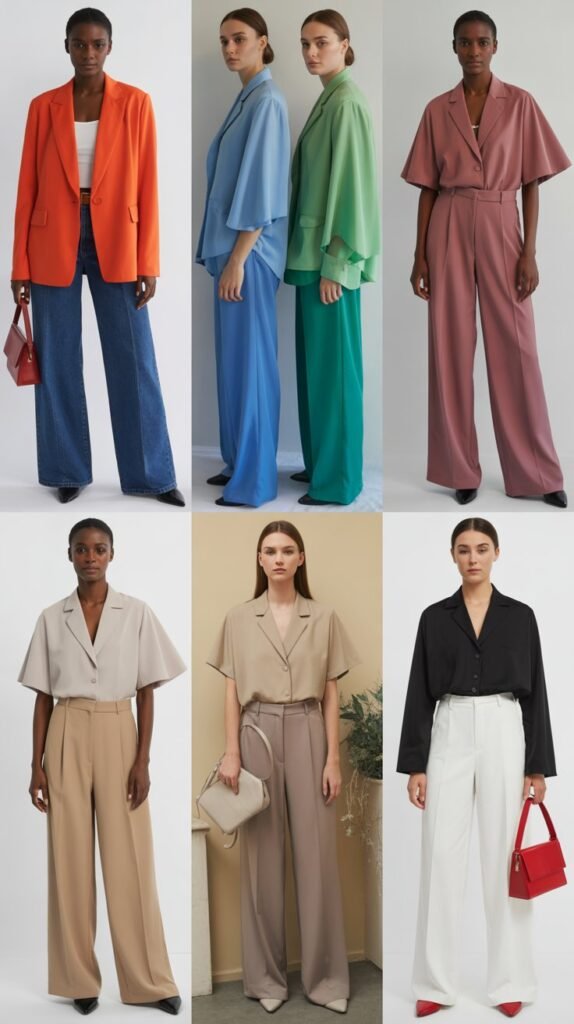
Understanding basic color principles helps you create harmonious yet interesting outfits from pieces you already own.
Moving beyond your safe color combinations introduces freshness without purchasing anything new.
• Start by identifying your safe colors and consciously pair them with shades you typically avoid.
• Learn about complementary colors (opposite on the color wheel) like blue and orange, or purple and yellow, for vibrant combinations.
• Explore analogous colors (next to each other on the color wheel) like blue, blue-green, and green for harmonious looks.
• Experiment with monochromatic outfits using different shades and tones of the same color for a sophisticated effect.
• Try the 60-30-10 rule: 60% dominant color, 30% secondary color, and 10% accent color for balanced outfits.
• Don’t fear mixing neutrals in unexpected ways, like pairing brown with black or navy with charcoal gray.
• Add pops of color through accessories if you’re hesitant to commit to colorful clothing pieces.
• Consider how colors interact with your skin tone, hair, and eye color to determine which combinations make you look most vibrant.
7. Revive Pieces Through Simple Alterations
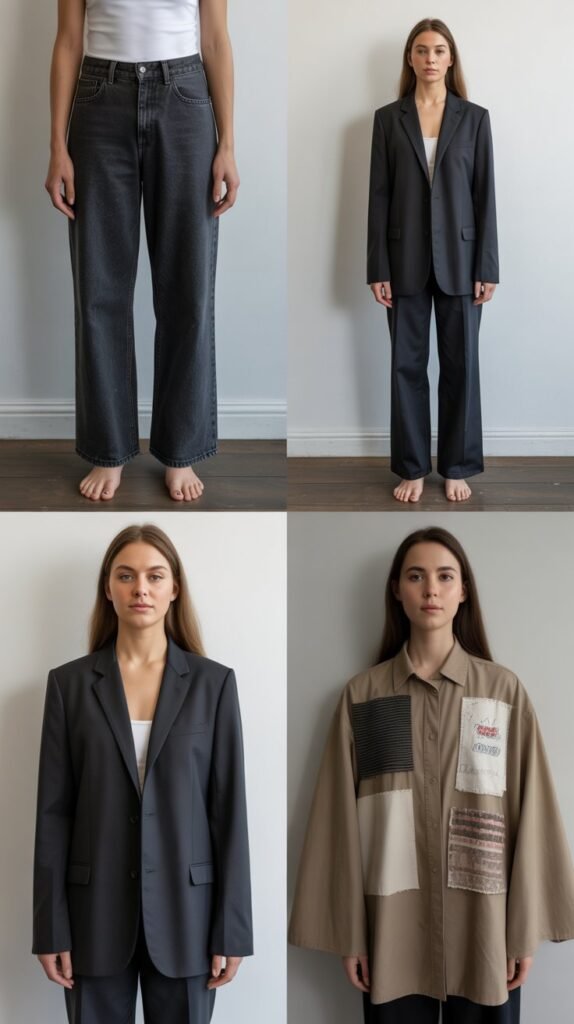
Minor modifications can transform ill-fitting or outdated pieces into wardrobe favorites.
Sometimes a boring closet just needs a little DIY attention or professional tailoring to feel fresh again.
• Hem pants or skirts to modern lengths—cropped, midi, or ankle-grazing styles feel more current than outdated lengths.
• Tailor oversized items to fit your body better, or intentionally make fitted items more oversized for a contemporary look.
• Cut sleeves off old shirts to create tanks or modify sleeve lengths for seasonal versatility.
• Add or remove embellishments like buttons, patches, or embroidery to personalize basic pieces.
• Convert old jeans into shorts or distress them for a more casual, lived-in appearance.
• Take items to a professional tailor for adjustments that you can’t confidently do yourself—proper fit makes everything look more expensive.
• Remove dated details like excessive ruffles, outdated hardware, or unflattering design elements that make pieces feel old.
• Consider dyeing faded or stained items to refresh them or completely change their color for a new look.
8. Create a Capsule Within Your Closet
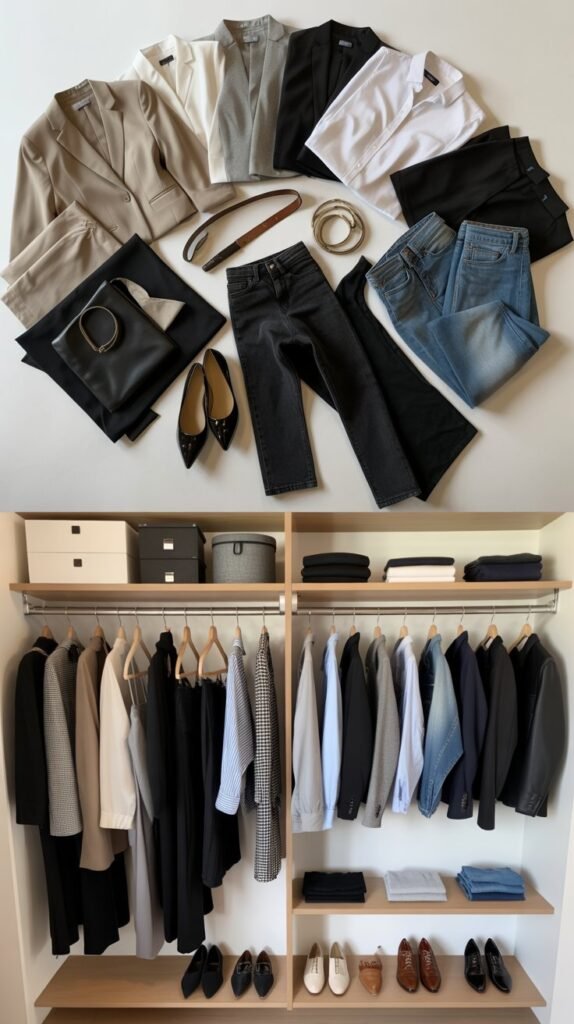
You don’t need to build a capsule wardrobe from scratch—create one from what you already own.
Selecting a limited number of versatile pieces forces creativity and helps you see new combinations.
• Choose 20-30 items that work well together in terms of color, style, and functionality for the current season.
• Ensure your mini capsule includes a balance of tops, bottoms, dresses, and outerwear that all coordinate.
• Select a cohesive color palette of 3-5 colors that all work together to maximize mixing potential.
• Include various basics that serve as foundation pieces for multiple outfits—well-fitted jeans, neutral tops, versatile shoes.
• Temporarily remove non-capsule items from easy view to eliminate decision fatigue and increase focus.
• Challenge yourself to create different outfits from your capsule items for two weeks without repeating combinations.
• Photograph your successful capsule outfits to remember combinations that work well together.
• Rotate your capsule seasonally, swapping pieces as weather and occasions change throughout the year.
| Capsule Category | Suggested Quantity | Examples |
|---|---|---|
| Tops | 6-8 | T-shirts, blouses, sweaters |
| Bottoms | 4-6 | Jeans, trousers, skirts |
| Dresses | 2-3 | Casual, semi-formal options |
| Outerwear | 2-3 | Blazer, jacket, coat |
| Shoes | 3-5 | Sneakers, boots, flats, heels |
| Accessories | 5-7 | Bags, scarves, jewelry |
9. Find Style Inspiration Intentionally
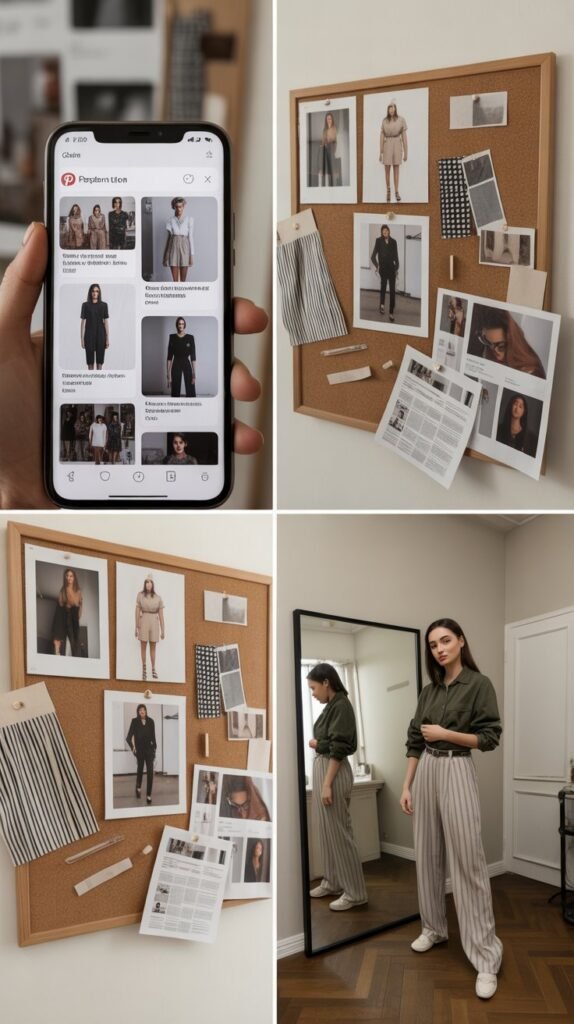
When your closet feels boring, fresh inspiration helps you see your existing pieces with new eyes.
Strategic inspiration-seeking prevents aimless scrolling and actually translates to wearable outfits.
• Follow diverse fashion accounts on social media that showcase different body types, ages, and style aesthetics than your usual preferences.
• Create a dedicated inspiration folder on your phone where you save looks that genuinely excite you, not just aspirational images.
• Analyze what specifically appeals to you in saved images—is it the color combination, the silhouette, a particular piece, or how items are styled together.
• Look for inspiration in unexpected places like classic films, art, architecture, or street photography rather than only fashion magazines.
• Pay attention to well-dressed people in your daily life and consider what makes their outfits work.
• Join online fashion communities or forums where people share outfit ideas and you can ask specific styling questions.
• Set boundaries on inspiration time to prevent overwhelming yourself or developing unrealistic expectations about your wardrobe.
• Immediately try recreating an inspiring look with your own pieces while the idea is fresh, adapting it to your existing wardrobe.
10. Shop Your Own Closet Regularly
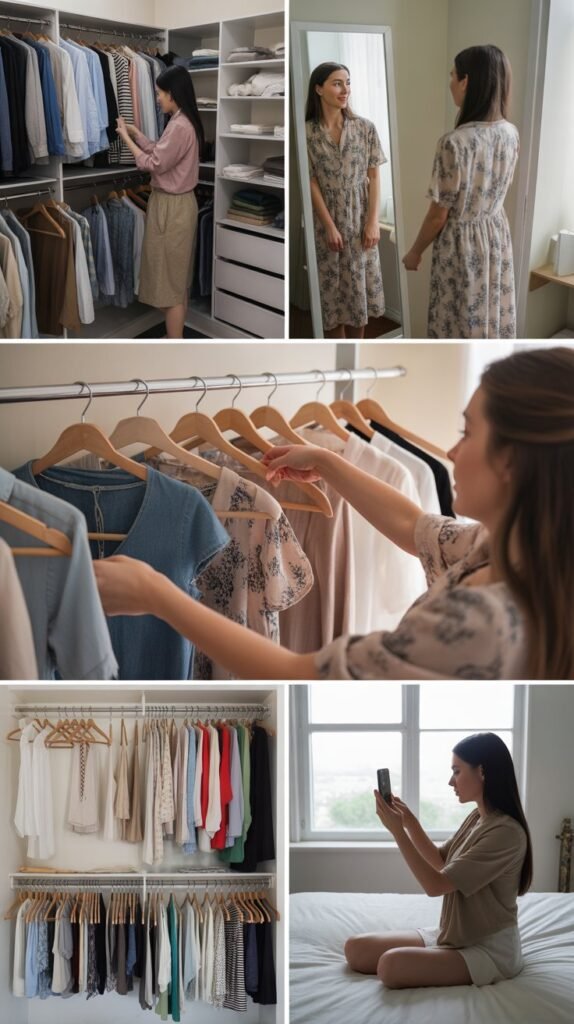
Treating your closet like a boutique changes your relationship with your clothes and creates excitement around getting dressed.
Regular “shopping sessions” at home reveal forgotten treasures and spark new ideas.
• Schedule monthly closet shopping sessions where you approach your wardrobe as if you’re browsing a store for the first time.
• Pull out items you haven’t worn recently and place them at eye level or in prominent positions to remind yourself they exist.
• Try on combinations you’ve never attempted before, even if they seem unlikely to work—you might be surprised.
• Reorganize your closet periodically by color, item type, or season to create a fresh visual perspective.
• Create “outfit sets” on hangers with complete looks ready to wear, removing the daily decision-making burden.
• Rediscover items borrowed from friends or family that you forgot were in your possession, or plan a clothing swap event.
• Document your favorite discoveries by taking photos so you remember to wear those combinations again.
• Rotate seasonal items to the front of your closet as weather changes, making them easier to access and incorporate into outfits.
11. Embrace the Power of Third Pieces
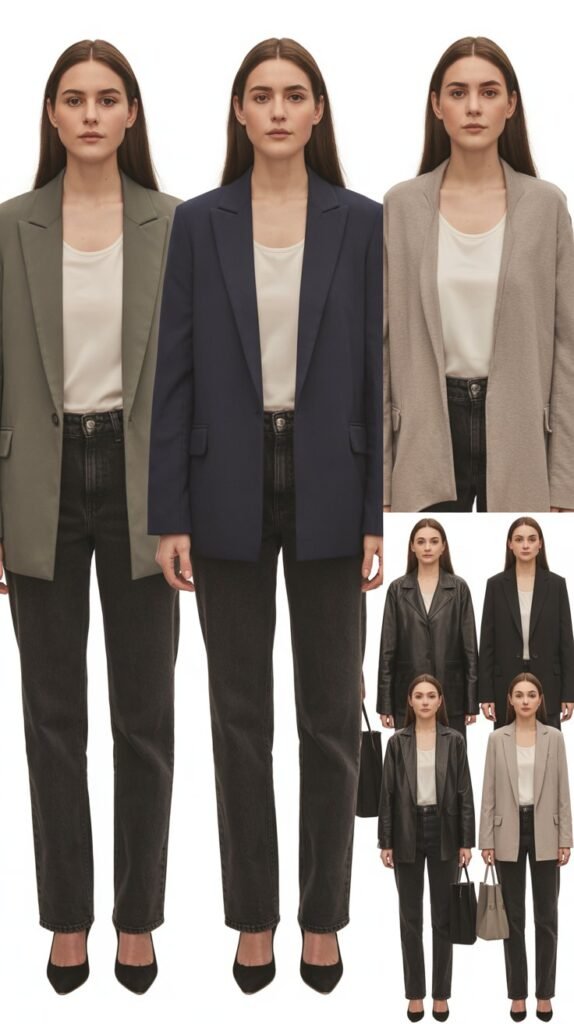
The “third piece” rule suggests that adding one additional element beyond basic tops and bottoms instantly elevates any outfit.
This simple concept makes basic combinations feel intentional and polished.
• Add a structured blazer over a simple t-shirt and jeans combination to create instant sophistication.
• Layer a cardigan or sweater over a dress to extend its wearability and add visual interest.
• Incorporate a vest—whether tailored, knitted, or denim—as an unexpected third layer that adds dimension.
• Use a statement jacket like leather, denim, or bomber style as your third piece for edge and personality.
• Add a longline coat or duster over any outfit to create vertical lines and instant elegance.
• Consider scarves, hats, or statement belts as third pieces when you want something lighter than a jacket.
• Experiment with wearing a button-down shirt open as a third piece over a tank and pants.
• Try a kimono, shawl, or poncho for a bohemian third-piece option that works across seasons.
12. Experiment with Different Tucking Techniques
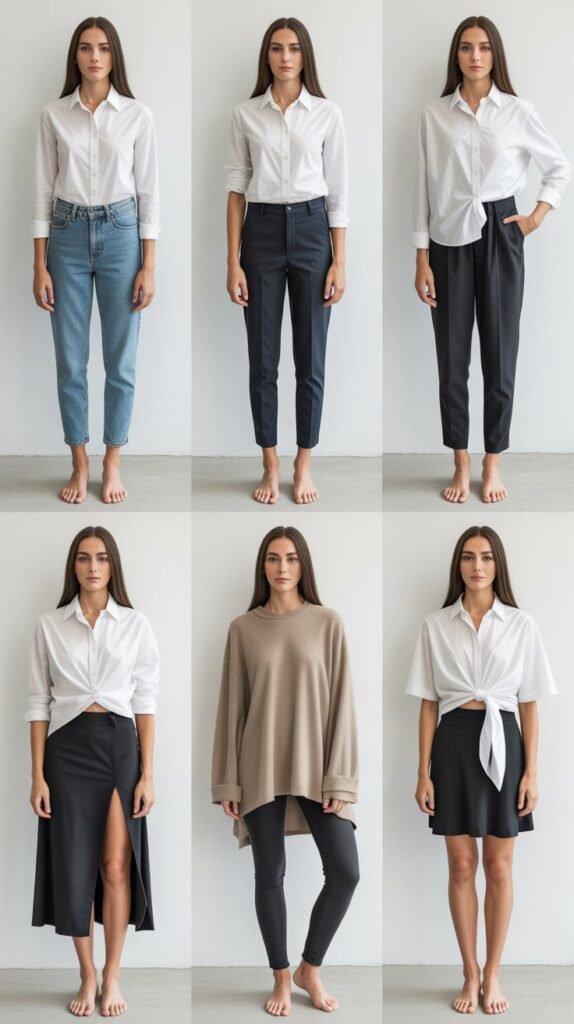
The way you tuck (or don’t tuck) your tops dramatically changes your outfit’s proportions and style.
Mastering various tucking methods is a free styling trick that instantly refreshes your look.
• Try the full tuck by tucking your entire shirt into your pants or skirt for a polished, put-together appearance.
• Experiment with the front tuck (also called the French tuck) by tucking just the front center of your shirt for a casual, effortless vibe.
• Use the half tuck by tucking in only one side of your top to create asymmetry and visual interest.
• Leave shirts completely untucked when wearing longer tops over leggings or with oversized pieces for a relaxed look.
• Try the belt tuck by tucking your top and adding a belt to define your waist and add an accessory element.
• Experiment with the partial back tuck, leaving the front loose but tucking the back for a unique silhouette.
• Use the knot technique instead of tucking by tying the front hem of your shirt to create shape and show a hint of skin.
• Adjust your tuck throughout the day to make it look intentionally effortless rather than perfectly neat.
13. Mix Textures and Fabrics Intentionally
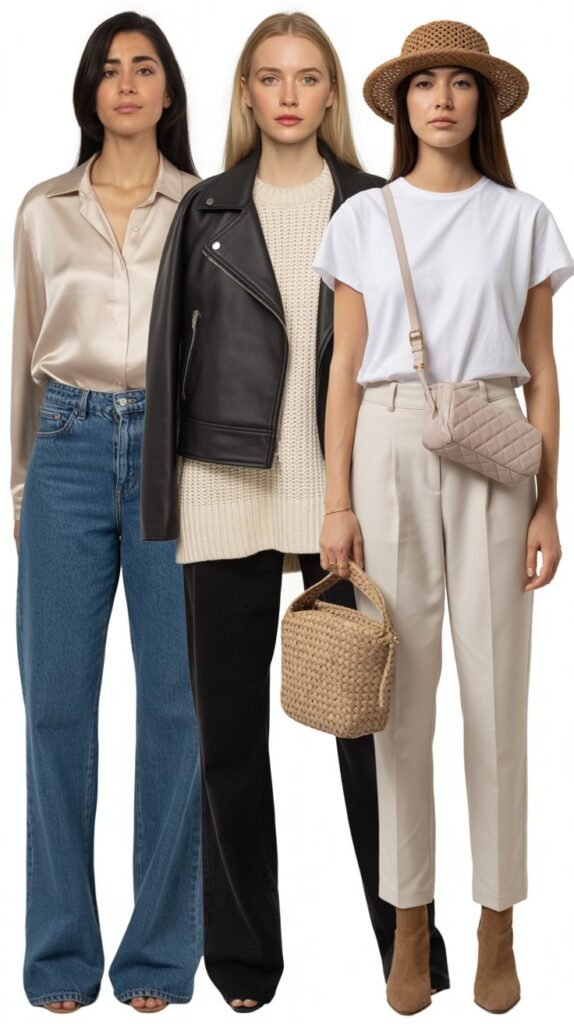
Combining different textures adds depth and sophistication to outfits that might otherwise feel flat.
Textural contrast creates visual interest even when using a limited color palette.
• Pair rough textures like denim or corduroy with smooth fabrics like silk or satin for appealing contrast.
• Mix structured pieces like a tailored blazer with flowing, drapey items like a silk camisole underneath.
• Combine chunky knits with sleek leather pieces—think a cable-knit sweater with leather pants or a leather jacket.
• Experiment with shiny and matte finishes in one outfit, such as a matte cotton top with satin trousers.
• Add texture through accessories like a suede bag, velvet shoes, or a metallic belt against cotton basics.
• Layer different knit weights and textures, such as a fine-gauge turtleneck under a chunky cardigan.
• Incorporate unexpected textures like lace, mesh, or crochet details with solid, structured pieces.
• Use textured neutrals together—like cream linen with beige cashmere—for a sophisticated monochromatic look with dimension.
14. Reinvent Items by Wearing Them Differently
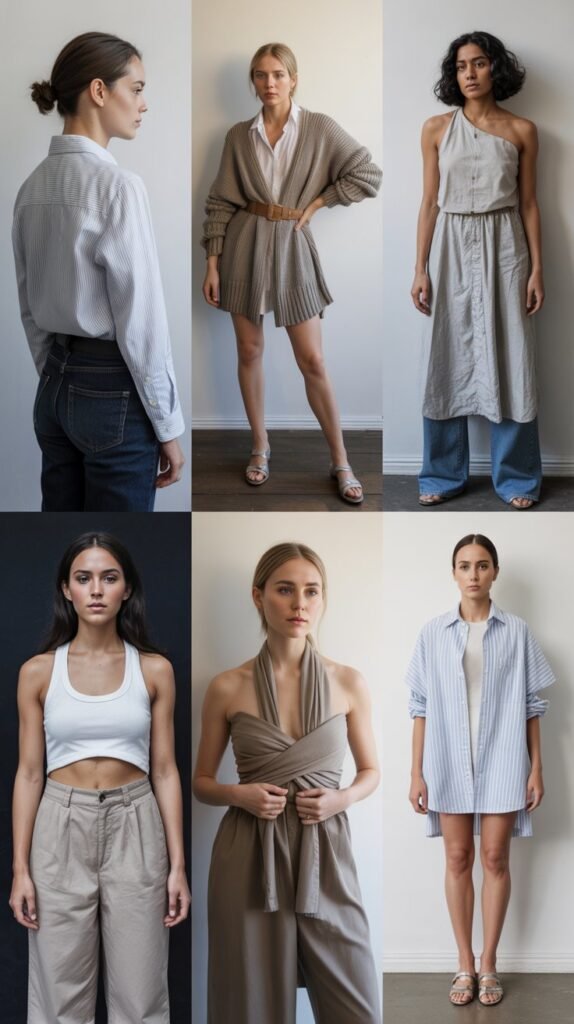
Many clothing items have alternative wearing possibilities beyond their obvious intended use.
Creative reinterpretation of existing pieces instantly expands your wardrobe options.
• Wear button-down shirts backward for an unexpected neckline, or off one shoulder for an asymmetrical look.
• Convert long cardigans into belted dresses or dusters by changing how you style them.
• Wear summer dresses over turtlenecks and pants during colder months to extend their seasonal use.
• Turn scarves into tops by wrapping and tying them creatively, or use them as belts for added color.
• Wear oversized shirts as dresses with a belt and boots for an entirely different silhouette.
• Layer tank dresses over t-shirts or turtlenecks instead of wearing them alone.
• Use large square scarves as skirts by wrapping and securing them at your waist.
• Wear blazers and structured jackets off the shoulder for a relaxed, fashion-forward approach.
15. Develop a Signature Element
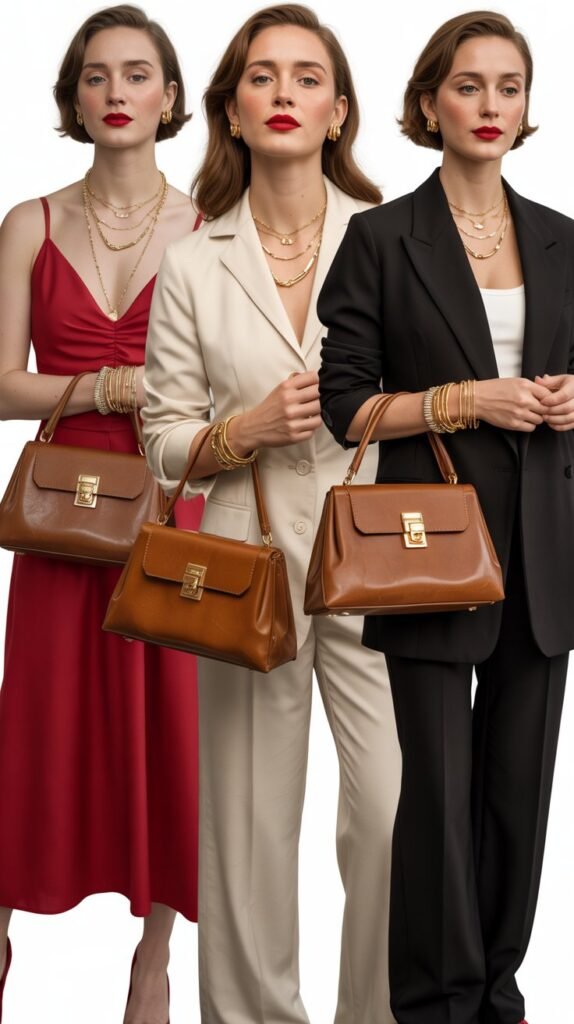
Having a signature styling element creates a cohesive personal style and makes getting dressed easier.
Your signature becomes a recognizable thread that runs through your outfits regardless of specific pieces.
• Identify what naturally draws you—perhaps you always reach for red lipstick, gold jewelry, or vintage brooches.
• Consider making a particular color your signature by incorporating it into every outfit through clothing or accessories.
• Adopt a signature accessory like always wearing a watch, specific style of sunglasses, or a particular bag shape.
• Develop a signature hairstyle or makeup look that becomes part of your overall aesthetic and makes you feel confident.
• Choose a signature silhouette or fit that flatters you, like always incorporating high-waisted bottoms or oversized layers.
• Make a particular styling trick your signature, such as always layering chains or consistently rolling your sleeves a certain way.
• Select a signature pattern or print that you incorporate regularly, whether it’s stripes, leopard, or florals.
• Consistency with your signature element creates a recognizable personal brand without limiting your overall outfit variety.
Conclusion
Finding what to wear when your closet feels boring doesn’t require a complete wardrobe replacement or significant financial investment.
By implementing the strategies outlined in this article on “What to Wear When Your Closet Feels Boring,” you can transform your existing pieces into fresh, exciting combinations that reignite your passion for getting dressed.
The key lies in shifting your perspective—approaching your closet with creativity, experimenting with new pairings, and being willing to break your established styling rules.
From mastering layering techniques and playing with proportions to incorporating statement accessories and mixing unexpected textures, these practical approaches work with whatever you currently own.
Remember that developing personal style is an ongoing journey, not a destination, and even small changes like different tucking methods or adding a third piece can dramatically impact how you feel in your clothes.
Your closet likely contains more potential than you realize; it simply needs your renewed attention and willingness to see familiar pieces through fresh eyes.
Start with one strategy that resonates most with you, practice it until it becomes natural, then gradually incorporate others to continuously evolve your style and keep your daily outfits feeling inspired and authentic to who you are.